Yes, Lithuania is an established EU production hub for high-quality and certifiable textiles. Vertically integrated manufacturers cover yarn, knitting, cutting, and sewing from a single source, many with GOTS, Oeko-Tex, or RWS certification. Clients should still verify working conditions and sustainability claims, for instance by looking at examples like BeachBodyz.
Key takeaways
Lithuania's textile industry is optimally geared toward quality- and sustainability-oriented brands through regional clusters, extensive certifications, and modernized production.
| Topic | Details |
|---|---|
| Regional specialization | Each Lithuanian region has its own focus, enabling short distances, efficient processes, and high quality. |
| Complete production chain | Many companies cover all production steps from yarn to the finished garment, which minimizes errors. |
| Certification and sustainability | Notably, many companies hold GOTS, RWS, or Oeko-Tex certificates, guaranteeing sustainable and pollutant-free production. |
| Export orientation and quality | Lithuania offers short delivery routes, stable quality, and certifications, making it a serious partner for Western European brands. |
| Automation and innovation | Modern machinery and digital development tools shorten lead times and increase competitiveness. |
Table of contents
- Regional production clusters in Lithuania and their specializations
- Production steps: From yarn to finished garment in Lithuanian factories
- Sustainability and certificates: Which proofs count and how to verify them
- Working conditions, ergonomics, and compliance: What brands must watch out for
- Concrete cooperation: MOQs, lead times, white-label, and cost factors
- E-E-A-T example: BeachBodyz and supply chain transparency in EU production
- Historical development and current market position of fashion production in Lithuania
- Innovative technologies and digitalization in Lithuanian textile and fashion production
- Export markets and international partnerships of Lithuanian fashion producers
- Funding programs and government support for fashion producers in Lithuania
- Case studies or examples of successful fashion production from Lithuania
- Author perspective: For whom Lithuania is the smartest choice
- Take the next step toward fairly produced streetwear
- Sources
- FAQ
Regional production clusters in Lithuania and their specializations
Lithuania's textile industry is divided by region. Each region has its own focus, machine inventory, and expertise.
- Panevėžys is considered a hub for knitwear, with appropriately specialized machinery.
- Alytus has focused on home textiles, as the regional overview by Invest Lithuania shows.
- Kaunas and Vilnius offer a broader spectrum, from technical textiles to clothing for export.
This division is no coincidence. Regional clusters bundle expertise and machinery, which allows for shorter domestic logistics and more stable quality. A manufacturer in Panevėžys does not need to import a knitting machine or retrain staff; the knowledge is already there.
Economically, the sector is not a niche. The production value of the Lithuanian clothing industry was around 476.83 million euros in 2023. This scale explains why international brands treat the country as a serious procurement option, not as an alternative solution.
For clients, this means: If you are looking for knitwear, look at Panevėžys first. If you want to have bed linen or towels produced, look at Alytus. If you want flexibility across multiple product categories, you will find broader operations in Kaunas or Vilnius.
Production steps: From yarn to finished garment in Lithuanian factories
Lithuanian factories often offer the entire process chain. This reduces interfaces and, consequently, sources of error. According to an offer on the Enterprise Europe Network platform, a Lithuanian textile manufacturer covers the entire chain from yarn development to finished goods.
The typical process looks like this:
- Yarn selection and, for some companies, in-house yarn finishing.
- Knitting or weaving of raw material, depending on the product type.
- Finishing: dyeing, printing, or functional treatment.
- Cutting of fabric rolls according to patterns.
- Sewing and assembling the garment.
- Finishing: ironing, labeling, packaging.
Knitted goods require different machines and skills than woven fabrics. Merino or outdoor products bring additional requirements, such as special treatments for odor resistance or water repellency. This exact specialization is found in the regional clusters described in the previous section.
Quality assurance is carried out via several checkpoints: spot checks after cutting, inspection of seams, and a sample cycle before series production. If you are planning a new collection, you should clarify in advance how many sample rounds are included in the offer and who signs off on deviations.
Sustainability and certificates: Which proofs count and how to verify them
Certificates are the first thing clients should ask for before discussing price or lead time. Four standards appear regularly in the Lithuanian textile industry.
- GOTS (Global Organic Textile Standard) regulates organic fibers from harvest to finished garment, including chemical limits.
- Oeko-Tex Standard 100 tests the finished product for harmful substances, regardless of the source material.
- RWS (Responsible Wool Standard) concerns animal welfare and land management in wool production.
- GRS (Global Recycled Standard) verifies the actual percentage of recycled material.
Many export-oriented Lithuanian textile companies hold GOTS, RWS, or Oeko-Tex certificates, as reported by the Enterprise Europe Network. This shows that certification in this market is not an exception but part of the standard offering.
Which certificate is needed depends on the material: organic cotton requires GOTS, wool requires RWS, recycled polyester requires GRS. A hoodie made of organic cotton without GOTS proof is a warning sign, not a minor offense.
The verification process itself is simple but often skipped. Every GOTS certificate carries a license number that can be looked up with the issuing certification body. Clients should demand this number and verify it themselves rather than relying on a logo in a catalog. The article on GOTS-certified clothing explains how this verification process works in detail.
Working conditions, ergonomics, and compliance: What brands must watch out for
Material certificates say little about the people who process them. This is an area of assessment in its own right.
The Lithuanian labor market shows increasing demand for skilled machine operators, and companies are increasingly focusing on automation. At the same time, studies on ergonomics in Lithuanian textile factories show specific musculoskeletal stresses, for instance from repetitive sewing tasks. This is not a uniquely Lithuanian problem, but it is a point that clients should actively address.
What brands should demand before signing a contract:
- Current social audits, such as according to SA8000 or comparable frameworks.
- Documented working hours and wages, not just verbal assurances.
- Evidence of ergonomic measures, such as rotation at sewing stations.
- An on-site visit or an independent audit partner, rather than relying on photos.
If you get these four points documented, you have a reliable audit trail. If any of them are missing, it is worth asking questions before the first order is placed. You can find more on legal obligations along the supply chain in the article on the Supply Chain Act.
Concrete cooperation: MOQs, lead times, white-label, and cost factors
Before a brand signs, it should clarify four things: minimum order quantity, lead time, scope of services, and contract protection.
- Minimum order quantities (MOQs) at modern factories are often around 1,000 pieces per color and style, as offers on the Enterprise Europe Network show. The reason for this is machine utilization: retooling for smaller batches is rarely economically viable for the factory.
- Smaller brands can try to combine multiple colors or styles within one order to meet the minimum quantity.
- Lead times depend heavily on the effort involved: a single-color T-shirt is finished faster than a product with custom fabric development, special dyeing, or embroidery.
- White-label offers often handle complete development, from pattern to packaging, which is particularly attractive for brands without their own production department.
Pro tip: Have color deviations, return policies, and the number of included sample rounds written into the contract, not just in an email thread.
Anyone booking white-label should still keep individual checkpoints, such as the approval of the final sample before series production begins. This takes little time but prevents expensive corrections for larger batches.
E-E-A-T example: BeachBodyz and supply chain transparency in EU production
A streetwear brand states that it uses GOTS-certified organic cotton and recycled polyester and produces fairly in the EU, with climate-neutral shipping as part of its own mission. In practice, this translates into steps that other brands can adopt: sample approvals before series start, contractually fixed material specifications, and the verification of certificate numbers rather than just relying on catalog information. The article on sustainable fabrics in streetwear describes how material decisions impact sustainability in concrete terms.
Historical development and current market position of fashion production in Lithuania
Lithuania's textile industry dates back to the Soviet era, when the country was a location for large, state-run textile combines. After independence in 1990 and EU accession in 2004, the focus shifted: away from mass production for a closed market toward export-oriented manufacturing for Western European brands.
This transition was not smooth. Many old combines closed, while smaller, specialized companies emerged. What remained was a sector that today relies more on quality and niche competence than on sheer volume.
The current production value of around 476.83 million euros in 2023 shows that the sector has remained stable despite international price pressure. Lithuania does not compete on the lowest price but on EU membership, short supply routes, and the aforementioned certifications.
This also explains why Lithuania is considered a partner for medium-to-small, quality-oriented collections by Western European brands today, rather than a location for cheap mass goods. This positioning has grown over decades, not overnight.
Innovative technologies and digitalization in Lithuanian textile and fashion production
Automation is no longer a future topic in the Lithuanian textile industry; it is everyday reality in many factories. The labor market report for 2025 describes a growing demand for skilled workers who can operate and monitor automated systems rather than just perform manual labor.
Modern knitting machines now allow for the production of complex patterns without additional cutting, which reduces material waste. Digital sample programs also shorten the development time between draft and first physical sample—an advantage especially for brands with frequent collection changes.

These investments are not an end in themselves. They are directly related to EU policy: The EU Strategy for Sustainable and Circular Textiles provides incentives for energy efficiency, waste reduction, and recyclability. Companies that invest in this direction position themselves as more competitive against manufacturers outside the EU.
For clients, this means: If you ask for digital sample development, you often get faster and cheaper adjustment loops—a point that directly affects lead times, as described in the section on cooperation.
Export markets and international partnerships of Lithuanian fashion producers
Lithuanian textile manufacturers are strongly export-oriented, with Western Europe as their primary sales market. The geographical proximity to Germany, Scandinavia, and the Benelux countries allows for short delivery times, an advantage over production sites in Asia.
A success story from the manufacturer Barker Textiles, documented by the Enterprise Europe Network, shows how investments in modern machinery have opened up international growth opportunities. Such examples represent a broader trend: Lithuanian manufacturers are actively seeking partnerships outside their home market instead of relying on local demand.
The Enterprise Europe Network itself acts as a kind of intermediary platform through which Lithuanian textile companies address cooperation offers to international brands. This makes it easier for smaller European brands in particular to make initial contact without having to search for factories on-site themselves.
The effect of this export orientation is also evident in investment behavior: companies that focus on international clients tend to invest more in certification and modern facilities because Western European brands demand exactly that. Export and quality standards are therefore directly linked.
Funding programs and government support for fashion producers in Lithuania
Lithuania supports its textile and fashion industry through several channels, from regional economic development to EU-funded programs. Invest Lithuania, the state investment agency, provides regional profiles, such as for Alytus, which specifically highlight existing textile expertise to attract international investors.
In addition, the EU Textile Strategy acts as a framework that encourages member states and companies to invest in circularity and energy efficiency. Such programs affect Lithuania just as they do other EU member states, but they have a particularly strong impact on sectors that are already export-oriented and certification-savvy, such as the Lithuanian clothing industry.
For clients, this is indirectly relevant: companies that benefit from such programs are often the same ones that are already GOTS or RWS certified and have invested in modern machinery. Funding programs thus reinforce a trend that is already moving in the direction of quality and sustainability, rather than setting a new direction.
Case studies or examples of successful fashion production from Lithuania
Two documented examples show how Lithuanian manufacturers became internationally successful. Barker Textiles, described in a success story by the Enterprise Europe Network, invested in modern machinery and used it to build an export business for blankets and home textiles that extends far beyond the Lithuanian market.
Another example is provided by the manufacturer Devold, whose experience according to Invest Lithuania shows that choosing a production site based on the product type rather than price alone shortens internal development times and increases quality consistency.
Both cases follow the same pattern: investment in specialization rather than pure cost leadership. This aligns with the regional clustering described at the beginning, as well as Lithuania's general market position as a location for quality-oriented, medium-sized production. Brands that want to follow a similar path would do well to look to these examples instead of focusing solely on the lowest bid price.
Author's perspective: For whom Lithuania is the smartest choice
Lithuania is best suited for brands looking for high-quality knitwear, merino basics, home textiles, or white-label collections. For micro-batches below the usual minimum quantities or for extremely cheap mass-produced goods, another location is often more worthwhile. The rule of thumb: If you prioritize quality and certification over the individual unit price, this is the right place for you.
— Ahmed
Take the next step toward fairly produced streetwear
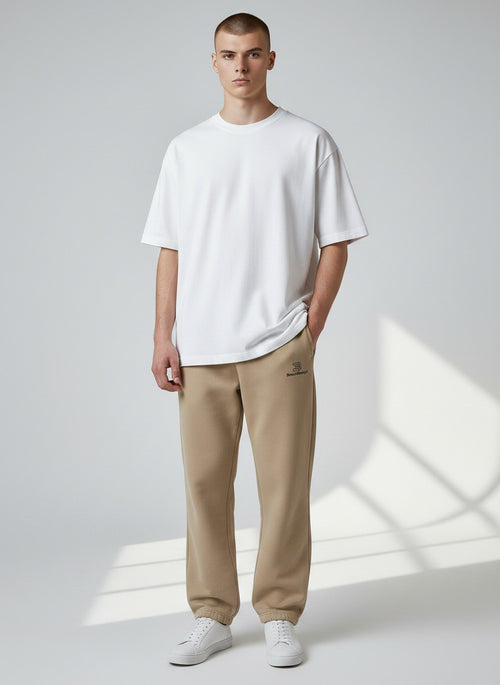
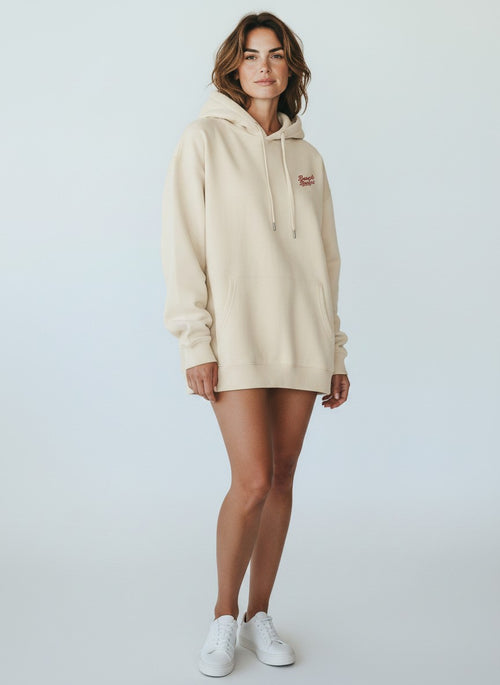
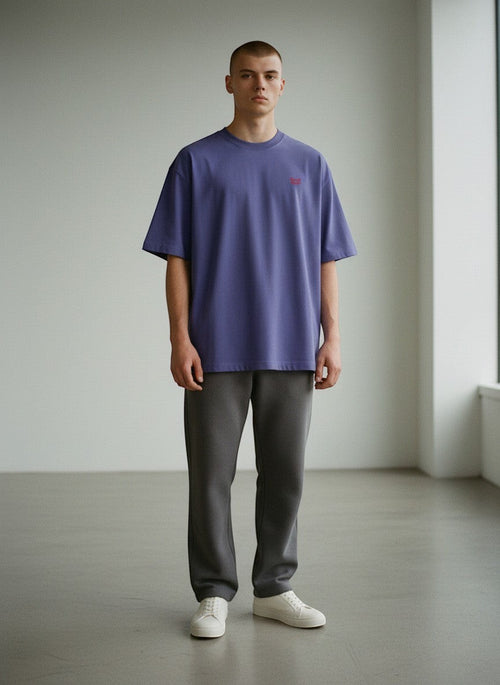
Those who want to go through the mentioned audit steps—from certificate numbers to social audits—on their own invest time that not every brand can afford. BeachBodyz has already traveled this path: organic cotton and recycled polyester, fairly produced in the EU, without customers having to organize factory visits themselves. The assortment ranges from hoodies and sweatshirts to sweatpants and oversized shirts, all with high standards for material and origin. If you want to compare directly, you will find concrete examples of finished, fairly produced clothing in the hoodie category and among the oversized shirts.
Sources
For those who want to dive deeper: Enterprise Europe Network for manufacturer offers, Invest Lithuania for regional data, Statista for market figures. An easy introduction to sustainability is also provided by this explanatory article.
- A Lithuanian textile company is offering jersey fabrics and ready-to-wear garments manufacturing under a commercial agreement | Enterprise Europe Network
- Alytus Region Overview | Invest Lithuania
- Production value of the wearing apparel manufacturing industry of Lithuania 2021-2023 | Statista
FAQ
Where is clothing usually produced in Europe?
Clothing is produced in Europe in countries including Lithuania, Portugal, Poland, and Romania, often in vertically integrated companies with in-house fabric production. Lithuania is particularly well-known for knitwear and home textiles, as regional overviews from Invest Lithuania show.
How does the production of clothing work in a Lithuanian factory?
The process ranges from yarn selection to knitting or weaving, finishing, cutting, and sewing. Many Lithuanian manufacturers cover this entire chain themselves, as described in an offer on the Enterprise Europe Network.
Which certificates indicate fair and sustainable production in Lithuania?
GOTS stands for organic fibers, Oeko-Tex Standard 100 for non-toxic end products, and RWS for animal-welfare-friendly wool. Certificate numbers can be verified with the issuing body, an important step before any order.
What does it cost to work with a Lithuanian producer?
The costs depend on the minimum order quantity, material choice, and additional services such as embroidery or special dyeing; there are no fixed flat rates on the market. Minimum quantities at modern companies are often around 1,000 pieces per color and model, as shown in offers on the Enterprise Europe Network.