Water-based printing means: softer, often more environmentally friendly prints on textiles. However, their durability depends on the process, pretreatment, and correct curing. Screen printing with water-based pigment pastes achieves very high wash fastness of up to 90 degrees Celsius when cured professionally. DTG prints are generally less durable. For manufacturers of sustainable collections, water-based printing is therefore usually the right choice, provided the process parameters are correct.
In short:
- Water-based prints on textiles are environmentally friendly, but only extremely durable with the correct curing and pretreatment.
- Screen printing with water-based pigment pastes offers the highest wash fastness and withstands 90 degrees Celsius.
- DTG prints are less durable and only achieve 30 to 50 wash cycles, but are well suited for individual pieces and small series.
- For durable prints on dark fabrics, an underbase is necessary for DTG, while DTF delivers bold colors without an underbase.
- Sustainability is significantly better with digital pigment printing, as chemical and resource consumption is considerably reduced.
Table of Contents
- What water-based printing methods are available for clothing?
- How do the methods compare in terms of durability and appearance?
- Curing, pretreatment, and typical production problems
- Which fabric is suitable for which design?
- How sustainable are water-based printing systems really?
- Care instructions: How to preserve the print for a long time
- How BeachBodyz uses water-based printing in practice
- Sustainable streetwear with custom printing from BeachBodyz
- Sources
- FAQ
What water-based printing methods are available for clothing?
Four methods dominate the market for water-based textile printing. Each has its own strengths, depending on the print run and design.
- DTG (Direct-to-Garment): An inkjet printer applies water-based ink directly to the fabric, suitable for individual pieces and small series with many colors.
- DTF (Direct-to-Film): The design is first printed on transfer film and then transferred to the fabric using heat. Practical for individual, small-scale orders, as described in technical texts on printing technology.
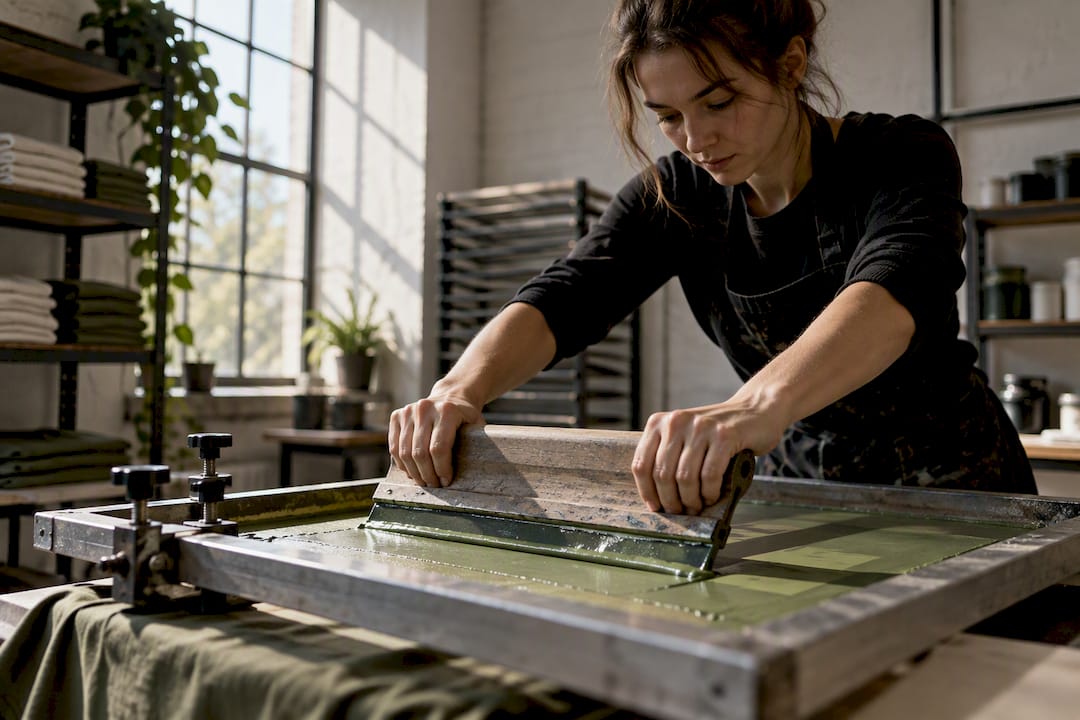
- Screen printing with water-based pigment pastes: The ink is pressed through a fine mesh screen onto the fabric, classic for medium and large print runs.
- Digital pigment printing in roll-to-roll process: Textile rolls pass continuously through the printing machine, which is suitable for large series.
The production steps are broadly similar: pretreatment of the fabric, application of the print, then curing through heat or crosslinkers. Those who only want to print a single shirt usually opt for DTG or DTF. Those who need hundreds of identical designs find screen printing or digital printing more cost-effective.
How do the methods compare in terms of durability and appearance?
The choice of method directly determines the lifespan and appearance of the print. According to expert sources, DTG prints typically last 30 to 50 washes before color loss becomes visible. Professionally cured screen printing withstands significantly more wash cycles and tolerates temperatures up to 90 degrees Celsius.
Professionally cured screen printing systems achieve wash fastness of up to 90 degrees Celsius. This makes them a robust choice for workwear and products that are washed frequently.
- On dark textiles, DTG almost always needs a white underlayer (underbase), otherwise the colors look pale.
- DTF transfers deliver strong opacity without an underbase, but feel thicker on the skin.
- Screen printing offers a soft feel with the right paste choice, barely noticeable from the fabric.
- Over the years, all methods show some wear through abrasion and UV light, while screen printing usually ages most evenly.
Curing, pretreatment, and typical production problems
Curing determines whether a water-based print lasts weeks or years. Those who save here will pay later with complaints.
- Choose the temperature: Most water-based colors need a heat curing at 130 to 160 degrees Celsius for around three minutes.
- Check the alternative: Cold curing agents (crosslinkers) reduce the temperature requirement, but require pot life and a resting time of the material of several days.
- Plan pretreatment: DTG needs a pretreatment on dark fabrics, while DTF does not, which saves production time, according to technical sources on printing technology.
- Avoid screen clogging: Water-based colors dry on screens faster than plastisol. Retarders and a suitable screen mesh prevent this.
- Perform a test wash: Test several wash cycles at the target temperature before series production, document color loss and cracking.
Visible pretreatment edges on DTG often only disappear after the first wash, a note that belongs in the care instructions.
Pro tip: Fine line designs need a finer screen mesh and more retarder, otherwise the paste sets too quickly.

Which fabric is suitable for which design?
Cotton absorbs water-based color most evenly because the fibers bind the pigments well. Polyester and blended fabrics often require adapted pastes, as synthetic fibers absorb color worse. Flannel and other hairy fabrics make fine lines difficult, here large-area designs work better.
- Fine lines and details work best on smooth cotton with a high thread count.
- Large-area color fields and multicolor designs also tolerate blended fabrics well.
- On dark fabrics, an underbase secures bold, opaque colors.
- A prewash of the raw fabric removes finishing agents that would otherwise interfere with color adhesion.
How sustainable are water-based printing systems really?
Water-based systems do without solvents and thus reduce the environmental impact compared to plastisol colors. However, they are still not completely free of environmental costs: binders, pretreatment, and the energy requirement of curing flow into the overall balance.
Digital pigment printing in roll-to-roll process saves around 75 to 80 percent of chemical consumption compared to reactive printing, a clear difference for the life cycle assessment of a collection.
- Pigment inks in combination with optimized goods preparation deliver high color fastness with lower resource use.
- GOTS evaluates the entire supply chain and is thus a more reliable sustainability indicator than the mere color type, as technical sources on printing technology emphasize.
- OEKO-TEX, on the other hand, specifically tests for harmful substances in the finished product.
Those who want to know how the GOTS standard can be specifically tested will find a detailed explanation in the blog.
Care instructions: How to preserve the print for a long time
Care also determines the lifespan of a water-based print, often more than the printing process itself.
- Wash printed clothing inside out, at maximum 30 to 40 degrees Celsius in the delicate cycle.
- Avoid bleach and aggressive full-strength detergents, a mild delicate detergent protects the color layer.
- Dry in the air, if possible. If a dryer is necessary, choose the lowest setting.
- Iron exclusively inside out, never directly over the design.
- Wash new prints once before the first wear, that removes residues of the pretreatment.
Further care tips, for example for embroidered details, can be found in our post on embroidery care.
How BeachBodyz uses water-based printing in practice
BeachBodyz combines organic cotton with printing processes that are tailored to these fibers. The curing parameters are based on fabric weight and design, not on a rigid standard value. For the final care, the same rule applies internally as for customers: prefer air drying, avoid heat. As a manufacturer, BeachBodyz understands these processes from its own production experience, a perspective that goes beyond pure theory.
— Ahmed
Sustainable streetwear with custom printing from BeachBodyz
Those who are looking for sustainable clothing with a personal design will find a direct source at BeachBodyz instead of many intermediate steps. The collection is produced fairly in the EU and uses GOTS-certified fabrics, in addition, the brand offers personalizations such as embroidery.
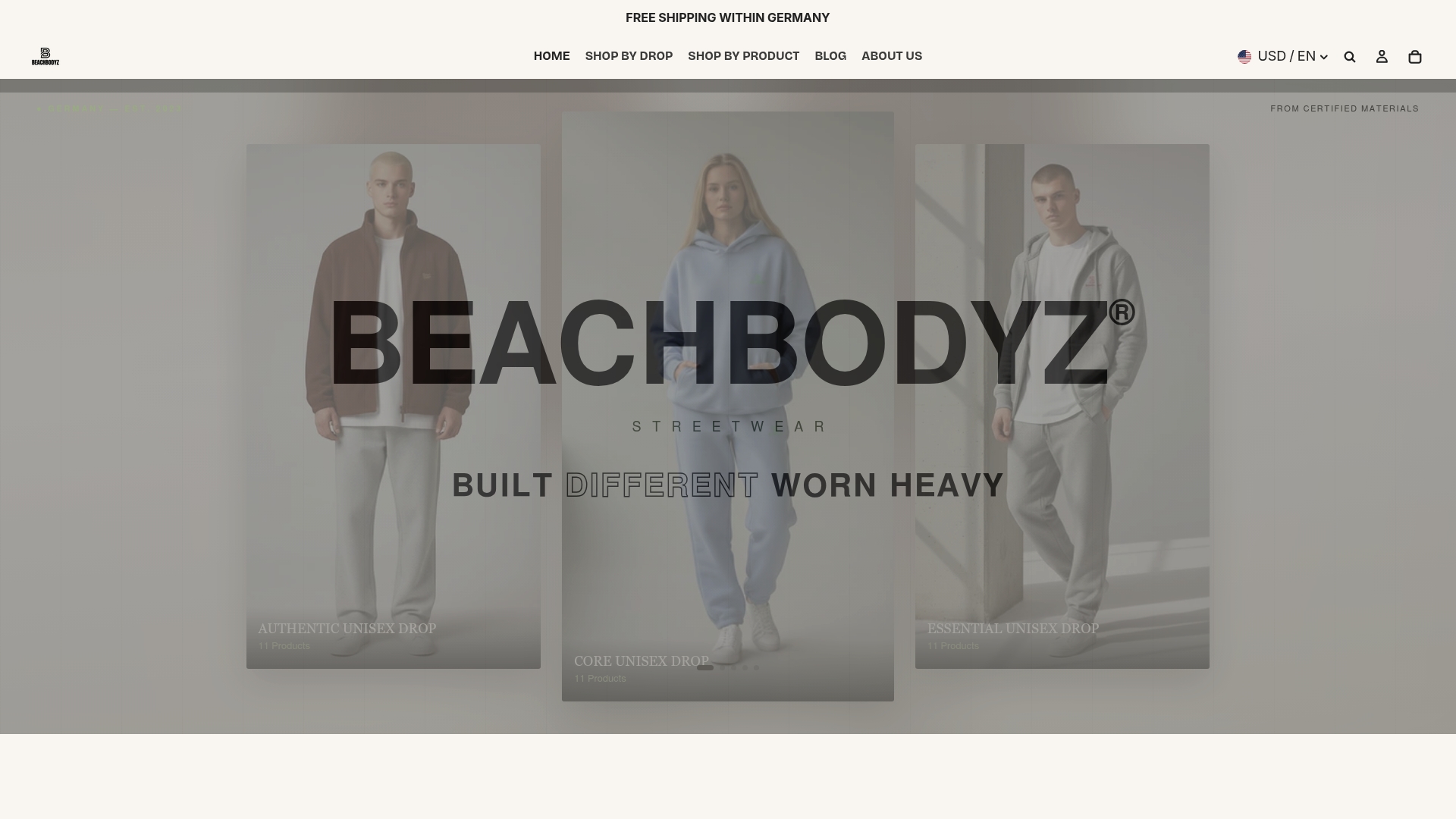
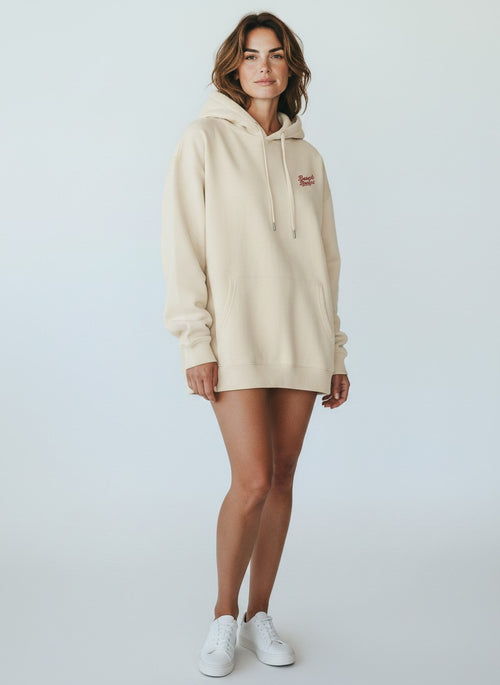
- Hoodies: Oversized cuts, suitable for individual customization, from 66 US dollars.
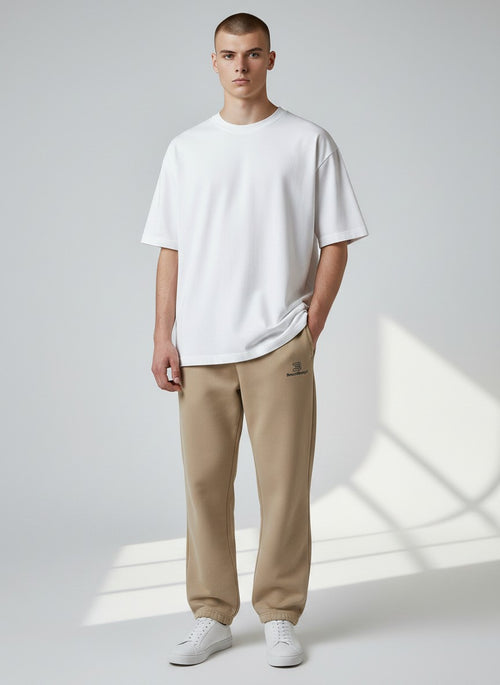
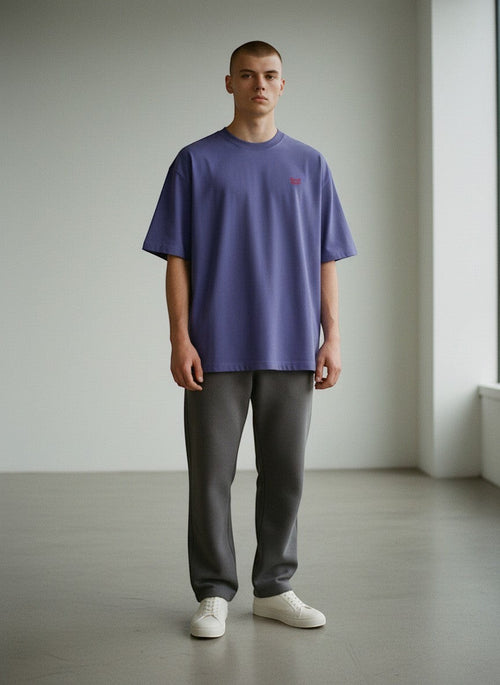
- Oversized T-Shirts: Light base for designs and color fields, from 45 US dollars.
- Sweatshirts: Robust choice for frequently worn collection pieces, 71 US dollars.
Those who want to understand the difference between embroidery and printing more closely before the decision is made, will find a comparison of both methods. The current selection can be viewed directly in the shop.
Sources
Technical specifications on curing, wash fastness, and life cycle assessment come from City Siebdruck, the DITF Research Institute, the DBU as well as a comparison of DTG and DTF.
- Textile printing - City Siebdruck
- High color fastness when printing with pigment inks - DITF
- Ecological roll-to-roll digital printing with pigment inks on textiles - DBU
- Textile printing: DTG, screen printing, transfer printing — Lazi Academy
- AquaTex C | Pröll GmbH
FAQ
How can I do transfer printing on textiles myself?
For DTF transfers, the design is printed on a special film and then transferred to the fabric with a heat press at around 130 to 160 degrees Celsius. Without professional equipment, the result can hardly be compared with industrial processes, as the print, temperature, and time must be exact.
Which textile print lasts the longest?
Professionally cured screen printing with water-based pigment pastes is considered particularly durable and achieves wash fastness of up to 90 degrees Celsius. DTG prints, on the other hand, usually only last 30 to 50 washes before color loss becomes visible.
What are water-based colors?
Water-based printing colors use water instead of solvents as a carrier medium for the pigments. They result in a softer feel on the fabric and are usually cured by heat.
What is better, DTF or screen printing?
That depends on the print run: DTF is suitable for individual pieces and small-scale, individual orders, while screen printing is cheaper and more durable for medium and large quantities. A detailed comparison of both methods helps with the classification by print run and design.