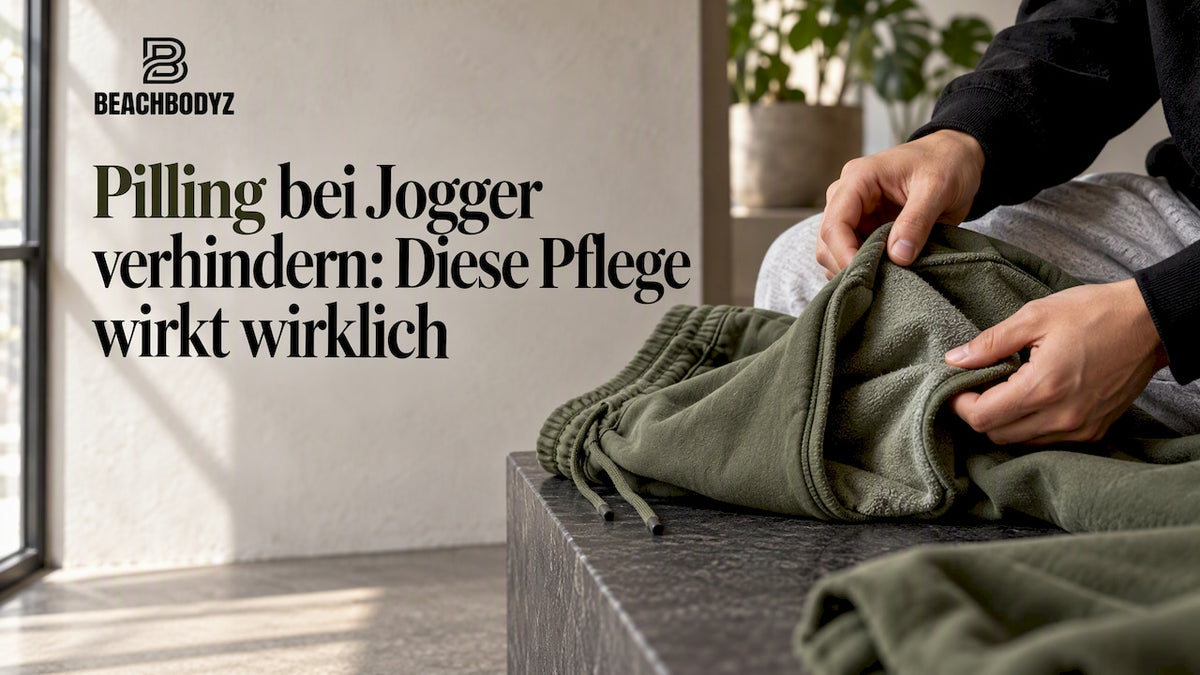
Wash inside out, use a gentle cycle at a low temperature, liquid detergent, a laundry bag, no fabric softener, and air dry: This combination noticeably reduces pilling on jogging bottoms. Pilling is caused by friction, not poor quality. Following these steps will significantly extend the life of your joggers without complicating your laundry day.
Key Findings
Proper washing and care practices, as well as the right choice of materials, can significantly reduce pilling on jogging bottoms, extending the life of the clothing.
| Topic | Details |
|---|---|
| Choose durable materials | Long-staple cotton and densely woven fabrics withstand friction better and reduce the tendency to pill. |
| Use gentle washing methods | Turn joggers inside out when washing, wash at a low temperature, and air dry to protect the fibres. |
| Minimise everyday friction | Choose backpack straps with soft padding and avoid friction against table edges and strong ironing. |
| Effective pilling removal | Light pilling can be removed with a lint roller or adhesive tape, while an electric pilling shaver helps with heavier pilling. |
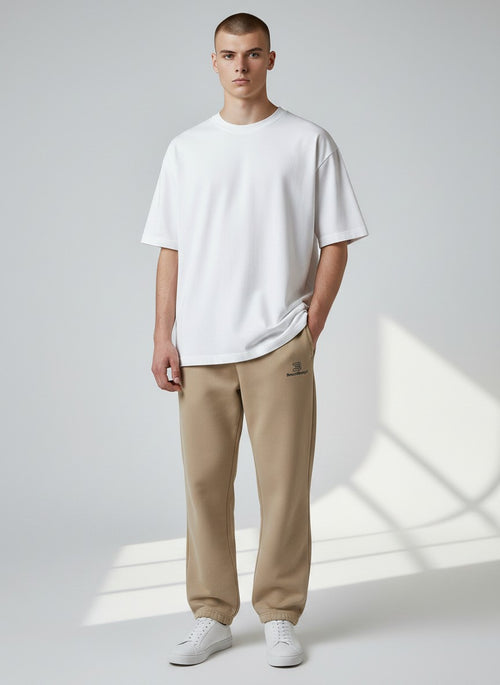
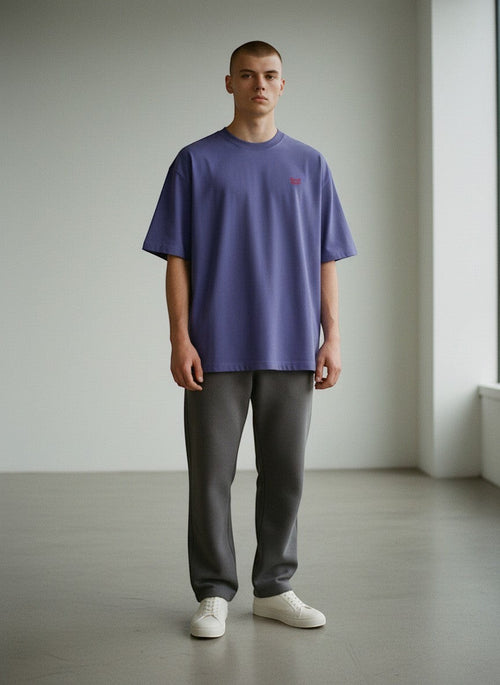
| BeachBodyz joggers | Made from organic cotton and recycled polyester, durable and resistant to pilling. |
Table of Contents
- How does pilling occur on jogging bottoms in the first place?
- Which materials pill more easily: polyester, cotton, or blended fabrics?
- Which washing and drying routine best prevents pilling?
- How can you reduce friction in everyday life before washing even begins?
- How can you remove existing pilling without damaging the fabric?
- What should you look for when buying joggers resistant to pilling?
- Care recommendations for BeachBodyz joggers
- Control pilling instead of demonising it
- BeachBodyz joggers: resistant to pilling and sustainably produced
- Sources
- FAQ
How does pilling occur on jogging bottoms in the first place?
Pilling is caused by mechanical friction. Fibres break away from the fabric, tangle into small knots, and remain attached to the surface. On joggers, this mainly affects areas of repeated contact: the seat, the inner hem, pockets, and areas that rub against backpack straps. According to Bergzeit Magazin, pilling occurs more frequently where clothing constantly rubs against backpacks or bags.
This friction has long been standardised and measurable in the textile industry. Tests such as ISO 12945-1 assess the tendency to pill under controlled conditions. This shows that pilling is closely linked to yarn structure and material construction, not just the duration of wear.
Which materials pill more easily: polyester, cotton, or blended fabrics?
Polyester tends to pill more than pure natural fibres because synthetic fibres are more tear-resistant and therefore do not break away but instead tangle on the surface. Short-staple cotton also shows an increased tendency to pill. Long-staple cotton, on the other hand, with longer and more tightly twisted individual fibres, pills significantly less.
Fleece is among the most susceptible materials of all, as its roughened surface provides a particularly large area for friction. Dense knits and anti-pilling finishes reduce the risk, regardless of the base material. Those who look for these features when buying will prevent pilling before the first wash.

Which washing and drying routine best prevents pilling?
The washing machine itself plays a larger role than many people assume. Studies using triboluminescent textile monitors show that drum movement and drum geometry affect the mechanical stress on the laundry and contribute differently to pilling depending on the machine type. A well-thought-out washing programme compensates for this to a large extent.
- Turn joggers inside out when washing.
- Choose a gentle cycle at a moderate temperature, never too hot.
- Use liquid detergent instead of powder and dose carefully.
- Close zippers and Velcro fasteners so they do not rub against other parts.
- Place delicate joggers in a laundry bag for extra protection.
- Keep the spin speed as low as possible.
- Whenever possible, air dry instead of using a tumble dryer.
Pro tip: Dry heavy knitwear flat to preserve its shape and prevent the fibres from stretching further.
The air-drying process noticeably protects fibres because they are not exposed to heat or the mechanical stress of the dryer. This principle also applies to more delicate fabrics such as wool or merino, as shown by the care instructions for beanies.

How can you reduce friction in everyday life before washing even begins?
Pilling does not only occur in the washing machine, but mainly through wear. Some simple habits make a real difference here.
- Choose backpack straps with soft padding to avoid prolonged friction on the back and hips.
- Avoid direct contact with table edges or counters when sitting or leaning for extended periods.
- Always close zippers and Velcro fasteners on jackets and bags.
- Fold heavy knitwear instead of hanging it, as hangers concentrate the weight on a few points.
These rules can easily be incorporated into everyday life, whether the joggers are worn for sports or as part of an streetwear look.
How can you remove existing pilling without damaging the fabric?
Once pilling has occurred, it can be removed with the right technique without further weakening the fabric.
- For light fuzz, a lint roller or a piece of adhesive tape is often sufficient.
- For heavier pilling, use an electric pilling shaver on a flat surface.
- Work on small areas individually instead of going over the entire surface.
- Work slowly and with light pressure, never in a hurry.
Pro tip: Test new devices on an inconspicuous area, such as the inner hem, before working on visible areas.
Coarse brushes, intense heat, or harsh chemicals are not suitable for pilling removal. They weaken the fibres further and worsen the problem in the long term instead of solving it.
What should you look for when buying joggers resistant to pilling?
Some features already reveal a lot about the future risk of pilling when browsing the shelves. Long-staple fibres, densely woven or knitted surfaces, and tightly twisted yarns withstand friction significantly better than loosely constructed fabrics. An anti-pilling finish, if noted on the label, is an additional plus.
Very fluffy plush surfaces or extremely loose knits may look soft, but they are exceptionally prone to pilling. A comparison of common fabric types helps to better assess the differences.
Care recommendations for BeachBodyz joggers
The same basic rule applies to joggers made from organic cotton or recycled polyester: use a gentle cycle at 30 degrees, turn them inside out, use liquid detergent, and no fabric softener. The material specifications and specific care instructions are on every product page in the shop and should be briefly checked before the first wash. For embroidered or printed models, use a laundry bag in addition, which protects both the print and the fabric surface. Those who follow this routine will keep their joggers in good condition for years.
Control pilling instead of demonising it
Pilling is not a defect, but usually a normal consequence of use and friction. Experts emphasise that pilling is not necessarily a reason for a complaint, as it does not necessarily indicate poor quality, but rather wearing habits. Those who want to consume sustainably do not throw away clothing at the first sign of fuzz, but continue to care for it specifically. This protects not only the wallet, but also resources.
— Ahmed
BeachBodyz joggers: resistant to pilling and sustainably produced
Those who want to minimise pilling from the outset start with the choice of material. The joggers from BeachBodyz are made from organic cotton and recycled polyester, crafted in dense, durable cuts that withstand friction better than thin fast-fashion items.

- Fairly produced in the EU.
- Oversize cuts that retain their shape even after many washes.
- Material specifications and care instructions can be viewed directly on every product page.
Those who are also looking for a suitable top will find dense, pilling-resistant quality in the sweatshirts as well. A look at the joggers collection shows which model suits your own style.
Sources
These sources provide the basis for the care instructions in this article:
Bergzeit Magazin on pilling Textilpflege Bergfreunde Blog on outdoor clothing DIN EN ISO 12945-1 Research report on washing mechanics Information on caring for printed textiles
- What is pilling? Formation, prevention & removal — Bergzeit Magazin
- Pilling on outdoor clothing — Bergfreunde Blog
- DIN EN ISO 12945-1 – Textiles: Determination of the tendency to pill (DINmedia)
- Triboluminescent textile monitors for quantifying washing mechanics (wfk/FRT report)
FAQ
What really helps against pilling on jogging bottoms?
The most effective method is a combination of a gentle cycle at a low temperature, liquid detergent, a laundry bag, and air drying. Washing inside out additionally reduces friction on the visible outside, as Bergzeit describes.
Is pilling a reason for a complaint?
Pilling is usually not considered a reason for a complaint, as it often occurs through everyday friction and does not indicate a material defect. Experts see pilling as a normal consequence of use that can be curtailed through targeted care.
How can I avoid pilling from the outset?
When buying, choose textiles with long-staple fibres, dense knits, and preferably an anti-pilling finish. In addition, a gentle washing routine at a low temperature and without fabric softener helps, as fabric softener can increase the tendency to pill.
What can I do if my joggers are already pilling?
Light pilling can be removed with a lint roller or adhesive tape, while heavier pilling can be removed with an electric pilling shaver on a flat surface. Work slowly and in small areas to avoid putting additional stress on the fabric.