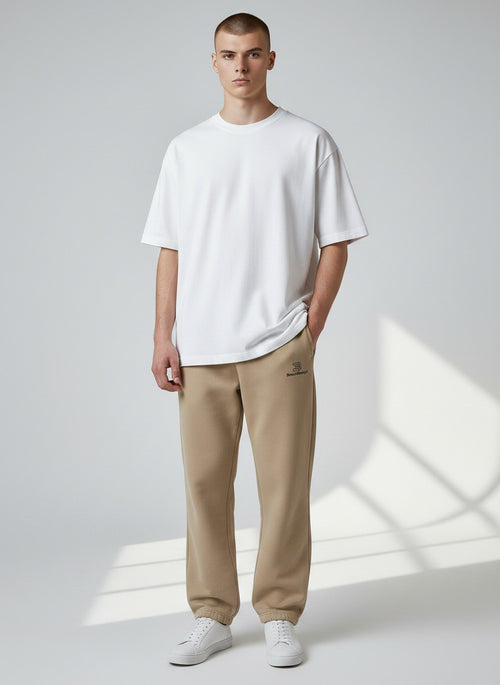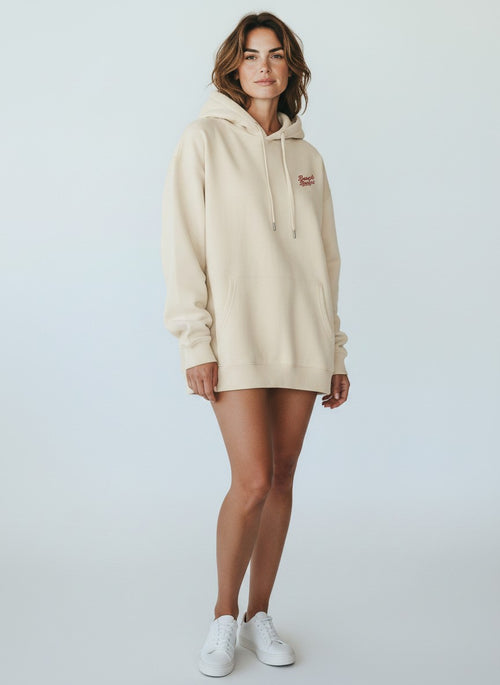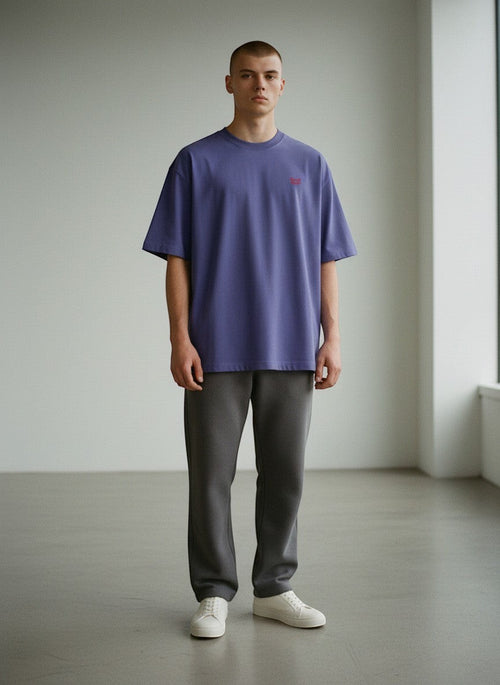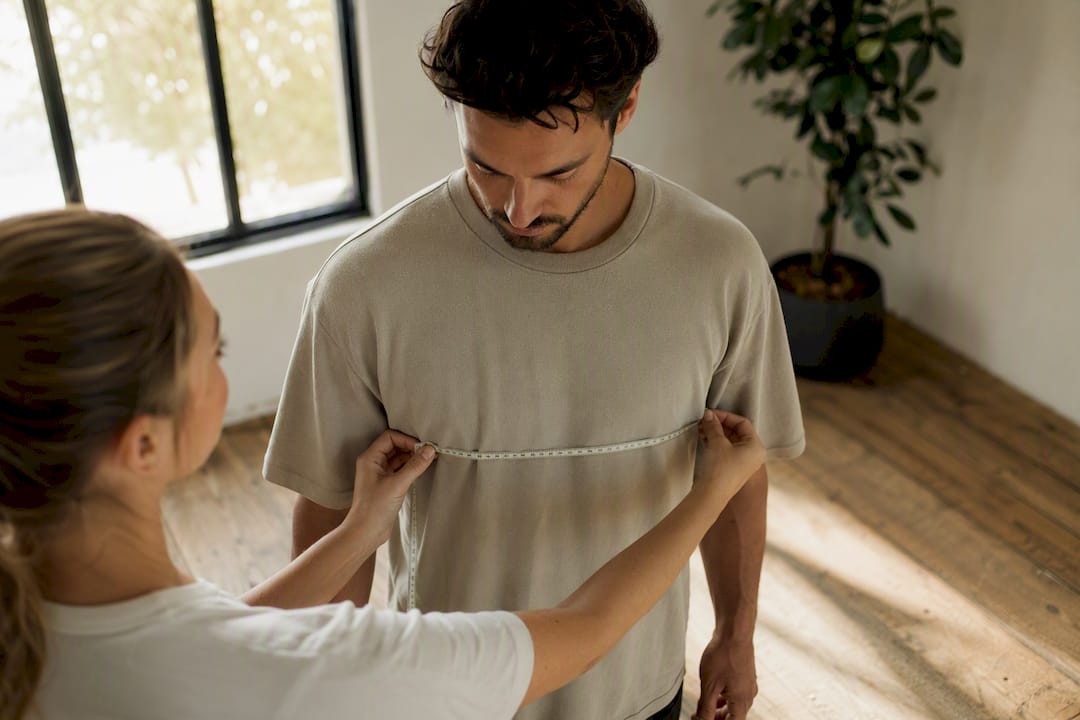
With genuine oversize cuts, your usual clothing size is generally sufficient. Going one size up is only worthwhile if you want an extra baggy fit, are planning to wear a T-shirt for layering under a hoodie, or if a cotton fabric without pre-treatment is likely to shrink significantly. The reason is simple: "oversize" is not a product of chance, but a constructed fit with dropped shoulders and calculated extra room. Size M therefore remains M; only the shaping changes.
Before you buy, it is worth doing a quick check:
- Measure yourself or a favorite garment (the next section shows you how).
- Compare your measurements with the respective product's size chart.
- Only then decide whether going one size up is truly necessary.
Key Takeaways
The correct oversize size is determined by comparing your own body measurements with the product-specific size chart, not by automatically rounding up your usual clothing size.
| Topic | Details |
|---|---|
| Basic rule | For genuine oversize cuts, your normal size is enough; only go +1 for layering, a baggy look, or shrinkage risk. |
| Measurements count | Measure chest width, shoulder seam, back length, and sleeve length yourself rather than just comparing size letters. | Understanding extra room | Oversize cuts are often 15 to 25% larger than the regular-fit chest width of the same size. |
| Consider fabric weight | From about 250 g/m² for shirts and around 400 g/m² for hoodies, the fabric holds its silhouette better. |
| Beachbodyz as a guide | Beachbodyz provides concrete size charts and oversize hoodies with around 400 g/m² organic cotton as a reference point. |
Table of Contents
- Choosing your oversize size: When your normal size is enough and when +1 makes sense
- How to measure yourself correctly for oversize shirts and hoodies
- Reading size charts: Typical dimensions for oversize items
- Which design features and materials define "oversize"?
- How to combine oversize pieces so they look modern
- What are the most common mistakes when buying oversize?
- BeachBodyz note: Our size charts and support options
- Editorial recommendation: My approach to buying oversize
- BeachBodyz oversize collection: Right size, tested material
- Sources
- FAQ
Choosing your oversize size: When your normal size is enough and when +1 makes sense
Oversize and regular fit differ not in size designation, but in the cut itself. A regular-fit shirt in M fits close to the body, whereas an oversize shirt in M is intentionally wider because the cut allows for more fabric from the start. If you don't know this, you might buy a size up out of habit and end up wearing a tent instead of a statement piece.
Three situations where going up a size is still worth it:
- Layering: If you wear the shirt under a hoodie or jacket, the fabric needs a little room to breathe.
- Shrinkage risk: With unwashed, 100% cotton without pre-treatment, the fabric can shrink noticeably after the first wash.
- Extra baggy desired: If you want the maximum streetwear look, choose +1—not out of uncertainty, but as a style choice.
With unisex cuts, the following applies: The sizing is based on body measurements, not gender labels. A woman with a chest circumference of 92 cm and a man with the same measurement will end up with the same size, regardless of whether the product is listed as "men's" or "women's."
Pro Tip: If you are buying from a brand for the first time, it is better to order your measured size rather than automatically rounding up. Extra room is already part of the basic design of oversize cuts, as different fit categories show.
How to measure yourself correctly for oversize shirts and hoodies?
A measuring tape beats any guess. Four measurements determine whether an oversize piece really fits:
- Chest width: Place the measuring tape horizontally around the upper body under the armpits; keep it loose, not constricting.
- Shoulder seam: Measure from the outer shoulder edge to the opposite shoulder edge along the neckline.
- Back length: Measure from the highest point of the shoulder to the desired hem end, along the spine.
- Sleeve length: From the shoulder seam to the wrist or the desired sleeve length.
It is faster to use a favorite piece: lay a shirt that already fits in an oversize style flat on a table and measure the chest width and length directly on the fabric, then double the chest width for the full circumference. Guides to hoodie sizing recommend exactly this comparison because it is more reliable than just guessing from size charts.
A common mistake when measuring yourself: the tape is pulled too tight or slips at an angle across the body. Measure in light, close-fitting clothing, keep the tape parallel to the floor, and repeat the measurement once to double-check. Even a deviation of 3 to 4 cm in chest width can determine whether a shirt falls casually or looks misshapen.
Reading size charts: Typical dimensions for oversize items
Size charts for oversize shirts and hoodies usually list two to three columns: the back length (often marked "A"), the chest width (often "B"), and for some brands, an additional shoulder measurement. The chest width is important because it shows most directly how much extra room the cut provides compared to a regular fit.
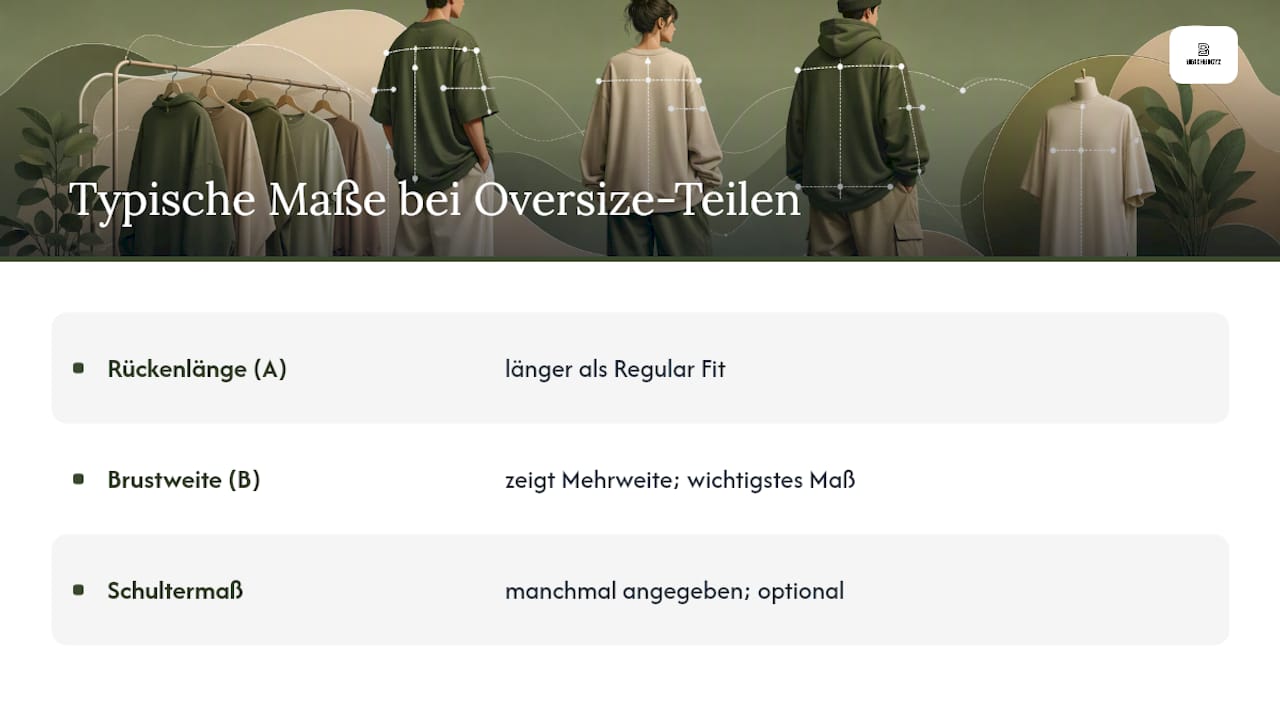
As a guide, oversize cuts in medium sizes typically offer significantly wider chest widths and longer lengths compared to regular fit, although the exact amount of extra room varies greatly depending on the brand and is not uniformly defined. Therefore, comparing your own measurements with the size chart is more binding than the size label alone.
Which design features and materials define "oversize"?
Three design features distinguish oversize from regular fit:
- Dropped shoulders: The shoulder seam does not sit on the shoulder, but 3 to 8 cm lower on the upper arm.
- Extra width in the torso: The chest circumference is typically 15 to 25% larger than the regular-fit value of the same size.
- Adapted sleeve length: To ensure the sleeve doesn't look too long despite the lower shoulder, many designs slightly shorten the sleeve length compared to regular fit.
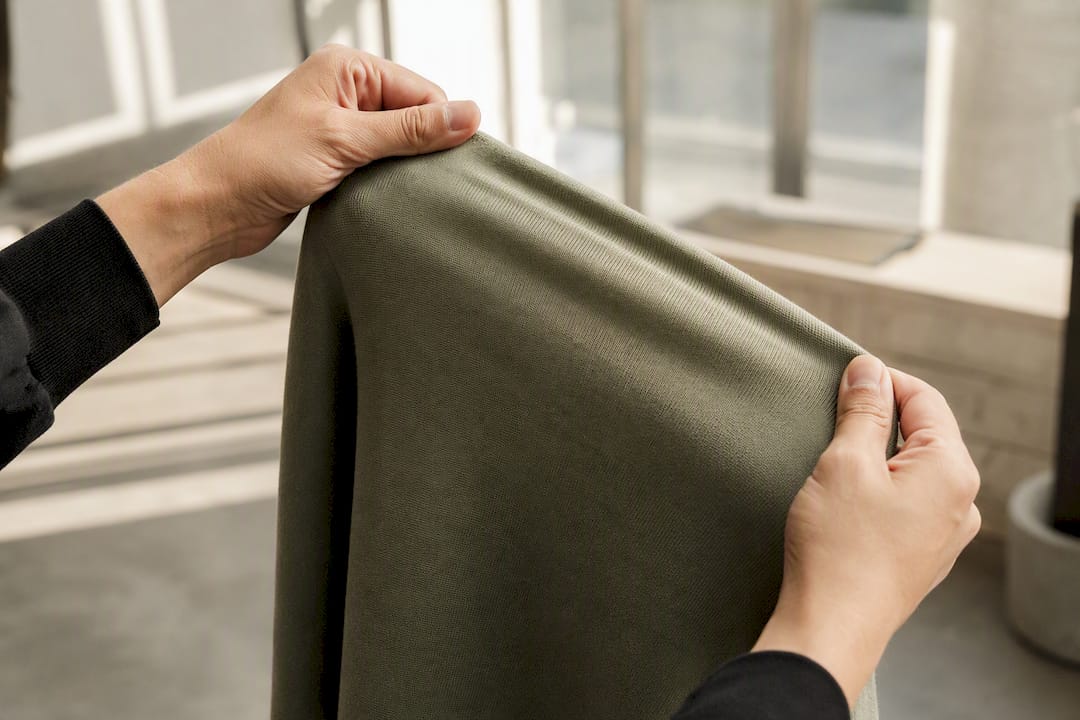
The fabric weight also determines whether this design works visually. For structured oversize shirts, fabrics from about 250 g/m² are recommended; lighter cotton below this value often falls limp and looks less like a deliberate design choice and more like oversized clothing. For hoodies, the guideline is higher, with many dense qualities around 400 g/m². Heavy fabric holds its shape even after multiple washes, whereas thin materials lose their shape and silhouette more quickly.
Pro Tip: Grab the fabric of the shirt before buying and pull it slightly. If the fabric hardly springs back, it will hold the oversize shape longer than a thin, elastic material.
How to combine oversize pieces so they look modern
Oversize looks best when part of the outfit provides contrast. Fashion journalism describes this balance as a deliberate choice of proportions, not a coincidence. A wide top meets narrower pants, or a wide hoodie meets slimmer-cut sweatpants or slim-leg jeans.
Three simple tactics for more structure in the look:
- Tuck the hem into the pants in the front instead of leaving the shirt completely open.
- Roll up the sleeves once; this breaks up the visual plane and makes the garment look less limp.
- A slim belt or a fanny pack creates a visual waist where the cut otherwise wouldn't have one.
Shorter individuals often fare better with a lighter fabric weight and a slightly shorter length so that the proportions do not completely overwhelm them. Conversely, taller individuals can wear more volume without the look losing its balance.
What are the most common mistakes when buying oversize?
The most common mistake is automatically going up a size out of habit without checking the actual extra room provided by the cut. The second is completely ignoring length, even though an oversize shirt that is too long can quickly look like a nightgown instead of a streetwear statement. The third is ignoring the material, even though 100% cotton without appropriate pre-treatment can shrink several centimeters after the first wash.
A quick checklist before you buy:
- Compare your own measurements with the product chart, don't just compare the size designation.
- Check the material specifications and, for pure cotton without pre-treatment, lean toward the next size up.
- Read the return policy before buying, especially for first-time orders without trying them on.
- Place a photo of a favorite piece next to the measurement specifications; this makes deviations immediately visible.
BeachBodyz note: Our size charts and support options
Beachbodyz provides a detailed size chart for every product with concrete measurements for hoodies and T-shirts, so you can compare exactly before you buy instead of guessing. Beachbodyz's oversize hoodies are made from GOTS-certified organic cotton and are in the fabric weight range of around 400 g/m²—the exact range that maintains the oversize silhouette even after many washes.
In short, what this means for you:
- Check the size chart before every purchase; don't order based on feeling.
- If you are unsure about your size, use the measured values rather than your usual clothing size.
- Returns and exchanges are possible if the chosen size does not fit.
Editorial recommendation: My approach to buying oversize
My process is always the same: measure first, check the table, then check the material, and only choose one size larger if I'm planning on layering or if there's a genuine shrinkage risk. For a hoodie, I first look at the fabric weight; under 350 g/m², oversize feels too soft for me. Only then do I compare the chest width with my favorite piece and order, all while keeping an eye on the return window.
BeachBodyz oversize collection: Right size, tested material
Beachbodyz is the alternative to the gamble of ordering oversize without trying it on: Every collection provides concrete measurements instead of vague sizing, and every piece openly states its fabric weight. The oversize hoodies with around 400 g/m² and the oversized T-shirts made of GOTS-certified organic cotton meet exactly the criteria that matter in this guide, namely reliable size charts, a fabric weight that maintains volume, and clear return policies if the size doesn't fit.
If you are looking for an oversize hoodie with 400 g/m² organic cotton after measuring, or want to browse the oversized T-shirts, you can find direct access to all current sizes and collections on the Beachbodyz homepage. Measure yourself, compare with the table, and order directly from the shop.
Sources
- Oversize Fashion: Fit and Style (ZEIT Magazin)
- Fit – Wikipedia
- Oversize — Definition & Meaning (Jefferys Glossary)
- Oversize Fashion and Oversize Look (Fashion-Insider)
FAQ
Which size should I choose for oversize?
Generally your normal clothing size, because the cut itself already includes the extra room. Going one size up is only worthwhile for layering, shrinkage risk, or if you want an extra-baggy look.
Can anyone wear oversize?
Yes, oversize works for many body types as long as the proportions are consciously balanced, for example, by wearing a narrower bottom or partially tucking in the hem.
How do I wear oversize correctly?
Combine the wide top with narrower pants or use a belt to create a visual waist so the look doesn't seem shapeless. Rolling up the sleeves also breaks up the surface area.
What does "oversize" fit mean?
How do I measure myself for an oversize hoodie?
Measure chest width under the armpits, shoulder seam from edge to edge, and desired back length, and compare the values with the Beachbodyz size chart.