CO2 offsetting in fashion means: emissions generated during the cultivation, production, and transport of a garment are mathematically balanced out by financing climate protection projects. This only works as a final step, never as a substitute for genuine reduction. The German Environment Agency (UBA) clearly defines the order: first avoid, then reduce, and only then offset. The average CO2 footprint in this country is about eleven tons per person per year [UBA]. Fashion accounts for a noticeable portion of this.
In everyday life, this means specifically:
- Buy fewer, but longer-lasting items instead of constantly new fast-fashion goods.
- Repair what can still be repaired before replacing something.
- Offset only the emissions you truly could not avoid, via verified climate protection projects.
Pro tip: Ask yourself before every purchase: "Do I really need this, or do I just want to soothe my conscience with an offset?" The honest answer often saves more CO2 than any certificate.
Key Insights
CO2 offsetting in fashion is only effective as a final step after avoidance and reduction, never as a substitute for long-lasting, fairly produced clothing.
| Topic | Details |
|---|---|
| Follow the hierarchy | Avoid first, then reduce, finally offset via verified projects. |
| Verify standards | Look for Gold Standard, Verra, or comparable registers with a public project ID. |
| Understand the contribution claim | A climate contribution is increasingly replacing blanket "climate-neutral" advertising, partly due to the EU's EmpCo directive. |
| Distinguish product classes | Fast fashion hardly benefits from offsetting; long-lasting basics benefit more. |
| Beachbodyz as a practical example | Relies on GOTS cotton, fair EU manufacturing, and climate-neutral shipping as a climate contribution, rather than just offsetting. |
Table of Contents
- How does CO2 offsetting in fashion work technically?
- Which project types are behind climate certificates?
- How do you recognize reputable CO2 offsetting?
- Offsetting or climate contribution: What is the difference?
- When does offsetting really make sense for clothing?
- How do you check compensation claims on product pages?
- How to calculate the footprint of a garment
- Why Beachbodyz prioritizes avoidance first
- Sustainable streetwear instead of mere offsetting
- Sources
- FAQ
How does CO2 offsetting in fashion work technically?
Behind every compensation claim is a multi-stage process that has little to do with the actual garment. A provider first calculates the emissions in tons of CO2 equivalent (t CO2e) incurred during production, transport, or shipping. Then, they purchase certificates from a climate protection project that saves or binds this amount elsewhere in the world.
The process runs in four steps:
- Emissions are calculated, usually with standardized emission factors for material, production, and logistics.
- A suitable climate protection project is selected, such as reforestation, biogas plants, or solar projects.
- A registry issues certificates for the saved amount and sells them to companies.
- The certificate is "retired" so it cannot be sold twice.
It is important to distinguish between the EU Emissions Trading System (EU-ETS), a regulated mandatory system for industry and the energy sector, and the voluntary offset market, where companies like fashion brands buy certificates voluntarily. In the voluntary market, there is no unified authority, but rather various private standards with varying depths of verification.
A key quality feature is the "Corresponding Adjustment": it prevents both the buyer country and the host country of a climate protection project from claiming the same emission reduction for themselves. If this mechanism is missing, there is a risk of double-counting, which dilutes the actual climate effect.
The German Environment Agency's guide therefore recommends always asking for baseline scenarios and monitoring reports before trusting a provider.
Which project types are behind climate certificates?
Not every climate protection project works with the same speed or certainty. Roughly four categories can be distinguished, and each brings its own strengths and weaknesses.
Nature-based projects like reforestation or peatland restoration bind CO2 biologically, but take decades to do so and are vulnerable to forest fires or land-use changes. Energy and efficiency projects, such as solar plants or wind farms, often provide more quickly measurable savings. Household projects like efficient cookstoves in developing countries directly reduce the fuel consumption of families. Technical CO2 removal via direct air capture or CCS plants is expensive but well-verifiable in the long term.

| Project type | Strength | Weakness |
|---|---|---|
| Nature-based (Forest, peatland) | Additional nature conservation benefit | Long binding duration, risk of reversibility |
| Energy/Efficiency | Quickly measurable savings | Additionality often hard to prove |
| Household projects | Local social co-benefits | Small individual volumes, high verification effort |
| Technical CO2 removal | Very precisely measurable | High costs, little scaling so far |
For fashion, this results in an uncomfortable truth: reforestation sounds appealing, but only takes effect after years, while a fast-fashion item often ends up in the trash after a few washes. Research also shows that some offset projects overestimate their impact, making the choice of project type a matter of trust.
How do you recognize reputable CO2 offsetting?
A certificate is only as good as the criteria behind it. Four terms determine the credibility of an offer.
- Additionality: The project would not have taken place without the certificate revenue.
- Permanence: The saved or bound amount of CO2 remains permanently removed from the atmosphere.
- Avoidance of double-counting: Only one party may claim the saving for themselves.
- Monitoring and transparency: Independent auditors regularly check whether the promised effect occurs.
Two registries have established themselves as references: Gold Standard, originally co-developed by the WWF, is considered particularly strict regarding social and ecological additional criteria. Verra is the largest registry worldwide, but has faced criticism regarding individual forest protection projects. A scientific evaluation has shown that the actual climate impact of some certified projects was significantly lower than stated. This makes the choice of registry alone no guarantee.
Before purchasing, a short checklist is worthwhile:
- Is the standard named (Gold Standard, Verra, or comparable)?
- Is there a project ID that can be looked up in the public registry?
- Are monitoring reports publicly accessible?
- Is the calculated amount of CO2 quantified in tons?
- Is there an independent third-party audit?
If one of these details is completely missing, it is usually just a marketing claim without a reliable basis.
Offsetting or climate contribution: What is the difference?
For a long time, fashion brands advertised with "climate-neutral through offsetting." This model claims an exact 1:1 balance: for every ton of emissions, one ton is saved elsewhere. More and more providers are moving away from this promise in favor of a so-called climate contribution or contribution claim. They no longer claim a product is "neutral," but communicate transparently that a certain amount of money flows into climate protection projects, without promising an exact offset balance.
The shift has solid reasons. Courts in Germany have repeatedly ruled against blanket "climate-neutral" advertising because it can mislead consumers. Additionally, the EU's EmpCo directive will further tighten such advertising claims starting in September 2026. Providers like Klimakollekte have therefore consistently switched their model to climate contributions, while myclimate and atmosfair increasingly distinguish between reduction and offset performance in their communications.
- Offsetting suggests an exact balance; a climate contribution describes support without a neutrality promise.
- The shift is also a reaction to court rulings and stricter EU requirements.
- Reputable providers now openly state how much money flows into which project.
When does offsetting really make sense for clothing?
Not every garment is equally well-suited for climate balancing. A sensible classification by product category helps with the decision, as described by atmosfair in its guide to meaningful CO2 offsetting.
- Fast-fashion items with a short lifespan: Here, offsetting tends to brake the necessary behavioral change because it buys a clear conscience instead of changing purchasing behavior.
- Long-lasting basics: An oversized hoodie made of robust organic cotton that lasts for years is a good candidate because the remaining emissions are distributed over a long period of use.
- Limited drops: Small quantities with high appreciation are suitable for supplemental offsetting, provided production and shipping are already optimized.
- Logistics emissions: Shipping can often be offset most easily and cheaply because the calculation basis is clearer than with complex textile supply chains.
What remains important: offsetting does not replace better material choices and no repair. It only complements both if avoidance and reduction have already been exhausted.
How do you check compensation claims on product pages?
Before trusting a "climate-neutral" claim, a quick fact-check is worthwhile. Ten questions are usually enough to separate the wheat from the chaff.
- Which standard is behind it (Gold Standard, Verra, or another)?
- Which type of project is being financed?
- Is there a verifiable project ID in the public registry?
- Is a Corresponding Adjustment mentioned?
- Is the additionality of the project proven?
- Over what period does the project run?
- Are current monitoring reports linked?
- Is there an independent third-party audit?
- How high is the price per ton of CO2, and does it seem realistic?
- Do links actually lead to original documents instead of just marketing texts?
A transparent product page states the tonnage, project name, registration number, and provider in plain text, not just a green seal icon. The same behind-the-scenes look is also worthwhile for climate-neutral shipping.
Pro tip: Warning signs are vague formulations like "we support climate projects worldwide" without project names, missing links to the registry, and a blanket "climate-neutral" without any numbers behind it.
How to calculate the footprint of a garment
An exact calculation is a matter for experts; a rough estimate can be done by yourself in a few steps.
- Determine the main material; cotton, polyester, or blends cause different emissions in cultivation or production.
- Estimate the transport distance from production to shipping.
- Consider the planned lifespan; the longer you wear the item, the lower the emission per day of wear.
- Use a CO2 calculator from a verified provider like atmosfair or myclimate for a rough tonnage.
- Offset only the remaining remainder via a verified project or make a climate contribution instead.
Depending on the study and cultivation method, a simple cotton T-shirt often causes a value in the low single-digit kilogram range of CO2e; the exact range depends heavily on cultivation, dyeing, and transport routes. More precise, product-specific values can be found in the calculators of the mentioned providers.
Why Beachbodyz prioritizes avoidance first
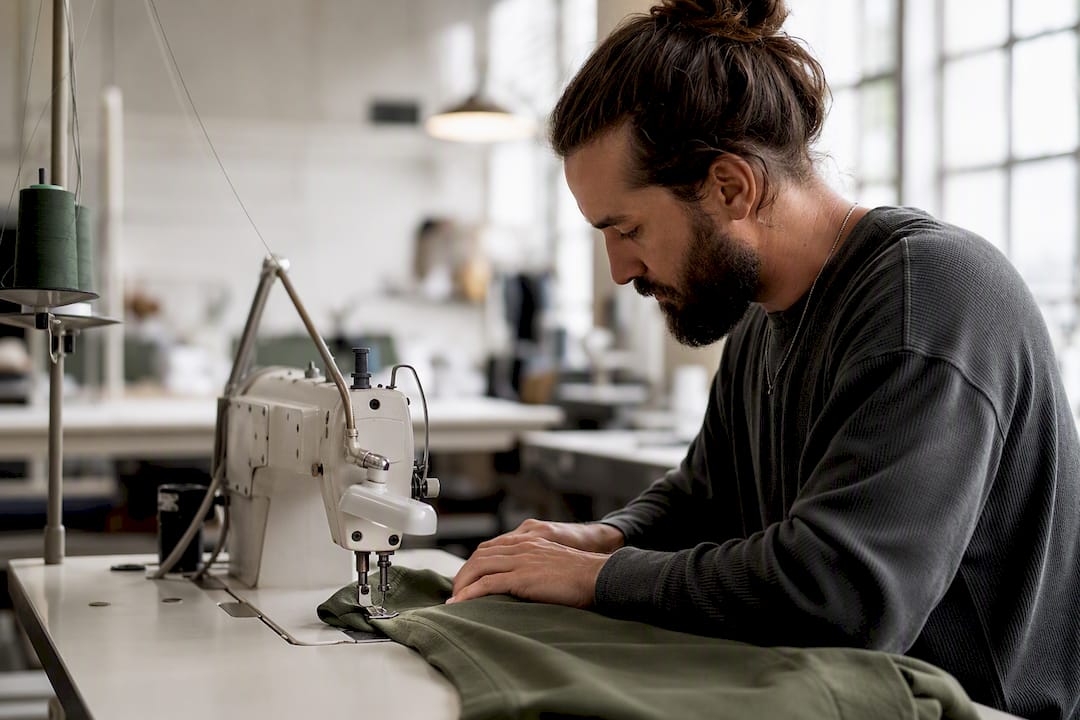
At Beachbodyz, we think about sustainability from the product perspective, not the certificate. Our collections are created from organic cotton and recycled polyester, manufactured fairly in the EU, so that emissions do not occur to the extent that one would later have to offset them. We handle shipping in a climate-neutral way, but consciously communicate this as a climate contribution rather than a blanket neutrality promise. Reduction and durability come before every certificate for us, because a hoodie that lasts five years beats every offset calculation.
Sustainable streetwear instead of mere offsetting
There are many ways to research CO2 offsetting for fashion, from calculators by individual climate protection organizations to comparison portals. Beachbodyz takes a different path: Instead of causing emissions first and then offsetting them at a high cost, the brand reduces them from the start through GOTS-certified organic cotton, recycled polyester, and fair manufacturing in the EU.
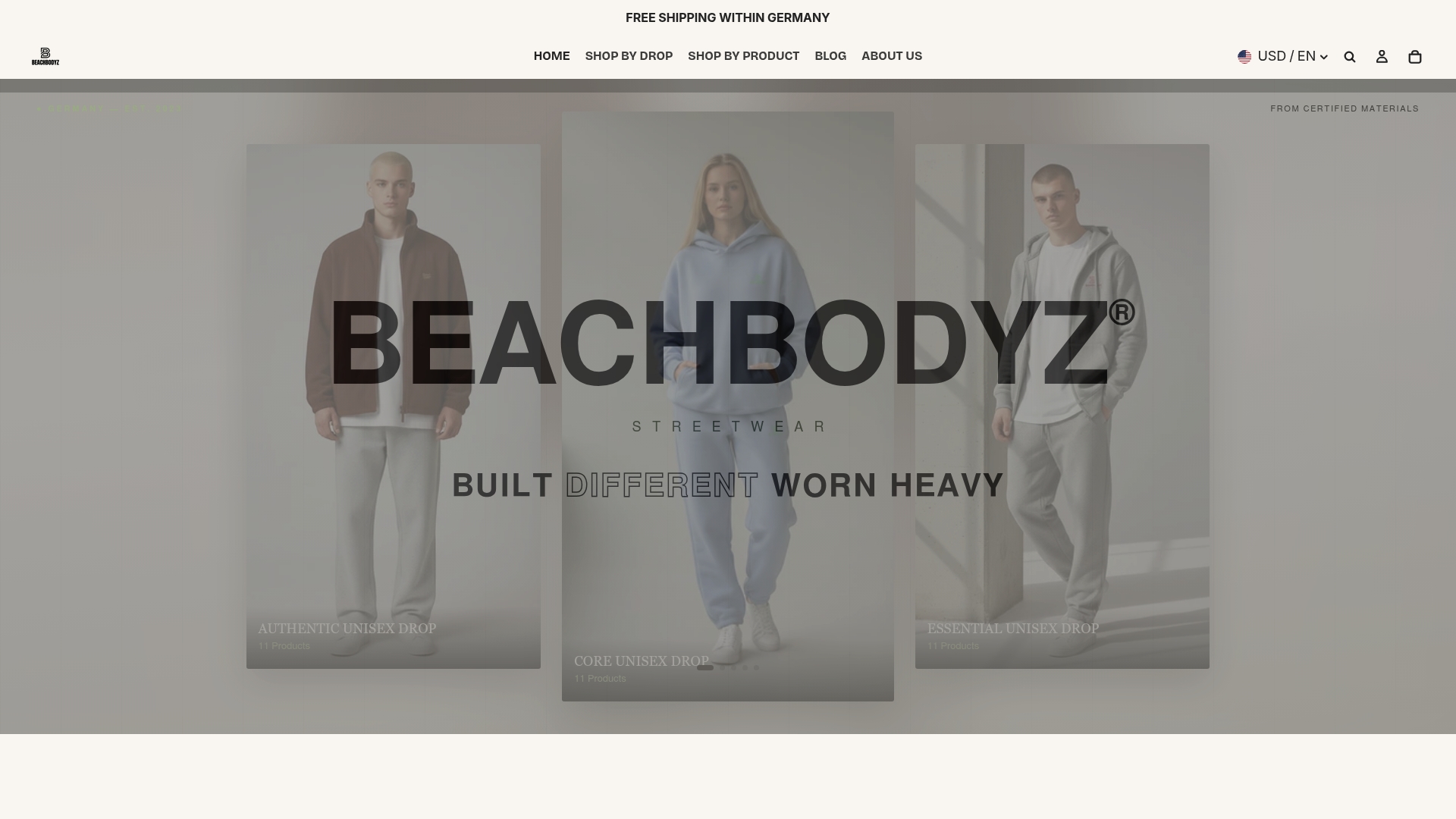
Our oversized hoodies, sweatshirts, and sweatpants are designed for durability, and many items can even be individually embroidered. Shipping is climate-neutral, communicated transparently as a climate contribution, not as an empty neutrality promise. Those looking for an alternative that puts avoidance before offsetting will find long-lasting basics in the Essential collection that fulfill exactly this requirement. Take a look and find an item you won't sort out again in two years.
Sources
For deeper research, the German Environment Agency is suitable for basic principles, Gold Standard and Verra for project quality, and atmosfair and Klimakollekte for provider comparisons. The EU's EmpCo directive will also change how brands can advertise starting in 2026.
- Using voluntary offset payments as a climate contribution | German Environment Agency
- K2 Requirements: Sensible CO2 Compensation (Guide) | atmosfair
- CO2 Compensation – Real Climate Solution or Dirty Trick? | Deutsche Welle
FAQ
What exactly is CO2 compensation?
CO2 compensation means that emissions that could not be avoided are mathematically offset by purchasing certificates from climate protection projects. According to the German Environment Agency (Umweltbundesamt), it should always be the final step in the sequence of avoiding, reducing, and compensating.
How sensible is CO2 compensation in fashion?
Compensation is sensible for long-lasting products and residual emissions that are difficult to avoid, such as shipping, but counterproductive if it justifies short-lived fast fashion purchases. The atmosfair guide recommends categorization by product class.
How can I compensate for my own emissions?
First, roughly calculate your footprint using a CO2 calculator, then select a project with a recognized standard such as Gold Standard or Verra and purchase certificates or make a climate contribution there. Beachbodyz additionally relies on avoidance for its own products through organic cotton and fair EU manufacturing.
What criticism is there regarding CO2 compensation?
Critics refer to compensation as modern-day indulgence trading because it can replace genuine reduction behavior without addressing the root cause. Investigations by Deutsche Welle and scientific evaluations also show that some projects significantly overestimate their climate impact.