For long-lasting, professional-looking logos, choose embroidery; for large, detailed, or photorealistic designs, choose printing. Embroidery offers durability and a high-quality, three-dimensional look, while printing excels with color gradients, fine lines, and small runs. For workwear washed in industrial facilities, embroidery is almost always the best choice, while DTF or DTG is usually faster and more affordable for small-batch streetwear designs.
In short:
- Embroidery is more durable and lasts longer than 100 washes, while screen printing usually lasts between 50 and 100 washes, and DTF and DTG even less.
- Printing is better suited for fine lines, small text, or color gradients, as embroidery has limitations for details smaller than approximately 4 to 5 millimeters.
- Large, solid designs are heavy and stiff with embroidery, while printing keeps the fabric soft and flexible.
- For repeat orders, using an embroidery file or a screen-printing screen can pay for itself, which can be more cost-effective in the long run.
- Combining both methods on a single garment pairs the durability of embroidery with the detail of digital printing.
Table of Contents
- Embroidery vs. Printing: A Direct Comparison
- Embroidery Stitch Types and Printing Techniques Compared
- Embroidery vs. Printing Costs: When Is It Worth It?
- Which Garment Is Best Suited to Which Method?
- How Long Do Embroidered and Printed Textiles Last?
- How to Choose in Five Steps
- How Can Embroidery and Printing Be Combined?
- What Makes Sustainable Textiles Suitable for Embroidery?
- Why the Choice Between Embroidery and Printing Is Often Made Too Emotionally
- Embroiderable Basics from Beachbodyz for Your Next Project
- Sources
- FAQ
Embroidery vs. Printing: A Direct Comparison
The decision between embroidery and printing depends on three factors: durability, appearance, and level of detail. Embroidery takes the lead in durability. According to industry estimates, it lasts over 100 washes, while screen printing usually lasts between 50 and 100 washes, and digital printing methods such as DTF or DTG even less.
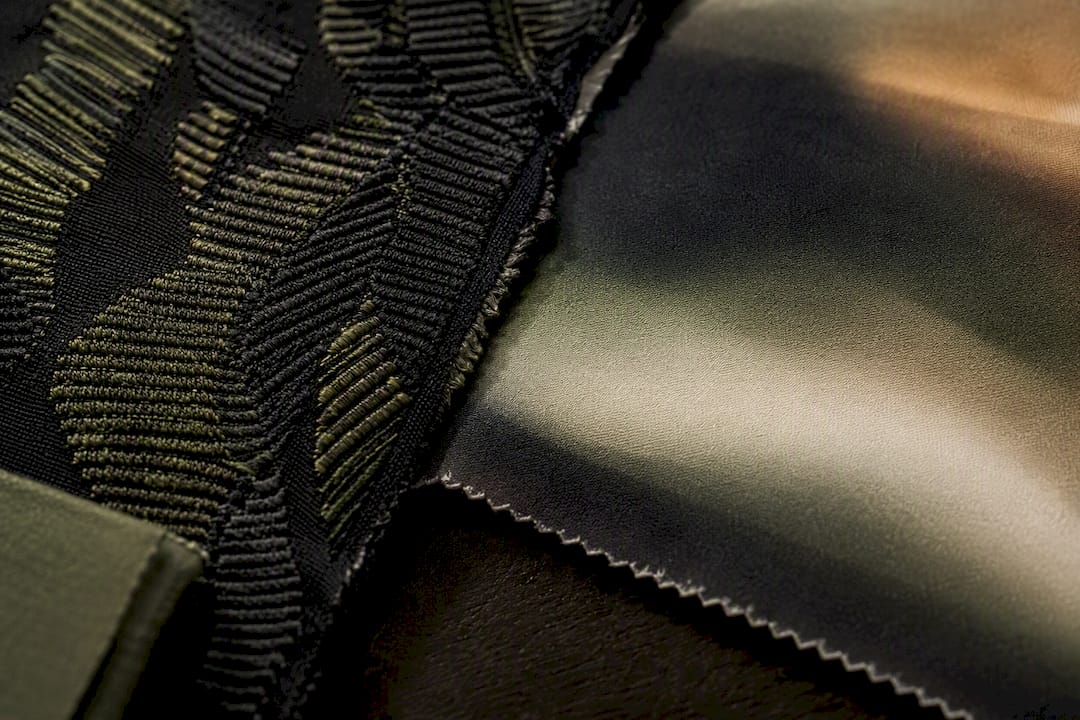
The methods differ significantly in appearance. Embroidery creates a three-dimensional, tactile texture that looks high-quality on polo shirts or caps. Printing remains flat on the fabric surface and is therefore better suited for large, photorealistic designs.
The situation is reversed when it comes to the level of detail:
- Embroidery reaches its limits with very fine lines and small font sizes (under approximately 4 to 5 millimeters) because the thread requires a minimum width.
- Color gradients are difficult to achieve with embroidery thread, as each color requires its own stitching.
- Printing methods such as DTF or DTG reproduce color gradients and fine fonts without loss of quality.
- Large solid designs quickly become heavy and stiff with embroidery, while printing keeps the fabric soft.
Embroidery Stitch Types and Printing Techniques Compared
Each method has a clear area of application. The following overview categorizes the most common techniques by purpose and limitations.
- Embroidery: The thread is worked into the fabric using stitch types such as satin stitch, fill stitch, or flat stitch. Ideal for logos, corporate clothing, and caps; highly wash-resistant, but limited in terms of detail and color gradients.
- Screen printing: Ink is printed onto the fabric through fine screens, with a separate screen for each color. Excellent for large runs with few colors; wash resistance usually lasts between 50 and 100 washes.
- DTF (Direct-to-Film): The design is printed onto a film and then heat-pressed. Works on almost any textile, including polyester and performance fabrics, without the need for screen setup.
- DTG (Direct-to-Garment): Inkjet printing directly onto the fabric; ideal for photorealistic designs and color gradients in small quantities, although it is particularly stable on cotton.
- Flex and flock films: Pre-cut film is heat-pressed, with flex for smooth surfaces and flock for velvety surfaces. Good for single-color numbers, letters, and sportswear.
Setup costs vary greatly. An embroidery file is created once, screens cost per color, and DTF requires virtually no advance costs.
Embroidery vs. Printing Costs: When Is It Worth It?
The embroidery price is based on the number of stitches in the design, not the area. A small logo with a few thousand stitches is affordable, while a densely embroidered large design quickly drives up the price because the number of stitches directly determines the production time.
- Screen printing becomes cheaper as the run size increases, because the screen costs are spread over more pieces.
- DTF and DTG remain price-stable even for a single piece, without a setup surcharge.
- General practical estimates: small embroidered logos fall within a typical price range per piece, DTF is usually slightly cheaper, and 3D embroidery costs a bit more. These values vary considerably depending on the provider.
- When calculated over the period of use, embroidery can be cheaper despite a higher starting price because it lasts longer and needs to be replaced less often.
Which Garment Is Best Suited to Which Method?
Fabric weight often matters more than personal taste. Thin T-shirts made of lightweight cotton can become distorted with too dense embroidery, making the fabric look stiff and causing it to ripple at the edges. Heavier textiles such as hoodies, polo shirts, and jackets handle embroidery significantly better, because the fabric can withstand the tension of the needle.
For performance fabrics and polyester sportswear, printing is usually the better choice. Embroidery on elastic, thin fibers can show through or leave holes, while DTF transfers flex along with the fabric.
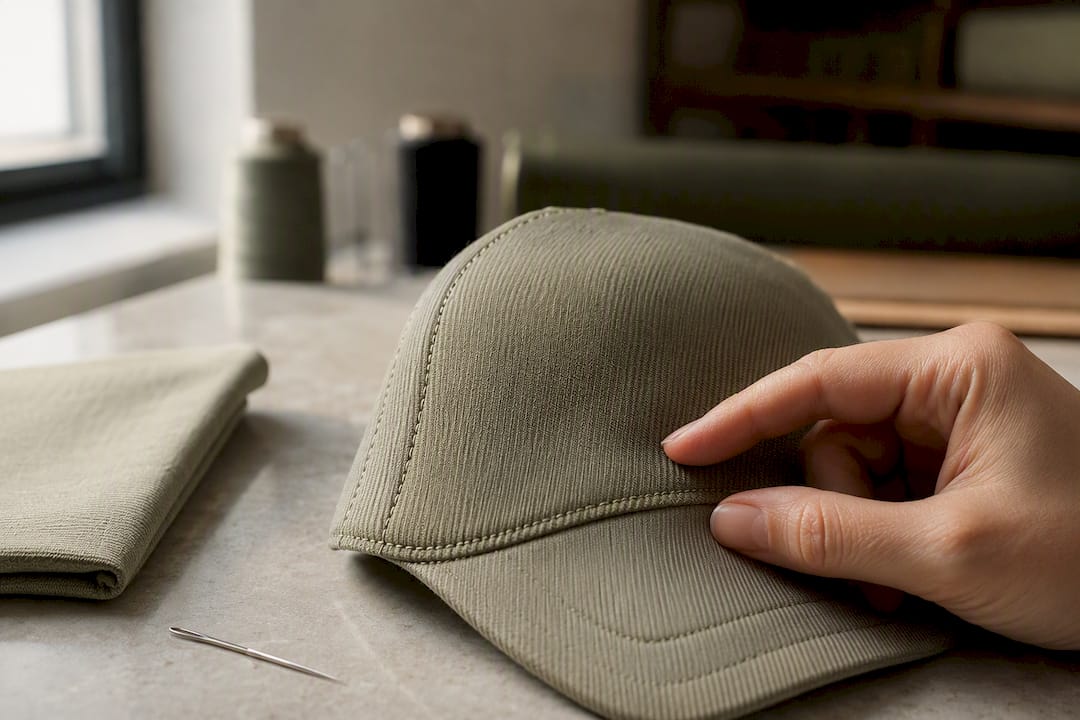
Special cases such as caps, bags, and aprons are almost always the domain of embroidery. The curved front of a cap does not tolerate print films well, while embroidery delivers clean results even on small, textured surfaces.
How Long Do Embroidered and Printed Textiles Last?
Realistic expectations save trouble. Embroidery lasts on average over 100 washes, screen printing usually lasts between 50 and 100, and DTF and DTG often less. These figures are estimates, not guarantees, because washing temperature and care significantly affect the result.
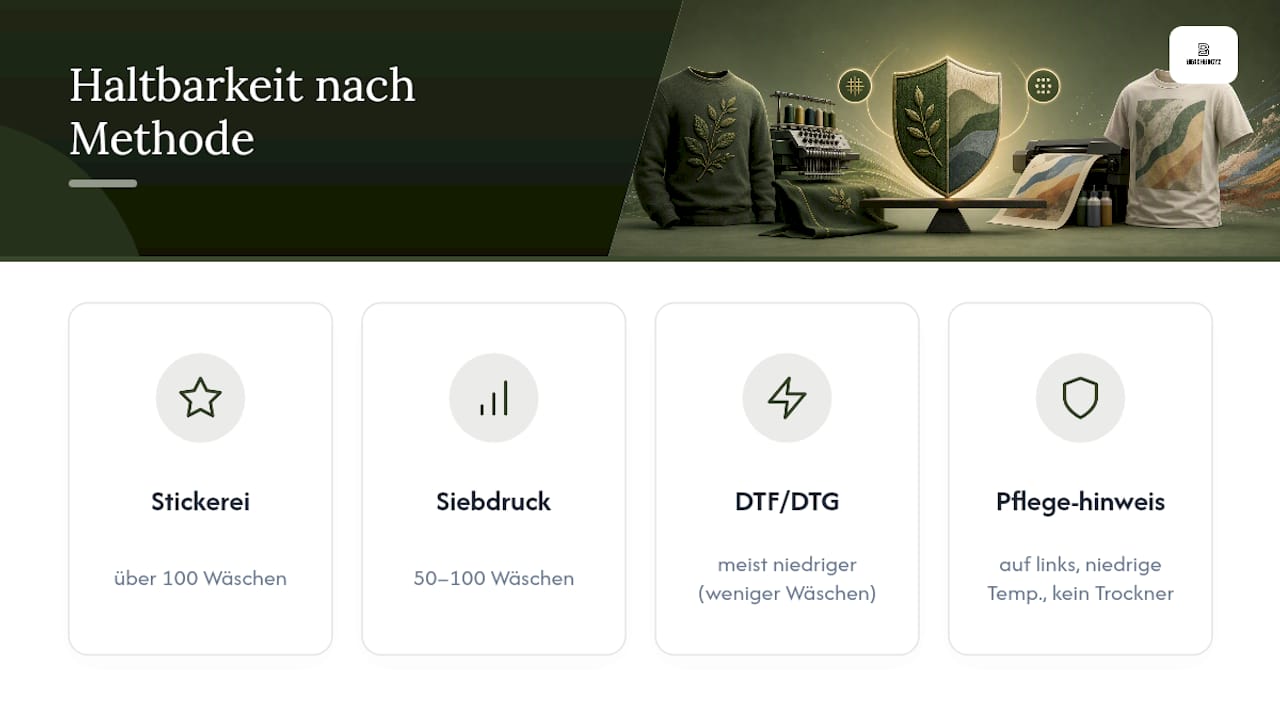
Printed items last longer if you wash them inside out, choose low temperatures, and avoid the dryer. Embroidery tolerates higher temperatures better, but it also stays beautiful longer if you do not dry it on high heat.
Pro tip: Always wash embroidered and printed items inside out; this protects both the thread and the print surface equally.
For industrial washing in the catering or trade industry, embroidery almost always remains the only sensible choice because it best withstands high temperatures and aggressive wash cycles.
How to Choose in Five Steps
A quick checklist helps before you order.
- What will the garment be worn for? Workwear that is frequently washed industrially requires embroidery, while occasionally worn streetwear is more forgiving.
- How large and detailed is the design? Small logos and lettering work with both methods, while large photo designs and color gradients are better suited for printing.
- What budget is available? Single pieces are usually cheaper with printing, while large quantities with few colors favor screen printing.
- How often will reorders follow? With repeat orders, an embroidery file or screen set pays for itself more quickly.
- What fabric is the textile made of? Heavy cotton can handle embroidery, while thin or elastic fibers are better suited for printing.
How Can Embroidery and Printing Be Combined?
The most economically and creatively sensible solution is often a combination. An embroidered chest logo together with a printed back design uses the strengths of both methods at the same time.
The chest logo remains permanent and looks high-quality, while the large back print can display color gradients or photo designs that embroidery could never achieve. Corporate kits consisting of a polo shirt with an embroidered chest and a hoodie with a printed back are a common example. Merch collections also combine both techniques to bring the brand logo and changing campaign designs together on a single garment.
What Makes Sustainable Textiles Suitable for Embroidery?
Embroiderability depends heavily on the base material. Dense, high-quality organic cotton takes stitches more evenly than thin mass-market fabric and distorts less often. Some sustainable streetwear manufacturers produce oversized T-shirts, hoodies, and sweatshirts from organic cotton and recycled polyester, fairly produced in the EU.
For sustainable embroidery thread, it is worth looking at organic embroidery thread and its identifying features before having a logo embroidered. Those who want to personalize ready-made basics will find concrete measurements in our guide to logo placement for embroidery. And how to care for an embroidered piece afterward is explained in our post on caring for embroidered clothing.
Why the Choice Between Embroidery and Printing Is Often Made Too Emotionally
Most guides act as if there were an objectively better method. This is not true. Anyone who wants to put a company logo on 200 polo shirts that are washed twice a week at 60 degrees needs embroidery, no matter how beautiful a color gradient in print might look. Anyone who wants to print a photo design on a single T-shirt is wasting money and patience with an embroidery file.
What is underestimated in practice: textile quality plays a role, not just the finishing technique. Thin fast-fashion cotton distorts with dense embroidery, no matter how well the machine is set up. Heavy, densely woven organic cotton, like that used in sustainable basics from Beachbodyz, gives the needle more support and the print a flatter surface. The foundation matters more than many buyers consider when ordering. My recommendation remains pragmatic: determine the purpose first, check the fabric second, and only then argue about aesthetics.
— Ahmed
Embroiderable Basics from Beachbodyz for Your Next Project
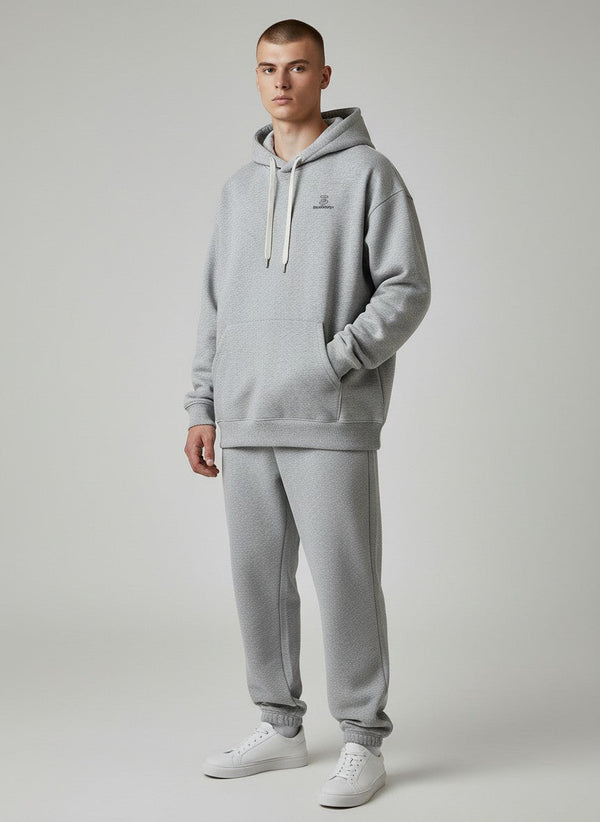
There are alternatives to quickly produced streetwear if you are looking for a textile that can handle both embroidery and printing cleanly. Oversized hoodies made from 350 g/m² organic cotton, fairly produced in the EU, offer a fabric density that is suitable for a long-lasting result with embroidery.
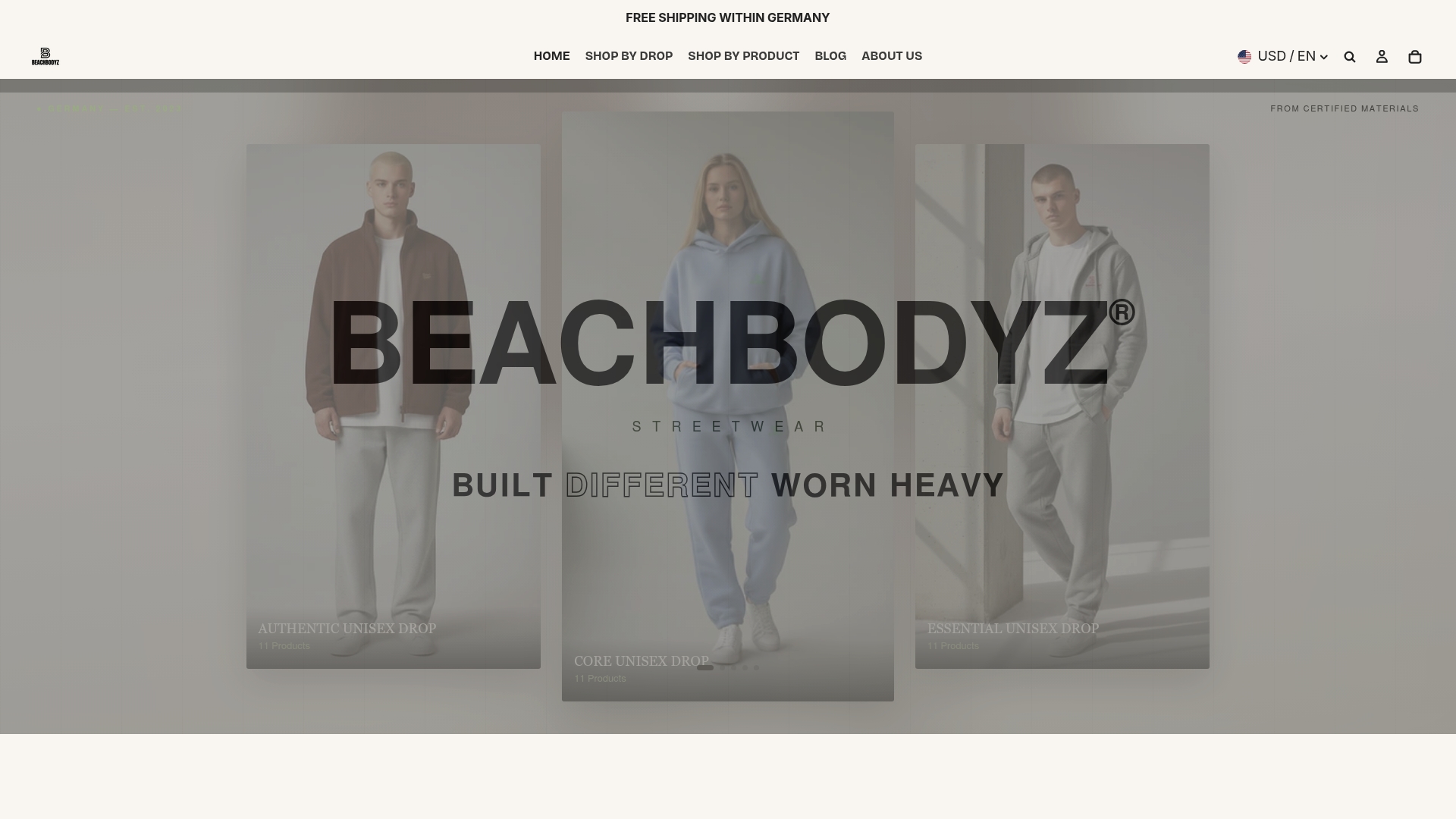
Anyone who wants to have a logo embroidered or a design printed will find a basic piece in the hoodie collection that can handle both finishes without distorting. GOTS-certified materials come as an added benefit without you having to pay a surcharge above the regular product price. Visit the Beachbodyz shop, choose your basic piece, and then have it personalized according to your wishes.
Sources
- Embroidery vs. Printing — Which Finish Is Right? | Siluri
- Which Print Lasts the Longest? Comparison | ShirtStore
- Textile Textile Finishing / Care Instructions
FAQ
What Lasts Longer: Embroidery or Printing?
Embroidery usually lasts over 100 washes, screen printing often lasts between 50 and 100, and DTF and DTG are usually lower.
Which Method Is Best Suited for Caps?
Caps are almost always embroidered because the curved surface does not take print films well, and embroidery delivers clean results even on small, textured surfaces.
Is Printing or Embroidery More Affordable?
It depends on the quantity: single pieces are usually cheaper with DTF or DTG, while large runs with few colors are more economical with screen printing or embroidery.
Can Embroidery and Printing Be Combined on a Single Garment?
Yes, a common combination is an embroidered chest logo with a printed back design, which uses the durability of embroidery and the detail of printing at the same time.
Which Textiles Are Best Suited for Embroidery?
Heavy, densely woven fabrics such as organic cotton hoodies or polo shirts handle embroidery best, while thin fast-fashion cotton distorts easily.