Do you want to accelerate your training progress, lose weight more sustainably, or simply eat healthier? Then you need to calculate your protein requirements – precisely, individually, and in a way that fits your everyday life. In 2026, more than ever, it holds true: those who clearly define their goal and plan intelligently achieve it faster. In this guide, I will show you step by step how to accurately determine your protein intake, which formulas you can use, how to translate those numbers into actual meals, and how to avoid common mistakes. Additionally, you will receive sample calculations for various body types, training goals, and life situations. Whether you are a beginner, intermediate, or professional: if you want to calculate your protein requirements, you need a solid foundation – and smart routines that work in a hectic daily life. That is exactly what you get here, including concrete gram measurements, practical tables, and tools to track your results permanently.
Start strong – feel BUILT DIFFERENT
Do you want focus and comfort during meal prep and training? Our Authentic Oversize Hoodie (400 g/m², organic cotton) delivers a premium feeling – MADE IN THE EU.
Discover the Authentic Oversize HoodieCalculating protein requirements: The scientific basis for 2026
Before you can calculate your protein requirements, you need a clear frame of reference. The body uses protein for muscle building and maintenance, enzymes, hormones, immune functions, and tissue repair. While official minimum intakes (around 0.8 g/kg of body weight) ensure survival, they do not optimize your performance. In 2026, practical recommendations are based on your goal, activity level, and body composition. For muscle building and dieting, the range is higher; for maintenance, it is moderate.
Why numbers in g/kg make sense
Grams per kilogram of body weight are the gold standard because they account for differences in body size. Example: 1.6 g/kg means 96 g/day for 60 kg, and 144 g/day for 90 kg – the same relative supply, fair comparability. If you have a very high fat mass, you can alternatively calculate based on fat-free mass (FFM); in that case, target values are typically higher (e.g., 2.3–3.1 g/kg FFM in a hard calorie deficit).
Orientation values for 2026
- Health maintenance, low activity: approx. 0.8–1.0 g/kg
- Leisure training, moderately active: 1.2–1.6 g/kg
- Strength/hypertrophy focus: 1.6–2.2 g/kg
- Endurance (high volume): 1.2–1.8 g/kg
- Diet/calorie deficit: 1.8–2.4 g/kg (or 2.3–3.1 g/kg FFM)
- 50+ years: often 1.2–1.6 g/kg due to anabolic resistance
If you want to calculate your protein requirements, combine activity level, goal, and – if relevant – age. From a health perspective, distributing your intake throughout the day is also helpful, as muscle protein synthesis reacts only to a limited extent per meal. A pragmatic guideline is 0.3–0.4 g/kg per meal, spread over 3–5 meals.
Here is how to proceed if you want to calculate your protein requirements: Determine your body weight or your fat-free mass, choose the appropriate g/kg range according to your goal, and aim for an even daily distribution. This is supported by numerous sports nutrition analyses that continue to confirm in 2026: for muscle building and maintenance, you need sufficient total protein, an intelligent meal frequency, and high-quality sources.
Calculating protein requirements with examples and a table: How much protein you need
Concrete numbers make planning easy. When we calculate protein requirements, we translate the goal into grams per day – and then directly into meals. Four profile examples show you the procedure.
Example 1: Office job, 60 kg, 2–3 workouts/week
Goal: Maintenance and slight improvement in body composition. Range: 1.2–1.4 g/kg. Calculation: 60 kg × 1.3 = 78 g/day. Distribution: 3 meals of approx. 25–30 g of protein each. Practical: Breakfast (Skyr + berries), lunch (lentil bowl), dinner (eggs/omelet + vegetables). That is how you can calculate your protein requirements and implement them easily.
Example 2: Strength focus, 80 kg, 4–5 workouts/week
Goal: Hypertrophy. Range: 1.6–2.2 g/kg. Calculation: 80 kg × 1.9 = 152 g/day. Distribution: 4 meals of 35–40 g + 1 snack with 20–30 g. Protein sources with high leucine content (e.g., whey, eggs, soy isolate) are particularly efficient here.
Example 3: Endurance, 70 kg, high running volume
Goal: Ensuring regeneration. Range: 1.4–1.8 g/kg. Calculation: 70 kg × 1.6 = 112 g/day. Carbohydrates remain high, but protein stabilizes the muscles. Timing tip: 20–30 g of protein within 1–2 hours after a long session.
Example 4: Diet, 90 kg, 20% calorie deficit
Goal: Fat loss with muscle maintenance. Range: 1.8–2.4 g/kg. Calculation: 90 kg × 2.1 = 189 g/day. If you have a very high fat mass, you can switch to FFM to avoid unnecessarily high target values, or choose the upper range if hunger levels and training volume allow.
The following comparison table helps you calculate your protein requirements and plan quickly – with g/kg guidelines and example gram amounts per day:
| Profile/Goal | Recommendation (g/kg) | 60 kg (g/day) | 75 kg (g/day) | 90 kg (g/day) |
|---|---|---|---|---|
| Health/maintenance, low activity | 0.8–1.0 | 48–60 | 60–75 | 72–90 |
| Moderate activity/leisure sports | 1.2–1.6 | 72–96 | 90–120 | 108–144 |
| Strength/hypertrophy | 1.6–2.2 | 96–132 | 120–165 | 144–198 |
| Endurance (high volume) | 1.2–1.8 | 72–108 | 90–135 | 108–162 |
| Diet/calorie deficit | 1.8–2.4 | 108–144 | 135–180 | 162–216 |
| 50+ years | 1.2–1.6 | 72–96 | 90–120 | 108–144 |
Use the table as a starting point to calculate your protein requirements. Choose your range, multiply by your weight, and divide the total amount into 3–5 meals. That is how theory becomes lived practice.
Warm, focused, ready for PRs
Rely on premium comfort for your training and meal prep: The Authentic Oversize Sweatshirt (350 g/m², GOTS organic cotton) is your smart layering piece.
View the Authentic Oversize SweatshirtProtein sources, timing, and everyday life: Calculating protein requirements in real life
Calculating is just the beginning – execution is what decides your success. Once you have calculated your protein requirements, you need to combine quality, timing, and everyday situations. Three levers have a particularly strong effect: source (amino acid profile, DIAAS), distribution (0.3–0.4 g/kg per meal), and convenience (meal prep, snacks, routines).
Quality: DIAAS, biological value, and combination logic
Animal proteins (whey, eggs, fish, lean meat, Skyr/quark) score with high leucine content and a complete amino acid profile. Plant-based options (soy, peas, rice, lentils, beans) benefit from combinations: grains + legumes together increase the quality. In 2026, many plant-based products provide improved DIAAS values, yet it is still helpful to keep an eye on the leucine threshold (≈2.5–3.5 g) per meal. This is how you combine quality with the number you determined when calculating your protein requirements.
Timing: Triggers for muscle protein synthesis
Plan 3–5 protein triggers per day. After strength training: 20–40 g of high-quality protein within 1–2 hours. Before sleeping, a casein-rich source (e.g., low-fat quark) can support nocturnal protein synthesis. For endurance blocks, protein is important during the refeed for tendons, connective tissue, and muscles.
Everyday tools: Meal prep, snacks, tracking
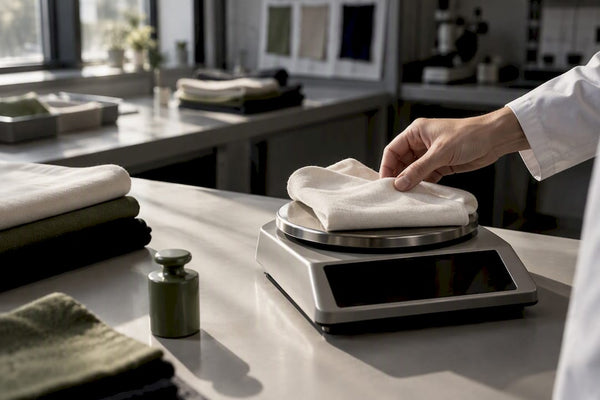
Use a kitchen scale, label information, and apps to secure your progress. Create 2–3 standard daily meal plans with 100–120–150 g of protein (depending on requirements) and rotate them. Examples: Skyr + whey + berries (35 g), lentil bowl + tofu (35 g), eggs + feta + vegetables (30 g), snack bar/shake (20–25 g). If you want to calculate your protein requirements, work backwards from your favorite dishes to your target amount – this keeps you flexible.
Performance begins in the mind – and with comfort. Breathable layers are worth their weight in gold for your training: The Core Oversize T-Shirt made of 200 g/m² organic cotton (GOTS) is a strong foundation, combined with the Signature Oversize Shorts (300 g/m²) for smooth sessions. For intensive leg days, the Power Oversize Shorts provide stability without compromise. For warming up outdoors, the Essential Fleece Jacket made of recycled polyester offers the right amount of warmth. If you love layers: The Standard Oversize Zipper Hoodie is a reliable daily companion, and the Form Oversize Zipper Hoodie makes a clear statement in the gym. For more choices: Browse our Oversize Hoodie Collection for men & women, the Oversize T-Shirts for men & women, the Oversize Jogger Collection, the Oversize Sweatshirts for men & women, and the Streetwear Jackets for men & women.
BeachBodyz stands for MADE IN THE EU and our BUILT DIFFERENT philosophy. Just as you want to calculate your protein requirements and implement them consistently, we provide you with pieces that raise your standard – every single day.
Special cases in 2026 and typical mistakes when calculating protein requirements
Not everyone needs the same strategy. If you want to calculate your protein requirements, consider your lifestyle, diet type, and goal timeframe. Here are special scenarios – plus typical stumbling blocks and how to avoid them.
Vegan/vegetarian: bundling quality, securing leucine
Going vegan or vegetarian makes achieving a high-protein diet effortless if you cleverly combine amino acid profiles. Focus: soy/tofu/tempeh, pea and rice protein, lentils, chickpeas, whole grains, nuts/seeds. Target per meal: 25–40 g of protein, leucine ≈2.5–3.5 g. In practice, this often means +10–15% total protein if the sources are predominantly plant-based. Meaning: If you were calculating your protein requirements at 1.6 g/kg, plan for 1.7–1.8 g/kg if necessary, depending on your meal mix.
50+, dieting, endurance block
Anabolic resistance increases after 50: 1.2–1.6 g/kg is realistic, plus approx. 0.4 g/kg per meal. During diets, 1.8–2.4 g/kg stabilizes your fat-free mass; pay attention to satiety and fiber. During peak endurance weeks, 1.4–1.8 g/kg helps protect tendons and muscles. Please consult medical professionals for pregnancy/breastfeeding and medical specifics – individual adjustments are a must, even if you can calculate your protein requirements.
Common mistakes when calculating protein requirements – and solutions
- Using percentages instead of g/kg: Percentages of total needs fluctuate wildly. Solution: Always define g/kg first.
- Total amount is great, distribution is bad: 120 g once a day is inefficient. Solution: 3–5 triggers of 0.3–0.4 g/kg.
- Forgetting quality: Too little leucine/essential amino acids. Solution: Mix of high-quality animal and plant sources.
- Planning too low during a diet: Hunger + muscle loss. Solution: Choose the upper range, increase fiber.
- Only using scale weight when fat mass is high: Overestimation. Solution: Estimate FFM (caliper, BIA) or choose a moderate range.
- No tracking: Planning without control. Solution: Track for 1–2 weeks, then readjust.
If you want to calculate your protein requirements, make it concrete: set g/kg, calculate daily grams, divide into meals, check sources, track for 1–2 weeks. Then fine-tune – that is how you create progress without guesswork.
Advanced: Calculating protein requirements precisely with FFM, energy availability, and periodization
FFM instead of body weight: how to calculate truly individually
If you want to calculate your protein requirements and your body fat percentage is significantly above average, or you are in a hard diet, fat-free mass (FFM) provides a cleaner foundation. Three-step procedure: First, roughly estimate your body fat percentage (BFP) via BIA, caliper, circumference measurements, or reference photos. Second, calculate FFM = body weight × (1 − BFP in decimal form). Third, choose the appropriate g/kg-FFM range according to your goal.
Example A (diet, higher fat mass): 90 kg, BFP 28%. FFM = 90 × 0.72 = 64.8 kg. In a diet, 2.3–3.1 g/kg FFM is suitable. If you choose 2.6 g/kg FFM, you end up with 64.8 × 2.6 ≈ 169 g/day. Distributed over 4–5 meals, that is about 35–45 g per meal – suitable for everyday life and efficient for muscle maintenance.
Example B (bulking, moderate fat mass): 70 kg, BFP 15%. FFM = 70 × 0.85 = 59.5 kg. For building/maintenance, 1.6–2.0 g/kg FFM is practical. With 1.9 g/kg FFM, you get 59.5 × 1.9 ≈ 113 g/day. If you prefer calculating with body weight, you stay in a similar range (e.g., 1.6–2.2 g/kg BW) and check performance, satiety, and body measurements after 1–2 weeks.
Practical tip: Work with an upper and lower target value. Example diet: lower guardrail 1.8 g/kg BW, upper 2.4 g/kg BW or 2.3–3.1 g/kg FFM. This allows you to adjust daily to hunger, training, and everyday life without abandoning your system.
Energy availability and training load: why your range shifts
Energy availability (simplified: calories consumed minus training expenditure) influences how high you should choose your protein range. The lower the calories, the higher the training volume, or the greater the everyday stress, the more reasonable it is to plan in the upper range. This protects your fat-free mass and supports regeneration.
Example of a high-volume week: 5 strength sessions + 2 light cardio sessions. If you usually do well with 1.7 g/kg BW, temporarily raise the range to 1.9–2.1 g/kg BW. Deload week? Lower it back to 1.6–1.8 g/kg BW. Heat stress, high step counts, lack of sleep, or work weeks with overtime are additional reasons to plan for 10–15% more protein temporarily – especially when calories are scarce.
Practical tip: Plan your protein like a safety net. If training/everyday life becomes predictably more strenuous, add 10–20 g extra to the two largest meals. This is easier than recalculating daily and stabilizes your habits.
Meal architecture: protein triggers and satiety stacks
To make the numbers you determined when calculating protein requirements work for you, you need a robust meal architecture. Three guardrails help: approx. 0.3–0.4 g/kg body weight of protein per meal; at least 2.5–3.5 g of leucine from the meal (or in total from combinations); plus a satiety stack of voluminous vegetables, fiber, and slow-digesting carbohydrates/fats.
Example daily structure for 75 kg and 150 g protein (4 meals): Breakfast 35 g (e.g., 2% Greek yogurt + whey + oats + berries), Lunch 40 g (chicken breast + chickpea pasta + broccoli), Snack 35 g (tempeh wrap with edamame hummus), Dinner 40 g (trout or seitan + potatoes + lamb's lettuce). For vegetarian/vegan options, adapt your sources (e.g., tofu/tempeh/seitan, soy skyr, pea/rice protein, legume combinations) and ensure you hit the leucine threshold per meal through smart combinations.
Pro tip: Build "protein anchors" into the largest meals of the day. If you set two anchors of 40–45 g each, you only need to add two smaller blocks of 25–35 g each. This makes implementation more relaxed – especially when on the go.
14-Day Checklist: Measure, plan, adjust
First: Set a corridor (e.g., 1.8–2.2 g/kg of body weight or 2.3–2.8 g/kg of LBM when dieting). Second: Calculate daily grams and distribute them across 3–5 meals. Third: Write two standard daily plans (e.g., 140 g and 170 g) that you use depending on hunger/training. Fourth: Track for 14 days (body weight, measurements, strength metrics, subjective recovery, hunger/satiety). Fifth: Fine-tune by 10–20 g up or down, depending on whether satiety, performance, and recovery are on point. Sixth: Re-assess body fat/LBM every 6–8 weeks and update your calculations.
Daily Implementation: Weekly Plans, Recipes, Shift Work, and Travel
Protein building blocks that always work
If you want to calculate your protein requirements and meet them every day, think in building blocks of 25–40 g of protein. Examples: 250 g low-fat quark or skyr; 150–180 g chicken/turkey breast; 160–200 g salmon or tuna; 200–250 g Harzer cheese (very high protein, low fat); 200 g tofu or 150–180 g tempeh; 1 large shake made of 30 g whey/soy isolate + 250 ml milk/drink; 80–100 g seitan; 100 g lentils (weighed dry, cooked ≈ 200–250 g) combined with whole grains; 2 cans of tuna/jackfruit "tuna" plus side dish; 3–4 eggs mixed with 150 g egg whites from a carton for an omelet.
Pro tip: Write down 10 building blocks you enjoy and stick the list to the fridge. This way, you can spontaneously assemble meals without having to recalculate – you just add blocks until your daily goal is met.
Three weekly blueprints: 120 g, 150 g, and 180 g per day achieved smartly
Blueprint 120 g (4 meals): Breakfast 25–30 g (protein porridge), Lunch 35 g (bowl with beans + rice + tofu), Snack 20–25 g (yogurt alternative + nuts), Dinner 35–40 g (fish or seitan + potatoes + vegetables). Suitable for quiet training phases or maintenance.
Blueprint 150 g (4–5 meals): Breakfast 30–35 g (high-protein smoothie), Lunch 40 g (chicken/tempeh plate with chickpea pasta), Snack 25–30 g (Harzer cheese or edamame snack), Pre-/post-workout 20–25 g (shake or soy skyr), Dinner 35–40 g (egg or tofu scramble + vegetables + bread). Ideal for moderate training volume.
Blueprint 180 g (5 meals): Breakfast 35–40 g (skyr + whey + fruit), Mid-morning 25–30 g (wrap with turkey breast/seitan), Lunch 40 g (bowl with lentils + quinoa + tofu), Pre-/post-workout 25–30 g (shake + banana), Dinner 40–45 g (smoked salmon/tempeh + sweet potato + salad). Suitable for muscle gain or dieting with high training volume when satiety is important.
Pro tip: Weigh your typical portions exactly once or twice for 1–2 weeks and save them as "favorite dishes." After that, you can work by "eyeballing it" because you know what your 30–40 g per meal looks like.
Shift work, long workdays, low appetite: Strategies that hold up
If you have irregular hours, a flexible framework with 3–5 protein triggers helps, rather than fixed times. Plan one large anchor within the first 2 hours of waking up (30–40 g), one during your longest break (30–40 g), and one pre-sleep block (25–40 g) if you work nights. Liquid options (shakes, drinkable skyr/soy drink, soups with lentils/seitan) are worth their weight in gold when your appetite is low or you have little time.
Pro tip: Pack a "shift box" with 2 protein portions in advance (e.g., 2 shakers with powder prepared, 1 pack of tempeh/seitan, 1 can of lentils + salt + olive oil). This way, you reach your goal even if the cafeteria is unexpectedly closed.
Budget, sustainability, and digestion: clever instead of complicated
Inexpensive high-protein heroes are low-fat quark/skyr, eggs, chicken legs instead of breast (remove fat accordingly), frozen fish, dried lentils/beans, soy granules, pea protein isolate, oats + extra protein powder. Plant-based protein mixtures of legumes and grains are often the cheapest option per 20 g of protein. Plan seasonal vegetables and bulk packs to lower costs while increasing fiber for satiety.
Regarding tolerance: If legumes bother you, soak them overnight, rinse them, and cook with spices like cumin, fennel, or ginger. For lactose sensitivity, choose lactose-free dairy products or plant-based alternatives. Increase your protein intake gradually over 7–10 days so that your digestion and habits can keep up.
Pro tip: Think in "cost per 20 g of protein." If an option is consistently over your target budget, use it as an occasional treat, not a daily staple. This keeps your plan sustainable – financially and ecologically.
Eating out and on the go: how to order smart
When you're on the go, stick to three rules: First, secure the protein first (ask for extra protein, e.g., double portion of tofu/fish/meat or extra beans). Second, swap side dishes tactically (fries for rice, bread for salad + beans/edamame). Third, order sauces separately to control calories while maintaining your protein anchor.
Example orders: Italian – grilled fish or chicken, extra vegetables, pasta or rice swap; Asian – tofu/tempeh/chicken wok "extra protein," half the sauce, rice instead of fried sides; Turkish – dürüm with double meat/seitan, extra salad, light yogurt sauce; Bakery – protein sandwich (whole grain, lean deli meat/tofu spread), skyr/soy yogurt and nuts as an add-on.
Travel setup: Pack 1–2 portions of protein powder in zipper bags, a small spice blend, travel cutlery, nut mix, jerky/tofu bites, and 1–2 durable cans (tuna, beans). This way, you can reach the numbers you defined when calculating your protein requirements, even in hotels, at the airport, or on the train – without "all-or-nothing" stress.
Pro tip: Save 3–5 menu ideas per favorite restaurant with approximate protein values in your map or notes app. You’ll then only order from that list – fast, reliable, and goal-oriented.
Conclusion
Calculating your protein requirements is not rocket science – it is a process of clear numbers, smart implementation, and consistent fine-tuning. Choose your target corridor (e.g., 1.6–2.2 g/kg for muscle building), multiply by your body weight, distribute the total amount into 3–5 meals, and ensure quality with leucine-rich sources. Track for 1–2 weeks, then adjust. In a diet, move to the upper range; for endurance and age 50+, plan higher amounts per meal specifically. Important: It’s not just the amount that counts – timing, bioavailability, and everyday practicality turn theory into real strength.
At BeachBodyz, you’ll find gear that reflects your standards: MADE IN EU, uncompromising in material and fit – BUILT DIFFERENT. If you can calculate your protein requirements and live by them, you need reliable routines and pieces that support you daily – in the gym, on the way to work, and during meal prep at home. Set measurable goals, stay flexible in your implementation, and stick to the simple ground rules from this guide. That is how progress becomes plannable – and noticeable.
Layer up, stay focused
For training, meal prep, and recovery: The Authentic Oversize Zipper Hoodie (400 g/m², organic GOTS-certified cotton) provides warmth and freedom of movement.
Secure Authentic Oversize Zipper HoodieFAQ
How can I calculate my protein requirements if I have a high body fat percentage?
If your body fat percentage is higher, it is more precise to work with lean body mass (LBM). Estimate your LBM via BIA/caliper or use conservative corridors. Example: Instead of 2.2 g/kg of body weight, take 2.3–3.1 g/kg of LBM (when dieting) or 1.6–2.0 g/kg of LBM (maintenance/building). If you don't know your LBM, choose a middle range for your body weight and check via measurements, strength, and satiety after 1–2 weeks.
Calculating protein requirements for women: Are there differences compared to men?
The g/kg recommendations are gender-independent because they are based on body mass and goals. Differences often arise due to absolute calorie intake and activity profiles. Women benefit just like men from 1.6–2.2 g/kg for muscle building and 1.8–2.4 g/kg in diets. In cycle phases with higher training stress, conscious distribution (3–5 meals) and a focus on iron- and protein-rich sources can provide additional help.
Which protein sources are most efficient for hypertrophy in 2026?
Efficient sources have high leucine content and a complete EAA profile: whey, eggs, low-fat dairy products, lean meat/fish. Plant-based sources like soy, pea, and rice protein work well; combine them smartly to increase DIAAS. The deciding factor is less the individual source and more the total sum per day and distribution into 3–5 triggers of 0.3–0.4 g/kg.
Calculating protein requirements in a diet: How high should I go?
In a caloric deficit, higher protein intake protects your lean body mass. Practice: 1.8–2.4 g/kg of body weight or 2.3–3.1 g/kg of LBM in a severe deficit/high training volume. Start, for example, with 2.0–2.2 g/kg, distribute into 4–5 meals with a high satiety factor (lean meat/fish, skyr, tofu, legumes), and adjust after 1–2 weeks based on strength, hunger, and recovery.
How do I optimally distribute protein throughout the day?
Aim for 3–5 meals, each with approx. 0.3–0.4 g/kg of protein. After strength training, consume 20–40 g within 1–2 hours. Before sleeping, 25–40 g of casein-rich food (e.g., low-fat quark) can support nighttime protein synthesis. The total amount you achieve over the day remains the biggest lever – timing primarily optimizes efficiency.
Can I calculate my protein requirements simply without an app?
Yes. Use ground rules: Choose your corridor (e.g., 1.6 g/kg), multiply by your weight, and round to practical meals. Example: 80 kg × 1.6 = 128 g; plan 4 meals of 30–35 g. Create 2–3 standard daily plans and rotate them. A kitchen scale and nutritional labels are often enough to reach 90% accuracy – the rest is fine-tuning based on your body's feedback.