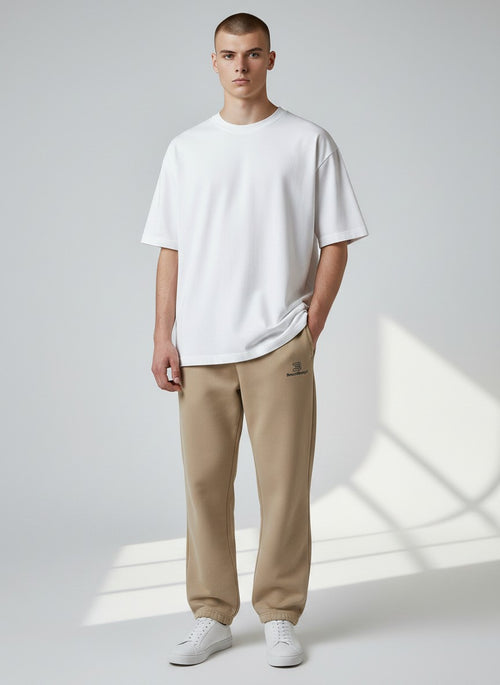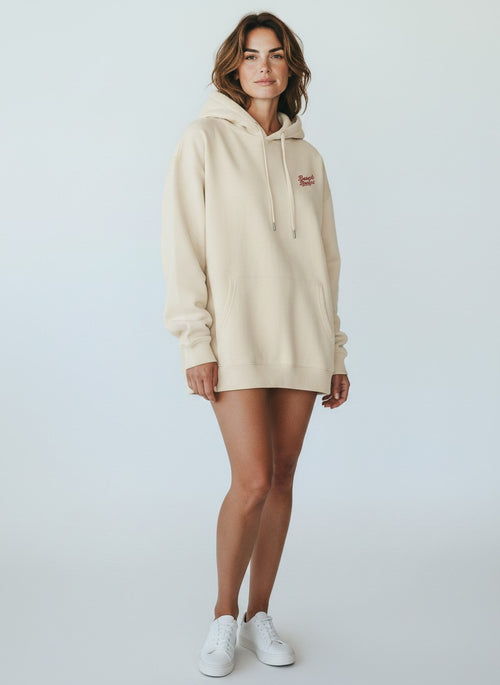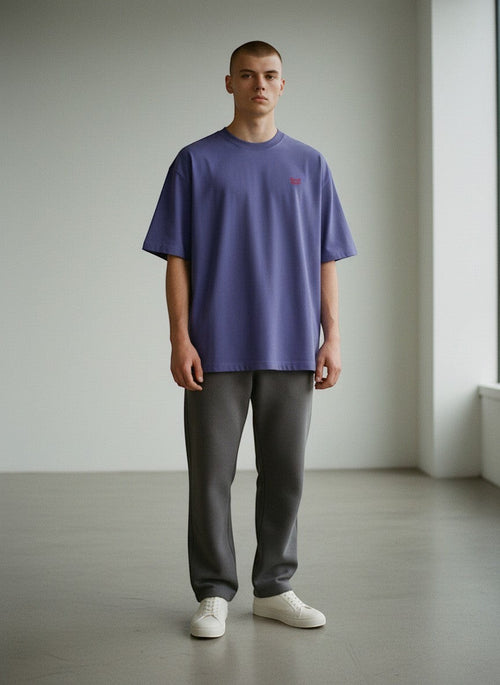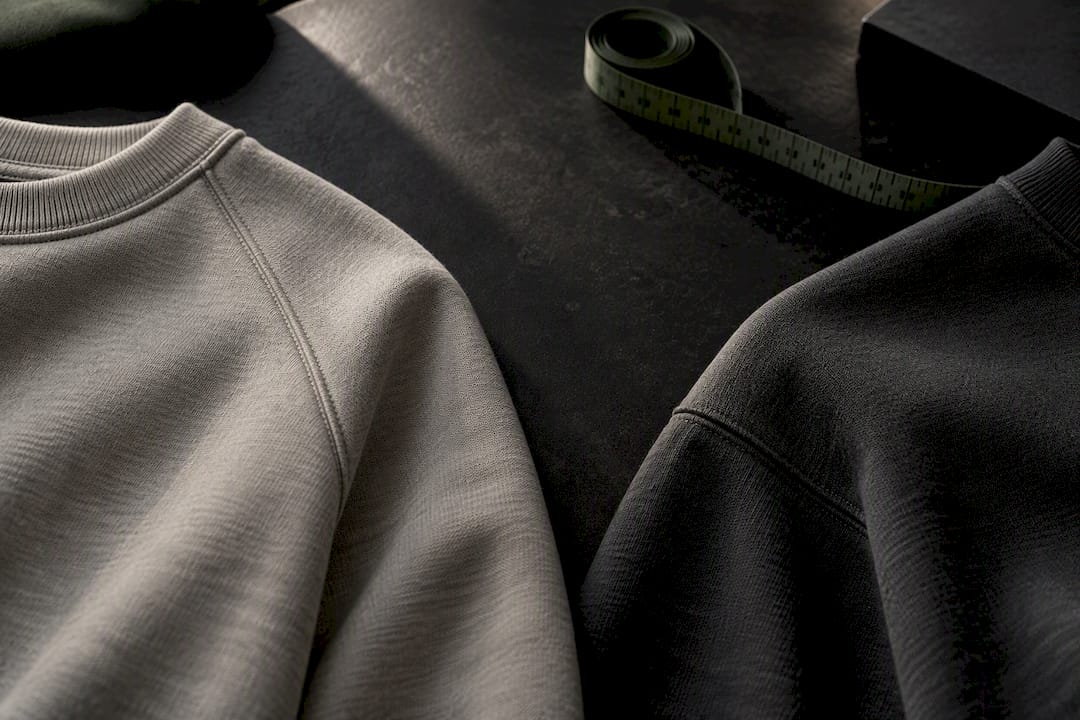
Raglan has diagonal seams from the neck to the underarm. Result: a closer-fitting, sporty fit. Drop-shoulder sets the shoulder seam lower, on the upper arm. Result: a casual, loose silhouette. For a close, sporty piece: raglan. For oversized and streetwear: drop-shoulder.
In short:
- Raglan is cut close to the body and is suitable for sporty, fitted models, while drop-shoulder allows for a loose, oversized silhouette.
- Knitting raglan is done through diagonal increases from top to bottom, which is easier for beginners to control.
- Drop-shoulder models usually consist of several parts that are sewn together, which increases the effort compared to raglan.
- For an optimal fit, the armhole depth should be measured exactly and the increase rate for raglan adjusted individually.
- Drop-shoulder tolerates softly falling, flowing yarns, while structured yarns emphasize the diagonal lines in raglan.
Table of Contents
- Pros and cons of both sleeve types in brief
- Construction and knitting techniques in detail
- Adjusting the fit: Ease, armhole depth and increase rates
- Yarn choice and drape: which look suits which cut
- Checklist before knitting and typical sources of error
- How BeachBodyz thinks about fit and material in oversized models
- Oversized hoodies and sweatshirts with drop-shoulder fit
- Sources
- FAQ
Pros and cons of both sleeve types in brief
Raglan sits closer to the body. Less fabric, less ease, more freedom of movement in the shoulder area. Drop-shoulder needs more width, but has a simpler construction principle. Both forms have clear areas of application, depending on the project and experience level, according to the comparative overview of sleeve types.
- Raglan: narrow shoulder line, good freedom of movement, usually knitted top-down.
- Drop-shoulder: low shoulder line, loose silhouette, often sewn together from separate parts.
- Beginner-friendliness: Drop-shoulder is considered constructionally easier because almost no increases need to be calculated.
- Examples of use: Hoodie and oversized sweatshirt for drop-shoulder, fitted sweater for raglan.
Those who want to knit seamlessly will lean towards raglan. Those who are not afraid of sewing or are looking for a simpler project will be right with drop-shoulder. The difference is therefore not only visual, but also a matter of effort and technique.
Construction and knitting techniques in detail
Raglan shaping works through regular increases along four diagonal lines, usually every two rows. In top-down constructions, you start at the neck and work downwards, which allows for continuous trying on. A methods comparison between top-down and bottom-up shows: raglan from the top is beginner-friendly because the fit can be checked during the work. Raglan from the bottom, on the other hand, offers advantages for elaborate patterns, such as cable work at the hem.
Drop-shoulder is usually created from separate parts: front piece, back piece and two sleeves, which are then sewn together. The shoulder drop, i.e., the additional depth of the armhole line, is determined in advance and incorporated into the pattern drawing. Modified variants combine drop-shoulder with slightly sloped shoulders to reduce the bunching at the transition.
For both forms: measurements must be translated into stitches and rows, and this is exactly where the technical work lies.
- Knit a gauge swatch and wash or steam it exactly as the finished piece will be treated later.
- Note the target measurements in centimeters: chest circumference, armhole depth, desired sleeve length.
- Recalculate the measurements into stitches and rows using the gauge swatch, as described by the schematic approach by Knitty.
- For raglan, adjust the increase rate to the armhole depth; for drop-shoulder, compare the shoulder width against the sleeve cap.
The Knitty pattern also explains how armhole depth and upper sleeve width relate to each other: In a box-shaped armpit area, both widths correspond to each other; in a sloped armpit area, the sleeve cap becomes trapezoidal.
Adjusting the fit: Ease, armhole depth and increase rates
Ease determines how a sweater looks on the body. According to the fit guidelines by Patty Lyons, drop-shoulder needs significantly more positive ease than raglan, which typically means several centimeters over the body measurement. These values are guidelines, not rules, but they show the basic difference in construction logic.
Important to measure: the armhole depth on your own body or on a well-fitting favorite piece, and the desired width over the chest. In raglan, the increase rate determines how deep the armhole will be in the end, because the diagonal runs directly from the neckline to the underarm.
- If it fits too tightly at the raglan line: increase the increase rate or insert additional rows without increases.
- If there is too much fabric at the drop-shoulder: reduce the shoulder width without adjusting the armhole depth.
For larger clothing sizes, a variable increase rate for raglan is worth it instead of strictly sticking to the standard rate. This keeps the armhole depth proportional, even if the circumference grows. Those who need adjustments to the sleeve cap can also work with a small gusset under the armpit, which creates additional freedom of movement without changing the overall shape.
Pro tip: Measure the armhole depth on a piece that is already worn and fits well, not just on your own body, because worn clothing shows how much movement is actually needed.

Those who want to orient themselves by size charts will find practical reference values for the ease calculation in the size chart for oversized hoodies.
Yarn choice and drape: which look suits which cut
Drop-shoulder pairs well with flowing, softly falling yarns. They allow the additional width to drape instead of letting it stand stiffly. Heavy or stiff yarns, on the other hand, can make the shoulder area look angular, especially at the transition seam to the sleeve.
- Flowing yarns like merino blends support the casual effect of drop-shoulder.
- Solid, structured yarns additionally emphasize the diagonal line in raglan.
- Cable patterns along the raglan line reinforce the sporty look, but interfere if they are placed too wide.
- Intarsia often works better with drop-shoulder because the flat area offers more room for the pattern.
For oversized hoodies in streetwear style, drop-shoulder is best suited in combination with draping yarn that controls the silhouette without looking stiff. Finer raglan sweaters, on the other hand, benefit from smooth, even yarns that leave the seam guidance visible. An overview of different material effects is offered by the comparison of fabric types.
Checklist before knitting and typical sources of error
- Before starting: knit a gauge swatch, determine target measurements, choose the ease value for the desired look.
- While knitting: try on every few centimeters, compare the row count with the planned increase rate.
- In case of deviation: adjust the increase rate instead of knitting to the end and only then correcting.
If the raglan line is too tight, it usually helps to insert a few additional increase rows before the armpit area is closed. If there is too much volume at the drop-shoulder, the cause is often a shoulder line that is too wide; here, a narrower recalculation of the parts before sewing them together is worth it.
Pro tip: Note the current row count with every try-on, so that an adjustment can be exactly traced and repeated later.
How BeachBodyz thinks about fit and material in oversized models
BeachBodyz works with organic cotton and recycled materials. This directly influences the yarn choice: heavier cotton qualities fall differently than synthetic blend yarns, and this has an effect on the drape of oversized cuts. Drop-shoulder fits exactly this logic: The low shoulder seam needs fabric that carries volume without looking stiff. Those who want to delve deeper will find further clues to the fit in the guide to oversized size selection.
— Ahmed
Oversized hoodies and sweatshirts with drop-shoulder fit

Those who do not want to knit the casual drop-shoulder look themselves but want to wear it directly will find a ready-made alternative at BeachBodyz. The oversized hoodies are made of high-quality, heavy materials that carry exactly the width that a drop-shoulder cut needs without losing their shape. The HOODIE costs 66 to 78 US dollars per piece, the sweatshirt 71 US dollars. Both lines are responsibly produced and offered. For everyone who prefers to buy instead of knitting, but still wants to wear the silhouette of this item, this is a direct path to a finished piece.
Sources
- Knitty — Technical article on sleeve shaping
- Strickpullover
- Patty Lyons — Sweater fit (PDF)
- Bewusst‑Verstrickt — Pullover knitted from top vs bottom
FAQ
What is the difference between a crew neck and raglan?
A crew neck runs in a continuous round line around the neckline without increases at the shoulders. Raglan, on the other hand, forms four diagonal increase lines from the neck to the underarm and thus adapts more closely to the shoulder shape.
What advantages do raglan sleeves have?
According to the comparative sleeve type overview, raglan sleeves offer a narrower shoulder line and more freedom of movement in the arm. They are well suited for top-down constructions, where adjustments are made during knitting.
What is easier, raglan from the top or bottom?
Raglan from the top, i.e., top-down, is considered more beginner-friendly according to the methods comparison of knitting directions because the fit can be directly checked during the work. Raglan from the bottom, on the other hand, offers advantages for complex pattern work at the hem.
Who does raglan suit?
Raglan suits people who are looking for a closer-fitting, sporty silhouette, for example for fitted sweaters or active clothing. Those who prefer a casual, loose look will find the more suitable alternative in drop-shoulder cuts or ready-made oversized models like the Oversized shirts by BeachBodyz.