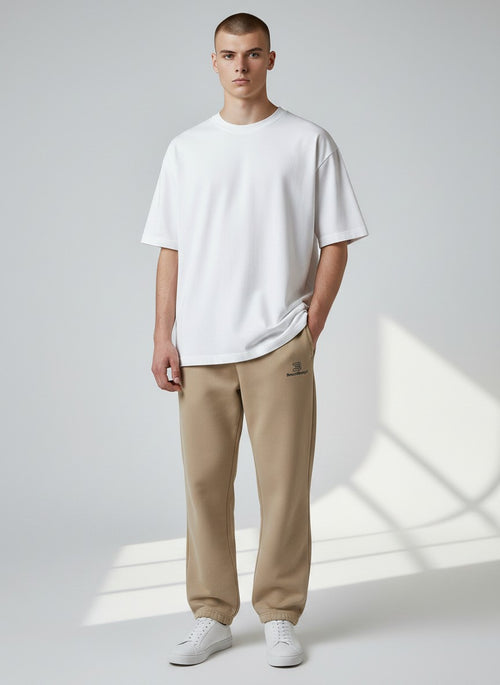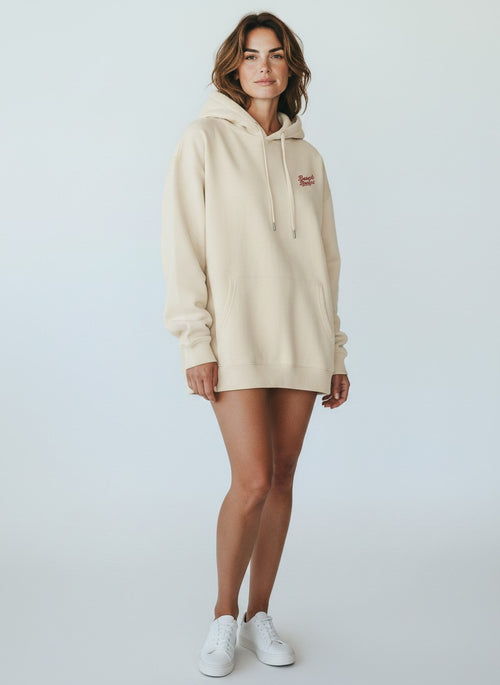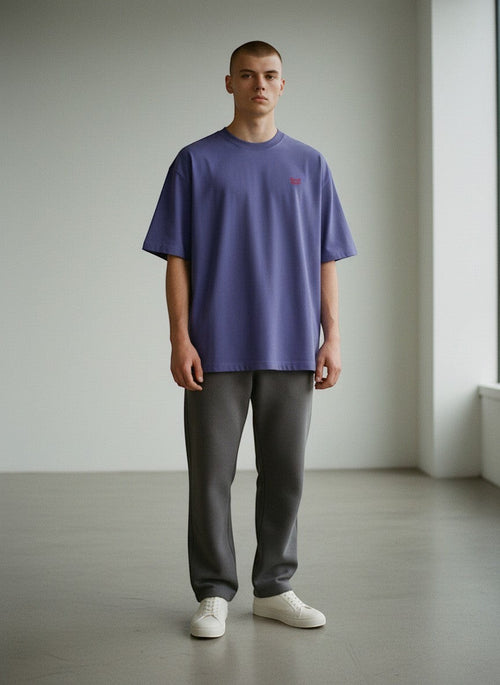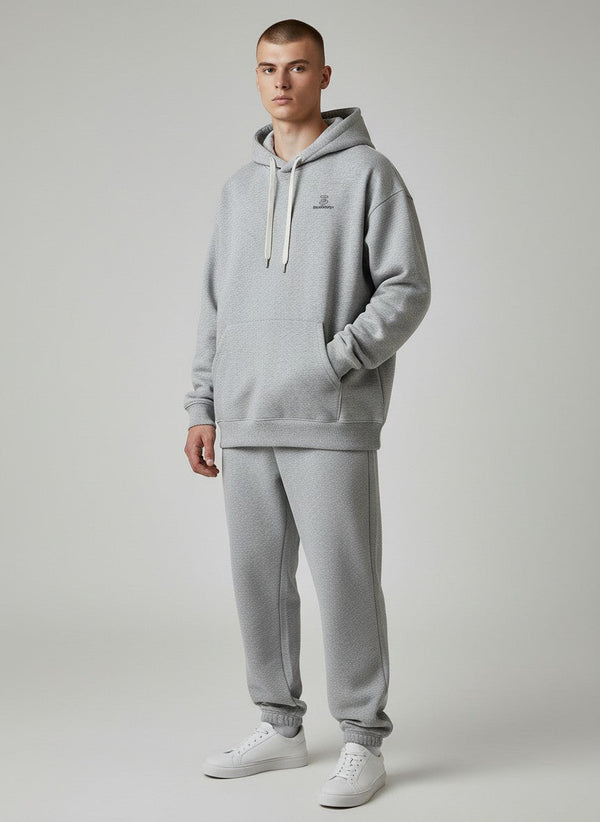
GSM stands for grams per square meter and describes the weight of a fabric per unit of area. For everyday T-shirts, 145 to 165 g/m² is considered the standard range, with lighter summer shirts falling below this and premium and streetwear styles above it. A value below 140 g/m² means a very thin shirt, while 180 to 220 g/m² is considered heavyweight. Important: GSM measures weight, not quality.
In short:
- Everyday T-shirts generally have a GSM range between 145 and 165, while fabrics below 140 g/m² are very thin and those above 180 g/m² are rather heavy.
- A higher GSM indicates a denser weave or knit and affects opacity, warmth, and the shirt's durability.
- However, quality does not depend on GSM alone; fiber quality, yarn type, and construction largely determine softness and longevity.
- For printed designs, at least 160 g/m² is recommended, while sports shirts are usually lighter at 130 to 160 g/m², and streetwear often falls between 180 and 220 g/m².
- When purchasing, customers should check the GSM rating along with material and construction details to assess the actual fabric quality.
Table of Contents
- What GSM Measures Exactly and How the Unit is Determined
- Typical GSM Ranges for T-Shirts and Their Uses
- How GSM Affects Drape, Warmth, and Durability
- Why GSM Does Not Equal Quality: Fiber, Yarn, and Construction
- Decision Guide: Finding the Right GSM for Your Needs
- Practical Shopping Tips: Reading and Interpreting GSM Ratings
- How BeachBodyz Puts GSM Decisions into Practice
- Specific Recommendations for Conscious Buyers
- BeachBodyz: The Right GSM Meets Sustainable Materials
- Sources
- FAQ
What GSM Measures Exactly and How the Unit is Determined
GSM is a measure of fabric weight. A testing laboratory punches out a fabric sample of a defined size, weighs it, and calculates the value per square meter. The result is the fabric weight, expressed in grams per square meter.
The value primarily indicates the density of the fabric. More grams per square meter usually means more fiber material in the same area, so the fabric is more densely woven or knitted. This affects opacity; a 200 g/m² shirt generally lets in less light than a 120 g/m² shirt.

What GSM does not show: fiber quality, yarn manufacturing, or construction. Two shirts with the same GSM value can differ significantly in feel and durability; fabric weight alone says nothing about craftsmanship.
Typical GSM Ranges for T-Shirts and Their Uses
The textile industry uses broad but recurring categories. Manufacturers set the boundaries slightly differently, but the following ranges serve as general guidelines.
- 120 to 140 g/m²: lightweight summer shirts, often used for promotional items or hot weather.
- 145 to 165 g/m²: the standard range for everyday shirts, offering a good balance of breathability and durability.
- 180 to 220 g/m²: the premium and streetwear range, with a heavier drape, often used for oversized cuts.
- Over 220 g/m²: transitioning to sweatshirt material, with little remaining of traditional T-shirt fabric.
For printing or embroidery, medium to higher fabric weights are usually recommended, as thinner fabrics often require an additional stabilizer. Those looking for a pure summer shirt will lean toward the lower range, while those wanting a bold streetwear look will choose the higher range. Some brands draw the line between standard and premium at 170 g/m², while others wait until 190 g/m². It is therefore more practical to look at the specific product information than to follow a rigid rule.
How GSM Affects Drape, Warmth, and Durability
Heavier fabrics hang differently. A 200 g/m² shirt hangs straighter and retains its shape, making it ideal for oversized cuts and streetwear looks. A 130 g/m² shirt moves more easily with the body but also wrinkles more quickly.
Warmth and breathability are closely linked to density. A higher GSM tends to retain more heat and is suitable for cooler months, while a lower GSM allows more air through and feels more comfortable in summer. Those who sweat a lot will quickly notice the difference.
Opacity is another effect of density: thicker fabrics show less of what is underneath, which is particularly relevant for light colors. For printing and embroidery, a higher fabric weight also provides more stability, as thin fabrics can become wavy around embroidered designs.
In terms of durability, more material per unit of area generally withstands abrasion longer. A thicker shirt holds up better to frequent washing and wear than a very thin one. However, this is no guarantee, as a thick shirt made from weak yarn can still quickly stretch out.
Why GSM Does Not Equal Quality: Fiber, Yarn, and Construction
A lightweight T-shirt made from high-quality long-staple cotton can be softer and more durable than a heavy T-shirt made from inferior yarn. Fiber length also plays a role: long-staple cotton, such as Pima or Supima, produces smoother, stronger threads than short-staple conventional cotton.
The yarn manufacturing process also matters. Ring-spun yarn is more uniform and durable than open-end yarn, which is directly reflected in softness and longevity. Two shirts with the same fabric weight can therefore feel completely different.
Construction makes up the difference. Clean seams, careful fiber pretreatment, and processes such as garment dyeing affect how a shirt looks after several washes. Fiber quality, yarn type, and construction determine the actual durability and feel at least as much as the fabric weight alone. GSM remains a useful starting point, but it is only one of several factors.

Decision Guide: Finding the Right GSM for Your Needs
Three simple questions can help before purchasing: What season will the shirt be worn in? What drape should the fabric have—close-fitting or structured? And what will it be used for—sports, everyday wear, or as a base for a printed design?
A few rules of thumb have proven useful:
- For printing or embroidered designs, a fabric weight of at least 160 g/m² is usually suitable; otherwise, the design will need an additional stabilizer.
- For sports shirts that need to dry quickly, the lower to medium range of approximately 130 to 160 g/m² is more suitable.
- For oversized and streetwear looks, the premium range between 180 and 220 g/m² provides a heavier drape.
Pro tip: If in doubt, order a sample or a single item and inspect the fabric yourself before ordering a larger quantity.
Practical Shopping Tips: Reading and Interpreting GSM Ratings
Many online shops state the fabric weight directly in the product description, often alongside information about the material and fit. This rating is generally more reliable than pure marketing terms such as "midweight" or "heavy," which are defined differently by each brand.
If the GSM rating is completely missing, it is worth looking at additional material information or asking the supplier. A few points can help with the assessment:
- If no GSM value is listed on the product page, look for the material composition and the origin of the fibers.
- Check the return options if the fabric appears thinner or thicker in person than expected.
- For larger orders, request a sample instead of relying solely on the description.
Terms such as "premium" or "heavyweight" are not protected designations; they say little about the actual numerical value.
How BeachBodyz Puts GSM Decisions into Practice
BeachBodyz combines organic cotton with different fabric weights depending on the product line: Oversized T-Shirts use approximately 350 g/m², while hoodies are around 350 g/m². The higher fabric weight in hoodies and sweatshirts provides a heavier drape and greater everyday durability, aligning with the brand's focus on long-lasting streetwear rather than short-lived fast fashion. Those who want to experience the difference between light and heavy fabrics for themselves can find further classifications of material types in the overview of T-shirt fabric types.
Specific Recommendations for Conscious Buyers
GSM is a good starting point, but never the final word. When purchasing a shirt, always read the value along with information about the fiber and construction. For most everyday purposes, a range between 150 and 200 g/m² is sufficient, combined with organic cotton and transparent sourcing.
— Ahmed
BeachBodyz: The Right GSM Meets Sustainable Materials
Those specifically looking for a certain fabric weight will find clearly stated values from many brands instead of vague marketing terms. The collections are fairly produced and made from organic cotton, which can be reflected in long-lasting cuts and documented material specifications.
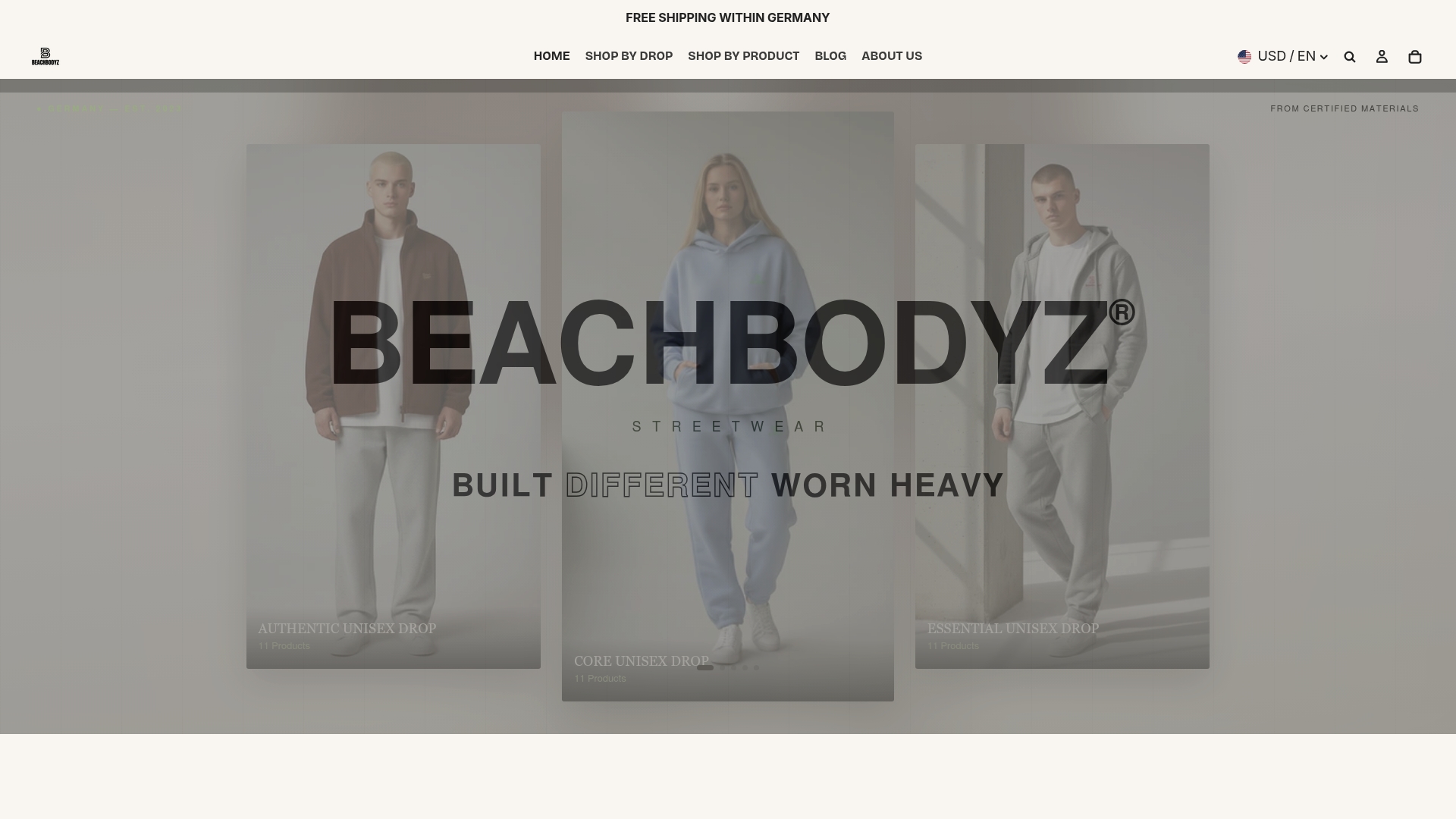
- Oversized shirts at around 350 g/m² for a bold yet still airy drape.
- Hoodies at around 350 g/m² for maximum durability and warmth.
- Sweatshirts as a transitional piece between a T-shirt and a hoodie.
Material information is available directly on the product pages; it is worth taking a look before ordering.
Sources
Those who want to delve deeper can find the basics of the definition and typical ranges in the textile encyclopedia from Wissen-Kompakt, as well as in the fabric weight glossary from Magicdruck. Concrete numerical examples are provided in the article from Textilwaren24. For questions about certifications for sustainable cotton, it is worth looking at the GOTS Standard. Those who are also interested in fabric properties for swimwear can find additional explanations in the guide by Doll House.
- T-Shirt Fabric Weights — Textilwaren24 Magazine
- Glossary: Fabric Weight — Magicdruck
- Fabric Weight — Wissen-Kompakt Textile Encyclopedia
FAQ
How Much GSM Does a Good T-Shirt Have?
For most everyday shirts, a range between 145 and 165 g/m² is considered a solid standard. Those who prefer a heavier drape will find thicker fabrics in the premium range between 180 and 220 g/m².
What Does GSM Mean in Clothing?
GSM stands for grams per square meter and is the standard measure for the fabric weight of a fabric. A higher value means a denser, usually heavier fabric.
How Much GSM Is Good?
It depends on the purpose: approximately 120 to 140 g/m² is suitable for summer shirts, 145 to 165 g/m² for everyday shirts, and 180 to 220 g/m² for streetwear with a heavier drape. There is no universally "good" value; what matters is the intended use.
What Does a Large G on the T-Shirt Mean?
A printed symbol on a T-shirt is usually part of a brand or collection logo and has no connection to the fabric weight. Information about the origin and meaning of a specific logo is usually available on the respective brand's product page.