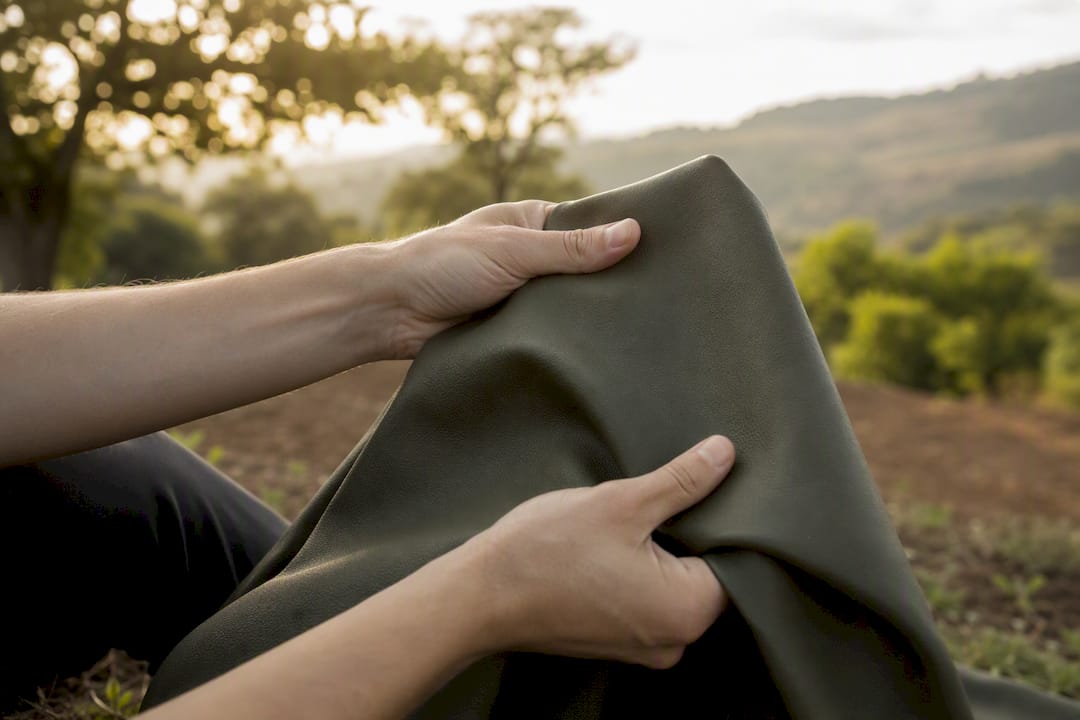
"Vegan leather" is a catch-all term, with PU leather being the most common form. Neither is automatically the more sustainable choice compared to real leather, as the environmental footprint depends on the material mix, the length of use, and the disposal process. Anyone who wants to truly compare must look at the composition, not the label.
In short:
- PU leather consists of a textile backing and a polyurethane coating, with quality depending heavily on the material composition.
- High-quality PU leather is more flexible and abrasion-resistant, but cheaper quality can quickly show cracks and peeling.
- The environmental footprint of PU leather is inconsistent, as factors like lifespan, recyclability, and microplastic pollution are crucial.
- The lifespan is usually between two and ten years, though care and proper storage can significantly extend durability.
- When buying, you should look for precise material specifications and certificates instead of relying solely on the "vegan" label.
Table of Contents
- Vegan Leather vs. PU: Definition and Technical Structure
- How does PU leather compare to other vegan materials?
- How sustainable is PU leather really in an environmental comparison?
- How long does vegan leather last and how do you care for it properly?
- Buying guide for vegan leather: What you should really look for
- Plant-based alternatives: Mushroom, pineapple, apple, and cork leather in a reality check
- Material honesty at Beachbodyz: What transparency looks like in practice
- Why material honesty is more important than the word "vegan"
- Sources
- FAQ
Vegan Leather vs. PU: Definition and Technical Structure
The term "vegan leather" is not legally protected. Any manufacturer can use it as long as no animal material is contained, regardless of how much plastic is inside. This explains why the quality fluctuates so heavily between products.
Technically, classic PU leather consists of a textile backing material, usually cotton or polyester, which is coated with a layer of polyurethane. Higher-quality versions often include a foam interlayer that provides more softness and a leather-like feel. This distinguishes PU leather significantly from PVC synthetic leather, which is based on polyvinyl chloride and generally ages poorly and is harder to recycle.
Important distinguishing features at a glance:
- PU leather: Textile backing plus polyurethane coating, usually more supple and breathable than PVC.
- PVC synthetic leather: Older, harder, and less flexible version, which is more difficult to separate as a raw material.
- Real leather: Animal hide, tanned, with an entirely different aging behavior and environmental profile.
So, when you read "vegan" on a label, you only know that no animal was used. The word says nothing about the plastic content.
How does PU leather compare to other vegan materials?
PU leather usually has the advantage in terms of flexibility and processing: it is easy to sew, emboss, and press into different thicknesses. This is precisely what makes it so popular for bags, shoes, furniture upholstery, and clothing. The weakness lies in the durability of the coating: with cheap goods, the PU layer often flakes off in scales or cracks after a few years—an effect many know as "peeling."
Direct comparison shows clear patterns:
- Flexibility: PU leather is more supple than PVC, but less stretchy than real leather.
- Abrasion resistance: High-quality PU handles everyday wear and tear on bags and shoes well; cheap PU does not.
- Cracking tendency: Increases with cold, UV exposure, and mechanical stress, especially with thin coatings.
- Haptics: Good PU quality feels surprisingly similar to leather, while simple versions often have an artificial shine.
For furniture and car seats where there is constant stress, the thicker, higher-quality PU version is usually worth it. For fashion with a shorter usage cycle, a lighter version is often sufficient, provided the seams and edges are neatly finished.
How sustainable is PU leather really in an environmental comparison?
Life cycle assessments according to DIN EN ISO 14040 show an inconsistent picture. The results depend heavily on assumptions about animal husbandry, tanning processes, and usage duration, which is why blanket statements are almost always open to challenge.
The carbon footprint of real leather can, in some analyses, be higher than that of synthetic alternatives—though this varies significantly depending on the study methodology, as Vogue reports.
Ultimately, several factors determine the actual footprint:
- Type of animal husbandry and the tanning process for real leather.
- Plastic content and production energy for PU leather.
- Actual service life of the finished product.
- Recyclability and behavior at the end of its life.
One problem often overlooked in sustainability debates: synthetic textiles like PU leather contribute to microplastic pollution because fine plastic fibers are released during washing and through abrasion, as 20min describes. At the end of its service life, PU leather also usually ends up in the general waste bin, as textile and plastic coatings can hardly be separated. Real leather is biodegradable, but the preceding tanning process generates its own environmental burdens. Both sides, therefore, have blind spots.
How long does vegan leather last and how do you care for it properly?
The lifespan of PU leather is typically between two and ten years, depending on material quality and stress. High-quality PU often outperforms cheap PVC, but rarely reaches the multi-decade durability of excellently tanned real leather. Typical signs of aging are peeling of the coating and fine cracks, usually triggered by dryness, heat, or harsh cleaning agents.
How to extend its life in everyday use:
- Clean stains immediately with a damp, soft cloth—never with alcohol or solvents.
- Do not store bags and clothing made of PU leather directly next to a heater or in blazing sun.
- Fold the material as little as possible to avoid crease lines.
- Treat small cracks early with a special synthetic leather repair agent before they get bigger.
Professional tip: Store PU leather bags with some filler material, such as paper. This keeps the shape and coating stable, and crease marks, where the coating might crack later, are less likely to occur.
Buying guide for vegan leather: What you should really look for
In the product description, you can determine if you are buying an honest product. Look at the percentage composition—how many percent polyurethane, cotton, or polyester were actually used—not just the word "vegan." Many products with this label consist of 30 to 60 percent fossil plastics, mostly PU.
Reliable trust signals when buying:
- Certificates such as Oeko-Tex or PETA Approved Vegan, which confirm specific standards.
- Manufacturer information on material proportions in percent, not just vague marketing terms.
- Notes on environmental footprint data or at least the production process.
- Transparency regarding the production region, such as EU manufacturing with verifiable standards.
For durable everyday products, the more robust PU variant is often worth it; for fashion pieces with a shorter life cycle, plant-based alternatives can make more ecological sense, provided the composition is right.
Plant-based alternatives: Mushroom, pineapple, apple, and cork leather in a reality check
Bio-based materials sound like an elegant solution, but in practice, it is more complicated. Mushroom leather is obtained from mycelium, pineapple leather from pineapple leaf fibers, apple leather from the pressed residue of apple juice production, and cork leather from the bark of the cork oak.
The problem: Many of these materials still require a PU coating to be stable and water-repellent, as Utopia reports. As a result, they are rarely completely biodegradable, even if the natural component scores points ecologically.
What you should look for with these materials:
- Check how high the actual natural component is compared to the plastic content.
- Ask about the type of coating, as many providers do not disclose this openly.
- Do not expect compostability as long as PU components are present.
Ecologically, these alternatives make sense primarily where the plastic content is low and transparently stated.
Material honesty at Beachbodyz: What transparency looks like in practice
Beachbodyz relies on certified materials for its streetwear instead of vague advertising promises. The brand uses materials certified by PETA-Approved-Vegan and GOTS-certified organic cotton—two standards that provide specific test criteria rather than just marketing statements. Additionally, in its article on sustainable fabric alternatives, Beachbodyz explains why material composition should be scrutinized more closely than pure label statements.
The practical advice for buyers remains: demand a clear percentage of plastic content, just as experts demand more comparability from other manufacturers. Those browsing the Beachbodyz collection will find, for example, the Signature Windbreaker Jacket as an example of durable, fairly produced craftsmanship.
Why material honesty is more important than the word "vegan"
The debate about vegan leather versus PU is too often led on moral grounds, yet it is primarily a question of materials science. Those who equate "vegan" with "automatically sustainable" overlook the fact that a large proportion of products sold as vegan still consist largely of fossil plastic. This is not a weakness of the concept, but a transparency problem in the industry.
Conventional buying advice focuses mostly on the question "animal or no animal," while the importance of European production quality and sustainability is increasingly coming into focus. It would make more sense to ask "how much plastic, how long will it last, how can it be disposed of?" This is exactly where the difference lies between a product that survives five washes and one that lasts for years.
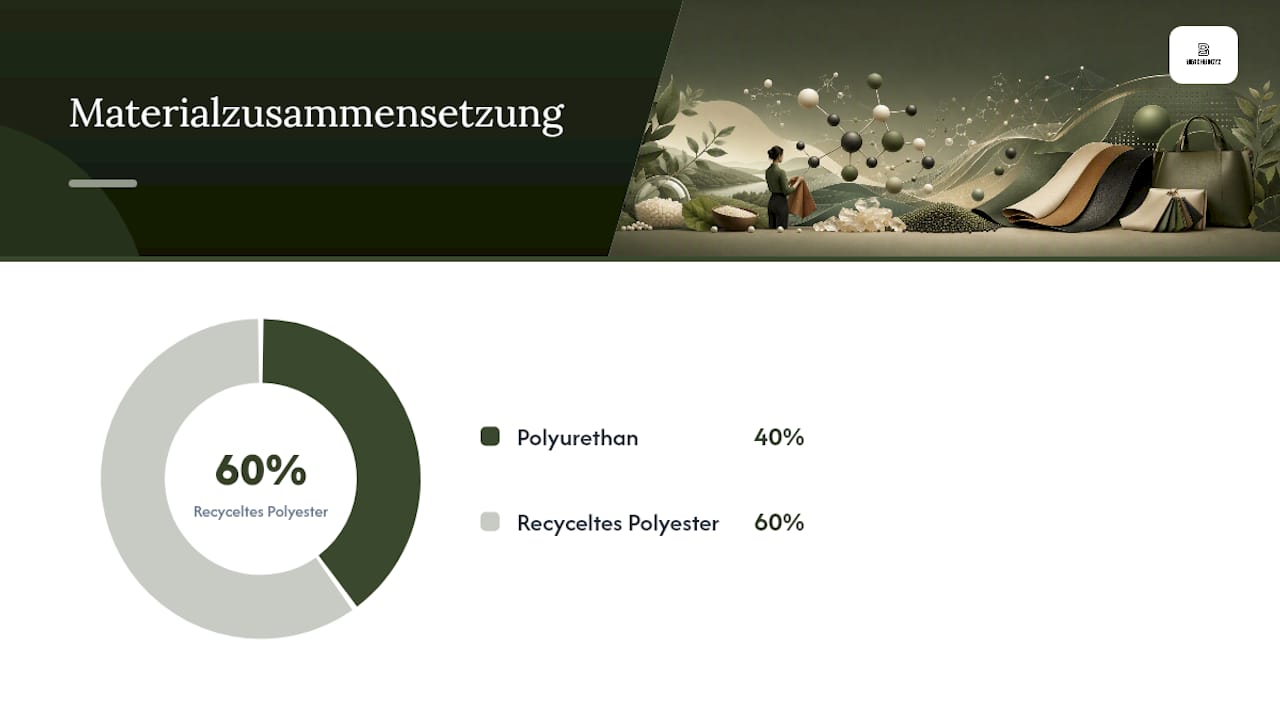
I therefore consider percentage figures for material composition to be more meaningful than any "vegan" seal alone. A manufacturer that discloses that a product consists of 40% polyurethane and 60% recycled polyester deserves more trust than one that just writes "100% vegan." Exactly such information should guide buying decisions, not gut feelings or marketing language.
— Ahmed
Sources
FAQ
What is vegan PU leather?
Vegan PU leather is a synthetic leather made from a textile backing with a polyurethane coating, produced without any animal components.
Is vegan leather better than real leather?
There is no universally valid answer: some life cycle assessments show a lower carbon footprint for vegan alternatives, but the result depends heavily on animal husbandry, the tanning process, and the service life of the respective product.
How durable is vegan leather?
The lifespan varies depending on the quality of the PU coating and daily wear and tear, as described under care and durability.
What is PU leather from China?
PU leather is frequently produced in Asian manufacturing countries, including China, with quality depending heavily on the specific manufacturer and the combination of backing material and coating used. The decisive factor is not the country of production alone, but the material specifications and certificates mentioned in the buying guide section.