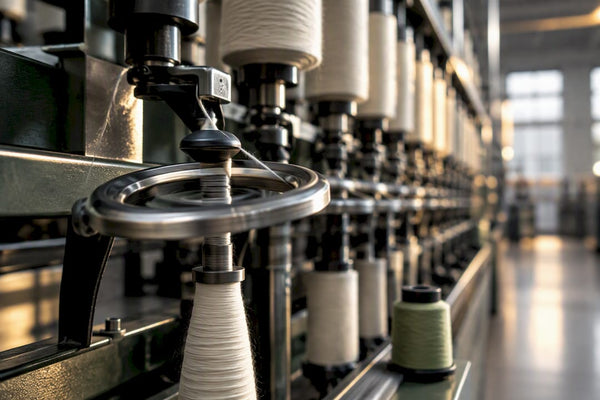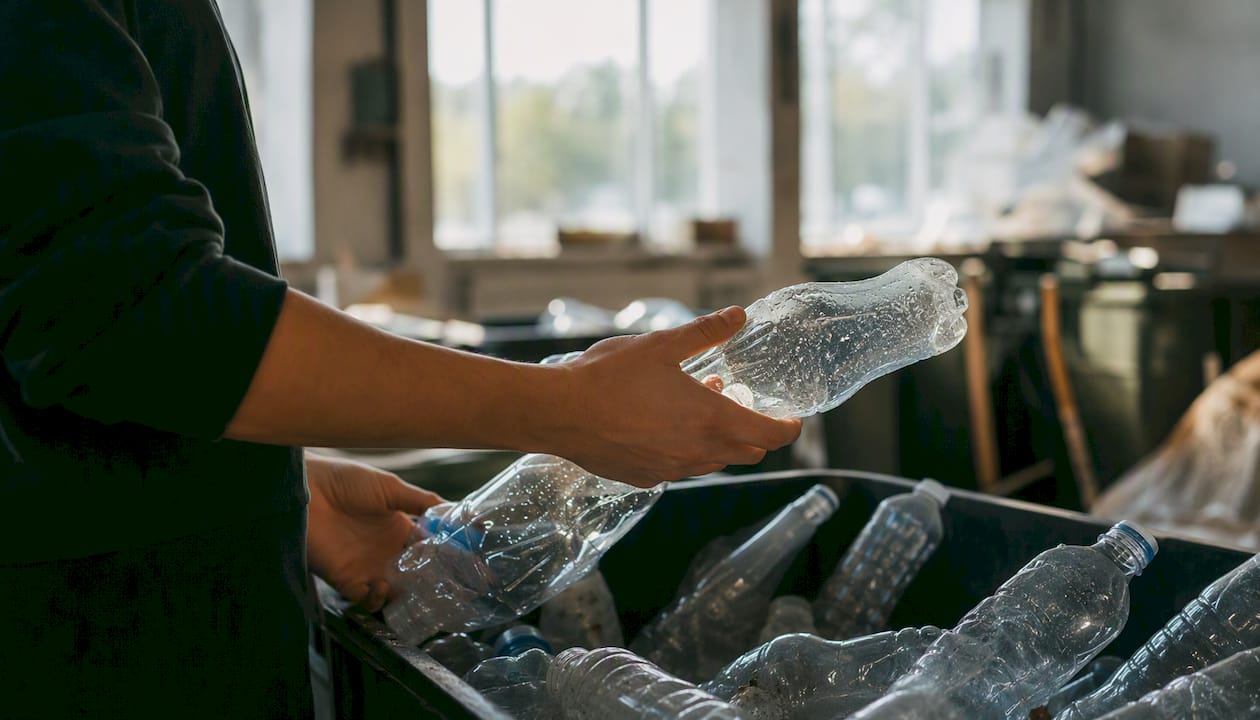
rPET is recycled polyethylene terephthalate. Specifically: PET material from previously used packaging that has been cleaned, shredded, and reprocessed into new technical or food-grade material.
Three key facts upfront:
- Post-Consumer vs. Post-Industrial: Post-consumer rPET comes from used bottles and packaging; post-industrial rPET from production waste. For food packaging and the bottle loop, almost exclusively post-consumer material is considered.
- Bottle-to-Bottle takes precedence: The closed bottle loop is considered the most ecologically valuable use. If rPET flows into textiles instead, it permanently leaves this loop.
- EU Regulatory Framework: EU regulations and EFSA requirements determine which rPET is approved for direct food contact and how recycled content must be calculated and reported.
A slightly darker or less transparent appearance with a high rPET content is normal. It is not a quality defect, but a visible characteristic of the recycling process.
Key Takeaways
rPET is recycled PET from post-consumer sources, achieving the greatest climate benefits in a closed bottle loop and subject to strict food safety requirements in the EU.
| Topic | Details |
|---|---|
| Definition of rPET | Recycled polyethylene terephthalate from used packaging, processed into new material. |
| Main Climate Advantage | Significantly lower greenhouse gas emissions compared to virgin PET; values depend on sorting quality and energy mix. |
| Bottle-to-Bottle Priority | Closed bottle loop is ecologically more valuable than use in textiles (downcycling). |
| EU Regulation | Binding calculation methodology for recycled content; EFSA approval mandatory for food contact. |
| Beachbodyz | Sustainable streetwear made from recycled polyester and organic cotton, ethically produced in the EU. |
Table of Contents
- What exactly does rPET mean? Post-Consumer and Post-Industrial in comparison
- How is rPET produced? The process step by step
- What are the advantages of rPET over new PET?
- What is rPET used for? Products and fields of application
- What does the EU regulate regarding the food safety of rPET?
- What are the quality limits of rPET?
- rPET in textiles: What buyers should know
- What does "100% rPET" on packaging really mean?
- What can consumers in Central Europe do specifically?
- rPET and Circular Economy: An editorial assessment
- Beachbodyz: Sustainable streetwear made from recycled material
- Sources
- FAQ
What exactly does rPET mean? Post-Consumer and Post-Industrial in comparison
rPET stands for "recycled Polyethylene Terephthalate." The term does not describe a uniform material, but differs significantly depending on the origin of the raw material.
Post-consumer rPET is created from products that consumers have already used and returned: beverage bottles, food trays, packaging. This material has gone through the full usage cycle and comes with the highest demands for cleaning and reprocessing. At the same time, it is the only material eligible for direct food contact and the bottle-to-bottle loop.
Post-industrial rPET comes from production waste: trim, rejects, residual material from production lines. It is cleaner and easier to reprocess, but in EU regulation, it is not considered post-consumer recycled content and cannot be counted towards the legal recycled content quotas for single-use bottles.
The origin thus directly determines what is possible with the material. Only cleanly collected, traceable post-consumer PET meets the requirements for food-grade applications. Standards such as the Global Recycled Standard or RecyClass help manufacturers and buyers to verify and communicate the origin and quality of rPET.
How is rPET produced? The process step by step
The production process of rPET involves several clearly defined stages. For food-related applications, additional cleaning and filtration steps are required.
- Collection: Used PET bottles and packaging are collected via deposit systems, the yellow bin, or municipal collection systems. Systems such as the reverse vending machines operated by TOMRA play a central role in Central Europe for the sorted collection of returnable bottles.
- Sorting: Automatic sorting systems separate PET from other plastics, glass, and metal. Infrared sensors identify material types; color recognition separates clear from colored PET.
- Cleaning: Labels, adhesives, and contaminants are removed. This step is crucial for the subsequent quality.
- Shredding into flakes: The cleaned material is shredded into small plastic flakes.
- Reprocessing: The flakes are washed, dried, and filtered. For bottle-to-bottle quality, a high-temperature treatment (solid-state polycondensation) follows, which further reduces impurities and restores the material's viscosity.
- Regranulate or Preform: The reprocessed material is extruded into rPET granulate or directly processed into preforms (bottle blanks). If necessary, virgin material is added to compensate for quality fluctuations.
Mechanical vs. chemical recycling
| Feature | Mechanical Recycling | Chemical Recycling |
|---|---|---|
| Process | Physical reprocessing (washing, melting, filtration) | Decomposition into monomers (e.g., glycolysis, methanolysis) |
| Quality | Slightly reduced viscosity after several cycles | Theoretically, virgin-like quality achievable |
| Food Safety | Possible with certified process (EFSA compliant) | Still limited regulatory recognition |
| EU Countability | Recognized as post-consumer recycled content | Depends on regulatory status |
| Energy Demand | Lower than new production | Higher than mechanical recycling |
| Prevalence | Widely established | Still in scaling phase |
Mechanically reprocessed rPET is currently the most widespread recycled material for direct food contact, as EFSA requirements for this process route are clearly defined. Chemical recycling offers long-term potential but is not yet fully integrated regulatorily.
What are the advantages of rPET over virgin PET?
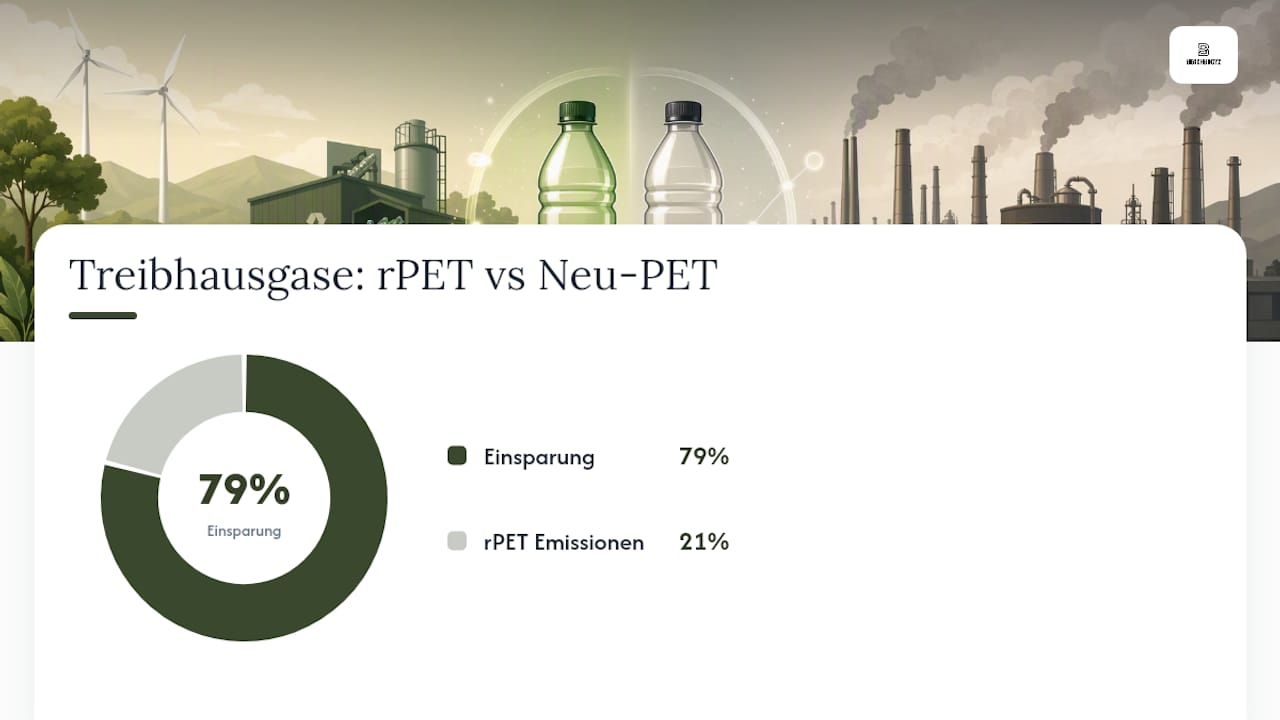
The most important advantage lies in the greenhouse gas balance. According to industry reports, the production of rPET results in significantly lower greenhouse gas emissions compared to virgin PET; a value frequently mentioned in popular discourse is around 79% fewer emissions under certain system assumptions. This figure applies to the closed bottle loop with high-quality sorting and assumes that recycling is operated with a favorable energy mix.
Important: Such percentage values are always scenario-dependent. Transport routes, energy source of the recycling plant, and sorting quality significantly influence the result.
Further advantages:
- Fewer primary raw materials: rPET reduces the need for crude oil as a raw material for new PET.
- Lower energy consumption: Mechanical recycling requires less energy than the new production of PET from crude oil.
- Circular economy: Every returned bottle extends the material cycle and reduces the need for landfilling or incineration.
Material flow analyses by IFEU show that a prioritized bottle loop can reduce the use of primary PET in the bottle sector to a fraction of today's value in certain scenarios. Prerequisite: high collection rates, clean sorting, and a truly closed loop without outflow into lower-value applications.
What is rPET used for? Products and application areas
rPET can be found in a wide range of products. The application determines whether the material remains in a high-value loop or leaves it.
- Beverage bottles (bottle-to-bottle): The most valuable use. Deposit-return PET bottles achieve high return rates and enable multiple recycling cycles for the same product type.
- Food packaging and trays: Only permitted if food-grade suitability is proven (EFSA-compliant process).
- Fibers and textiles: rPET polyester is spun into fibers and used in clothing, sportswear, and home textiles. Technically, this often constitutes downcycling, as the material permanently leaves the bottle loop.
- Packaging films and blisters: Technical packaging applications without direct food contact.
- Construction and automotive components: Insulation materials, geotextiles, vehicle interior trim. A growing field of application, but also outside the bottle loop.
Brands like Coca-Cola have publicly communicated their priority of bottle-to-bottle as the gold standard because the use of bottle rPET in textiles wastes valuable circular potential.
What does the EU regulate regarding the food safety of rPET?
The EU has clearly defined the framework for rPET in food packaging. Two levels are relevant: product safety and recycled content quotas.
Food Safety and EFSA: Mechanically reprocessed rPET may only be used for direct food contact if the recycling process has been evaluated and approved by EFSA. The evaluation checks whether the process reliably reduces contaminants to a safe level. Not every rPET granulate is automatically food-grade; the process route must be proven.
Recycled Content Quotas and Reporting Obligations: The EU Implementing Rules establish a binding methodology for calculating and reporting the recycled content in single-use PET beverage bottles. The calculation considers bottle bodies, caps, and labels separately and regulates which recycled materials from which regions of origin (EU, EEA, OECD) may be counted. Transitional rules define until when certain proofs of origin are sufficient.
For packaging manufacturers, this specifically means: complete documentation of the recycled content's origin, proof of the reprocessing process, and clear labeling of the recycled content in the overall product. TÜV SÜD and comparable testing bodies independently certify recycled content and food safety.
What are the quality limits of rPET?
rPET is not a panacea. Several technical and logistical limitations restrict its use.
- Discoloration: Colored PET bottles and dye residues from labels can dull the regranulate. Clear rPET for food packaging requires very careful color sorting.
- Contaminants: Adhesive residues from labels, additive residues, and foreign plastics affect quality. Even small amounts of PVC in the PET stream can render the entire batch unusable.
- Polymer aging: Each recycling cycle slightly shortens the polymer chains. After several cycles, the viscosity decreases; virgin material must be added to stabilize the material properties.
- Collection rates: High recycling quality requires high return rates. Where deposit systems are absent or poorly functioning, the available quantity of clean post-consumer PET decreases.
- Export flows: A portion of the collected PET leaves Europe and is thus not available for the European loop.
Pro tip: Manufacturers who proactively implement "design for recycling," i.e., easily removable labels, no multi-layer composites, and no PVC components, significantly improve the recyclability of their products. RecyClass offers a recognized assessment scheme for this.
rPET in textiles: What buyers should know
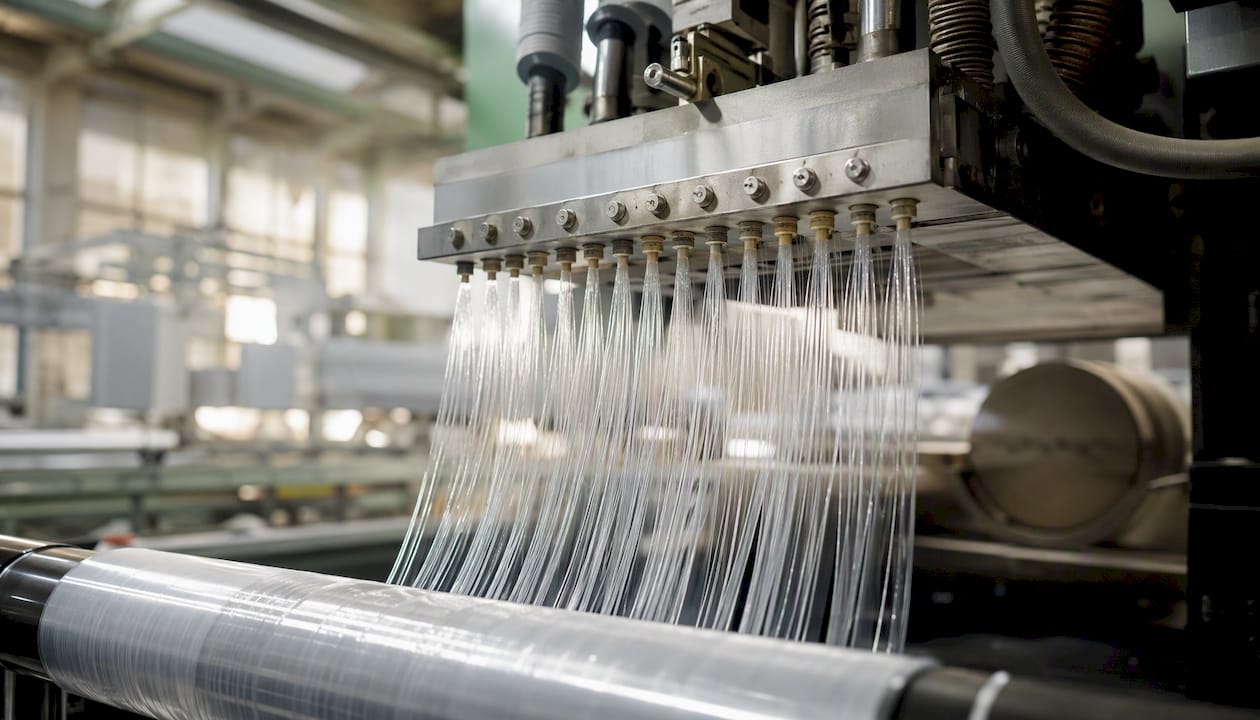
rPET fibers for clothing are produced differently than bottle-to-bottle rPET. The reprocessed granulate is melted and drawn into fibers through spinnerets. This process is technically less complex than food-grade reprocessing but has its own demands on purity and viscosity.
What buyers can expect: rPET polyester in clothing behaves functionally similar to conventional polyester. Handfeel, care properties, and durability are comparable. Certificates such as the Global Recycled Standard (GRS) or GOTS provide guidance on whether the recycled content is actually proven.
Care instructions to extend product life and reduce microplastic loss:
- Use wash bags (e.g., Guppyfriend) to catch microfibers
- Choose low washing temperatures (30 °C)
- Prefer gentle cycles, reduce spin speed
- Wash less often if possible
More about recycled polyester in clothing and its practical properties can be found in the Beachbodyz blog.
What does "100% rPET" on packaging really mean?
Closures, labels, and shrink sleeves often consist of other materials and are listed separately or not at all.
True 100% solutions, where even closures are made from rPET, exist, but are technically more demanding and not yet widely implemented. Manufacturers who claim this must substantiate it with certificates and proof documents.
Consumers can recognize credible information by the following characteristics:
- Indication of the exact recycled content in percent (not just "contains rPET")
- Separate declaration for bottle body, closure and label
- Reference to certification (RecyClass, GRS) or EFSA-approved process
- Transparent origin (post-consumer, EU/EEA)
What can consumers in Central Europe do?
The circular economy only works if enough clean material is returned. Consumers have a direct influence on this.
- Use reverse vending machines: Deposit PET bottles belong in the reverse vending machine, not the yellow bin. Deposit bottles achieve the highest purity levels and flow directly into the bottle-to-bottle cycle.
- Separate cleanly: Remove residues, unscrew lids (depending on the local system), remove labels if possible. Contaminated bottles reduce sorting quality.
- Know local systems: Different deposit and collection systems apply in Germany, Austria, and Switzerland. What goes through the reverse vending machine in Germany is collected via PET-Recycling Switzerland in Switzerland. Local rules can be checked on the websites of the respective system operators.
- Make purchasing decisions: Prefer products with a proven and certified rPET content. Read information on packaging critically (see section above).
- Choose durable products: For textiles, the longer a garment is worn, the better the overall balance. A sustainable everyday life often begins with fewer, but more conscious purchases.
rPET and Circular Economy: An Editorial Assessment
rPET is not a marketing term. It is a technologically mature bridge between waste and raw material, which is already working on a large scale in Europe. But the term is too often used as a free pass, without asking the crucial question: Which rPET, from which source, for which application?
The bottle cycle has the greatest climate-saving potential. Those who direct rPET from bottles into textiles gain a green argument in the short term, but lose circular material in the long term. Manufacturers and retailers bear responsibility here that goes beyond labeling. Transparency about origin, process, and accountability is not an option, but an obligation.
For consumers, certificates like GRS or RecyClass are more reliable than marketing promises. And returning deposit bottles is the most direct contribution to the circular economy.
Beachbodyz relies on proven material origin and fair EU production for recycled polyester, because sustainability without traceability has no basis.
Beachbodyz: Sustainable Streetwear Made from Recycled Material
When looking for rPET, people often think of bottles first. But recycled polyester is also found in clothing that is worn daily.
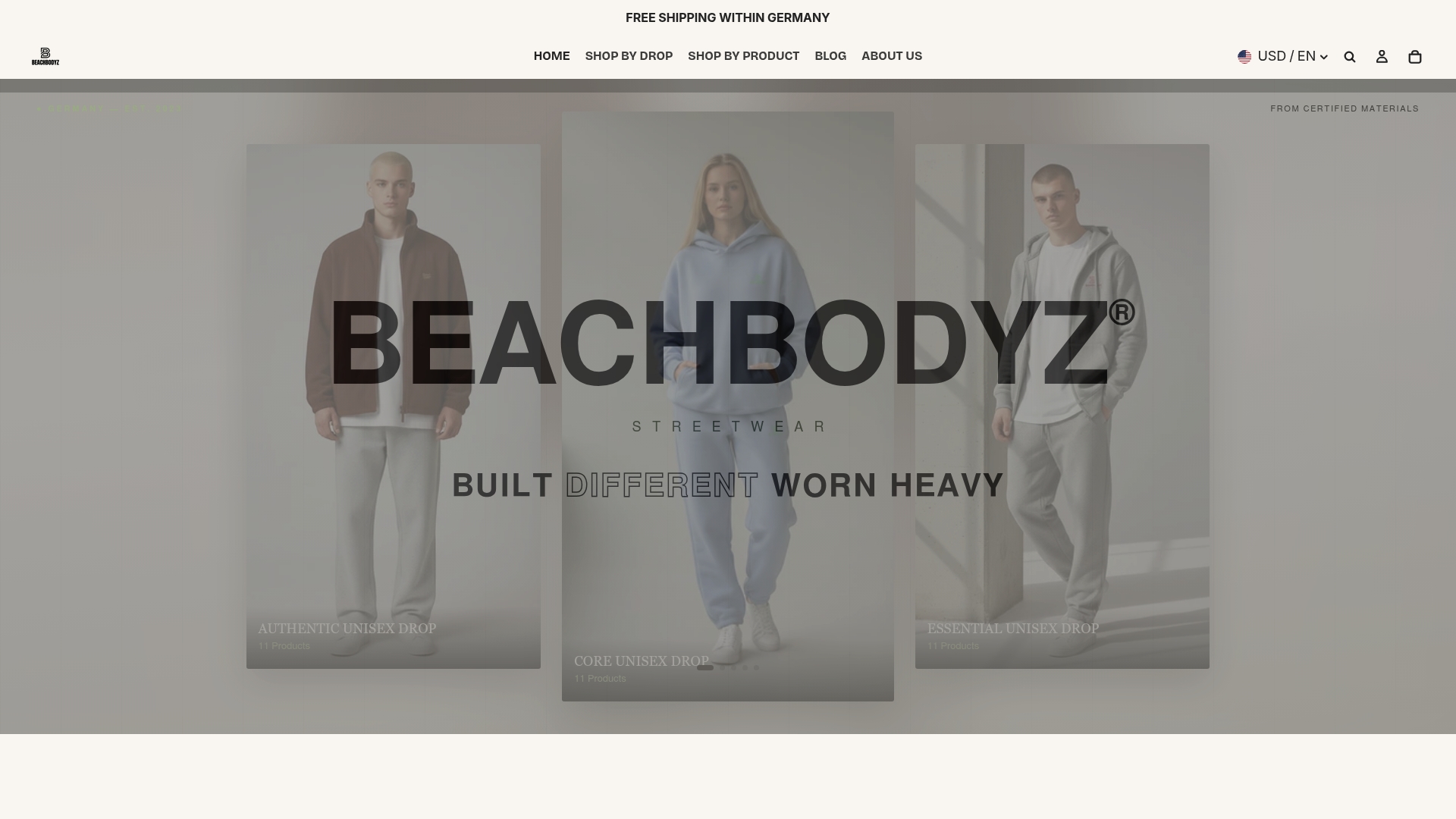
Beachbodyz produces streetwear from GOTS-certified organic cotton and recycled polyester, fairly manufactured in the EU and shipped climate-neutrally. No fast-fashion compromise, but clothing that is durable and whose material origin remains traceable. The Identity Oversize Hoodie made from recycled material is a concrete example of what rPET polyester looks like in everyday life. Those who want to see the entire sustainable collection can find it in the Essential Drop collection. There you will find basics that last instead of ending up in the trash after one season.
Sources
For those who want to delve deeper, the following sources are recommended:
- EUR-Lex — Implementing Decision on the calculation of the recycled content (DE)
- IFEU — PET Material Cycle: Project rPET (Final Report)
- Forum PET — Bottle-to-Bottle Recycling
- What is rPET and why do we use it for food packaging? — Verive
- rPET makes recycling visible — SicherVerpackt
FAQ
What kind of material is rPET?
rPET is recycled polyethylene terephthalate, i.e., PET plastic that has been recovered from used packaging such as beverage bottles, cleaned, and reprocessed into new material.
What does 100% rPET mean on a bottle?
The information usually refers only to the bottle body. Closures and labels are often made of other materials and are declared separately or not at all.
Is rPET approved for food packaging?
Yes, but only if the recycling process has been evaluated and approved by the EFSA. Not every rPET granulate automatically meets this requirement.
Is rPET waterproof?
rPET material has the same barrier properties as conventional PET and is therefore suitable for liquid packaging. In textiles, rPET polyester behaves like conventional polyester and can be treated to be water-repellent.
How does rPET differ from regular polyester in clothing?
Functionally, the differences are minor. rPET polyester in textiles comes from recycled sources and has a better greenhouse gas balance than virgin polyester, provided that the recycled content is verifiably certified, for example by the Global Recycled Standard.