Monochrome Streetwear 2026: The Complete Guide to Tone-on-Tone Outfits
In 2026, monochrome streetwear is more than just a black hoodie paired with black joggers. The look succeeds when color, fit, material, and accessories interact intentionally. Tone-on-tone does not mean that every piece must have the exact same color code. The key is a cohesive color world that feels calm but gains depth through texture, cut, and layering. This is exactly where its strength for everyday life lies: you can appear relaxed without your outfit looking random or cluttered.
This guide categorizes monochrome streetwear in a way that you can actually use: from neutral color palettes, proportions, and footwear to capsule planning for multiple seasons. You aren't getting a rigid rulebook, but a system. It helps you combine existing pieces better, purchase new items more selectively, and avoid typical mistakes like flat fabric surfaces, wrong lengths, or unclear contrasts.
What defines monochrome streetwear in 2026
Monochrome streetwear means your outfit operates within a dominant color or color family. This can be all-black, but also stone, grey, navy, brown, off-white, olive, or a graduated beige. The difference from a simple single-color look lies in the intent. You don't build the outfit randomly from similar items, but rather plan tonality, volume, and surfaces so that a coherent overall image emerges.
Good monochrome streetwear uses three levels. First, the color: light, medium, dark, or slightly desaturated. Second, the silhouette: wide, straight, cropped, long, or fitted. Third, the texture: smooth jersey, heavy sweat, fleece, softshell, ribbed structure, or a matte jacket surface. If all three levels remain the same, the look quickly appears flat. However, if you change only one level, the look remains calm but gains presence.
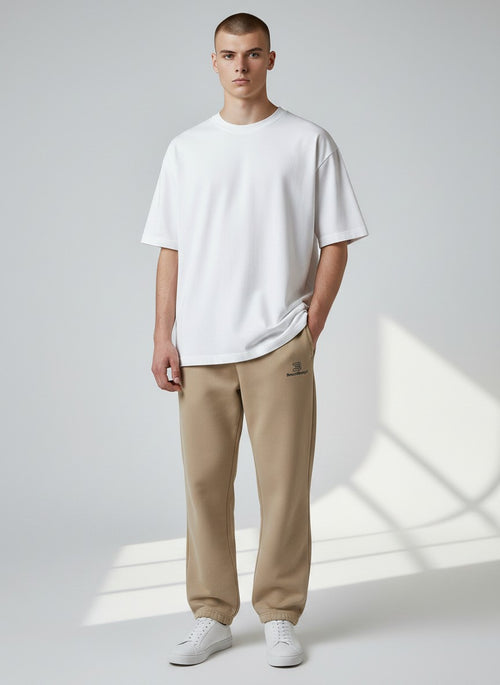
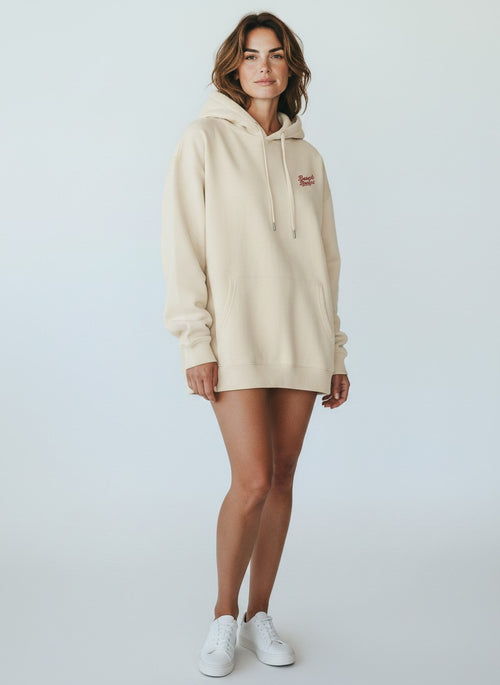
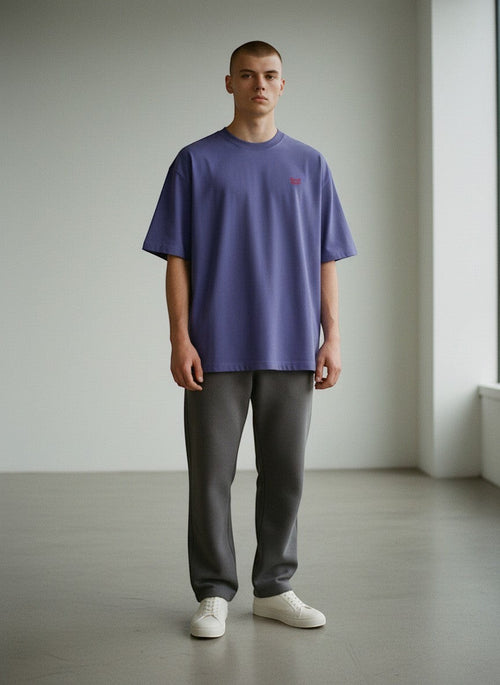
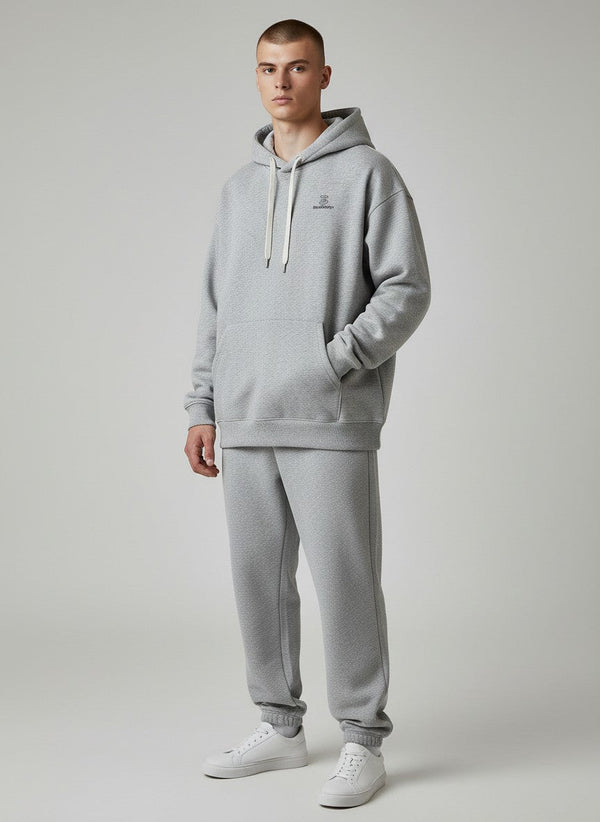
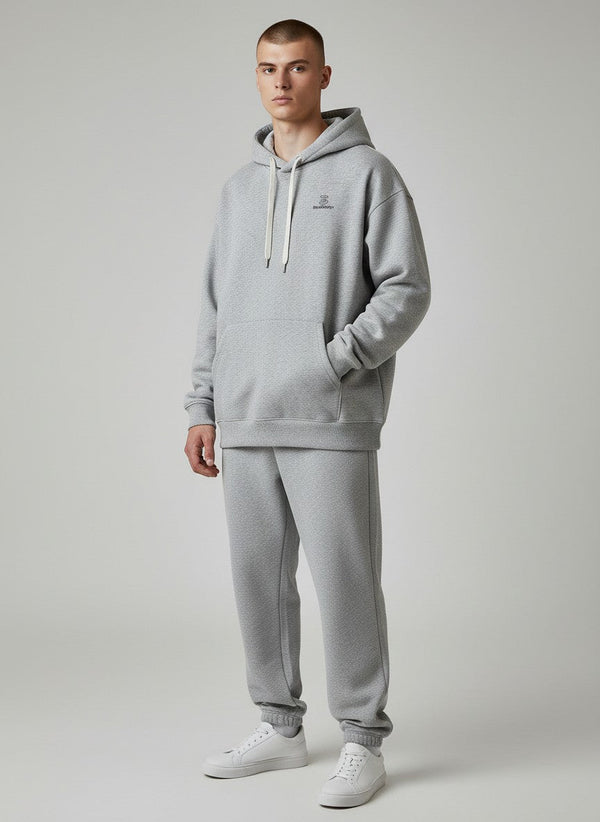
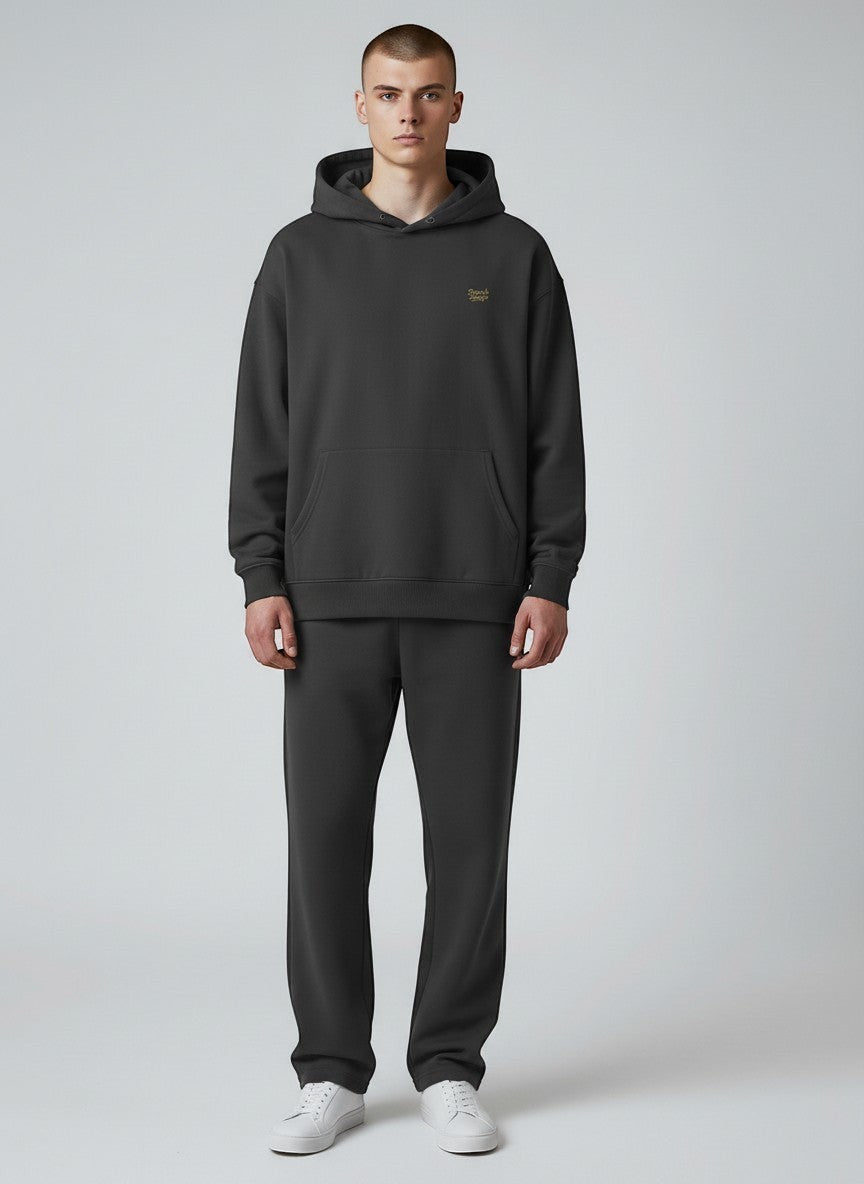
For BeachBodyz®, monochrome streetwear means wearable, not costumey. An oversize hoodie, clean joggers, a heavier t-shirt, and a functional jacket can form a strong base when the lengths are right. MADE IN EU and BUILT DIFFERENT are not styling rules here, but brand attitudes that fit well with a reduced, confident outfit language: less noise, more stance.
The advantage of monochrome streetwear lies in its easy repeatability. You don't have to spend much time thinking in the morning because the color family is already set. At the same time, the look can appear high-quality without being formal. The disadvantage: poor fit stands out more. If the hoodie, pants, and jacket all sit too uniformly, you quickly end up with a block without contour.
Borderline case: monochrome streetwear can have small deviations. Gold embroidery, white socks, or a darker sole do not automatically ruin the look. It is important that accents do not take the leading role. They should mark the outfit, not dominate it.
Monochrome Streetwear: Building color worlds and tones correctly
In monochrome streetwear, color is the foundation. Do not start with individual pieces, but with a color world. Black is the easiest, but not always the most exciting. Anthracite looks softer, navy more urban, stone more modern, brown warmer, olive understated, and off-white deliberately clean. For 2026, broken tones are particularly relevant: colors that are muted rather than bright. They are easier to layer and seem less season-dependent.
Monochrome streetwear forgives small differences in tone if they are distributed logically. A safe method is a gradient from inside to outside: the t-shirt slightly lighter, the hoodie in the middle, the jacket darker. Alternatively, dark on top and slightly lighter on the bottom works if the shoes pick up the dark tone again. This creates a visual frame that holds the look together.
Avoid the attempt to force multiple garments to match exactly if they consist of different fabrics. Black on sweat looks different than black on softshell. Beige on fleece looks different than beige on jersey. That is not a mistake as long as the direction is correct. It only becomes problematic if one piece is warm beige, another is cool grey-beige, and the shoes suddenly have a yellow tint. Then the undertones compete.
A safe formula for monochrome streetwear is: one main tone, one lighter tone, one dark anchor. Example: grey oversize t-shirt, anthracite hoodie, black or very dark sneakers. For a brown look, it could be sand, mocha, and espresso. With navy, blue-grey, navy, and almost black dark blue work. These gradations make the outfit wearable without making it colorful.
This ensures that monochrome streetwear doesn't look delicate or sterile, even with light colors. If you wear all off-white, you need structure: coarser sweat, a matte jacket, clean seams, or visible cuffs. For very dark looks, you need points of light: a minimally lighter shirt at the hem, embroidery, light laces, or a textured surface. This keeps the color world closed, yet provides orientation for the eye.
Controlling monochrome streetwear through silhouettes, proportions, and fit
The silhouette decides whether your tone-on-tone outfit looks intentional or accidental. With monochrome streetwear, there are no color contrasts to hide flaws. Therefore, lengths, widths, and transitions become more important. An oversize hoodie needs pants that can accommodate the volume. Very slim pants under a wide top can work, but only appear modern in 2026 if the shoes have enough weight and the length of the hoodie sits cleanly.
For larger body proportions, a longer top often works well as long as the pants don't sit too low. Ensure the hem of the hoodie doesn't end exactly at the widest point if you don't want to draw attention there. For smaller body proportions, clear vertical lines are helpful: fewer harsh interruptions, similar shoe and pant colors, and not too many visible layers on the upper body. A zip hoodie can be better here than a very long pullover because the open line elongates.
If you have broad shoulders, a straight, not-too-short hoodie can balance the proportions. If you have narrower shoulders, dropped shoulders, firmer fabrics, and a jacket with some structure help. For thicker thighs, the joggers shouldn't be tight or have a sheen. A straight fall looks calmer than an extremely narrow cut. For very long legs, a slightly longer top can improve the balance.
A safe formula for monochrome streetwear is the 60-30-10 distribution of volumes: 60 percent main area, usually hoodie or jacket; 30 percent pants; 10 percent shoes and accessories. This is not a mathematical rule, but a visual principle. If all parts are equally loud, hierarchy is missing. If one part clearly dominates, it needs a counter-pole.
This way, monochrome streetwear doesn't look like a tracksuit, but like a planned streetwear look. The difference lies in the fit. Cuffs should sit intentionally, not slide up randomly. Pant lengths can break slightly on the sneaker, but should not bunch up uncontrollably. Oversize means space, not arbitrariness: shoulder seam, sleeve width, and hem length must still form a line.
Materials, textures, and layering for monochrome streetwear
Monochrome streetwear thrives on material contrasts. When color is reduced, fabrics do the work. A smooth t-shirt under a heavier sweatshirt, layered with a fleece jacket or windbreaker: depth is created without needing a second color. The difference between matte, soft, tactile, and structured is particularly important. A completely smooth look can quickly appear uniform; a completely fluffy look can appear too cozy.
Layering starts with the order. The bottom layer should be visible cleanly at the neck or hem, but not protrude messily. An oversize t-shirt can be visible for two to four centimeters under a hoodie. With a zip hoodie, the shirt can show more surface area because the vertical opening structures the look. A jacket worn over it should have enough space so the hoodie isn't compressed. If the hood looks squashed under the jacket, the outer layer is too tight.
| Decision | Works particularly well with | Advantage | Borderline case |
|---|---|---|---|
| Heavy hoodie plus smooth t-shirt | Grey, black, navy | Clear depth at collar and hem | Too-long shirts can shorten proportions |
| Fleece jacket over sweatshirt | Stone, brown, olive | Soft texture contrast without color break | Can seem too warm or voluminous |
| Windbreaker over hoodie | Black, anthracite, off-white | Matte outer surface brings urbanity | Crinkly or shiny fabrics draw attention |
| Tonal joggers with heavy sneakers | Dark and medium color worlds | Stable finish at the ground | Overly chunky shoes can compress smaller silhouettes |
For monochrome streetwear, material weight is an underestimated factor. A 200 gsm t-shirt feels different than a 350 gsm hoodie. You don't need to make a science out of it, but you should feel if the pieces have substance together. A very thin top under heavy pants can seem unbalanced. Conversely, a massive hoodie with light pants can become too dominant on top.
Monochrome streetwear becomes strongest when layers are planned visibly. Hood, collar, hem, and sleeve cuffs are the most important transitions. If you vary tones here, it is often enough. A black look gains depth through anthracite-colored cuffs or a slightly different surface. A beige look needs clean undertones, otherwise it quickly looks thrown together rather than curated.
Monochrome Streetwear: Shoes, accessories, and seasons
In monochrome streetwear, shoes decide whether the look is grounded. Sneakers should pick up the color world or intentionally form a neutral conclusion. Black sneakers almost always work, but can cut off light outfits harshly. Tonal sneakers in grey, cream, or brown look softer but are less error-tolerant if the undertone doesn't match. A darker sole can help make light outfits more suitable for everyday wear.
Accessories should not look like afterthought decoration. Caps, beanies, bags, socks, and jewelry are small surfaces with a big impact. Gold embroidery can be a precise accent in a reduced look if it doesn't compete with several other metal tones. You shouldn't mix silver, gold, black, and white indiscriminately. Choose an accent logic and stick to it.
This is precisely where monochrome streetwear shows its practical strength: you can change the mood via accessories without rebuilding the base. A black cap makes a grey look sportier. A tonal bag makes an off-white look calmer. White socks can appear deliberately retro with dark outfits, but they create a strong break. If you don't want that, choose socks in the color of your pants or shoes.
In spring, light layers work: t-shirt, zip hoodie, windbreaker. The color world can be fresher, for example, stone, grey, sage-olive, or light navy. In summer, monochrome streetwear works best reduced: oversize t-shirt, shorts or light pants, clean sneakers. The danger is highest here that the look seems too simple. Therefore, focus on clean cuts, visible fabric quality, and a functional accessory, such as a cap or bag.
In autumn and winter, the outfit can become denser. Hoodie, sweatshirt, fleece jacket, softshell, or windbreaker can work on top of each other, as long as the outer layer leaves enough room. Dark color worlds are easier to maintain and seem natural in the cold season. Bright winter looks can look very strong, but require more attention to shoes and hem edges. This way, monochrome streetwear remains not just a photo look, but is wearable for travel, weather, and everyday life.
For very light looks, the following applies: shoes are the reality check. If you wear all cream but choose strongly contrasting sneakers, the look shifts toward a statement. That can be intended. If you want to appear calmer, choose a sole that mediates between the outfit and the ground.
Common mistakes, care, and capsule planning for monochrome streetwear
Monochrome streetwear rarely fails because of the idea, but because of the details. The most common mistake is a lack of depth: hoodie, pants, and shoes are all equally dark, equally smooth, and equally heavy. Then a block is created. The second mistake is a wrong undertone. Warm beige, cool grey, and yellowish sneakers look good individually, but look restless together. The third mistake is too much oversize at once. Width is strong, but needs edges.
- Check tones in daylight, not just in room lighting.
- Combine at least two different surfaces.
- Set a visual anchor: shoes, jacket, or bag.
- Keep logos and embroidery deliberately dosed.
- Buy new pieces according to color world, not impulse.
For monochrome streetwear, care is also a style topic. Dark pieces only look good if they don't appear washed out. Light pieces only look clear if they aren't unevenly discolored. Therefore, follow the care instructions on the garment, wash similar colors together, and avoid blindly throwing very different textiles into the same wash cycle. With sweat and fleece, it is worth checking surfaces after washing so that lint or pilling doesn't disturb the calm look.
A wearable monochrome streetwear capsule starts with a core color. Do not choose five colors, but one main world for 70 percent of your pieces. For starters, ten to twelve pieces are enough: two t-shirts, an oversize hoodie, a zip hoodie or sweatshirt, joggers, a second pair of pants, a jacket, two pairs of sneakers or one sneaker plus boots, cap or beanie, bag, and a neutral accent. Multiple outfits result from this if the lengths harmonize.
Do not plan monochrome streetwear as a rigid set. An authentic oversize hoodie can look very calm with authentic joggers; with a smooth t-shirt underneath and an authentic fleece jacket on top, more structure is created. An authentic windbreaker or authentic softshell jacket brings a different surface into play. If you work with gold embroidery, repeat the accent subtly at most, instead of placing new signals everywhere.
The disadvantage of monochrome streetwear is the limited error tolerance when restocking. A new grey piece can suddenly look too blue, too green, or too light next to old grey pieces. That is why a capsule makes sense: you buy less often, but more selectively. The advantage is the high combinability. If core color, fit, and material logic are correct, you need fewer pieces to be well-dressed more often.
Conclusion: Combining monochrome streetwear 2026 consciously, wearably, and precisely
Monochrome streetwear in 2026 isn't about minimalism at any cost. The look thrives on conscious decisions: a color world instead of coincidence, tonal values instead of exact uniformity, proportion instead of mere bagginess, and texture instead of loud prints. If you consider these layers, a tone-on-tone outfit feels calm, but never boring.
In 2026, monochrome streetwear is particularly effective when you think of it as a system. Start with a core color, add two tonal shades, choose matching shoes, and keep accessories controlled. Check every look in the mirror for three questions: Is there depth? Are the lengths right? Does the outfit have a clear anchor?
The strongest monochrome streetwear looks aren't created through perfection, but through balance. A small accent, a different surface, or a consciously placed hood can be enough. This is how you build a capsule that remains suitable for everyday wear while still reflecting your style.
FAQ about monochrome streetwear
How do I start with a tone-on-tone streetwear outfit if I usually wear a lot of contrasts?
Don't start directly with a full look in a difficult color. First, choose a neutral base like black, anthracite, navy, or stone. Combine a top, pants, and shoes in related tonal values, but with different textures. A smooth T-shirt under a heavier hoodie is an easy way to start. If the look feels too quiet, use a small accent: cap, socks, embroidery, or bag. It is important that only one detail stands out. This way, you get used to the reduced aesthetic without feeling like you're wearing a costume.
Which colors are easiest to combine for tone-on-tone streetwear in 2026?
The easiest colors are those that allow for many intermediate shades. Black, anthracite, gray, navy, brown, olive, and stone work particularly well because you can find light and dark versions. Pure white or very bold colors are more demanding, as deviations are more noticeable. For everyday life, an off-tone is often better than a perfect pure shade. Stone instead of white, mocha instead of reddish-brown, or blue-gray instead of bright blue feel more flexible. If you are unsure, photograph the pieces next to each other in daylight and check whether the undertones match.
Can I wear an oversized hoodie and baggy sweatpants together without looking shapeless?
Yes, if you set clear boundaries. The hoodie should fall intentionally and not be accidentally too long. The sweatpants can be wide, but they need a clean finish at the shoe. Sneakers with a bit of volume are particularly helpful so the outfit doesn't look too light at the bottom. If both the top and pants are very wide, at least one line should provide structure: a visible hem, a jacket with body, a zip hoodie, or a bag. Additionally, avoid too many soft, voluminous layers, otherwise, the look loses its contour.
Which shoes fit best with a completely tonal streetwear look?
The best choice depends on your color world. Black sneakers are universal but can cut off light outfits sharply. Gray, cream, or brown sneakers look more harmonious but must match the undertone. For dark outfits, heavy sneakers or subtle boots provide stability. For light outfits, a slightly darker sole is practical because it grounds the look. Avoid shoes that tell a new color story if you want a calm look. A small contrast is allowed but should look planned.
How do I care for tone-on-tone outfits so the color effect is preserved?
Care starts with sorting. Wash similar colors together and always follow the care label in the garment. Dark pieces should not be washed unnecessarily hot or with strongly contrasting colors so the surface remains uniform. Light pieces need attention because small discolorations are visible faster. Turn printed or embroidered items inside out if the care instructions allow it, and dry them so that the shape and surface don't suffer unnecessarily. Remove lint regularly, because reduced looks clearly show such details.
How do I plan a small capsule that allows for several tone-on-tone outfits?
First, define a core color and don't buy across too many color worlds at once. A small capsule needs about two T-shirts, one hoodie, one sweatshirt or zip hoodie, one pair of sweatpants, a second pair of pants, a jacket, matching shoes, and two accessories. Make sure that at least three pieces share the same base tone and two pieces provide slight gradations. This creates combinations without boredom. Before every purchase, check if the new piece improves at least three existing outfits. If not, it is probably not a capsule component.