Muscle Building & Hypertrophy Optimization 2026: The Ultimate Science-Based Guide to Strength Training, Progressive Overload & Recovery

Scientifically Grounded Muscle Building & Hypertrophy Optimization in the Gym: The Ultimate 2026 Guide to Effective Strength Training, Progressive Overload, and Optimal Recovery
Content Pillar: Fitness & Gym
Building muscle in 2026 means more than just "lifting heavy." If you want to optimize hypertrophy, you need a finely tuned system of training science programming, biomechanically sound exercise selection, precise progressive overload, and intelligent recovery. In this comprehensive guide, you will learn how myofibrillar and sarcoplasmic hypertrophy actually occur, how to manage CNS fatigue, plan deload strategies, maximize muscle protein synthesis (MPS), and implement nutrient timing in a practical way. This manual combines current evidence with field-tested strategies for athletes of every performance level – from your first structured training plan to periodized, long-term progression. Of course, with the personal touch of BeachBodyz: MADE IN EU. BUILT DIFFERENT.
Our goal: To provide you with a robust, measurable framework that makes progress predictable, overcomes plateaus, and minimizes injury risk. You will learn how to dose volume, intensity, and frequency effectively, how to correctly use RIR/RPE, how to maximize the decisive factors of mechanical tension, how to intelligently apply metabolic stress, and how to distinguish between muscle soreness and a genuine training stimulus. Additionally, you will receive guidelines for protein, carbohydrates, fats, supplement basics, sleep, and stress management – because hypertrophy never just happens in the weight room; it is prepared for 24/7 and lived consistently.
Optimize training and comfort with functional gym wear – MADE IN EU, BUILT DIFFERENT:
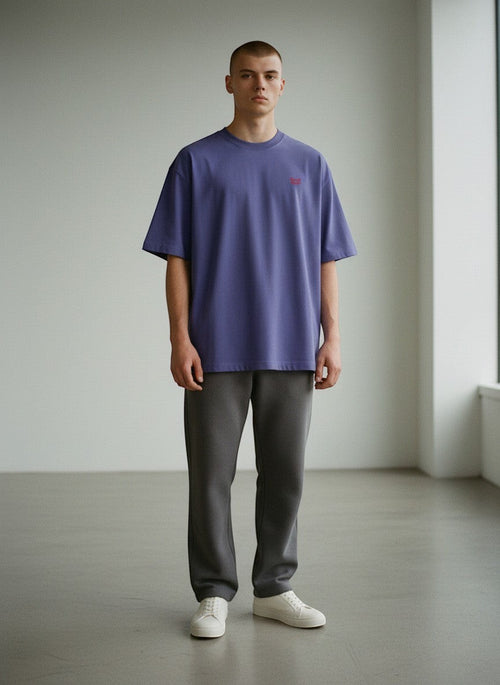
- Authentic Oversize Top – freedom of movement for clean ROM.
- Authentic Sport Joggers – stability for squats & hip hinges.
- Basic Canvas Shoes – solid footing for better force transfer.
Discover more: Authentic Collection, Shoes.
1) Understanding hypertrophy: mechanisms, signaling pathways, and metrics
Muscle hypertrophy describes the increase in muscle cross-sectional area (CSA) through structural and functional adaptations. Two main forms are relevant: myofibrillar hypertrophy (increase in contractile proteins, primarily actin and myosin) and sarcoplasmic hypertrophy (increase in non-contractile cell volume, e.g., glycogen, enzymes, fluid). Both processes coexist but differ in mechanisms, time course, and training response. For maximum, sustainable performance and muscle gains, a periodized focus that addresses both facets without leaning too far in one direction is beneficial.
Myofibrillar vs. sarcoplasmic hypertrophy
Myofibrillar hypertrophy correlates closely with strength gains. It is triggered primarily by high mechanical tension in the longitudinal axis of the muscle fiber. Training ranges of roughly 3–8 reps, longer rest periods, and a focus on full, controlled range-of-motion (ROM), especially in stretched positions, promote this adaptation. Sarcoplasmic hypertrophy is typically driven by higher metabolic stress – for example, through moderate-to-high rep ranges (8–20+), limited rest, isometric holds, and occlusion-like situations. Both forms, however, rely on the same anabolic signaling pathways; the emphasis differs via load, time under tension, and fatigue management.
Mechanical tension, metabolic stress, muscle damage
Mechanical tension is considered the primary driver. High forces at sufficient muscle lengths increase the stretching of titin and Z-disc structures and activate mechanosensitive signaling pathways (e.g., FAK, mTORC1). Metabolic stress via increased metabolites (lactate, inorganic phosphate) can enhance the recruitment of high-threshold motor units and modulate hormonal signatures. Muscle damage is not an end in itself: while eccentrics and new stimuli do increase marker signals (e.g., CK), excessive damage extends recovery time and can shift MPS capacity without providing proportional gains. The goal is "enough" new stimulus, not maximum damage.
Protein synthesis, mTOR, and satellite cells
Muscle protein synthesis (MPS) increases after training and adequate protein intake (leucine-triggered mTORC1 signaling pathway). Repeated MPS episodes over weeks/months lead to net hypertrophy, provided that protein degradation (MPB) remains relatively lower and energy availability is ensured. As training advances, the fusion of satellite cells (muscle stem cells) becomes increasingly important to expand myonuclear domains – a prerequisite for further fiber growth. Factors such as sufficient sleep, energy balance, micronutrients, and a moderate inflammatory status modulate these processes.
Metrics and practice
Hypertrophy can be tracked via ultrasound, DEXA, circumference measurements, strength progression (indirectly), and visual progress tracking. Strength gains without volume increases point more towards neural adaptations; parallel volume increases (e.g., arm or thigh circumferences) speak more strongly for structural hypertrophy. Training journals, RPE/RIR protocols, sleep and stress scores, and photo/video comparisons provide robust practical markers.
2) Progressive overload 2026: precise, measurable, sustainable
Progressive overload is the structured increase of the training stimulus so that the organism adapts permanently. The big levers: load (kg), volume (sets x reps), frequency (sessions per muscle/week), density (work/time), ROM, and exercise selection. Modern overload models integrate autoregulation (RIR/RPE) to account for daily readiness, sleep quality, stress, and nutrition. The goal is a "stimulating but tolerable" stimulus that stays close enough to the performance limit without chronically overloading the CNS and local tissues.
RIR/RPE: objectify instead of guessing
"Reps in Reserve" (RIR) and "Rate of Perceived Exertion" (RPE) calibrate proximity to muscle failure. An RIR range of 0–3 in the second half of the working sets is particularly effective for hypertrophy. Heavy compound exercises often benefit from 1–3 RIR to maintain technique and limit CNS load; for isolation exercises, 0–1 RIR can be used more safely.
Volume landmarks: MEV, MAV, MRV
Minimal Effective Volume (MEV) is the lowest volume that generates progress; Maximal Adaptive Volume (MAV) is the range where progress scales best; Maximal Recoverable Volume (MRV) is the upper limit. For many advanced lifters, effective weekly sets per muscle fall between 10–20, distributed across 2–4 sessions. Start at the lower end and increase when recovery is good.
Microcycles, double progression & ROM focus
Double progression (first increase reps, then load) minimizes technique drift. A length-focus (training muscles regularly in stretched positions) increases mechanical tension per repetition. Example: Bulgarian split squats with controlled stretching in the bottom position instead of just accumulating more reps.
Comparison of common progression models
| Method | Core Concept | For Whom | Advantages | Risks/Mistakes |
|---|---|---|---|---|
| Linear Progression | Weekly load increase with constant reps | Beginners/Early Intermediates | Fast initial gains, predictable | Plateaus, technique risk, CNS stress |
| Double Progression | Increase reps in target range, then increase load | All Levels | Technique-stable, precise adjustment | Impatience leads to premature load jumps |
| DUP (Daily Undulation) | Varying rep ranges/intensities within the week | Advanced | Plateau prevention, variable stimuli | More complex to plan, higher coordination load |
| Autoregulation (RIR/RPE) | Load/volume based on daily readiness | Advanced/Pros | Recovery-oriented, injury-preventative | Requires honesty & experience |
| Step-Loading | Multiple weeks the same, then larger jump | Intermediate | Simple, calculable | Steps too large if chosen poorly |
3) Exercise selection & technique: biomechanics, ROM, and the right order
The most efficient plans combine compound exercises (high load, many muscles) with targeted isolation exercises (local exhaustion, precise stimulus). The key is a resistance profile that generates enough tension in stretched positions without compromising joint reserves. Machines and free weights are not a matter of faith, but a toolbox. What matters is the fit to individual anthropometry, mobility, and injury history.
Multi- vs. single-joint
Multi-joint exercises like squats, Romanian deadlifts, and bench presses send strong neural signals and provide high mechanical tension. Isolation exercises like leg extensions, leg curls, cable flys, or bicep curls allow targeted proximity to failure when system fatigue is already high. A sensible order: heavy compound exercises in the first third of the session, then targeted isolation work.
Resistance profile & length
Regularly train muscles in lengths where they are stretched (lengthened training). Deep split squats, hip thrusts with full hip extension, lat pulldowns with active shoulder depression and controlled stretch. Ensure a stable base – solid shoe, grippy clothing. For maximum stability on lower-body days, we recommend the Basic Canvas Shoes and the Authentic Oversize Hoodie as a warming layer (MADE IN EU, BUILT DIFFERENT). More inspiration: Hoodie Collection, Shoes.
Tempo, rest & mind–muscle connection
A controlled eccentric tempo (e.g., 2–3 s) increases time under tension without technique loss. Rest lengths match the goal: heavy (2–3 min), moderate (1–2 min), metabolic (30–90 s). An active mind–muscle connection stabilizes movement patterns and can improve the recruitment of specific fiber portions – especially in isolation exercises.
Gear up for volume phases and technique blocks – comfort, stability, breathability:
- Authentic Jogger Shorts (Embroidery) – ideal for lower-body pump.
- GRN Hauszeichen Bomber Jacket – light, versatile for warm-ups.
- Authentic Oversize Hoodie – keeps muscles warm between sets.
Discover more: Jogger Shorts, Identity Drop, Core Collection.
MADE IN EU. BUILT DIFFERENT.
4) Volume, intensity, frequency & fatigue management
The hypertrophy triangle of volume, intensity, and frequency must remain in balance. Too much of one variable without counter-regulation overloads the system. A sensible starting window per muscle is 10–14 working sets/week, distributed across 2–3 sessions. With good recovery and progress, this can be increased to 14–20+. Intensity ranges of 30–85% 1RM are effective for hypertrophy, as long as the sets are taken close to failure; heavier ranges generally provide higher myofibrillar stimuli, while higher rep ranges provide more metabolic components.
Frequency & exercise rotation
A frequency of 2–4 sessions per muscle/week allows for high-quality sets without excessive set lengths per session. Rotations (e.g., A/B exercise variants) reduce overuse in the same joint angle and promote long-term adherence.
Set quality and proximity to failure
High-quality sets (clean technique, full ROM, progressive tension) beat "set collecting." Proximity to failure is crucial but context-dependent: for complex lifts, it is better to leave 1–3 RIR; for machine training/isos, you can occasionally use 0–1 RIR. Clusters, rest-pause, or myo-reps use intentional short breaks to maintain high-quality reps at lower cardiovascular stress – use sparingly to limit CNS load.
CNS fatigue & deload indicators
CNS fatigue manifests in loss of coordination, decreased speed, increased perceived exertion at the same load, sleep disturbances, or lack of motivation. Local fatigue shows in persistent stiffness, tenderness, or persistent strength loss in the same movement pattern. When multiple markers coincide, a deload is sensible (see section 6). Also support recovery passively: breathable layers like the Authentic Oversize Top and stable lower-body pieces like the Authentic Sport Joggers from the Authentic Collection support warm-ups and keep joints warm.
5) Recovery, sleep & nutrient timing: the 24/7 hypertrophy lever
Recovery is not a side issue but the stage where training effects are consolidated. Sleep (7–9 h), energy balance, protein distribution, carbohydrate strategy around training, and moderate fat consumption form the foundation. Whoever neglects these pillars limits net MPS – regardless of the training program.
Protein: amount, quality, distribution
Guideline: 1.6–2.2 g protein/kg/day, distributed over 3–5 protein-rich meals, each with 0.3–0.5 g/kg protein and 2–3 g leucine equivalent (e.g., 20–40 g high-quality protein). A protein-rich, easily digestible meal 60–120 minutes pre-workout and a post-workout meal within 1–3 hours are practical – the "anabolic window" is wider than previously assumed, but daily balance and meal structure count.
Carbohydrates & fats
Carbohydrates of approximately 3–6 g/kg (depending on volume/intensity) support glycogen replenishment and training performance; preferably use easily digestible sources around the session. Fat at 0.6–1.0 g/kg/day, primarily outside the immediate pre-/post-workout window, so as not to slow gastric emptying unnecessarily.
Supplement basics & hydration
Creatine monohydrate 3–5 g/day (daily, loading phase optional) supports strength and intracellular energy stores. Caffeine 3–6 mg/kg 30–60 min pre-workout can improve performance and perceived exertion; dose based on timing and sleep sensitivity. Beta-alanine (3.2–6.4 g/day, split) supports longer set durations/metabolic blocks; effect seen after weeks. Salt and electrolytes ensure fluid distribution; goal: light urine, consistent performance.
Sleep, stress & routines
Consistent bedtimes, a dark/cool bedroom, an evening routine without strong blue/stray light, and regular daytime brightness stabilize the circadian rhythm. A light mobility/breathing protocol helps with winding down. Layering for an evening walk: Authentic Softshell Jacket – wind-resistant, MADE IN EU, BUILT DIFFERENT. It matches the Core Collection for minimalist, functional looks.
6) Periodization, deload & your 12-week blueprint
Effective muscle building follows cycles: microcycles (1 week), mesocycles (4–6 weeks), and macrocycles (3–6+ months). Within a mesocycle, the load increases progressively; afterwards, a deload stabilizes performance and joints. Hybrid periodized models are suitable for hypertrophy: DUP elements (varying rep ranges) combined with double progression per exercise and strategic lengthened-overload exercises. The deload reduces volume (30–50%) and/or intensity (5–15%) but keeps the movement pattern active.
Deload strategies
Option A – Volume deload: halve the sets, keep the load the same, increase RIR to 3–4. Option B – Intensity deload: reduce load by 10–15%, moderately reduce sets. Option C – Technique deload: only technique singles/doubles at 60–70% 1RM, focus on mobility and blood flow. Choose what addresses your bottlenecks – for joint irritation, primarily reduce volume; for neural fatigue, focus more on intensity.
12-week blueprint (example)
Weeks 1–4 (Accumulation): 10–14 sets/muscle/week, rep ranges 6–12, RIR 2–3, focus on length/ROM, double progression. Weeks 5–8 (Intensification): 12–16 sets, integrate 1–2 heavy top sets (3–6 reps) per main lift, backoffs 8–12 reps, RIR 1–2. Week 9 (Deload): volume –40–50%, RIR 3–4. Weeks 10–12 (Re-load & Specialization): 12–18 sets, emphasize 1–2 weak points with additional frequency; failure only on safe isolation exercises/machines. Document every session and adjust via RIR.
Prevention, warm-up & equipment
General warm-up (5–8 min), specific ramp-up sets, technique check, then working sets. Rely on stable basics instead of constantly seeking new stimuli. For sessions with frequent temperature changes: Authentic Zipper (Stick) for flexible layers and the GRN House Sign Bomber Jacket between the gym and everyday life. Browse the Authentic and Identity Drop collection – performance-ready, MADE IN EU, BUILT DIFFERENT.
For focus, thermal management, and flexible layers in the final stretch of your mesocycle:
- Authentic Zipper (Stick) – super-fast on/off between sets.
- Authentic Softshell Jacket – outdoor cardio partner, robust & lightweight.
- Authentic Oversize Top – maximum range of motion on every lift.
Combine complete outfits now: Core, Hoodie, Shoes.
MADE IN EU. BUILT DIFFERENT.
FAQ – Frequently asked questions about science-based muscle building (2026)
1) How many sets per muscle group per week for maximum muscle growth in 2026?
Most trainees do well with 10–20 working sets per muscle/week, spread over 2–4 sessions. Start at the lower end (10–12), keep 1–3 RIR, assess recovery (sleep, muscle soreness, performance), and gradually increase toward 14–20+. Advanced athletes with high work capacity can temporarily exceed this but should schedule deloads (every 4–8 weeks).
2) Is training to muscle failure necessary for hypertrophy?
It is not necessary, but proximity to failure is important. For complex multi-joint exercises, 1–3 RIR is usually optimal (technical safety, CNS load). For isolation exercises/machines, 0–1 RIR can be safely used. The key is set quality: full ROM, controlled eccentric, no form breakdown.
3) How long should rest periods be between sets for muscle hypertrophy?
Heavy lifts 2–3 minutes, moderate hypertrophy work 1–2 minutes, metabolically oriented sets 30–90 seconds. Longer breaks often increase repetition quality and total work per session – a plus for myofibrillar hypertrophy.
4) Best rep ranges for myofibrillar vs. sarcoplasmic hypertrophy?
Myofibrillar: 3–8 reps with longer breaks and high mechanical tension; sarcoplasmic: 8–20+ reps with focused metabolic stress. In practice, combine both within the week (e.g., DUP): one heavy day, one moderate day per muscle.
5) How do I plan a deload in strength training without losing muscle mass?
Reduce volume by 30–50%, keep technique and movement patterns active, lower intensity moderately (5–15%), and increase RIR to 3–4. A 5–7 day deload stabilizes recovery, reduces inflammation, and prepares you for the next mesocycle – without muscle loss, provided protein intake/activity levels are maintained.
6) Protein requirement per day and per meal for muscle building?
Reference value 1.6–2.2 g/kg/day, spread over 3–5 meals of 0.3–0.5 g/kg with a 2–3 g leucine trigger (approx. 20–40 g high-quality protein). Pre- and post-workout meals within 1–3 hours of the session are practical; daily total is the most important lever.
7) Does it make sense to emphasize the eccentric phase for more growth?
Yes, a controlled eccentric (2–4 seconds) increases mechanical tension and can amplify MPS signals. However, avoid excessive eccentric volumes that overtax regeneration. Use them specifically in 1–2 main exercises per session or as a block within a mesocycle.
Author: Ahmed Shehata, Editor-in-Chief BeachBodyz (beachbodyz.de)