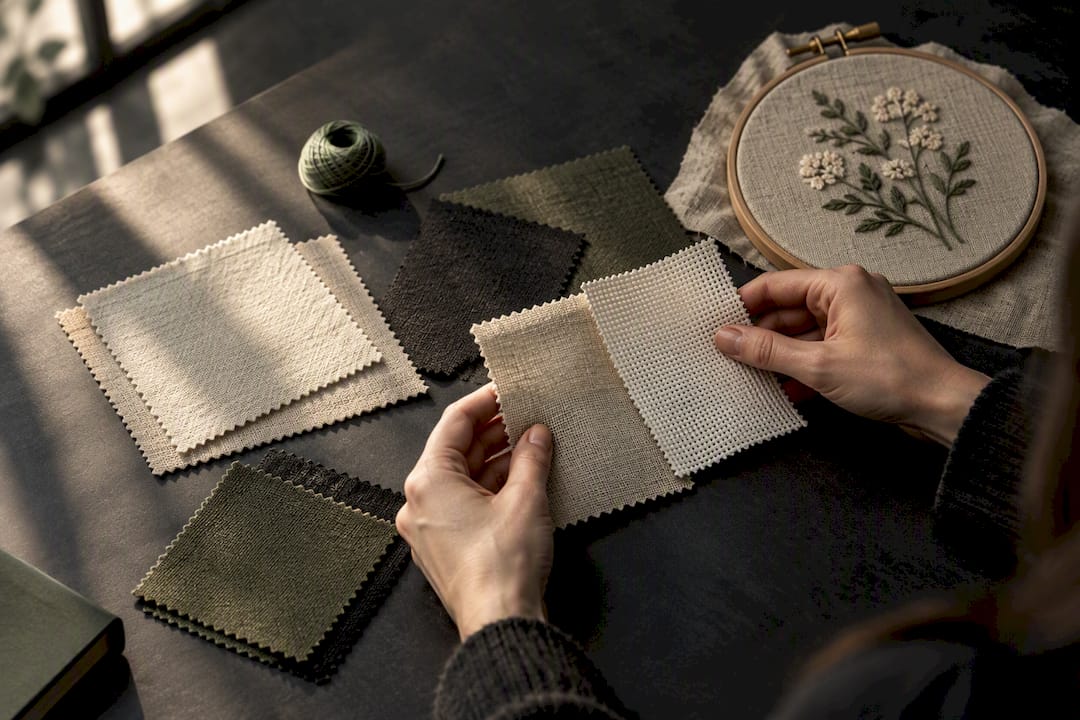
In short: For hand embroidery, medium-weight, tightly woven natural fabrics like cotton, linen, and special counted fabrics like Aida are best suited. Stretchy fabrics like jersey or sweatshirt fabric also work, but need a stabilizing interfacing, otherwise the embroidery will distort. Sturdy materials like canvas and felt can almost always be embroidered. In the end, the design and stitch density determine which fabric is really right.
In short:
- Medium-weight natural fabrics like cotton, linen, and cotton-linen blends are best suited for hand embroidery because they offer sufficient structure.
- Sturdy fabrics like canvas, felt, and denim are suitable for durable badges and bags, but require stronger needles and preliminary tests.
- Elastic fabrics like jersey and sweatshirt fabric need stable interfacing support and a reduced stitch density to avoid distortion or puckering.
- Very fine, slippery fabrics like silk and chiffon benefit from water-soluble topping and a light, temporary reinforcement.
- For beginners, it is advisable to start with cotton and Aida before venturing onto stretchy or delicate fabrics.
Table of Contents
- Common fabrics for hand embroidery: Properties and uses
- Denim, canvas, and felt: Where thick fabrics reach their limits
- How to stabilize stretchy fabrics like jersey and sweatshirt fabric?
- Fine, slippery, or transparent fabrics: What do silk and chiffon need?
- Preparation before embroidery: Washing, ironing, and a test piece
- Needles, hoops, and thread: Which tools are right for which fabric?
- Practical examples by project type: Clothing, home textiles, and bags
- Why certified organic cotton makes a difference when embroidering
- Personal perspective of the author: Practical advice from an embroidery enthusiast
- BeachBodyz as an embroiderable base for sustainable streetwear
- Sources
- FAQ
Common fabrics for hand embroidery: Properties and uses
Cotton is the all-rounder among embroidery fabrics. It has a medium weight, is easy to wash, and also forgives minor beginner mistakes in stitch direction. Anyone holding a needle for the first time should start right here, because cotton lies quietly in the hoop and still shows clear contours.
Linen looks more elegant and is traditionally used for table linen, cushion covers, and other home textiles. The fabric is stable, but tends to shrink on the first wash, which is why pre-washing is almost mandatory. For classic hand embroidery, tightly woven, medium-weight natural fabrics like cotton, linen, and cotton-linen blends are the safe choice because they offer enough structure to hold stitches without being too stiff.
Aida and evenweave belong in a category of their own: counted fabrics. They are made for cross-stitch because their uniform squares make counting the stitches much easier. Aida is available in various stitch counts, from coarse to very fine, so the choice depends on the size of the design and the desired level of detail. Another advantage for beginners: counted fabrics often have a sizing that makes embroidery without a hoop easier because the fabric stays taut on its own.
Cotton-linen blends combine both advantages. They are cheaper than pure linen, shrink less, and can be handled almost like normal cotton.
A brief overview of the most common options:
- Cotton: light to medium-weight, washable, ideal for beginners
- Linen: stable, elegant, tends to shrink, good for home textiles
- Cotton-linen blend: a good compromise on price and care
- Aida: counted fabric for cross-stitch, available in several stitch counts
- Evenweave: uniform fabric for delicate cross-stitch patterns
Denim, canvas, and felt: Where thick fabrics reach their limits
Sturdy fabrics like denim, canvas, or felt are almost ideal for badges, bags, and patches because they offer resistance to the needle and the embroidery lasts a long time. The catch is the thickness: The tighter the weave, the more power the needle needs, and the more likely unsightly holes are to appear if the wrong strength is chosen.
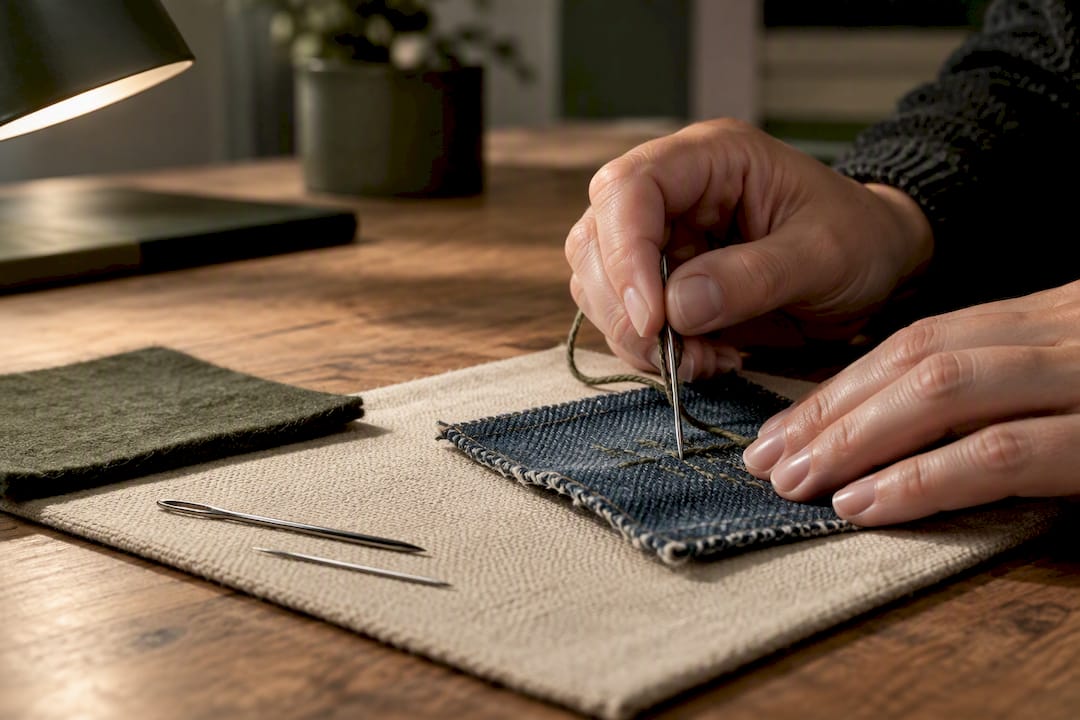
A test piece is almost indispensable with these materials. Seams, zippers, and multi-layered areas like pocket edges should be avoided as much as possible, because the material bunches up there and the needle bends more easily. Felt, wool, canvas, and firmer cotton fabrics are easy to embroider, especially if a tear-away or cut-away interfacing is added for support at a high stitch density.
Practical tips for heavy fabrics:
- Use strong embroidery or quilting needles with a sturdy point
- Choose pearl cotton or multi-ply embroidery twist instead of fine thread
- Consistently avoid marked seams and fasteners
- Always test on a remnant first before starting the actual project
Pro tip: When embroidering canvas or denim, first stitch a small test design on the edge of the fabric remnant. This way you can immediately see if the needle slips through or if the thread breaks when pulled, before anything goes wrong on the finished piece.
How to stabilize stretchy fabrics like jersey and sweatshirt fabric?
Jersey, T-shirt fabric, and sweatshirt fabric are among the trickiest materials for hand embroidery because they distort under tension. The most common beginner mistake is to hoop them too tightly, which makes the design look wavy or completely lose its shape after removal. The basic rule: lay the fabric flat, do not stretch it.
This is the best way to work with stretchy fabrics:
- Place the fabric in the embroidery hoop without tension and only lightly tighten it.
- Apply a suitable stabilizing interfacing to the back before the first needle goes through.
- Reduce the stitch density and adapt the size of the design to the elasticity of the fabric.
- After embroidering, carefully remove the excess interfacing without putting stress on the stitches.
There are clear differences in choosing interfacing: Cut-away interfacing remains permanently in the fabric and is particularly suitable for stretchy materials because it supports the stitches even after many wash cycles. Tear-away interfacing, on the other hand, can be easily torn off and is better suited to firmer fabrics. Wash-away interfacing dissolves completely and is the right choice if no residue should be visible afterward. The important thing is: more interfacing is not automatically better, because the right amount depends on the fabric's stretch, weight, and stitch density, not on a fixed rule.
Fine, slippery, or transparent fabrics: What do silk and chiffon need?
Silk, chiffon, and organza are among the most demanding fabrics for hand embroidery because they slip, distort easily, and every needle mark remains visible. Here, a so-called topping helps—a thin, water-soluble layer on the front that prevents stitches from sinking into the loose weave. This, by the way, also applies in reverse: On coarse pile fabrics like terry cloth or plush, a washable topping ensures that the stitches remain visible at all, instead of disappearing into the pile.
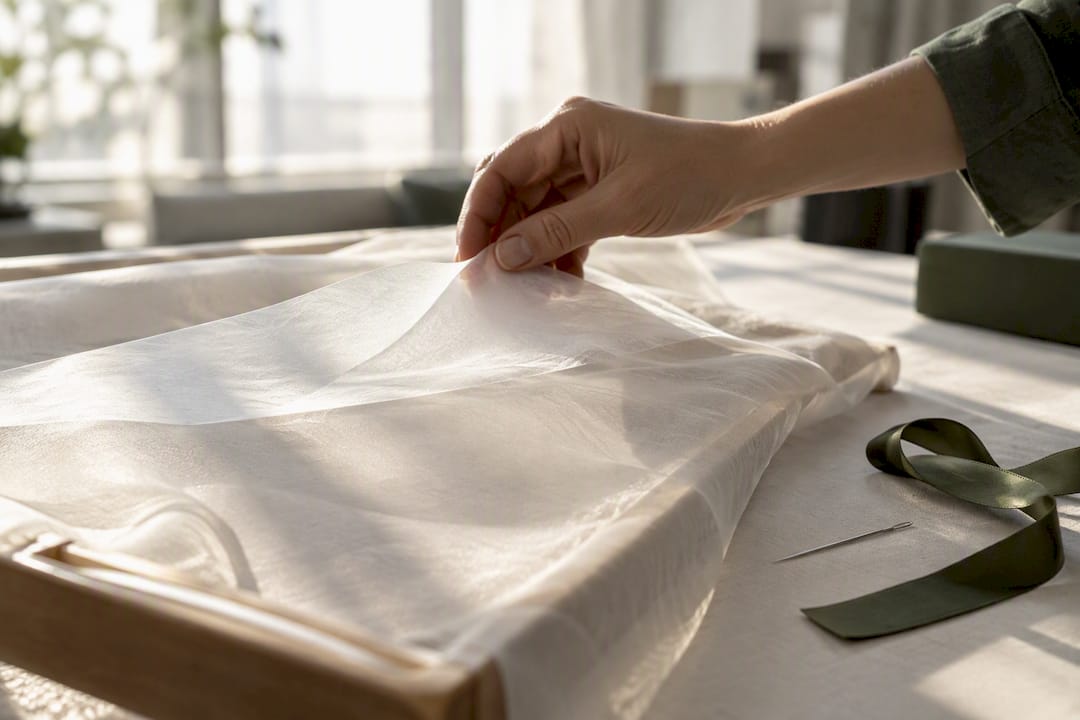
For fine fabrics, a light backing of muslin is also recommended, which serves as temporary reinforcement and can be removed later. When transferring the design, restraint is advisable: thin, water-soluble pens instead of strong markers, because sheer fabric shows every line.
Important points at a glance:
- Use water-soluble topping on pile fabrics and very fine weaves
- Use muslin or similarly light fabrics as a temporary backing
- Choose fine, sharp needles to avoid damaging the delicate fabric
- Transfer designs with water-soluble pens instead of permanent markers
Preparation before embroidery: Washing, ironing, and a test piece
Before the first needle touches the fabric, preparation often determines the result. A fabric that can shrink should be pre-washed and ironed, otherwise the finished design will distort after the first wash in everyday use.
The sequence that has proven itself in practice:
- Pre-wash and dry the fabric to prevent later shrinkage.
- Iron it flat so that wrinkles do not shift the design later.
- Embroider a small test piece on a remnant to test the stitch density and thread strength.
- Transfer the actual design, and only then apply the suitable interfacing.
The choice of interfacing follows clear criteria: material, stitch density, and whether the finished piece can tolerate visible interfacing later or not. Stabilizers like tear-away, cut-away, and wash-away have different uses, such as wash-away for transparent fabrics and cut-away for permanent stability on stretchy materials. Likewise: the type of fabric determines which interfacing is even an option, but the embroidery design itself determines how many layers of interfacing are needed, because a more elaborate design needs more support than a single outline.
Needles, hoops, and thread: Which tools are right for which fabric?
The right needle depends directly on the fabric. Sharp embroidery needles penetrate tightly woven materials like cotton and linen without problems, while blunt needles are preferred for counted fabrics like Aida so that the needle glides between the woven threads instead of splitting them.
Regarding the hoop: A classic embroidery hoop with two rings is suitable for most firm fabrics, while stretchy materials are often better secured on a backing instead of being stretched. A thimble protects the fingertip on thicker fabrics like canvas or denim and speeds up the work at the same time.
Thread recommendations by fabric:
- Mouliné thread for fine cotton, linen, and Aida
- Pearl cotton for bolder outlines on medium-weight fabrics
- Wool thread for felt, canvas, and other sturdy bases
Practical examples by project type: Clothing, home textiles, and bags
With clothing, the back of the embroidery counts above all, because it lies against the skin when worn. A cut-away interfacing that remains in the fabric provides stability, but should be soft enough not to scratch. Washable thread is mandatory here, because garments regularly end up in the machine.
For home textiles like cushions or table runners, linen and cotton are suitable, ideally pre-washed so that the design does not shift after the first cleaning. For bags and badges, canvas and felt dominate, combined with sturdier needles and thicker thread so that the embroidery holds up even under daily wear and tear.
- Clothing: soft cut-away interfacing, washable thread, smooth the back
- Home textiles: linen or cotton, pre-wash, plan the design in the center
- Bags and badges: canvas or felt, strong needles, pearl cotton or wool thread
Pro tip: For embroidered garments, it is worth looking at the right care after embroidery so that the stitches remain sharp even after many wash cycles. A post about caring for embroidered clothing shows which washing temperatures and drying methods have proven themselves.
Why certified organic cotton makes a difference when embroidering
Some sustainable streetwear brands process certified organic cotton and recycled materials in their products. Certified fabrics are often more uniform in weight and weave density than cheap mass-produced goods because stricter production standards reduce fluctuations in fiber quality. For embroiderers, this is a practical advantage: A uniform weave density means more predictable stitch behavior and fewer surprises when pulling the needle through. Anyone interested in sustainable materials can find more about this in the post on sustainable embroidery thread, which explains how to recognize genuine eco-embroidery.
Personal perspective of the author: Practical advice from an embroidery enthusiast
Anyone starting out should not skip the learning sequence: first cotton, then Aida, and only after that stretchy fabrics like jersey. This sequence is no coincidence, because each step builds on a skill that was internalized at the previous step. A beginner who starts directly with jersey struggles with needle guidance and fabric distortion at the same time, which causes frustration unnecessarily quickly. Always stitch a test piece first, even if it is tempting to start directly on the finished project.
— Ahmed
BeachBodyz as an embroiderable base for sustainable streetwear
Sustainable streetwear offers an alternative to fast-fashion basics for anyone who wants to see their embroidery designs on a fabric with substance, not on thin mass-produced goods.
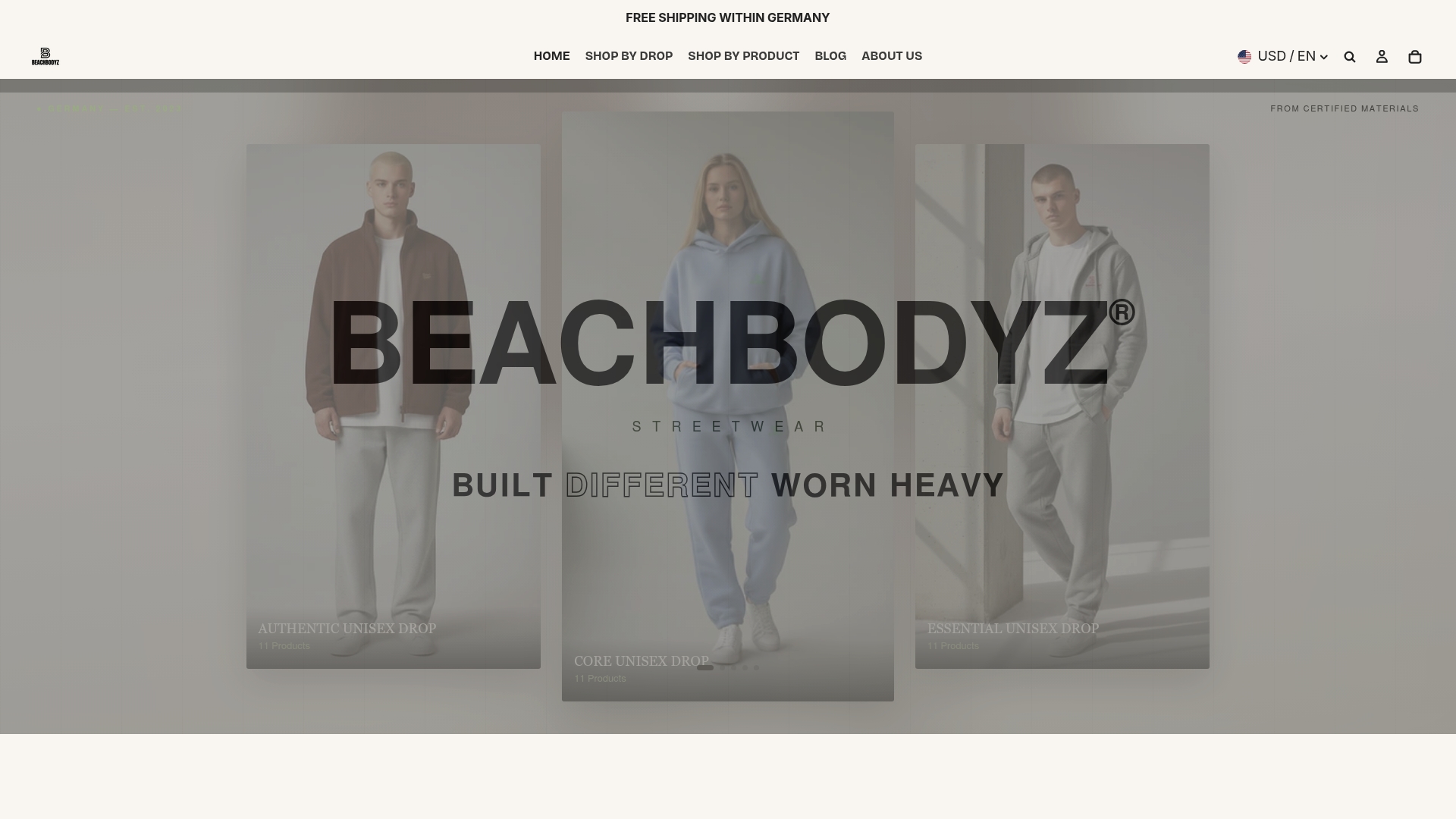
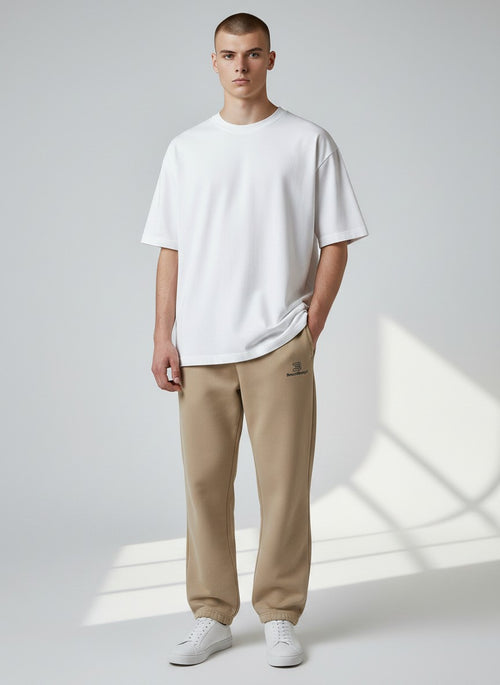
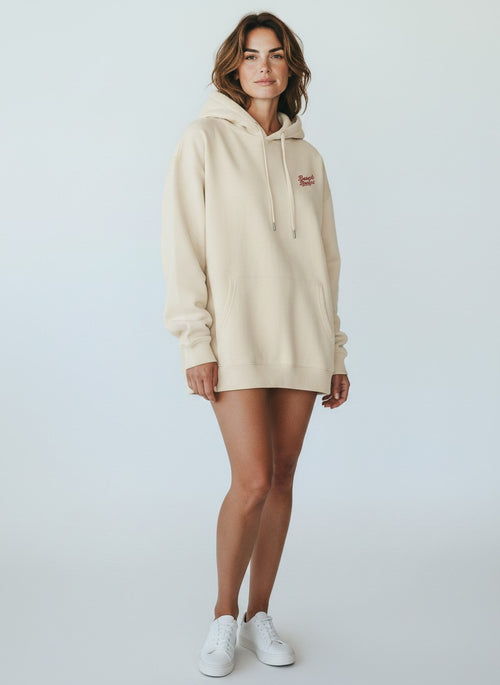
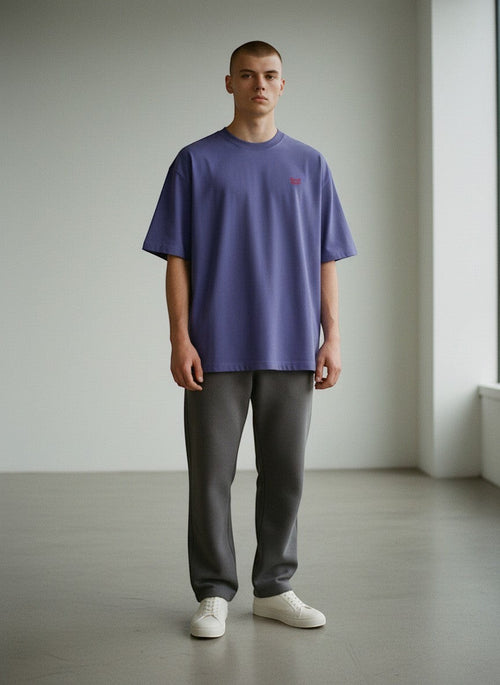
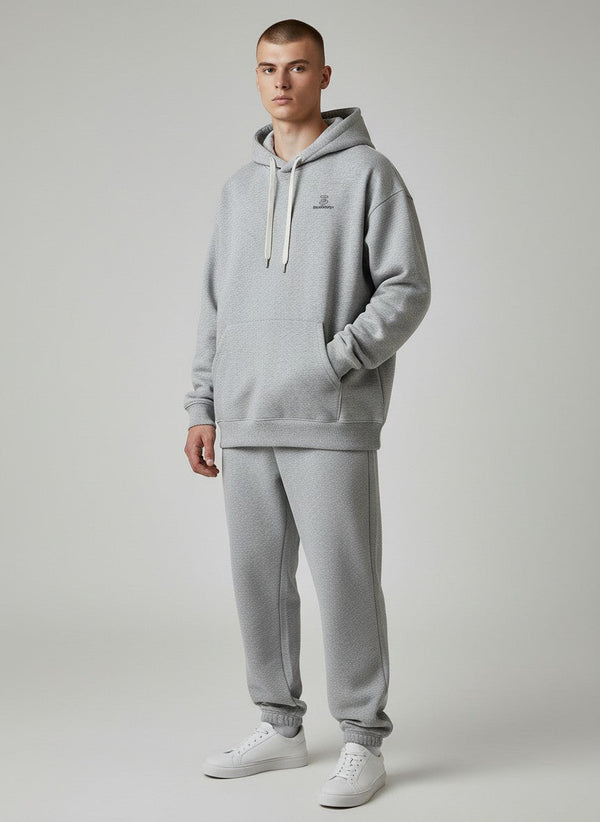
For embroidery, hoodies are particularly well suited because their oversized fit and dense, sturdy material provide enough surface area and stability for larger designs. Sweatshirts are also a solid base for beginner designs, while oversized shirts are suitable for smaller, lighter embroidery. If you are unsure whether embroidery or printing is better suited to your planned design, you will find a breakdown by textile type in our comparison of embroidery and printing. In addition, the external guide from Shay’s Print Shop on textile customization provides further tips on preparing stretch fabrics. Check out the current collection and choose the garment that is right for your next embroidery project.
Sources
For more in-depth research on the topic, specialist sources such as Zweigart for needlework fabrics and Aida qualities, BERNINA for stabilizers and interfacing types, and PracticalEmbroidery for a comprehensive specialist guide to embroidery fabrics are worth exploring. Internally, the post on embroidering a hoodie provides concrete project ideas.
- PracticalEmbroidery — An embroidery fabrics guide
- ZWEIGART — Embroidery
- BERNINA — The right embroidery stabilizer
- BERNINA Blog — Which embroidery stabilizer for which material?
FAQ
Which fabrics are good for embroidery?
Medium-weight, densely woven natural fabrics such as cotton, linen, and cotton-linen blends are best suited. For cross-stitch, Aida in various counts is the classic choice.
Can you embroider on any fabric?
Almost any fabric can be embroidered, as long as it is prepared correctly. However, stretch or very fine fabrics require an interfacing stabilizer, otherwise they will pucker under the needle.
What can be embroidered?
Clothing, home textiles, bags, and patches can be embroidered, from lightweight cotton to sturdy canvas. Sturdy streetwear basics such as hoodies or sweatshirts are also well suited for larger designs, provided the fabric is densely woven enough.
What is the fabric you can embroider called?
For cross-stitch, the classic counting fabric is called Aida, named after its uniform woven structure. For freehand embroidery, cotton, linen, or evenweave are better suited, as they offer more flexibility in design.
How much does an embroiderable garment from BeachBodyz cost?
BeachBodyz hoodies and sweatshirts are mid-priced, and you can find the exact prices on the respective product page. Current prices for all categories are listed directly on the product page in the shop.