In 2026, a strong warm-up routine is far more than just "warming up a bit." It is your performance booster, injury shield, and mental switch into a focused training state. In the next few minutes, you will get a scientifically grounded, practical guide to efficiently prepare for every session – whether it’s strength, cardio, or HIIT. You will learn how to bring your tissue up to temperature, mobilize joints, prime your nervous system, and precisely expand your range of motion where you need it for power and control. And because comfort is part of performance, we will also show you how to execute your warm-up smarter and more consistently with high-quality, MADE IN EU streetwear. Ready for a warm-up routine that is BUILT DIFFERENT and will sustainably boost your performance in 2026?
BUILT DIFFERENT | MADE IN EU
Your warm-up layer for every gym start
The high-quality, breathable material keeps the heat in during the crucial first 10 minutes – perfect for keeping your warm-up routine consistent.
Discover now →What a warm-up routine really needs to deliver in 2026
The best warm-up routine in 2026 is goal-oriented, short enough to stick with, and precisely tuned to your training focus. It follows the principle of "general → specific": first increase temperature and blood flow, then mobilize joints, subsequently stabilize actively, and finally prime movement-specifically. This sequence optimizes the viscosity of your tissue, lowers passive stiffness, improves neuromuscular control, and raises your RFD (Rate of Force Development). The result: You move faster, more controllably, and more safely – and you feel alert and "in the system."
A smartly designed warm-up routine saves you time and protects you from overdoing it: 8–12 minutes are generally enough to increase temperature (+1–2 °C in the muscle), movement quality, and mental focus. Dynamic movements with progressive amplitude beat static stretching before strength training – the latter can briefly reduce maximum strength. Instead, rely on controlled swings, CARS (Controlled Articular Rotations), active end-range holds, and light, specific ramp-up sets. Especially in 2026, where training data and wearables are omnipresent, consistency is king: A warm-up routine that you actually do every day is worth more than the perfect but too-long protocol.
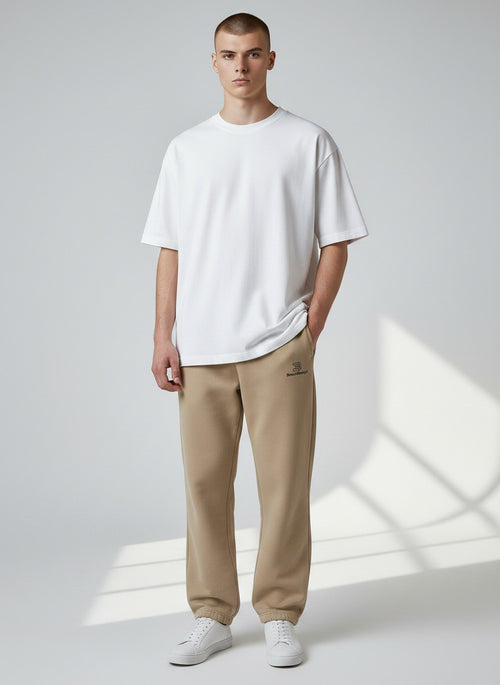
And yes: Your outfit also influences the start. A light layer like the Authentic Oversize T-Shirt 180g/m² under a warming mid-layer like the Authentic Oversize Sweatshirt 320g/m² keeps muscle temperature stable without overheating you. Oversize fits give you freedom of movement for rotations, lunges, and arm circles. For more inspiration: Check out our collection Oversize T-Shirt Men & Women and increase the chance that your warm-up routine happens every day – because it simply feels good. BUILT DIFFERENT, MADE IN EU.
Why the sequence counts: Temperature before mobility improves the flow properties of your fascia and tendons. Mobility before activation ensures that you can also control the newly gained range. Activation before specificity ensures that exactly the muscle chains you need are firing. This creates a common thread that runs from minute 1 to the first working repetition.
Make your warm-up routine measurable: Define 2–3 simple KPIs that you check every time, such as "light sweating starting from minute 3," "end-range hold without shaking for 10–15 seconds," and "first ramp-up set feels 7/10 stable." If a metric isn't right, extend the appropriate module by 60–90 seconds instead of overloading everything.
- Temperature criterion: Heart rate 50–65% HRmax, skin feel "warm but relaxed."
- Range criterion: 1–2 controlled end-range holds of 10–20 seconds each without pain.
- Neuro criterion: 1–2 explosive, clean reps (e.g., light medicine ball toss) feel crisp.
- Breathing criterion: 4–6 calm nasal exhalations without gasping for air before the first ramp-up set.
The biomechanics of your warm-up routine: Fundamentals & Science
Behind every effective warm-up routine is a clear target image: You want to prepare tissue, "unlock" joints, and calibrate your central nervous system (CNS) for the upcoming task. First: Temperature. Light, increasing activity (rower, AirBike, brisk walking) over 3–5 minutes increases oxygen release (Bohr effect) and reduces muscle viscosity. Second: Joint competence. Through CARS, you generate synovial fluid, displace passive tissue, and improve proprioceptive feedback. Third: Motor preparation. Low-load activations (e.g., mini-band drills, isometrics) recruit the right patterns without causing fatigue. Fourth: Specificity. Ramp-up sets in the target movement calibrate range, timing, and force curves.
Relevant for 2026: The CNS loves reliability. If your warm-up routine always follows the same logic, cognitive load decreases. Choose 2–3 basic modules and vary only slightly depending on the training day. Example: "Temp ↑ + CARS + Activation + Specificity." Link this to clear time markers (e.g., 2 minutes each) and you will stay under 12 minutes. Clothing can help subtly here: A zipper like the Authentic Oversize Zipper Hoodie 400g/m² or the warming Authentic Oversize Hoodie 400g/m² keeps you warm between blocks without restricting you. Discover our Oversize Hoodie Men & Women and Streetwear Jackets Men & Women collections – functional, MADE IN EU, organic cotton, truly BUILT DIFFERENT.
So you can quickly decide which methods fit when, here is a comparison:
| Method | Goal | Examples | When useful | Notes |
|---|---|---|---|---|
| General warming up | Temp ↑, HR ↑ | Rower 3–5 min, AirBike easy | Always at the start | Don't fatigue, just "prep" |
| Dynamic mobility/CARS | Joint play, range | Hip CARS, thoracic rotation | If range is limited | Control end-range |
| Activation/Isometrics | Prime patterns | Glute bridge iso, scap pulls | Before strength and HIIT | Keep short & crisp |
| Specific ramp-up sets | Calibrate movement | Light squats, technique runs | Always before main set | Increase load & tempo |
Deepen the biomechanics with simple breathing and tension cues: Use 2–3 calm nasal breaths before mobility to lower tone and make movement "soft." Hold light isometric tension in end-range positions for 10–20 seconds, then release in a controlled manner and expand the amplitude. In activations, "waking up" is sufficient rather than "exhausting" – 1–2 sets of 20–30 seconds isometric or 8–12 loose repetitions suffice. Before ramp-up sets, do 1–2 explosive, technically clean intent reps (e.g., high bar speed) without losing form.
Step-by-Step: Your 8–12-minute warm-up routine blueprint
Want structure at the push of a button? This blueprint makes your warm-up routine 2026 repeatable – whether you have little time or a full 12 minutes. Choose your time window and work through the modules in sequence. Replace exercises depending on the training day, but keep the logic.
| Time budget | Module 1: Temp | Module 2: Mobility | Module 3: Activation | Module 4: Specificity | Total |
|---|---|---|---|---|---|
| 6 min | 2 min light cardio | 1 min 1–2 joints | 1 min focus pattern | 2 min 1–2 ramp-ups | ≈ 6:00 |
| 8 min | 2–3 min cardio | 2 min mobility | 1–2 min activation | 2 min ramp-ups | ≈ 8:00 |
| 10 min | 3 min cardio | 2–3 min mobility | 2 min activation | 2–3 min ramp-ups | ≈ 10:00 |
| 12 min | 3–4 min cardio | 3 min mobility | 2–3 min activation | 3 min ramp-ups | ≈ 12:00 |
Strength day squat: Step-by-step (10 minutes)
- 3 min rower/AirBike easy, progressive breathing (nose in, calmly out).
- 1 min hip CARS (controlled, hold end-range), 1 min ankle rocks.
- 2 min activation: Glute bridge iso 30s + tib raises 12 reps + light KB swings 8 reps.
- 4 min specificity: 3 ramp-up sets at approx. 30%–50%–65% 1RM, 5–3–2 reps each, tempo "controlled down – explosive up."
Upper body day push/pull: Step-by-step (8 minutes)
- 2 min jump rope or rower easy.
- 2 min thoracic rotation + scap CARS, hold end-range 10–15s.
- 1–2 min activation: Banded external rotation 12–15 reps + scapular pull-ups 6–8.
- 2–3 min specificity: 2–3 ramp-up sets bench press/rows, technique focus on scapular set and stable foot pressure.
Timer setup tip: Set 2-minute intervals, switch with a short vibration signal. This way, you stay in the flow without constantly looking at the clock – your warm-up routine will automatically become efficient.
The perfect warm-up routine for strength training
A solid warm-up routine for strength takes you to a new level in 2026 – more stability, better force curves, fewer "surprises" in the first set. Divide into four blocks: 1) Temperature: 3 minutes AirBike or rower easy. 2) Mobility: 2–3 joints you will need shortly (e.g., hip, thorax, ankle). 3) Activation: short isometrics or mini-band drills (glutes, rotator cuff, core). 4) Specificity: 2–4 ramp-up sets in your main exercise.
Upper body focus (bench press, overhead press, pull)
- Thoracic rotation 2×5/side, scapular pull-ups 2×6, banded external rotation 2×12.
- 2–3 ramp-up sets bench press: 30% – 50% – 70% 1RM, 5/3/1–2 clean reps each.
- Keep warm: Stay in the Authentic Oversize Hoodie 400g/m² between blocks, then remove layer. Also check out Oversize Hoodie Men & Women.
Lower body focus (squat, deadlift, lunge)
- Hip CARS 2×3/side, ankle rocks 2×8, 90/90 switches 2×5.
- Glute bridge iso 2×20–30s, tib raise 2×12, light kettlebell swings 2×8.
- Ramp-up sets squat: 30% – 50% – 65% – 75% 1RM, focus on depth & tempo.
- Comfort for lower body: The Authentic Oversize Joggers 320g/m² or the Authentic Oversize Fluffy Joggers 320g/m² keeps you warm, offers range. More selection in Oversize Joggers Men & Women.
Example flow (10 minutes)
- 3 min rower easy → 2 min mobility (hip/thorax) → 2 min activation (glutes/scap) → 3 min ramp-up sets.
- Outfit tip: Start in the Authentic Oversize Sweatshirt, underneath the Authentic Oversize T-Shirt. Remove layers little by little – MADE IN EU, GOTS, tangible difference.
Technique priming for main exercises
- Squat: 2–3 breaths in the deep goblet-hold position, elbows push the knees slightly outward, sternum "long." Then 2 fast but clean ascents with focus on pressure over the midfoot.
- Deadlift: 1–2 hinge-pulldowns with empty bar, scapulae "in the back pockets," lats slightly pre-tensioned. 2 short intent reps with emphasis on "pushing the floor away from the body."
- Bench press: Scap-set (shoulders back/down), build foot pressure, 1–2 pause-reps with light load (hold 1–2 seconds at the chest) for stability.
- Overhead press: 2–3 bottom-up holds with light kettlebell to "wake up" grip/forearm, then 1–2 accelerated reps at low load.
5-step protocol for consistent strength performance
- Temp ↑: 3 min (light cardio, nasal breathing).
- Range ↑: 2 min (CARS/end-range holds at 1–2 joints).
- Stability ↑: 2 min (isometric activation of key muscles).
- Specificity ↑: 2–4 ramp-up sets with increasing speed/load.
- Mindset ↑: 20–30 sec visual cues + 2 calm breaths before the working set.
- The warm-up routine in strength training is not a waste of time, but preparation for performance. Combine clever progression with a conscious breathing rhythm (e.g., 3–4 calm nasal breaths before ramp-up sets). For hot days or dynamic lower-body sessions, the Authentic Oversize Shorts 180g/m² are ideal; you get maximum airiness with the Power Oversize Shorts 180g/m². Further inspiration: SHOP BY PRODUCT and Oversize Sweatshirt Men & Women.
BUILT DIFFERENT | MADE IN EU
More warmth, more focus – zero compromises
The fluffy inside keeps you at the perfect temperature between warm-up blocks – your warm-up routine stays supple and explosive.
Discover now →Warm-up routine for cardio, HIIT & team sports
For cardio, HIIT, and team sports, your 2026 warm-up routine needs a different pace: shorter, but more pulse-oriented, with quick transitions into specific movements. After 2–3 minutes of general warm-up (jump rope, light running), integrate dynamic drills that increase your movement frequency and elasticity: Skips A/B, karaokes, hops over short distances, and short progressive sprints (60–80% max). Important: The total volume of the warm-up should remain moderate so that you start your first real interval feeling fresh.
HIIT-specific
- 2 min jump rope → 2 min dynamic mobility (thorax, hips) → 2 min activation (core, glutes) → 2–3 progressive technical runs or bike sprints.
- Wear light, breathable layers: The Authentic Oversize T-Shirt with the Power Oversize Shorts for more airflow and freedom of movement.
Team sports (e.g., soccer, basketball)
- Ball drills with coordinative patterns: Rondo, short changes of direction, reaction games.
- Prepare elasticity: Pogos 2×15, lateral bounds 2×6/side, decel drills (controlled braking).
- Stay warm in layers: Throw on a light layer between blocks, such as the Authentic Oversize Sweatshirt. More options in Oversize Sweatshirts for Men & Women.
Plyo-primer & running flow
- Plyo-primer: 2×10 low-amplitude pogos → 2×6/side skater bounds → 2×20 m ankling/high knees (increasing frequency).
- Running flow: 3–5 min very easy → 2 min mobility (ankle, hip) → 2× strides of 60–80 m at 70–85% with full recovery.
- Rule: Quality over quantity. Stop if your ground contact starts to feel sluggish.
Cardio-long runs
- 5 min very easy (walking/light jogging) → 2 min mobility (ankle, hip) → 2× strides of 60–80 m at 70–80% intensity.
- Remove layers early in heat, keep them on longer in the cold. Perfect: Authentic Oversize Shorts or the Authentic Oversize Joggers – depending on the weather. Also check out Oversize T-Shirts for Men & Women.
The warm-up routine in endurance and team sports is particularly useful for neural sharpening and explosive elasticity. Use small reaction tasks, changes in stimuli (visual, acoustic), and measured sprints. Clothing that doesn't flap but allows for airflow helps. MADE IN EU materials, like those at BeachBodyz, feel pleasant against the skin, and organic cotton regulates the climate—exactly what you need in 2026. BUILT DIFFERENT, because performance starts with the basics.
Practical examples: Warm-up routine for typical goals
Hypertrophy push day (approx. 9 minutes)
- 2 min easy jump rope.
- 2 min mobility: Thoracic rotation + scapular CARs.
- 2 min activation: Banded chest fly 12 reps + external rotation 12 reps.
- 3 min specificity: 2–3 ramp-up sets for bench press (30%–50%–65%), last reps with a 1s pause at the reversal point.
HIIT fat loss (approx. 8 minutes)
- 2 min easy AirBike.
- 2 min dynamic hip/ankle drills.
- 2 min core/glute activation (Dead bug iso 30s + glute bridge iso 30s).
- 2–3 technical sprints of 6–8 seconds at 70–80% with complete recovery before interval 1.
10 km PR preparation (approx. 12 minutes)
- 4 min easy run, increasing to conversational pace.
- 3 min mobility: Calves/Achilles tendon via hops + hip CARs.
- 2 min activation: Tib raises 12 + single-leg RDL light 6/side.
- 3× strides of 80 m at 80–85%, focus on an upright torso and short ground contact times.
Adapting your warm-up routine to daily form, climate & time
Your warm-up routine isn't a rigid script; it adapts to your daily form, climate, and the time of day. You are often stiffer in the morning—extend mobility and isometric activations by 1–2 minutes. By evening, the tissue is often "warmer," so you can get into specifics faster. In cold weather: Keep layers on longer (e.g., Authentic Oversize Hoodie over the Authentic Oversize T-Shirt) and increase the general warm-up to 5 minutes. In heat: Shorten the first few minutes, hydrate beforehand, and use shorts like the Power Oversize Shorts.
In 2026, the warm-up routine benefits from mini-checks: 1) Breathing: Can you breathe calmly through your nose? 2) Joint feeling: Does the first ramp-up set feel coordinated? 3) Symmetry: Is the left/right side comparable? If not, add 1–2 targeted drills (e.g., single-sided hip CARs). For cozy studios or cool garage gyms, the Core Oversize Fluffy Joggers 320g/m² or the Authentic Oversize Fluffy Joggers are worth their weight in gold. Browse through Oversize Joggers for Men & Women and secure yourself MADE IN EU quality that keeps you consistent.
Do you train in changing conditions? Layering is your lever. Start with the Authentic Oversize Zipper Hoodie and take it off after the mobility block. For athletes who vary their training, we recommend a base setup of 1–2 T-shirts, 1 sweatshirt, 1 pair of joggers, 1 pair of shorts—all with oversize fits. Find inspiration in SHOP BY PRODUCT and Oversize Hoodies for Men & Women. This keeps your warm-up routine consistently good—day after day, 2026.
"Warmth-RPE" as a compass: Scale from 1–10 how "ready" your system feels. Goal before the first work set: 6–7/10 (warm, focused, not fatigued). If your feeling is below that, extend the weakest module by 60–90 seconds (e.g., mobility if the range is stuck; activation if stability is missing). Over 7/10? Start—more warm-up won't provide much additional benefit.
Warm-up routine in the home gym, office & on the go: Minimal setup
No bike, no machine, little space? Your warm-up routine also works with bodyweight and everyday objects. The goal remains the same: Temp ↑, mobility ↑, activation ↑, specificity ↑—only the tools change.
Home gym quickie (6–8 minutes, no equipment)
- 2 min jumping jacks or march-in-place (progressively faster).
- 2 min mobility: Cat-cow + World’s Greatest Stretch, alternating.
- 1–2 min activation: Wall sit 30–45s + plank 30s.
- 2 min specificity: 2–3 technical reps of your main exercise (e.g., air squats/push-ups in perfect form).
Office/Hotel (quiet & space-saving, 6 minutes)
- 90s brisk stair climbing or zippy walking in the room.
- 90s mobility: Hip CARs standing, arm circles, neck reset (gentle).
- 90s activation: Glute squeezes standing 2×15s + calf raises 20 reps.
- 60–90s specificity: 1–2 sets of technical reps (e.g., backpack goblet squat, table-edge incline push-ups).
On the go in the park (8–10 minutes)
- 3 min brisk walk.
- 2–3 min mobility on a park bench: Ankle rocks, hip openers, thoracic rotation.
- 2 min activation: Mini-band side steps 2×10/side (if available) or isometric split stance 2×20s.
- 2–3 min specificity: Light technical runs/strides or air squats/push-ups depending on session goal.
Common mistakes, progression & tools in your warm-up routine
Many don't fail at the warm-up routine itself, but at typical mistakes: too much volume (you arrive at your main set already tired), too little specificity (you prepare for movements you aren't even training), or a lack of progression (always the same drills—no matter what is coming up). In 2026, the rule is: minimalism with a system. Two to three core drills per joint/movement pattern, 30–60 seconds each, then quickly into ramp-up sets. Incorporate a small progression every 6–8 weeks: e.g., longer isometrics, more explosive starts, more precise end ranges.
Tools can help, but they aren't a must. Mini-bands for hips/shoulders, a light stick for overhead positions, a timer for interval logic. The crucial thing remains that your warm-up routine puts you in a focused, ready state. Clothing is a silent enabler here: if you can move freely and stay warm, you'll do it more often and better. Try the Authentic Oversize Shorts for explosive lower-body drills or layer with the Authentic Oversize Sweatshirt between mobility and specificity. For upper-body days, the Authentic Oversize T-Shirt is unbeatably light, while the Authentic Oversize Joggers keep you warm during breaks—MADE IN EU, GOTS, BUILT DIFFERENT.
Subtleties that make the difference in 2026: Breathe through your nose while mobilizing, extend exhalation in isometric postures (parasympathetic reset), increase range and tempo first in ramp-up sets, then the load. Use mental cues ("long, proud, pressure into the ground") in your last warm-up reps. This is how your warm-up routine turns from a chore into a performance rocket—compact, repeatable, effective.
Conclusion
In 2026, your warm-up routine is the fastest way to better performance and fewer injuries—provided it is short, clear, and specific. Increase temperature, mobilize purposefully, activate smartly, calibrate with ramp-up sets, and adapt duration and intensity to your daily form and climate. With the right layers, you stay warm, mobile, and focused—exactly what is needed for strong sets, clean runs, and quick changes of direction. MADE IN EU materials and oversize fits from BeachBodyz provide you with comfort and freedom of movement so you can stay at it. BUILT DIFFERENT here is not a claim, but a result: a warm-up routine that takes every workout to a higher level.
BUILT DIFFERENT | MADE IN EU
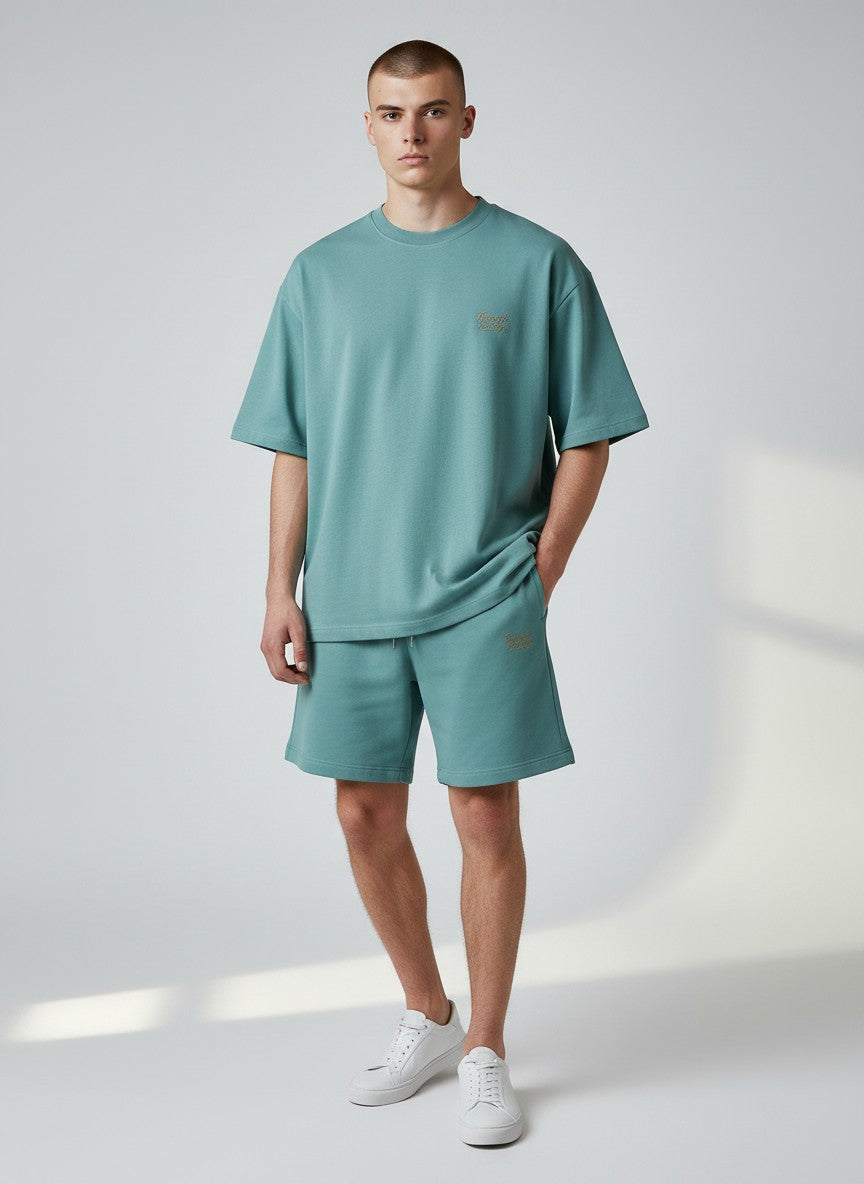
Light, airy, ready for speed
Whether in the gym or on the track: These shorts give you maximum freedom of movement—perfect for a fast, effective warm-up routine.
Discover now →Frequently Asked Questions (FAQ)
How long should a warm-up routine take before strength training in 2026?
Plan for 8–12 minutes. Start with 2–3 minutes of general warm-up, followed by 2–3 mobility drills for the relevant joints, 2 minutes of activation (e.g., isometrics, mini-bands), and 2–4 short ramp-up sets in the target exercise. In the morning or in cold conditions, you can extend this by 2–3 minutes. It is important to go into the first work set fresh, not fatigued. Use layers like hoodies or sweatshirts to keep muscle temperature high and bridge breaks efficiently.
What warm-up routine is ideal before squats and deadlifts?
Focus on hips, ankles, and core: Hip CARs 2×3/side, 90/90 switches 2×5, ankle rocks 2×8, glute bridge iso 2×20–30s, and tib raises 2×12. Then 3–4 ramp-up sets (30%–50%–65%–75% 1RM) with a focus on breathing tension and depth. In cool conditions, warm up longer and stay warm between sets, perhaps with joggers. This way, you get more stability, better positions, and controlled power peaks into the first work set.
Morning vs. evening warm-up routine—what is more effective in 2026?
In the morning, tissue is often tougher and joint play is smaller. Therefore, extend general warm-up and mobility by 1–2 minutes each and use nasal breathing for a gentle system start. In the evening, temperature and range are usually higher, so you can get specific faster and increase ramp-up sets quickly. What is more effective is what fits your daily routine and stays consistent. Adapt the duration flexibly without changing the core principle (temp → mobility → activation → specificity).
Do I need a warm-up routine on rest days or during mobility sessions?
A short warm-up routine is also worthwhile on rest days when you are training mobility or doing a recovery flow. 5–8 minutes is enough: light warming, joint CARs, gentle isometric postures. The goal here is less performance and more joint care, coordination, and blood circulation, so you are fresher for the main exercises the next day. Keep volume low and stay in a comfortable range. This promotes regeneration without creating additional fatigue.
What clothing is ideal in 2026 for a winter warm-up routine?
Focus on layering with breathable, warming materials: T-shirt as a base, a sweatshirt or hoodie on top, and comfortable joggers. Freedom of movement and maintaining temperature during breaks are important. Oversize fits prevent constriction during rotations and lunges. Remove layers progressively as you move into specific sets. MADE IN EU textiles made of GOTS organic cotton feel pleasant on the skin, regulate the climate, and support you without overheating.
What mistakes slow down my warm-up routine—and how do I fix them?
Common mistakes: warming up for too long and getting fatigued; static stretching before main strength sets; lack of specificity; no progression. Solution: 8–12 minutes target time, dynamic mobility instead of static, activations short and crisp, followed by ramp-up sets in the target movement. Incorporate small progressions every 6–8 weeks (tempo, range, isometrics). Use breathing cues and clear time windows. Stay warm with smart layers so you can switch seamlessly to the first work set without downtime.