A streetwear capsule wardrobe consists of 25 to 50 carefully chosen, highly combinable pieces that guarantee you a stylish outfit every single morning. This range is considered a practical minimum to provide enough variety across all seasons without sinking into wardrobe chaos. The philosophy behind it is simple: fewer pieces, but each one goes with almost everything else.
The benefits are immediately apparent in three areas:
- Time: No more morning decision fatigue, because every combination works.
- Money: Fewer impulse buys because you invest specifically in a few high-quality pieces instead of trends that end up gathering dust in the closet after one season.
- Sustainability: A smaller, more conscious wardrobe generates less textile waste and supports materials with a better environmental footprint.
For you as a fashion-conscious individual who loves streetwear but doesn't want to invest in fast fashion, the capsule wardrobe is not about deprivation. It is a system.
Key Takeaways
A streetwear capsule wardrobe works best with 25 to 50 pieces, a neutral color palette, balanced proportions, and sustainable materials such as organic cotton, linen, and Tencel.
| Topic | Details |
|---|---|
| Number of pieces as a benchmark | Stick to 25 to 50 pieces, distributed across seven basic categories from tees to sneakers. |
| Balancing proportions | Always combine oversized tops with looser, not tight, pants to maintain the silhouette. |
| Choosing materials consciously | Rely on GOTS organic cotton, linen, and Tencel for better durability and environmental impact. |
| Build gradually, not hastily | Use the 30-day wear analysis before buying new items or sorting out old ones. |
| Beachbodyz as a starting point | Beachbodyz offers oversized hoodies, tees, joggers, and jackets made from certified materials for building your capsule. |
Table of Contents
- What defines a streetwear capsule wardrobe?
- What benefits and mistakes should you know about?
- Which basic categories belong in the capsule?
- How do you choose the right color palette?
- Which materials are worth it for streetwear basics?
- How do you build your capsule step-by-step?
- What do concrete outfits from the capsule look like?
- How do you properly care for your capsule pieces?
- How does BeachBodyz fit into a sustainable capsule?
- What most guides overlook regarding streetwear capsules
- Your entry into a sustainable streetwear capsule
- Sources
What defines a streetwear capsule wardrobe?
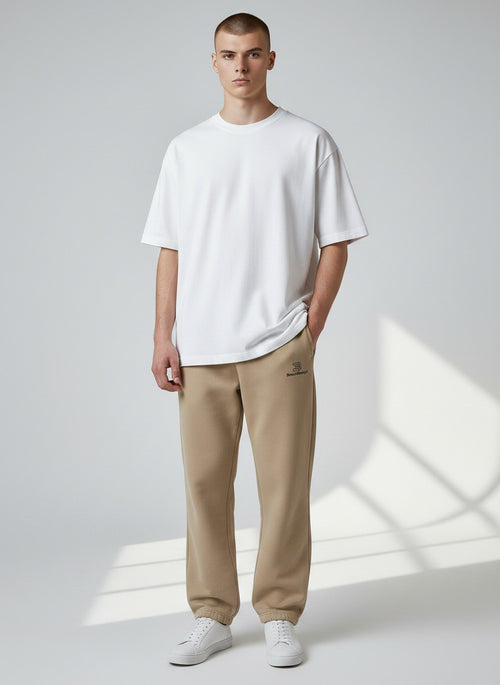
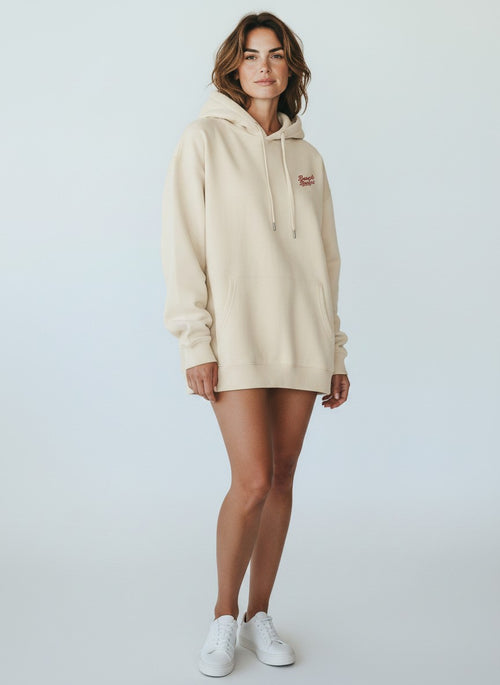
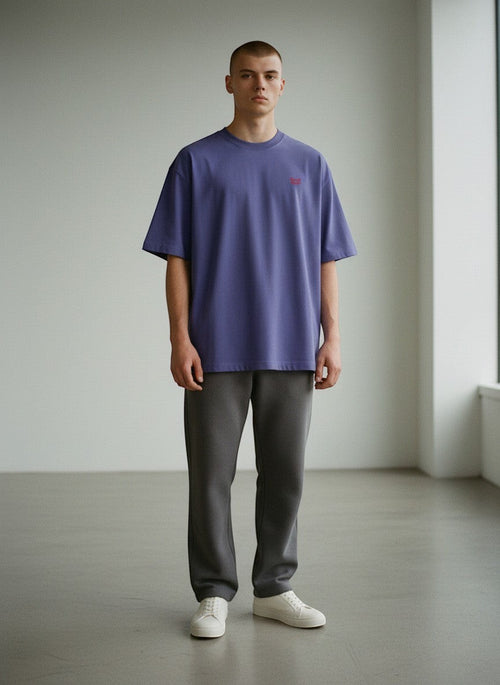
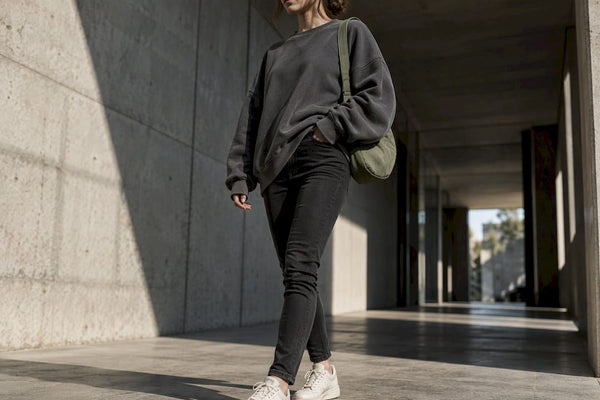
The fundamental principle of a capsule wardrobe is always the same: a neutral core of a few colors, supplemented by pieces that can be mixed and matched at will. With streetwear, there is a second level that many underestimate: proportions. Oversized tops need a counterweight, otherwise the look seems gangly rather than deliberately loose. Wider pants, wide-leg cargos, or straight-cut jeans balance out a wide sweatshirt or an oversized hoodie.
Three rules have proven effective in practice:
- Volume balance: If the top is loose, the pants shouldn't be tight, and vice versa. Two loose pieces at the same time make you look shapeless.
- Three-layer principle: A base piece, a middle layer, and an outer layer. This works in summer with a T-shirt, an open shirt, and a light jacket, just as it does in winter with a long-sleeve, hoodie, and quilted jacket.
- Fabric weight as a style factor: Heavier cotton qualities (from about 240 g/m²) drape with more structure and appear higher quality than thin fast-fashion shirts.
Pro tip: Always buy your pants one size larger than usual if you mainly wear oversized tops. Otherwise, the silhouette remains lopsided, no matter how well the individual piece fits.
What benefits and mistakes should you know about?
The biggest advantage of a well-thought-out capsule is the time saved combined with better material quality. Anyone who only owns 30 pieces can afford a higher budget per piece and automatically ends up with more durable fabrics instead of disposable goods.
However, there are also real downsides:
- Overly rigid rules take the fun out of getting dressed if you cling strictly to a number or color palette even when your daily life requires more variety.
- Special occasions like business meetings or sports events often don't fit into a pure streetwear capsule and require a small extra category.
- Replacing your entire wardrobe too quickly leads to bad purchases because you compromise on fit or material in your haste.
Therefore, build the capsule slowly, over several weeks rather than on one weekend. Observe which proportions actually work for you before buying five pairs of pants in the same fit.
Which basic categories belong in the capsule?
A functional streetwear capsule can be broken down into seven core categories. Practical streetwear guides confirm this basic framework, supplemented by specific quantities within the 25 to 50 pieces of your total wardrobe.
The seven categories:
- Heavyweight T-shirts (4 to 6 pieces): Thicker cotton qualities in neutral colors that don't become translucent even after years of washing.
- Hoodies (2 to 3 pieces): A neutral base hoodie plus one or two color accents.
- Wide pants or cargos (3 to 4 pieces): Wide-leg jeans, cargo pants, and sweatpants as a base for the lower half of the body.
- Technical jacket or shell (1 to 2 pieces): Weatherproof, usually in black or khaki, as an outer layer for wind and rain.
- Sweatshirts (2 to 3 pieces): As a middle layer between T-shirt and jacket.
- Seasonal layering piece (1 to 2 pieces): A quilted vest or a cropped puffer for transitional periods.
- Sneakers (2 to 3 pairs): A neutral everyday model plus a pair with more character for special looks.
This breakdown is intentionally gender-neutral. Oversized silhouettes work regardless of whether you prefer a tighter or wider fit, as long as the proportions between top and bottom are correct. If you have a slighter build, pay attention to shorter sleeve lengths on hoodies and jackets so the oversized effect doesn't verge on unkempt.
How do you choose the right color palette?
The color palette determines the functionality of your capsule more than any single garment. A neutral core of two to three base tones, supplemented by one or two accent colors, is enough for dozens of combinations.
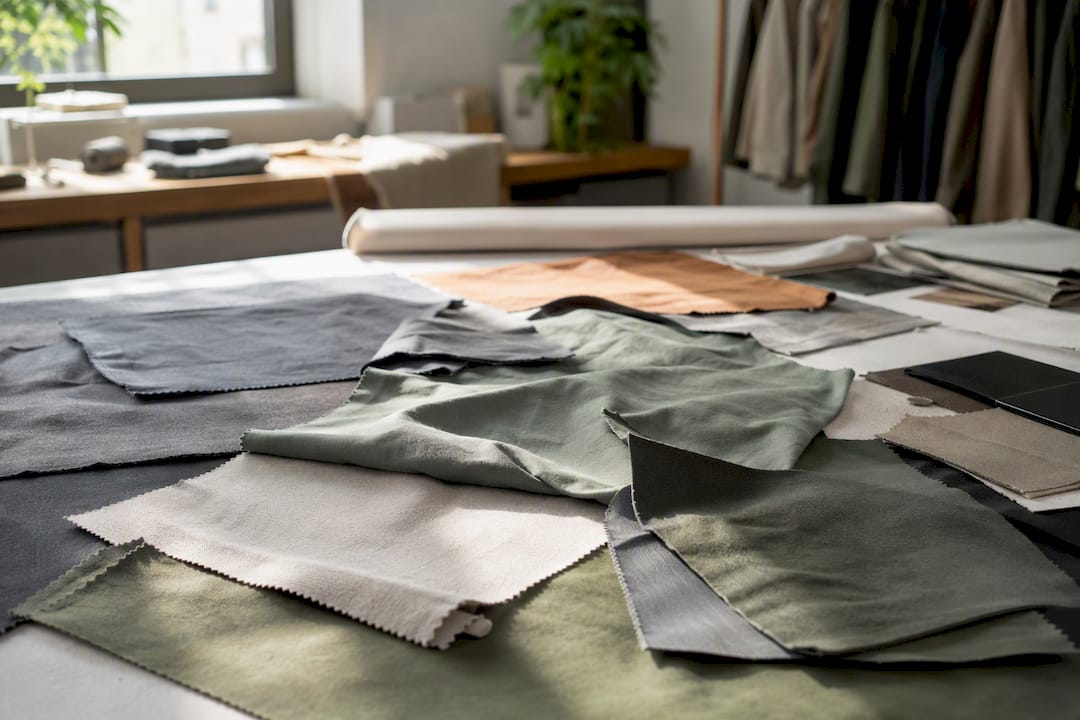
A simple test rule helps with every new purchase: Every top must work with every pair of pants in your capsule. If a new piece doesn't fit anywhere, it's either the wrong color or doesn't belong in a minimalist wardrobe.
Three palettes that have proven successful in practice:
- Earth tones: Khaki, sand beige, chocolate brown with black as a contrast. Feels calm and fits almost any occasion.
- Monochrome gray: Anthracite, light gray, off-white. Very reduced, ideal for minimalists who don't want to make color decisions in the morning.
- Sage and charcoal: A muted sage green combined with dark gray creates a calm but not boring base that is well-suited for layering looks.
Pro tip: Introduce an accent color only in small amounts, perhaps via a sweatshirt or sneakers. This keeps the capsule flexible without appearing drab.
Which materials are worth it for streetwear basics?
The choice of material determines directly how long a garment stays in your capsule. GOTS-certified organic cotton, linen, and Tencel are considered preferred materials over conventional polyester because they offer a better environmental footprint and often a longer lifespan.
Why these three materials work:
- GOTS organic cotton: Grown without synthetic pesticides, breathable, and comfortable on the skin. Ideal for heavyweight tees and sweatshirts that have direct body contact.
- Linen: Extremely robust, gets softer with every wash rather than worse. Fits well into transitional layering when cotton would be too warm.
- Tencel (Lyocell): Made from cellulose fibers, flowing in drape and moisture-regulating. A good addition for lighter layering pieces in the spring.
Recycled polyester is a compromise. It reduces the need for new petroleum and is well-suited for technical jackets where water repellency is more important than breathability. The downside: it continues to shed microplastics when washed and feels less natural than natural fibers.
A simple material test you can do in the store: Hold the fabric up to a light source. The less light shines through, the denser the weave and generally the longer-lasting the piece. Thin, translucent shirt material usually wears out significantly faster than densely woven qualities.

Regarding care: Organic cotton and linen tolerate wash temperatures up to 30 degrees Celsius without any issues; Tencel should rather be treated in a gentle cycle with a mild detergent so as not to damage the fiber structure. Knowing these differences noticeably extends the lifespan of your capsule. You can also find more details on fabric choice and care in the guide to sustainable fabrics.
How do you build your capsule step-by-step?
Building a capsule wardrobe is best done by following a clear sequence rather than through spontaneous purchases. Structured instructions recommend a combination of taking inventory, targeted purging, and selective new purchases.
- 30-day wear analysis: Turn all clothes hangers in your closet in one direction. Each time you wear a piece, turn the hanger back. After a month, you will see immediately what you really wear and what is just wasting space.
- Determine colors and lifestyle: Decide on two to three base tones and one or two accents that match your daily life, your job, and your preferred activities.
- First round of purging: Part with everything that hasn't been worn in the 30 days and doesn't fit the new color palette.
- Second round of purging: Check the remaining pieces for condition and fit. Stretched-out cuffs, faded colors, or poorly fitting proportions go, even if you like the piece.
- Identify gaps: Write down which of the seven basic categories are missing or underrepresented.
- Purchase selectively: Only buy what is on your gap list, in the materials you have identified as durable.
- Test outfits: Put together a different outfit from the new capsule every day for a week and observe what is still missing or redundant.
Second-hand platforms are not a fallback solution in this process, but a real strategy. Second-hand purchases combined with selective new acquisitions are considered one of the most ecologically sensible approaches because they utilize existing resources before new materials are produced.
- Search specifically for brand-name basics in good condition instead of buying every piece new.
- Reserve your new-purchase budget for pieces where fit and material are most important, such as the technical jacket.
What do concrete outfits from the capsule look like?
A few pieces cleverly combined create more variety than many people expect. Seven examples show how this works across daily life and seasons.
Three everyday looks:
- Heavyweight tee in sand beige, wide cargo pants in khaki, neutral sneakers, plus a simple chain as an accessory.
- Hoodie in anthracite over a monochrome long-sleeve, straight-leg jeans, sneakers with color detail, baseball cap.
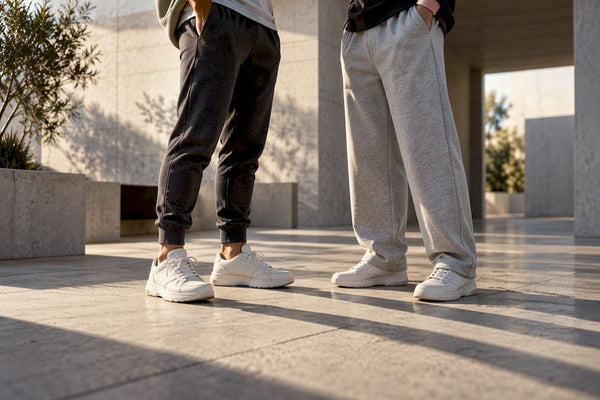
- Sweatshirt in off-white, wide-leg joggers in gray, chunkier sneakers, crossbody bag as a functional accessory.
Two transitional looks:
- Linen shirt open over a heavyweight tee, plus cargo pants and a light quilted vest as the outermost layer.
- Sweatshirt, over it a technical shell jacket, combined with joggers and sturdier sneakers for changeable weather.
Two winter looks:
- Organic cotton long-sleeve, thick hoodie, over it a lined technical jacket, plus warm wide-leg pants and lined sneakers.
- Sweatshirt, cropped puffer as a middle layer, long quilted jacket outside, beanie, and thicker socks for cold protection. You can find details on proper layering in winter in the guide to autumn/winter streetwear.
For slighter individuals, it is worth choosing a size smaller for hoodies and jackets while deliberately allowing for more width in the pants. This way, the oversized look remains recognizable without the entire body disappearing under fabric.
How do you properly care for your capsule pieces?
Care determines the actual cost-per-wear of each piece. A high-quality hoodie that is washed incorrectly won't last longer than a fast-fashion model.
- Washing according to material: Organic cotton and linen tolerate 30 degrees and a normal gentle cycle; technical shells belong in a special sports detergent without fabric softener, as this attacks the waterproofing.
- Drying: Air dry hoodies and sweatshirts, do not use a tumble dryer to prevent shrinking and stretched-out cuffs.
- Refresh waterproofing: Re-waterproof technical jackets about once per season, especially after frequent washing.
- Do small repairs yourself: Sew up loose seams immediately, replace missing buttons, and mend small holes with a patch instead of throwing the item away.
- Store correctly: Store heavy sweatshirts and hoodies lying flat instead of on hangers so the shoulder area doesn't bulge.
Pro tip: Turn T-shirts and sweatshirts inside out before washing. This protects prints and surface structure from abrasion in the machine much more effectively than many believe.
How does BeachBodyz fit into a sustainable capsule?
Beachbodyz produces streetwear basics from organic cotton and recycled polyester, manufactured fairly in the EU and shipped climate-neutrally. This exact combination of material quality and ethical production makes the brand an obvious starting point if you want to fill your capsule with long-lasting, sustainable basics instead of fast-fashion items.
For the seven basic categories of your streetwear capsule, Beachbodyz provides several direct answers: oversized T-shirts and hoodies as core pieces, sweatshirts for the middle layer, joggers as a wide pants base, and jackets for the outer layer. The cuts are often intentionally oversized, which corresponds exactly to the logic of proportions that a good streetwear capsule requires.
- Organic cotton and recycled polyester as main materials
- Fair production in the EU instead of fast-fashion supply chains
- Climate-neutral shipping and personalization options such as embroidery
Anyone wanting to dive deeper into care and styling details will find further guidance for building their own capsule in the overview of essential categories.
What most guides to streetwear capsules overlook
Most capsule wardrobe guides come from the business-casual world and apply their rules to streetwear without modification. This only works to a limited extent. A strict blazer-style logic of "everything is combinable" ignores the fact that streetwear thrives on volume, not slim lines. This is exactly where the actual fallacy lies: balance of proportions is more important than mere color coordination.
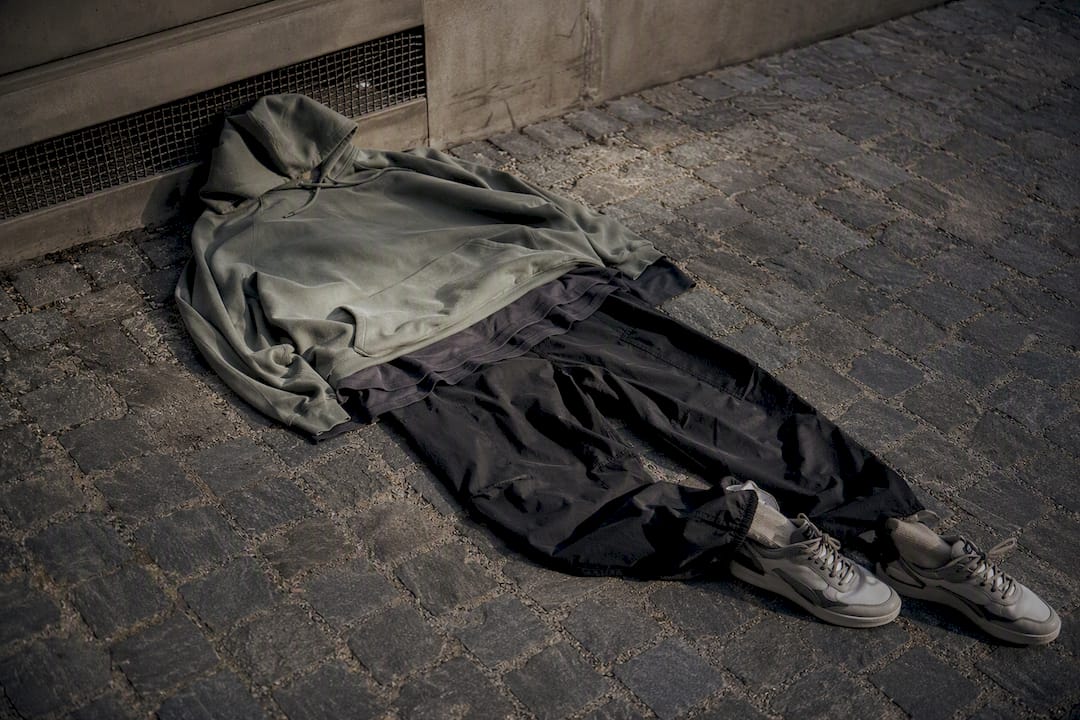
I consider the common fixation on rigid item counts to be overrated. Whether it is 28 or 42 pieces matters less than the question of whether tops and bottoms match each other. Anyone wearing two wide pieces at the same time loses the silhouette, no matter how well-thought-out the color palette is.
What readers should address first is the 30-day wear analysis before buying a single new item. Only then is it worth investing in materials, because it becomes clear which categories are actually missing. Sustainable basics like those from Beachbodyz make more sense at this stage than at the beginning of the process, when your own fit and color palette are still unclear.
Your entry into a sustainable streetwear capsule
Beachbodyz is the practical answer for everyone who doesn't want to fill their capsule wardrobe with fast-fashion compromises: GOTS-certified organic cotton and recycled polyester instead of cheap, fast-wearing goods, produced fairly in the EU instead of through anonymous supply chains.
The shop offers matching pieces directly for the seven basic categories of your capsule: oversized hoodies, heavyweight tees, joggers, and jackets, all in cuts designed for the proportional balance between wide tops and bottoms. If you are looking for an additional technical layering piece, the ripstop quilted vest from Minoti is a sensible addition for transition-season looks.
Check out the entire range in the BeachBodyz shop and find the basics that complete your capsule for the coming season. Personalizations such as embroidery turn a standard item into a piece that truly fits you.
Sources
- Minimalism in the closet: Building a capsule wardrobe based on ecological criteria
- What is a capsule wardrobe and how do you create one?
- The Streetwear Capsule Wardrobe: 7 Essential Pieces You Need to Survive the Urban Jungle - Reels Media
FAQ
What are the disadvantages of a capsule wardrobe?
Rules that are too rigid can take the joy out of dressing, and special occasions like business appointments often do not fit into a pure streetwear capsule. Furthermore, changing the entire closet too quickly often leads to bad purchases.
What is the 3-3-3 rule for clothing?
The 3-3-3 rule describes a mini-capsule consisting of three tops, three bottoms, and three pairs of shoes for a limited period, often three months. For a complete streetwear capsule, a broader range of 25 to 50 pieces is considered a more practical framework.
How do I start with a capsule wardrobe?
Start with a 30-day wear analysis to identify your actual habits, then set a color palette and clear out your closet in two rounds. Only after that should you purposefully buy the missing basic categories.
Which pieces of clothing belong in a streetwear capsule wardrobe?
Seven basic categories form the framework: heavyweight tees, hoodies, wide pants or cargos, a technical jacket, sweatshirts, a seasonal layering piece, and versatile sneakers. Beachbodyz covers several of these categories directly with its hoodies, tees, joggers, and jackets.
How many items does a streetwear capsule wardrobe need?
Between 25 and 50 items are considered a practical spectrum, depending on lifestyle and seasonal changes. More important than the exact number is that every top works with every bottom in the capsule.