Second hand is usually the more effective lever against resource waste because it directly avoids new production. Fair fashion is convincing where second hand offers no alternative: for special sizes, functional clothing, or pieces that are intended to last for years. Which option is really more sustainable depends on usage behavior, not on the category alone.
In short:
- Second hand avoids new production and is most sustainable when the garments are actually worn for longer.
- Fair fashion relies on verified social standards and durable materials, but is usually more expensive and less available.
- For everyday clothing, second-hand options are usually cheaper, while fair fashion can be more practical for special clothing in rare sizes.
- The rebound effect in second hand can increase overall consumption, and exports of inferior goods additionally cause ecological and social problems.
- For an environmentally friendly decision, users should pay attention to workmanship, material, repairability, and lifespan.
Table of Contents
- What is Second Hand? Definition and Limits of the Concept
- What Does Fair Fashion Mean and Which Labels Really Count?
- Second Hand vs. Fair Fashion: Who Wins in Which Category?
- Second Hand or Fair Fashion: A Quick Decision Guide
- Why Second Hand Alone Does Not Solve the Quantity Problem
- Shopping Checklist: How to Make the Better Choice When Shopping
- Why Responsible Fashion Is Important to Us at Beachbodyz
- Sources
- FAQ
What is Second Hand? Definition and Limits of the Concept
Second hand refers to used clothing that finds a second or third owner instead of ending up in a clothing collection. Vintage is a subcategory of this, usually referring to pieces that are at least 20 years old. Recommerce describes the organized resale through platforms, often with a photo service and shipping management.
The main advantage is obvious: Every garment that continues to be worn replaces one that is newly produced. Second hand almost completely avoids the environmental costs of new production as long as the extended wearing period actually occurs. That is precisely the real lever, not the purchase itself.
But second hand also has its downsides:
- The rebound effect: Easy availability can lead to more consumption instead of less.
- Shipping and returns on online platforms generate their own emissions, partially offsetting the ecological advantage.
- Inferior goods are often exported abroad, where they create social and ecological consequential problems.
- Not every used piece lasts long; some end up in the trash after a short time anyway.
In Germany, the second-hand market is mainly accessed through Vinted, eBay Kleinanzeigen, local vintage stores, and social thrift stores. The latter often combine the ecological effect with a local social purpose.
What Does Fair Fashion Mean and Which Labels Really Count?
Fair fashion refers to new clothing that is produced under verified social standards, with a traceable supply chain and a material selection designed for durability. It is not just about ecology, but specifically also about working conditions.
No single label covers all aspects. The consumer protection agency recommends a combination of GOTS and Fair Wear Foundation as the most meaningful guide, because both labels check different areas.
| Label | Focus of Audit |
|---|---|
| GOTS | Ecological fiber standards, chemical management, partial social minimum criteria |
| Fair Wear Foundation | Working conditions, wages, grievance mechanisms in production facilities |
| Grüner Knopf | State meta-label that bundles existing certifications such as GOTS or Fair Wear |
| Fairtrade Textile | Fair wages and trading conditions along the textile chain |
| bluesign | Chemical and environmental management in production |
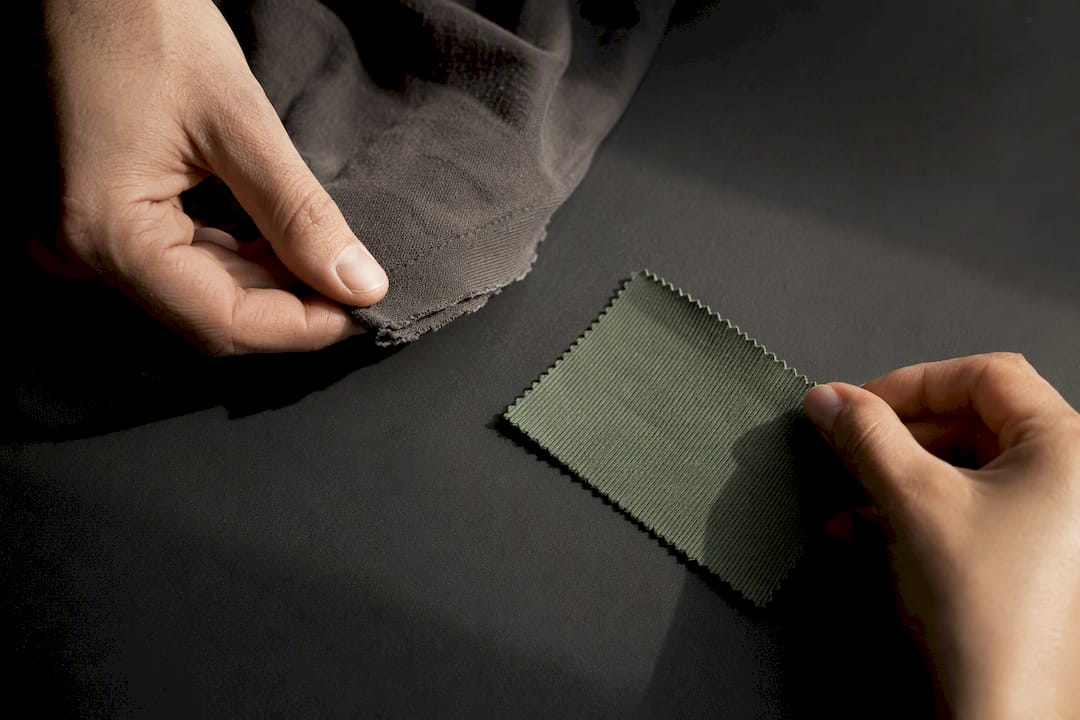
A durable, fairly produced piece that is worn for years can turn out to be ecologically more favorable than several short-lived Betont-Hand pieces, provided the usage period is correspondingly high. When buying, it is worth looking at the material composition, seam workmanship, and whether the piece can be repaired later. Details on the material selection of sustainable fabrics help with this assessment, as does a simple check of seam quality.
Second Hand vs. Fair Fashion: Who Wins in Which Category?
A direct comparison shows that both concepts score in different areas:
- Resources and CO₂: Second hand completely avoids new production, Fair Fashion reduces the impact per new production through better materials and processes.
- Social conditions: Second hand has no direct lever here, Fair Fashion addresses exactly this with verified labor standards.
- Costs and flexibility: Second hand is usually cheaper and covers spontaneous needs, Fair Fashion often requires a higher initial investment.
- Durability and repairability: Fair-fashion pieces are often designed for durability, while the condition of second hand varies greatly.
- Availability: Second hand is unbeatable for standard sizes, but the selection quickly thins out for special measurements or certain fits.
A T-shirt can consume around 2,000 liters of water in its production chain. This magnitude explains why every avoided new production carries so much weight, whether through second hand or through a Fair-Fashion piece that is worn for years.
For everyday clothing like basics, second hand usually wins because the selection is large and the replacement effect is high. For special clothing, such as functional jackets or shoes in rare sizes, Fair Fashion is often the more practical choice. For a gift or a special occasion, Fair Fashion additionally scores with its like-new appearance. So there is no universally better option, only the one that is more suitable for the respective situation.
Second Hand or Fair Fashion: A Quick Decision Guide
Three questions help with the decision: How often will the piece be worn, for what occasion it is needed, and whether there is a willingness to have it repaired later.
- For frequently worn basics like shirts or jogging pants, it is worth looking at Betont-Hand platforms first.
- For pieces with high stress or a special cut, a fairly produced new piece is usually the safer choice.
- In case of uncertainty about the fit, trying it on in a brick-and-mortar store before ordering online helps, as it reduces returns and thus unnecessary shipping emissions.
- For special occasions, a high-quality Fair-Fashion piece can be worth the investment because it stays in the closet for years.
Pro tip: Before you even buy new or used, it is worth looking into your own closet. Consumer advocates point out that most people own significantly more unused clothing than they realize.
Why Second Hand Alone Does Not Solve the Quantity Problem
The rebound effect is real: More availability of cheap Betont-Hand goods does not automatically lead to less overall consumption, but can encourage additional purchases. Another problem concerns the export of inferior old clothing, which creates its own ecological and social burdens in recipient countries.
The second-hand boom can trigger rebound effects and does not automatically lower overall consumption. At the same time, exports of inferior goods create new social problems in the destination countries, which can only be addressed with political measures such as stricter export standards and investments in fiber-to-fiber recycling.
This assessment comes from an analysis by the Südwind Institute on the limits of second-hand fashion. Extended producer responsibility, which makes companies jointly responsible for the entire lifespan of their products, is considered one of the most effective political levers against this problem.
Shopping Checklist: How to Make the Better Choice When Shopping
Whether second hand or new, the check proceeds similarly:
- Check seams for even stitches and stable workmanship; loose threads are a warning sign.
- Check labels for material information and labels such as GOTS or Grüner Knopf.
- Touch the material: Natural fibers and high-quality blended fabrics feel different than cheap synthetics.
- Assess repairability, for example whether zippers are replaceable.
In terms of care, cool washing at a low spin cycle significantly reduces microplastic release, and a wash bag for synthetic fibers helps additionally. Clothing should be stored dry and protected from light, which measurably extends its lifespan. Those who give away pieces should prefer fair platforms, local clothing swap markets, or social thrift stores, as this extends the usage period most effectively.
Why Responsible Fashion Is Important to Us at Beachbodyz
Some sustainable brands deliberately rely on organic cotton, recycled polyester, and fair production in the EU because quality and durability make the biggest difference. A garment that lasts for years is often the more sustainable choice in the end than several short-lived alternatives. More on this in the comparison of Slow Fashion and Fast Fashion.
— Ahmed
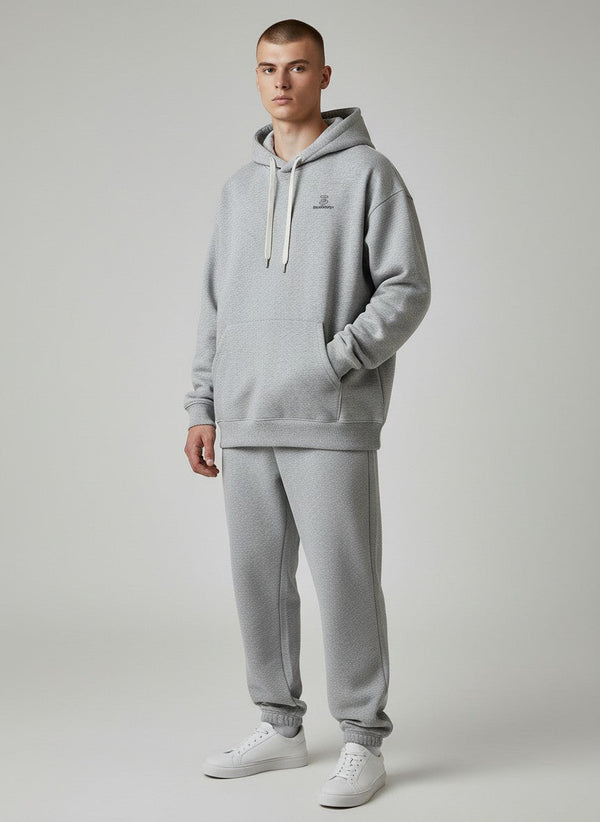
Anyone looking for a piece that is intended to stay in the closet for a long time instead of being discarded after just one season will find Oversize Hoodies made of 350 g/m² Organic Cotton, sweatshirts, jackets, and jogging pants at Beachbodyz, all fairly produced in the EU. For everyone who oscillates between streetwear aesthetics and sports functionality, it is worth looking at the corresponding current collections.
Sources
- Second Hand vs. New: How Sustainable Is Clothing Really
- Sustainable Fashion: Fair Fashion, Second Hand & Labels Explained
- What Second-Hand Fashion Can and Cannot Do (Südwind Institute, 2026)
- Vinted Publishes First Climate Impact Report (Burda)
FAQ
What Exactly Does Second-Hand Fashion Mean?
Second-hand fashion refers to already worn clothing that is used again through a second sale or handover. It thus avoids the environmental costs of new production as long as the piece is actually worn further.
Why Is Second Hand Often Better Than Fast Fashion?
Second hand extends the usage period of an already produced garment and thus saves resources that arise in fast fashion through constant new production. Fast fashion also rarely relies on verified social or ecological standards, while second hand at least bypasses the new production step.
Why Do Many Young People Still Buy Fast Fashion?
Fast fashion often remains the cheapest and fastest option, especially with a small budget or short-term needs. Second hand and Fair Fashion usually require more time during the search or a higher budget per piece, which increases the barrier to entry.
Do H&M and Zara Count as Fast Fashion?
Both companies are considered classic representatives of fast fashion due to their rapid collection changes and high production volumes. Individual sustainability lines of these brands change little of this, as long as the basic model remains designed for fast, high-volume consumption.
Are Second Hand and Fair Fashion Always the Better Choice?
Not automatically: The rebound effect can lead to more consumption instead of less in second hand, and fair-fashion pieces are only useful if they are worn for a long time. In the end, it is always your own usage behavior that matters, not just the category of the purchase.