Recycled polyester, known as rPET in technical terms, is a synthetic fiber made from existing plastic waste such as PET bottles or textile scraps. The material saves crude oil, reduces CO2 emissions, and keeps plastic out of the environment. For anyone looking to buy sustainable textiles, rPET is now one of the most commonly used alternatives to virgin polyester. Brands like Beachbodyz rely on this material because it combines circular economy principles with fashion demands.
How is recycled polyester made?
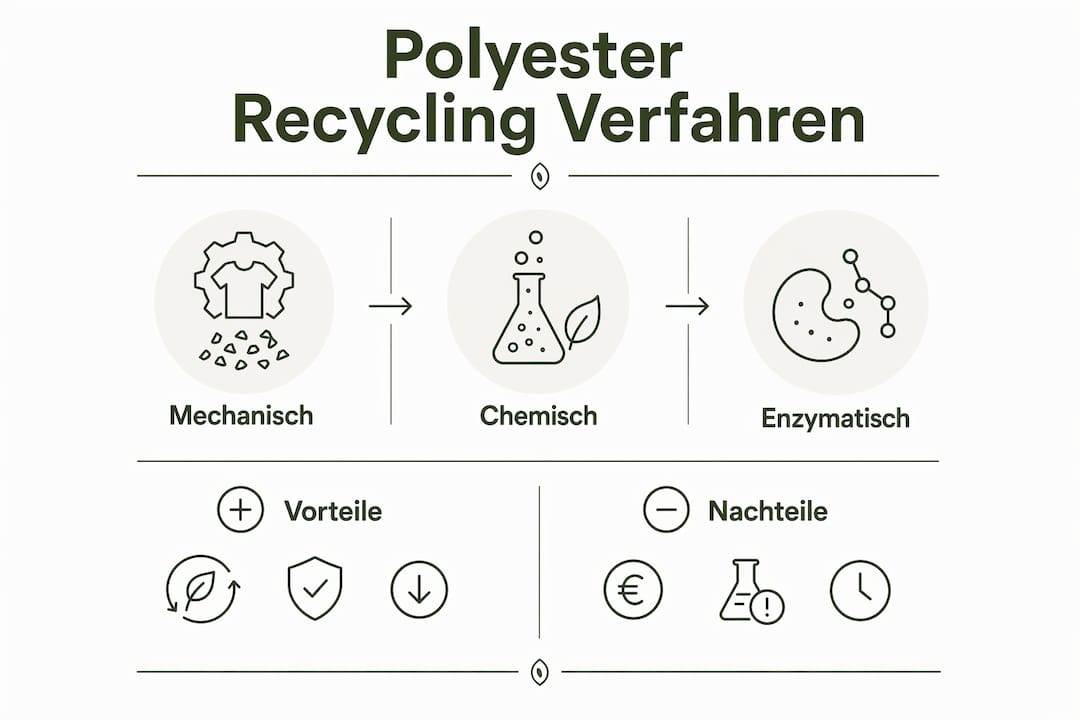
Polyester recycling fundamentally uses two processes: mechanical or chemical. Both methods begin with collecting and sorting the source material, such as PET bottles, packaging, or old textiles. After this, the processes diverge significantly.
Mechanical recycling: affordable but limited
In mechanical recycling, plastic waste is shredded, washed, melted, and spun into new fibers. The process is cost-effective and widely used. The downside: each melting process degrades the fiber quality. Typically, only 1–2 recycling cycles are possible before the fiber becomes too weak. For clothing intended to last a long time, this is a significant limitation.

Chemical recycling: complex but higher quality
Chemical recycling breaks down polyester at a molecular level, for example, through glycolysis. Chemical processes can efficiently depolymerize polyester fibers in 120 minutes. The result is raw materials of virgin quality that can be processed again into high-quality fibers. The process is more expensive and technically demanding but enables a truly closed loop.
Enzymatic recycling: the future
Innovative enzyme-based processes significantly improve the efficiency of polyester degradation under industrial conditions. Fusion enzymes specifically break down polyester, even at high solids concentrations. This technology is not yet available on a large scale but shows where development is headed.
| Process | Cost | Quality | Recyclability |
|---|---|---|---|
| Mechanical | low | decreases | limited (1–2 cycles) |
| Chemical | high | like virgin material | fully possible |
| Enzymatic | still high | very high | in development |
Pro Tip: When buying rPET clothing, it's worth checking the manufacturing process. Chemically recycled polyester lasts longer and can be recycled more often than mechanically recycled.
What are the environmental benefits of recycled polyester?
rPET performs significantly better in life cycle assessments than newly produced polyester. 1 kg of recycled polyester causes 32% fewer CO2 emissions and saves around 3.5 liters of crude oil. This means that buying an rPET jacket measurably saves resources compared to a conventional jacket made from virgin polyester.
In addition, it reduces plastic waste. Every PET bottle that becomes fiber does not end up in the ocean or in landfills. This is not marketing; it's physics. And sustainable production in Europe can reduce the carbon footprint of textiles by up to 98% compared to fast fashion when regional manufacturing and digital production planning are combined.
Anyone who wants to ensure that a product genuinely contains recycled material should look for certifications:
- GRS (Global Recycled Standard): requires at least 20% recycled content and audits the entire supply chain
- RCS (Recycled Claim Standard): requires at least 5% recycled content and confirms the material's origin
- Both certifications help avoid greenwashing because they are independently verified
The EU has formulated clear recommendations on this. For polyester in T-shirts and jeans, the EU recommends at least 3% recycled fibers from fiber-to-fiber recycling. This is a minimum value, not a goal. Quality-oriented brands go significantly further.
What are the challenges with recycled polyester?
rPET is not a perfect material. The biggest criticism concerns microplastics. Textiles made from recycled polyester can release up to 55% more microplastics than new polyester fabrics. This is due to the altered fiber structure after the recycling process. Tiny fiber particles detach during washing and enter the wastewater.
Further weaknesses:
- Loss of quality: Mechanically recycled fibers lose viscosity and strength after each cycle. After 1–2 cycles, the material is often no longer suitable for high-quality clothing.
- Greenwashing risk: Without GRS or RCS certification, manufacturers can claim any recycled content. Without transparent certificates, buyers risk greenwashing because claims cannot be verified.
- Wearing comfort: rPET breathes less than natural fibers like organic cotton. For everyday clothing without a sports function, this can be a disadvantage.
- Sorting effort: Blended fabrics made of polyester and other fibers are difficult to recycle. This severely limits the recyclability of many garments.
Pro Tip: Use a Guppyfriend washing bag when washing rPET clothing. It filters microfibers from the wash water and prevents them from entering the wastewater.
Where is recycled polyester used?
The use of rPET in fashion is broader than many think. In the sports and outdoor sector, recycled polyester is widely used because the material is lightweight, quick-drying, and dimensionally stable. Leggings, running jackets, fleece sweaters, and backpacks are often made from rPET fibers.
The material has also found its way into streetwear. Brands that produce sustainable streetwear use rPET for hoodies, jogging pants, and transitional jackets. Beachbodyz focuses on fair-produced clothing within the EU and combines recycled materials with certified organic cotton.
Specific product categories using rPET:
- Sports jackets and softshell jackets
- Jogging pants and training pants
- Fleece mid-layers for outdoor activities
- Bags, backpacks, and accessories made from rPET fabric
- Workwear and corporate fashion with a sustainability claim
Those who want to buy recycled fabrics should pay attention to the combination of certification and place of manufacture. A GRS-certified product from European production has a significantly better overall balance than a cheap rPET shirt from the Far East without proof.
Key takeaways
Recycled polyester demonstrably saves CO2 and resources but has technical limitations regarding microplastics and recycling cycles, which can only be offset by certification and conscious purchasing.
| Topic | Details |
|---|---|
| CO2 savings | 1 kg of rPET causes 32% less CO2 than newly produced polyester. |
| Recycling processes | Chemical recycling delivers better quality; mechanical is cheaper and more common. |
| Microplastics | rPET textiles release up to 55% more microplastics; washing bags reduce the risk. |
| Certifications | GRS and RCS are reliable proofs of genuine recycled content and protect against greenwashing. |
| Areas of application | Sports, outdoor, streetwear, and accessories are the main fields for rPET in fashion. |
What I've learned after years in sustainable fashion
For a long time, I believed that rPET was the simple answer to fast fashion. That's not entirely true. The material is good, but it's not a panacea.
What surprised me most: the microplastic issue. The fact that recycled polyester releases more microfibers than new polyester is counter-intuitive. You buy something sustainable and inadvertently cause another problem. This doesn't mean avoiding rPET. But it does mean washing more consciously, less often and at cooler temperatures, and using a filter bag.
The second point that many underestimate: certificates are not optional. I've seen products advertised as "recycled" without any proof. GRS and RCS are the minimum standard. If you don't check this, you're buying in the dark.
What makes me optimistic are the enzymatic recycling processes. If this technology is scaled industrially in the coming years, it will solve the quality problem of mechanical recycling. Then rPET will truly be circular, not just theoretically.
My practical advice: Buy less, but better. One rPET item with GRS certification from European production beats five cheap, unverified shirts in every respect. Quality and origin are the decisive questions, not just the material.
— Ahmed
Sustainable fashion from Beachbodyz with recycled materials
Beachbodyz produces streetwear in the EU, with certified materials and a clear focus on durability. The collection includes items made from recycled polyester and organic cotton, which meet both demands: fashionable and ecologically responsible.

Those looking for specific items will find products at Beachbodyz such as the Authentic Sport Jogging Pants or the Essential Softshell Jacket, both based on sustainable materials and fairly manufactured in Europe. For anyone seeking durable clothing with genuine sustainability credentials, the Beachbodyz range is a concrete starting point.
FAQ
What exactly is recycled polyester?
Recycled polyester, or rPET for short, is a synthetic fiber made from recycled plastic waste such as PET bottles or old textiles. It replaces newly produced polyester and saves CO2 and crude oil.
How much CO2 does recycled polyester actually save?
1 kg of rPET, on average, causes 32% fewer CO2 emissions than newly produced polyester and saves around 3.5 liters of crude oil. This is a measurable advantage that significantly adds up across an entire clothing collection.
Does recycled polyester release more microplastics?
Yes. Textiles made from rPET can release up to 55% more microplastics than new polyester fabrics. A filter bag during washing significantly reduces this discharge into the wastewater.
How do I recognize genuine recycled polyester?
The most reliable proofs are the GRS certificate (at least 20% recycled content) and the RCS certificate (at least 5% recycled content). Both are independently audited and protect against unsubstantiated sustainability claims.
How many times can recycled polyester be recycled again?
With mechanical recycling, typically only 1–2 cycles are possible before the fiber quality degrades too much. Chemical recycling theoretically enables a closed loop but is still more expensive and less common.