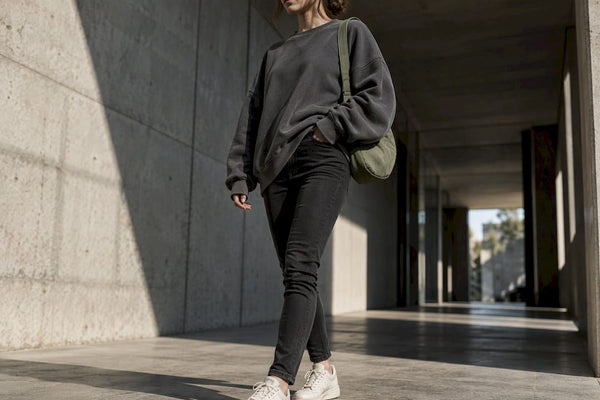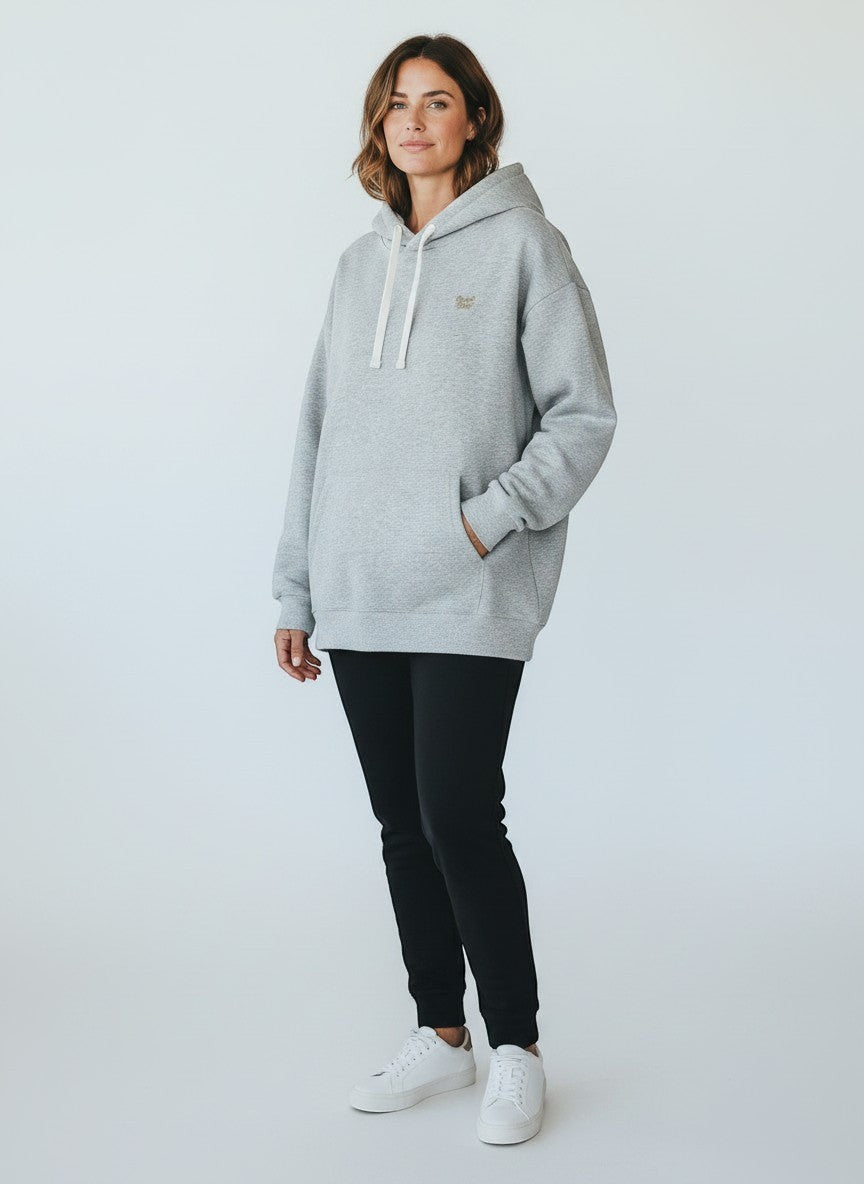
By 2026, recycled materials in clothing are no longer a compromise, but a question of the right quality: the cleanliness of the processed fiber, the density of the fabric knit, and the care taken with seams determine the look, durability, and feel. Mechanically vs. chemically recycled, mono-material vs. smart blend – the details make the difference. At BeachBodyz, we consistently rethink streetwear: selected pieces are 📍MADE IN EU🇪🇺 and strictly BUILT DIFFERENT, with a focus on stable fits, robust ribbed cuffs, and a clean finish that holds its shape even after many washes – all without sacrificing a modern, urban vibe.
What does this mean for your everyday life? Pay attention to fabric weight (e.g., 400 gsm for hoodies), pilling resistance, dense knit patterns, and high-quality yarns; check that seams are securely locked and hems aren't fraying. Recycled cotton gains stability when blended with organic fibers, recycled polyester increases tear resistance – and proper care extends the garment's lifespan. If you want to experience high-quality fabric weights and clean cuts, check out our hoodie collection. This is how you wear sustainability that not only feels good but also performs for the long haul.
Upgrade your look now
Discover our best-selling essentials – fairly produced in Europe and designed for maximum longevity.
📍MADE IN EU🇪🇺 — BUILT DIFFERENT
Recycled materials in clothing: Quality – The basics and why it matters now
Recycled materials in clothing: Quality begins with the basics. "Recycled" generally covers two sources: post-consumer (e.g., old textiles, PET bottles) and pre-consumer (cutting scraps from production). Processing also differs: mechanical (e.g., cotton is shredded into shorter fibers) or chemical (e.g., polyester/nylon is broken down into its building blocks and re-polymerized). Recycled polyester (rPET), recycled cotton, wool, or nylon can result in high-quality yarns – provided that fiber selection, spinning processes, and subsequent manufacturing are consistently focused on durability.
Quality is not a coincidence, but engineering. Mechanically recycled cotton often has shorter fibers and is therefore frequently blended with longer (sometimes virgin) fibers to ensure tear resistance and shape retention. Chemically recycled synthetics can reach near-virgin levels if the polymer chains are intact. The deciding factor is how the fabric is created: yarn fineness, knit density, lining construction (e.g., 3-thread fleece), and a weight of around 400 gsm provide substance, minimize pilling, and maintain the silhouette. BUILT DIFFERENT here means: it's not just the material that is recycled – the entire construction is designed for performance.
Why is this particularly relevant in 2026? Resource and climate pressure, rising raw material costs, and stricter EU requirements for circularity bring transparency and longevity to the forefront. Digital product passports and stricter proofs for recycled content are setting new standards. Furthermore, regional supply chains shorten transport routes – 📍MADE IN EU🇪🇺 stands for traceable production, fair conditions, and consistent quality. For you, this means you can make more conscious decisions without compromising on comfort.
How can you recognize quality in recycled fabrics in practice? Look for clear material specifications (including percentages and sources), reputable standards like GRS or RCS, and check the fabric construction.
- Fabric weight: Heavier qualities (e.g., ~400 gsm) offer substance and remain dimensionally stable.
- Knit density & yarn quality: Densely knitted fleece with cleanly twisted yarns pills less.
- Seams & Ribbing: Wide, firm ribbed cuffs and reinforced seams maintain the fit.
- Care & Finish: Brushed lining, de-pilled surfaces, and colorfast dyes extend lifespan.
If you want to feel the difference, take a look at our hoodie collection: High fabric weights and dense constructions show how robust streetwear can be – regardless of whether it is made from recycled or organic fibers. A good example of substance is the Authentic Oversize Hoodie 400gsm made of organic cotton: it embodies the fundamental principle that material quality and construction make the difference.
Do you prefer a casual zip look with the same substance? Then the Authentic Oversize Zipper Hoodie 400gsm is a benchmark for clean workmanship and weight class. Whether recycled fiber blends or purely organic options – opt for transparent specifications, long-lasting constructions, and regional production. That is how sustainable fabric becomes a true wardrobe favorite: 📍MADE IN EU🇪🇺 and BUILT DIFFERENT.
Recycled materials in clothing: Quality – How to check it in practice
Recycled fibers are mainstream in 2026 – but true quality shows in the details. So you can find sustainable pieces that perform for a long time, you can quickly check the material and manufacturing quality yourself. At BeachBodyz, we rely on clear standards, precise workmanship, and 📍MADE IN EU🇪🇺 – streetwear that is truly BUILT DIFFERENT.
- Label check: Look for reliable proof such as GRS or RCS. Important details include the exact recycled content (%) and whether the fiber is post-consumer (e.g., bottles) or pre-consumer (scraps).
- Weight & Density: You can feel quality in the hand – and measure it in gsm. For hoodies, 380–420 gsm is considered heavy. Do the light test: hold the fabric up to the light – the less light that shines through, the denser (and usually more durable) the weave.
- Yarn & Construction: Ring-spun, compact, or double-twisted yarns pill less than open-end. For jersey, interlock ensures shape retention; for fleece, tightly knitted French Terry (loopback) is more robust than overly soft brushed fabric.
- Pilling and abrasion test: Rub a hidden area 20 times with a rough cotton cloth or the edge of a key ring. If fuzz forms quickly, the yarn is short-fibered or loosely knitted – not a good sign for long-lasting recycled blends.
- Seams & Ribbing: Look for 4-thread overlock, clean coverstitching, bartack reinforcements at stress points, and 2x2 ribbing with about 5–7% elastane. The "snap-back" (ribbing pulls back immediately) shows shape retention.
- Color & Smell: Rub an inside area with a damp white cloth – if it stains heavily, the color fixing is weak. A solvent-like smell indicates poor treatment – avoid it.
- Care reality: Recycled materials (especially rPET) prefer 30°C, liquid detergent, and air drying. Use a microfiber laundry bag to reduce abrasion. Good pieces maintain their shape and color after 10 washes.
Compare recycled fabrics with reliably heavy references: A dense 400 gsm fleece sets a sensible benchmark for feel and drape. If you want to feel that, use our Authentic Oversize Hoodie 400gsm made of organic cotton as a standard – not recycled, but ideal for assessing density, hem stability, and stitching.
Are you looking for robust basics that set the bar for dense gear? Browse our hoodie collection and round out your setup with matching sweatshirts. That way, you'll instantly know if the fabric weight, knit pattern, and workmanship are correct during your next recycled purchase. BeachBodyz focuses on precise manufacturing 📍MADE IN EU🇪🇺 – streetwear that performs in everyday life and remains BUILT DIFFERENT.
Recycled materials in clothing: Quality – What really matters (using our BeachBodyz Hoodies as an example)
Recycled materials in clothing have long since outgrown the niche. Whether post-consumer fibers (e.g., PET bottles, discarded textiles) or pre-consumer scraps: The deciding factor is not just the ecological impact, but the quality of the resulting yarns and fabrics. Recycled cotton is often blended with fresh, longer cotton to ensure tear resistance; recycled polyester (rPET) scores with shape retention and abrasion resistance; recycled nylon provides high elasticity. Quality here means: clean sorting, gentle recycling, finely tuned blends, and precise workmanship.
How do you recognize high-quality recycled goods? First, pay attention to the fiber base and the staple length of the cotton: Short, broken fibers pill faster. For rPET, thread fineness (denier) and uniformity (low nepping, few knots) are important. Equally relevant: fabric weight and density. A heavy, densely knitted fleece (e.g., 400 gsm) is significantly more durable, retains its shape better, and feels more substantial. The finishing (brushed inside, compact outside) influences warmth, feel, and pilling. And: workmanship beats everything – stable seams, clean ribbed cuffs, reinforced shoulder seams, and shape-retaining hoods ensure that recycled fabrics reach their potential. All in all, this creates true streetwear quality that is BUILT DIFFERENT.
Transparency is provided by certifications. For recycling, GRS (Global Recycled Standard) and RCS (Recycled Claim Standard) are relevant. GOTS is the standard for organic cotton; for safety against harmful substances, look for OEKO-TEX, among others. At least as important: production. 📍MADE IN EU🇪🇺 means short transport routes, stricter labor and environmental standards, and consistent quality controls – a clear advantage for fit, durability, and a clean finish.
- Check material blend: Percentage and type of recycled fiber (e.g., rPET, recycled cotton) stated transparently.
- Weight & Density: Heavy fleece from ~380–420 gsm stands for substance, heat retention, and shape retention.
- Surface appearance: Smooth outside, few thread knots, softly brushed inside – without excessive fuzzing.
- Seams & Cuffs: Double seams, stable ribbed cuffs, cleanly finished hems, sturdy zipper on zipped models.
- Certificates & Origin: GRS/RCS for recycling, GOTS for organic; ideal: production 📍MADE IN EU🇪🇺 for verified quality.
Our heavy oversize styles – like the Authentic Oversize Hoodie 400gsm or the Authentic Oversize Zipper Hoodie 400gsm – serve as benchmarks for feel, density, and workmanship in the 400 gsm class. Both rely on massive fabrics, precise seams, and a durable construction – built for years of use and therefore clearly: BUILT DIFFERENT. If you are looking for recycled options, apply these quality criteria 1:1: clear material certification (GRS/RCS), high fabric weight, dense knitting, and consistent EU production. This way, you get sustainable pieces that not only feel good but also withstand the toughest everyday demands – from the first wash to the thousandth wear.
Our recommendation for you
These pieces fit this topic perfectly and combine premium quality with timeless streetwear design.
📍MADE IN EU🇪🇺 — BUILT DIFFERENT
Common mistakes with recycled materials – and how to avoid them (plus pro tips)
Recycled textiles are more than a trend in 2026 – they are standard. However, quality fluctuates significantly. Those who only follow the keyword "recycled" risk bad purchases: stretching cuffs, pilling after a few washes, or color fading. Here you will find out which mistakes are common and how to avoid them – including pro tips to keep your fit fresh for a long time.
Mistake 1: Labels instead of proof. "Recycled" is not a quality guarantee. Look for clear fiber percentages (e.g., "40% recycled cotton, 60% organic cotton") and recognized standards like GRS/RCS for recycled materials. Reputable brands also communicate whether pre- or post-consumer waste is used. Without a chain-of-custody document, the keyword is worthless.
Mistake 2: Misunderstanding fabric weight. Recycled cotton often brings shorter fiber lengths. If the weight is too low (e.g., thin fleece qualities), the risk of pilling increases. For hoodies, 380–420 gsm is a robust sweet spot. As a benchmark for long-lasting, dense fleece structures, take a look at the HOODIE collection: heavy 400 gsm fabrics, cleanly finished seams – 📍MADE IN EU🇪🇺 and simply BUILT DIFFERENT. This shows how massive and dimensionally stable premium streetwear should be constructed, regardless of whether a portion is recycled.
Mistake 3: Poor workmanship. Recycled material alone does not make a high-quality piece. Seam densities, double topstitching, cleanly finished seams, and stabilized shoulder seams are critical. You can quickly check the look and feel: pull the hoodie slightly in width – does it spring back into shape? Does the fabric drape heavily? Models like the Authentic Oversize Hoodie 400gsm or the Authentic Oversize Zipper Hoodie serve as references for solid construction with strong ribs and clean zipper tape.
Mistake 4: Wrong care. Recycled fibers – especially mechanically recycled cotton – are sensitive to heat and friction. Those who wash at 60°C and blast it in the dryer destroy the surface. Better: 30°C, liquid mild detergent, turn inside out, air dry; a microfiber bag reduces abrasion for recycled polyester.
- Pro tip on fit & density: For recycled cotton blends, choose ring-spun, combed yarns and heavier loopback or brushback fleece (380–420 gsm) for stability.
- Pro tip on blend strategy: Recycled cotton harmonizes with organic cotton or a moderate portion of recycled polyester (for shape retention). A too-high percentage of recycled material in cotton can decrease tear resistance.
- Pro tip on dyeing: For recycled polyester, prefer solution-dyed or yarn-dyed qualities – this reduces color bleeding and saves water.
- Pro tip on production: Look for pre-washed/compacted fabrics, stable cuffs, and clean shoulder tapes. European production often delivers more consistent quality – 📍MADE IN EU🇪🇺 speaks for controlled processes.
- Pro tip on tactile test: Hold fabric up to the light (density!), rub with the palm 10 times (pilling check). A good piece remains smooth, dimensionally stable, and feels "heavy."
Conclusion: Quality in recycled materials comes from the interplay of fiber source, spinning technique, fabric weight, dyeing, and, above all, workmanship. Compare your selection with reliable benchmarks from practice – e.g., heavy, cleanly constructed hoodies from our HOODIE collection – and you will wear them longer, more sustainably, and more stylishly. BUILT DIFFERENT starts with the right decision.
Recycled materials in clothing: Quality, sustainability, care & longevity
Recycled fibers are long since no longer a compromise in 2026, but a quality guarantee – provided that material selection and workmanship mesh precisely. Whether mechanically recycled cotton from cutting scraps or recycled polyester from post-consumer PET: Performance stands or falls with fiber length, yarn technology, and weight construction. At BeachBodyz, we combine high fabric weights with dense mesh structures and thoughtful finishes so that recycled components do not come at the expense of feel, structure, and shape retention. The result: streetwear that feels robust in everyday life, drapes cleanly, and does not stretch out even after many wash cycles – true quality that makes sustainability measurable.
It’s not just about “what,” but “how.” 📍MADE IN EU🇪🇺 for us means short supply chains, transparent sourcing, and production according to strict environmental and social standards. In European knitting and garment manufacturing facilities, yarn fineness, twists, and dyeing processes can be controlled so that even blends with recycled fibers achieve low pilling values, stable seams, and even color depth. Double seams at stress points, cleanly finished ribbed cuffs, and pre-washed fabrics minimize shrinkage and ensure a consistent fit for years. BUILT DIFFERENT is not just a claim, but our process DNA: durable construction instead of short-lived hype.
Proper care extends the lifespan of recycled materials just as it does for virgin and organic fibers. Here is how to keep the quality feeling like new for longer:
- Wash cold at 30 °C, turn inside out, use low spin speed; use mild detergent without fabric softener.
- Close zippers and use a laundry bag – this protects the knit and surfaces.
- Air dry instead of using high tumble dryer heat; brush out the inside of fleece lightly to reactivate volume.
- Remove pilling gently with a fabric shaver – do not pull, to avoid damaging the threads.
- Air out between wears and wash less frequently; this protects fibers and saves resources.
Durability is born from material + construction + care. Our heavy 400 gsm fleece standards show how robust streetwear can be built – benchmarks we also apply to styles containing recycled materials. Take a look at the workmanship on pieces like the Authentic Oversize Zipper Hoodie 400 gsm or the Essential Oversize Hoodie 400 gsm: dense knit, stable ribbing, reinforced seams. In our BeachBodyz hoodie collection, you will find this construction as a common thread – regardless of whether the fibers are organic or recycled.
Conclusion: Sustainability is shown in days of use, not just on labels. Recycled materials deliver top quality when used correctly in construction and cared for consciously. With 📍MADE IN EU🇪🇺 production, robust 400 gsm setups, and attention to detail in every seam, BeachBodyz is BUILT DIFFERENT – for streetwear that lasts longer, looks better, and saves resources.
Recycled materials in clothing: Quality compared
Recycled textiles are long past being a mere trend: they deliver performance and durability when the material, yarn, and workmanship are right. Quality is not created solely by the source material, but by fiber lengths, yarn twist, fabric construction, and finish. At BeachBodyz, we combine recycled fibers with precise cuts and robust fabric weights – for streetwear that is BUILT DIFFERENT and performs as well in everyday life as it does during a workout. Our production is 📍MADE IN EU🇪🇺, which means short transport routes, fair standards, and reproducible quality. You can find more background information on our Sustainability page and in our Quality Guidelines.
| Material (recycled) | Durability & Pilling | Feel & Breathability | Ideal Cuts |
|---|---|---|---|
| rPET (recycled polyester) | Highly abrasion-resistant; low pilling with tight knit and high torque | Smooth, quick-drying; moderately breathable, moisture-wicking | Tech tees, linings, performance shorts |
| Recycled cotton (R-CO) | Depends on staple length; optimal in blends with virgin cotton for tear resistance | Soft, natural; highly breathable, temperature-regulating | Heavy hoodies, t-shirts, sweatpants |
| Econyl (recycled nylon) | Very durable; excellent recovery, maintains shape | Cool, smooth; less airy, but elastic and dense | Leggings, windbreakers, swim & gym shorts |
| Blended fabrics (rPET/cotton, rPET/elastane) | Balanced; low pilling with double yarn/double thread | Soft-touch, shape-retentive; good moisture management | Oversized tees, hybrid joggers, streetwear sets |
Conclusion: “Recycled” is not a promise of quality per se – what counts is yarn fineness, thread density, fabric weight, and the finishing process (e.g., enzyme wash to prevent pilling). For durable streetwear, we recommend heavier French Terry or fleece qualities of ~300 gsm and up for hoodies, tightly knit jerseys for t-shirts, and tested elastane percentages for shape retention. Pay attention to clear material specifications and recognized standards. At BeachBodyz, we rely on certified supply chains, strict pilling and Martindale tests, and precise cuts – streetwear that is BUILT DIFFERENT and performs day in, day out. Discover our 📍MADE IN EU🇪🇺 selection in our hoodies and essentials – quality you can feel that lasts longer.
Final Verdict
Recycled materials do not redefine quality downward – they shift the focus to the correct selection of fibers, clean sorting, precise spinning techniques, high stitch density (GSM), and thoughtful finishing. High-quality recycled yarns, such as rPET or mechanically recycled cotton in smart blends with premium virgin fibers, deliver a dense, smooth surface with high shape retention, low pilling tendency, and rich colors. The construction is the deciding factor. At BeachBodyz, we rely on robust 400 gsm heavyweights, tightly knit fabrics, reinforced seams, and cleanly brushed insides – 📍MADE IN EU🇪🇺 and BUILT DIFFERENT. The result: Streetwear that combines performance-oriented durability with responsible material selection, making “recycled” feel not like a compromise, but like a smart, contemporary decision.
How do you recognize quality levels? By even knit patterns, noticeable weight, elastic recovery after stretching, color-fast dyeing, and certified processes (e.g., GRS/GOTS) – and, not least, by precise finishing of cuffs, seams, and zippers. If you are looking for massive, long-lasting essentials that meet these benchmarks, start with our Authentic Oversize Hoodie 400 gsm or explore the entire hoodie collection. You are investing in pieces that confidently withstand many washes, maintain their fit, and offer real closet value through timeless oversize design. Quality from recycled materials is not a flash in the pan, but the new foundation of a conscious, high-performance wardrobe – consistently BeachBodyz, consistently BUILT DIFFERENT.
Ready for the next step?
Secure your BeachBodyz favorites now – BUILT DIFFERENT, 📍MADE IN EU🇪🇺, with free shipping.
📍MADE IN EU🇪🇺 — BUILT DIFFERENT
Frequently Asked Questions (FAQ)
Are recycled polyester and nylon fabrics in streetwear truly as durable as new materials?
Yes – when the right yarn selection and knitting density are used. We utilize high-tenacity filaments, dense interlock and double-knit structures, and Martindale abrasion tests. Our hoodies with 330 gsm and reinforced cover seams hold their shape and color. Manufactured 📍MADE IN EU🇪🇺, BeachBodyz pieces are simply BUILT DIFFERENT. You can find more about our testing in our Quality Standards.
How does clothing made from recycled cotton feel in everyday life – breathability, softness, and fit?
Recycled cotton blends feel soft and breathable when ring-spun, combed yarns and enzyme washes are used. We stabilize the fit through pre-washing and shape-retaining ribbed cuffs. Take a look at our T-shirts and our size chart. Produced 📍MADE IN EU🇪🇺, our essentials are comfortable to wear – and remain BUILT DIFFERENT.
How can I identify high-quality fashion made from recycled materials? Certificates, fabric weight, and workmanship explained.
You can identify quality by certificates such as GRS or RCS, complemented by OEKO-TEX. Pay attention to the fabric weight (e.g., 280–340 gsm for sweatshirts), dense knit, clean cover seams, and stable ribbed cuffs. Our Sustainability and Quality Guidelines show transparently how we measure, test, and manufacture – 📍MADE IN EU🇪🇺, consistently BUILT DIFFERENT.
Care instructions for recycled fibers without loss of quality: Washing, drying, filtering microfibers?
Wash at 30 °C, inside out, with mild detergent and low spin speed. Air dry, avoid fabric softeners and high heat. Use laundry bags or filters to reduce microfibers. More tips can be found on our Care and Sustainability pages. This is how recycled quality is preserved for a long time – functional and BUILT DIFFERENT.
Is pilling a bigger problem with recycled fabrics – and how does BeachBodyz prevent it?
Not necessarily: Pilling depends on fiber length, twist, and stitch density. We use filament-strong, tightly knit fabrics, anti-pilling finishes, and test according to Martindale/Bobbles standards. We balance brushed fleece against abrasion. Manufactured 📍MADE IN EU🇪🇺, tested in small batches. Learn more under Quality and our hoodies.
Transparency: Where do the recycled raw materials at BeachBodyz come from and how do we ensure quality?
We source recycled yarns from post-consumer PET bottles and pre-sorted production remnants, monitored via RCS/GRS transaction certificates. Processing and garment manufacturing take place 📍MADE IN EU🇪🇺. We continuously check every batch for dimensional stability, colorfastness, and harmful substances. Learn more on our Sustainability and About Us pages – truly BUILT DIFFERENT.