Polyester odor can be reliably removed by combining three steps: pre-treatment with vinegar or baking soda, washing at a recommended maximum temperature with an enzymatic detergent, and then air-drying. Fabric softener should not be used. It seals the fibers with a waxy film, trapping odors instead of eliminating them.
Quick overview: What really helps
- Hang clothes immediately after wearing; never store them damp.
- Pre-treat with a proven vinegar-water solution or a typical baking soda solution.
- Apply enzymatic cleaner to problem areas before washing.
- Wash at a recommended maximum temperature, using the "Easy Care" or "Sport" program.
- Activate an extra rinse cycle; omit fabric softener.
- Air-dry clothes inside out.
How to remove odor from polyester step by step?
Persistent odors require more than a normal wash cycle. The following sequence also works for heavily soiled functional shirts or sports jackets.
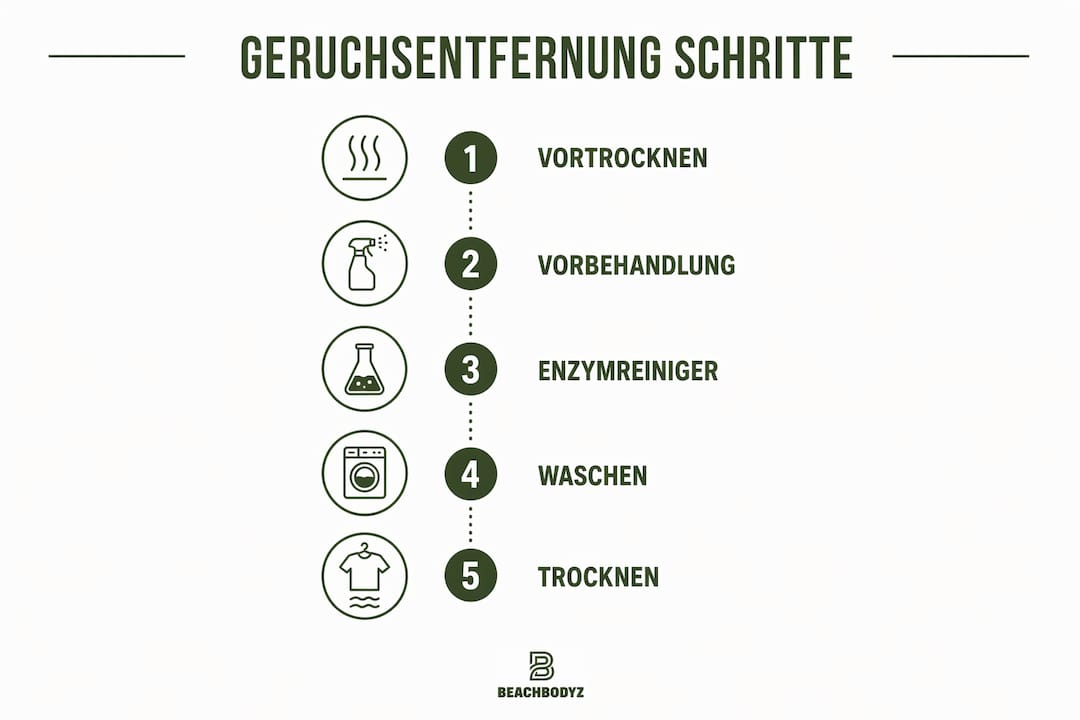
Step 1: Pre-drying
Hang polyester after wearing and let it dry completely. Damp clothes left crumpled in the laundry basket will develop a musty smell within a few hours.
Step 2: Choose pre-treatment
For light odors, a baking soda solution in typical dosage is sufficient: dissolve one tablespoon of baking soda in five liters of lukewarm water and soak the clothes overnight. For stronger sweat odors, vinegar water in a proven mixing ratio is recommended, letting it soak for at least one hour. Both methods neutralize odor molecules without damaging the fiber.
Step 3: Apply enzymatic cleaner
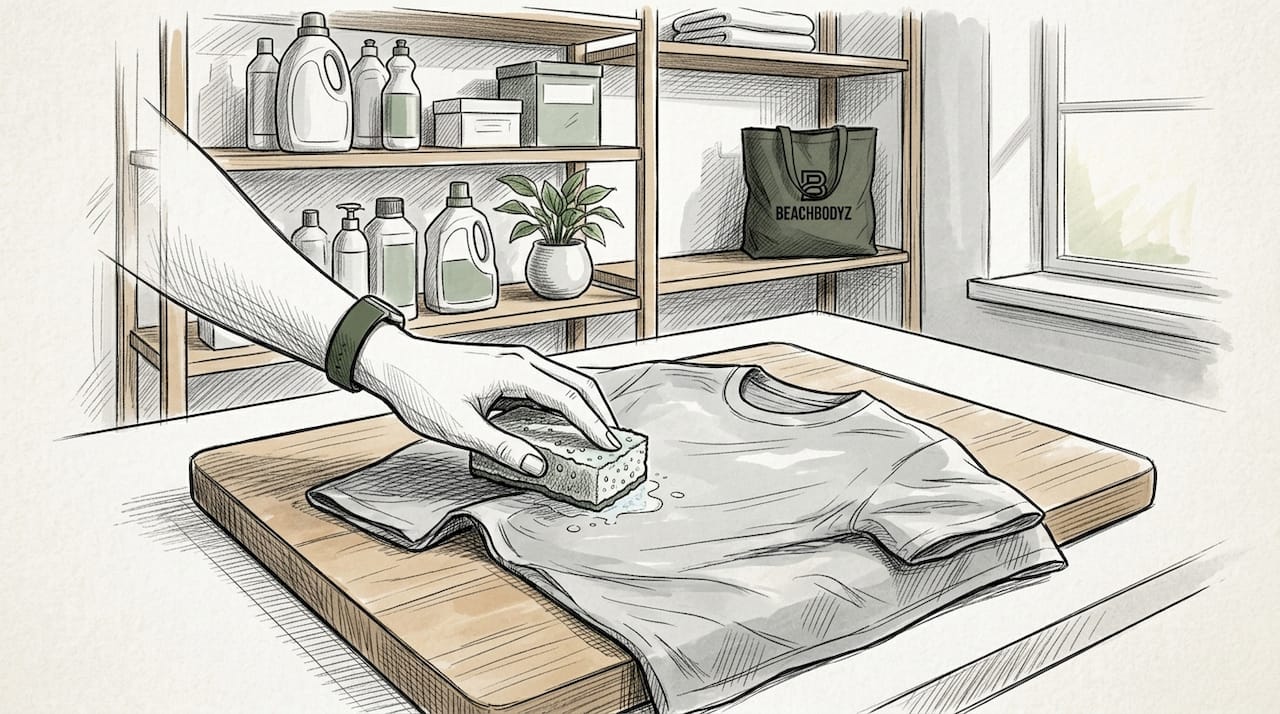
Before washing, spray a biological enzymatic cleaner on armpits, collars, and other problem areas and let it sit for about one minute. Enzymatic cleaners deeply break down organic residues such as sweat and skin oils.
Step 4: Washing
- Select "Easy Care" or "Sport" program, set to recommended maximum temperature
- Fill drum only up to two-thirds to allow water to circulate
- Turn clothes inside out
- Properly dose enzyme-containing universal or color detergent, no fabric softener
- Activate extra rinse cycle
Step 5: Drying
Hang clothes airily immediately after washing, inside out and with space between items. Store only when completely dry.
Why does polyester stubbornly retain sweat odor?
Polyester is oleophilic: the fiber binds fat, skin particles, and detergent residues to its surface. A thin film forms there, where odor-producing bacteria settle. This biofilm is the actual cause of the typical sweat odor in sportswear.
If the film is only partially removed during washing, it becomes active again during the next wear due to body heat and moisture. Fabric softener exacerbates the problem because it leaves an additional coating on the fiber. Overdosed detergent also settles in the fibers and intensifies the odor when worn. Cotton absorbs moisture into the fiber and releases it again. Polyester does not: sweat remains on the surface and provides ideal conditions for bacteria.
How can odor formation in polyester clothing be permanently prevented?
Prevention is easier than treatment. These measures keep polyester fresh long-term:
- Hang immediately: Do not bundle damp clothes after wearing; hang them directly. Air drying slows bacterial growth.
- Omit fabric softener: No fabric softener, no scent boosters. Both only temporarily mask odors and worsen rinsing effectiveness.
- Dose detergent correctly: Less is often more, especially with soft water. Residues in the fibers are a common source of odor.
- Maintain washing machine: Regularly clean the detergent drawer, gasket, and drum. Biofilm in the machine directly transfers musty odors to synthetics. A hot empty wash cycle at 60–90 °C is recommended once a month.
- Do not store laundry damp: Damp clothes in a closed laundry basket quickly develop a moldy smell. Baskets with air vents or open storage are better.
Those who wear sustainable streetwear made from recycled polyester benefit twice from a good washing routine: the clothes stay fresh and last longer.
Washing polyester correctly in the washing machine
A targeted washing process removes odors more reliably than any single home remedy. The systematic washing routine with an extra rinse cycle is more effective than aggressive individual agents.
- Pre-wash or soak: For strong odors, first soak or use a pre-wash cycle without much detergent. This removes the initial film of dirt.
- Select program: "Easy Care" or "Sport," not quick wash. Longer programs better dissolve grease films.
- Temperature: Maximum 40 °C. Higher temperatures can damage polyester fibers and are not suitable for most sports items.
- Detergent: Enzyme-containing universal or color detergent, dosed correctly according to water hardness and load. No fabric softener.
- Extra rinse cycle: Activate. This is where residues that later smell of sweat or chemicals disappear.
Pro Tip: Wash heavily smelling synthetics separately from towels. Lint adheres to functional fabrics and can transfer odors.
Advanced methods for odor removal from polyester
If standard washing is not enough, there are other options.
Freezing
Place polyester clothing in a bag and put it in the freezer for at least 12 hours. The cold kills odor-forming bacteria. Afterwards, thaw at room temperature and wash normally. This method fully protects the fiber.
Biological Enzyme Cleaners
Enzyme cleaners based on natural microorganisms deeply break down organic residues such as sweat, skin oils, and food particles. They don't mask odors with perfume but neutralize the source. Apply to affected areas before washing, let it sit briefly, then wash. Ready-to-use products approved for delicate fabrics are suitable for textiles.
Vinegar and Baking Soda Bath
- Vinegar: 1:4 ratio with water, soak for at least one hour, then wash.
- Baking soda: dissolve one tablespoon in five liters of water, soak overnight.
Vinegar works better in the rinse cycle to dissolve residues, while baking soda neutralizes acidic odor molecules in the wash cycle. Both methods can be combined but should not be applied simultaneously.
Air out in fresh air
Hang clothes outdoors, preferably in daylight. UV radiation breaks down odor molecules. For new clothes with a typical chemical smell, airing them out before the first wash is recommended.

Pro-Tip: Sustainable laundry detergent sheets, such as those offered by environmentally friendly alternatives, leave fewer residues in the fibers than conventional liquid detergents and can be a good choice for delicate polyester textiles.
Beachbodyz: Sustainable clothing that deserves care

Beachbodyz produces streetwear from GOTS-certified organic cotton and recycled polyester, fair-produced in the EU. Those who wear durable clothing benefit twice from a good washing routine: the items stay fresh and last for years. The sports jogging pants made from recycled polyester are an example of textiles that can be cared for long-term using the methods described here.
Key Insights
Polyester odor can be permanently removed if pre-treatment, enzyme-containing detergent, an extra rinse cycle, and air-drying are consistently combined.
| Topic | Details |
|---|---|
| Cause of odor | Polyester binds fat and bacteria to the fiber surface, forming a biofilm. |
| Avoid fabric softener | Fabric softener seals the fibers, trapping odors instead of releasing them. |
| Washing temperature | Maximum 40 °C recommended; higher temperatures damage polyester fibers. |
| Use enzymatic cleaner | Apply to problem areas before washing to break down organic residues. |
| Freezing as an alternative | At least 12 hours in the freezer effectively kills odor-causing bacteria. |
FAQ
What to do if polyester still smells after washing?
Often it's due to detergent residues or biofilm in the machine. Activate an extra rinse cycle, clean the drum and gasket, and use an enzymatic cleaner for pre-treatment in the next wash.
How do you get odors out of synthetic fabrics?
Soak in vinegar water (1:4 ratio) for at least an hour, then wash at a maximum of 40 °C with an enzyme-containing detergent, and air dry afterwards.
How do you wash 100% polyester correctly?
Use the "Easy Care" or "Sport" program at a maximum of 40 °C, fill the drum only up to two-thirds, do not use fabric softener, activate an extra rinse cycle, and wash clothes inside out.
What smells stronger: cotton or polyester?
Polyester retains sweat odor more stubbornly because the fiber is oleophilic and binds fat and bacteria to its surface. Cotton absorbs moisture into the fiber and releases it more easily.