Authentic clothing from Portugal exists and is verifiable. The "Made in Portugal" label, according to EU Regulation 1007/2011, only applies if the last substantial processing step — cutting and sewing — actually took place in Portugal. Three quick verification marks:
- Product page: Manufacturer information with factory or location proof
- Certificate: GOTS, OEKO-TEX, or Fair Wear number, verifiable in the respective database
- Last substantial processing: Indication that cutting and sewing took place in Portugal, not just finishing
By checking these three points, you can distinguish reliable origin claims from misleading labels.
Table of Contents
- Why is "Made in Portugal" clothing so popular?
- What types of clothing are typically manufactured in Portugal?
- What certificates prove origin and quality?
- How do you check if an item was really made in Portugal?
- What are the costs of production and minimum order quantities in Portugal?
- Where can you find Portugal-made clothing in Central Europe?
- Why is Portugal particularly advantageous for traceable EU production?
- How do you make a responsible decision as a buyer?
- Key Takeaways
- Why Portugal Production is More Than a Marketing Promise
- Beachbodyz: EU Streetwear with Verifiable Origin
- Useful Resources for Further Reading
- FAQ
Why is "Made in Portugal" clothing so popular?
Portugal's textile industry comprises around 12,000 companies and generated exports of approximately 5.5 billion euros in 2025. This makes the country one of the largest textile producers in the EU. For sustainability-conscious buyers, this offers concrete advantages:
- Manufacturing expertise: Decades of experience in jersey basics, knitwear, and technical sportswear
- EU standards: Worker rights, environmental regulations, and chemical regulations are binding throughout the EU
- Shorter supply chains: Proximity to Central Europe reduces transport emissions compared to Asian production
- Growing certification rate: Environmental certifications in the Portuguese textile sector have increased by 13%, indicating a structural shift towards more sustainable processes
Additionally, there's the change that Deutschlandfunk has already journalistically documented: Portugal is increasingly producing higher-quality fashion instead of mass-produced goods, with better pay for local workers.
What types of clothing are typically manufactured in Portugal?
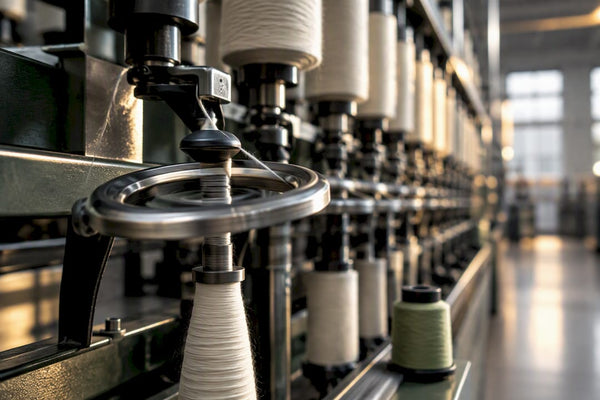
Portugal is particularly strong in heavy jersey weights, which gives hoodies and sweatshirts from Portuguese production a noticeably denser feel than comparable Asian goods. Typical segments include:
- Jersey basics: T-shirts, hoodies, sweatshirts, jogging pants
- Knitwear: Sweaters, cardigans, fine knit goods
- Denim: Jeans and jackets, often with organic cotton content
- Linen and natural fabrics: Summer clothing, shirts, light dresses
- Technical sportswear and activewear: Functional garments with recycled polyester
For material blends, GOTS-certified organic cotton, recycled polyester (GRS-certified), and Tencel/Lyocell are common. Those specifically looking for sustainable fabrics will find a wide selection of manufacturers in Portugal who process these materials.
What certificates prove origin and quality?
Certificates are not proof of origin in the legal sense, but they significantly support credibility. A GOTS-certified manufacturer must disclose their entire supply chain, which makes origin claims practically verifiable.
- Fair Wear Foundation: Checks working conditions in sewing factories; member brands publish audit reports
Pro-Tip: Enter the certificate number directly into the database of the respective standard (e.g., global-standard.org for GOTS). If the number does not match the manufacturer, the certificate is not valid.
How do you check if an item was really made in Portugal?
- Request audit reports: — Reputable brands provide Fair Wear or BSCI audit reports upon request.
Pro-Tip: Write directly to the supplier: "Can you tell me the name and location of the sewing factory where this product was made?" If they don't answer or are evasive, they usually don't have verifiable proof of origin.
What are the costs of production and minimum order quantities in Portugal?
For end customers, production costs are indirectly relevant: they explain why Portugal-made clothing is more expensive than mass-produced goods. For small labels or buyers planning their own productions, the following guidelines apply:
- MOQ (Minimum Order Quantity): Specialised factories accept from 50–100 units; export factories require 300 to over 1,000 pieces
- CMT Prices Basic T-shirt: Approximately 2.20 to 7.00 euros per piece, depending on volume and complexity
- Lead times: 4–8 weeks to Europe compared to 12–16 weeks from Asia
- Factory holidays: Portuguese factories typically close in mid-August for two to three weeks; orders should take this window into account
The price difference compared to Asian production is real, but it reflects EU-compliant working conditions, shorter transport routes, and better traceability.
Where can you find Portugal-made clothing in Central Europe?
Direct-to-consumer brands with transparent manufacturer information are the most reliable source. Some points of reference:
- Certified Direct-to-Consumer Brands: — Brands with GOTS or Fair Wear certification and explicit Portugal indication on the product page
Pro-Tip: Use the Fair Wear member list as a starting point. All brands listed there are committed to audits and publish country reports, including Portugal.
Why is Portugal particularly advantageous for traceable EU production?

More than 70% of Portuguese textile production is concentrated in the Vale do Ave and the Guimarães region. This cluster effect has practical consequences: yarn, fabric, and garment manufacturers are often located within a 100-kilometer radius, simplifying audits and reducing transport emissions within the supply chain.

This is an advantage for the upcoming Digital Product Passport (DPP). Manufacturers with OEKO-TEX or GOTS certificates already have material data documented, which reduces the time to create a product passport per item to about 2–4 hours. Without complete supply chain data, the same process takes significantly longer. Portuguese manufacturers are thus structurally better prepared for the upcoming EU textile regulation than many producers outside Europe.
How do you make a responsible decision as a buyer?
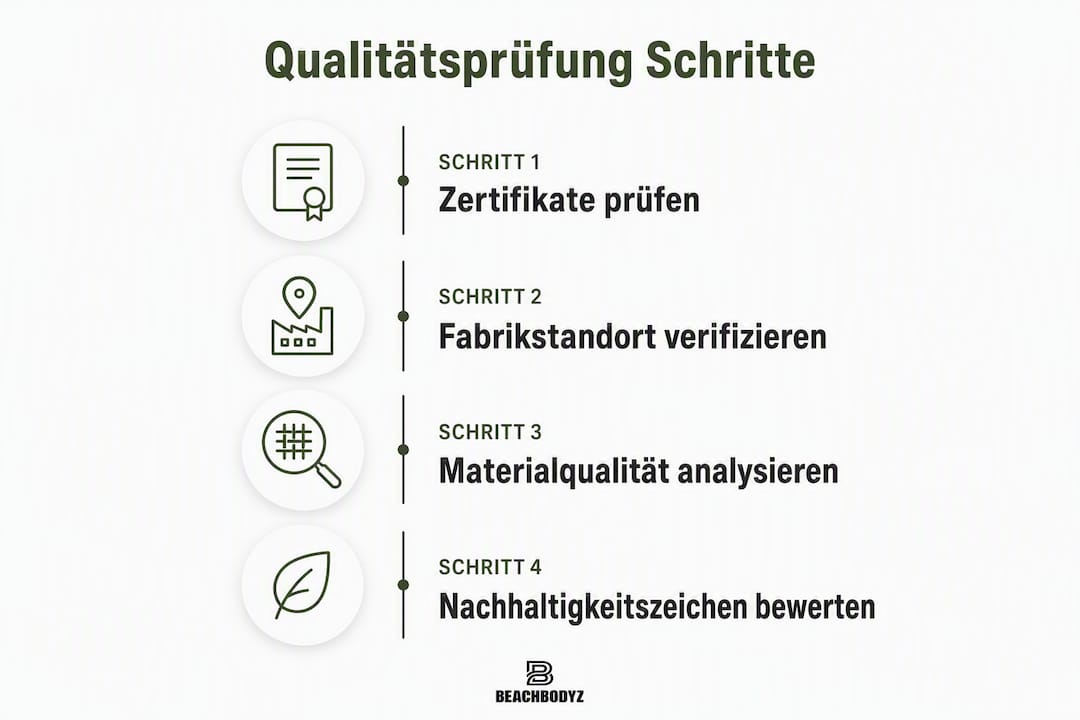
Three steps are sufficient for a solid minimum standard:
- Check: Verify the product page for explicit origin information, certificate ID, and factory proof
- Ask: If information is missing, directly inquire with the supplier about the sewing factory and the last substantial processing step
- Prioritise: Choose brands with GOTS, Fair Wear, or OEKO-TEX and transparent EU production, including Beachbodyz as an example of sustainable streetwear from EU manufacturing
Those who consistently apply these steps will not buy clothing with misleading origin claims. The risk primarily lies with products without certificates and without factory information.
Key Takeaways
Made in Portugal clothing is verifiable and reliable if the certificate ID, factory information, and proof of the last substantial processing are available.
| Topic | Details |
|---|---|
| Rule of Origin | EU Regulation 1007/2011: Cutting and sewing must have taken place in Portugal. |
| Lead Times | 4–8 weeks to Europe compared to 12–16 weeks from Asia. |
| Certification Trend | Environmental certifications in the Portuguese textile sector have increased by 13%. |
| Production Cluster | Over 70% of production is concentrated in Vale do Ave and Guimarães. |
| Beachbodyz | EU-produced streetwear from GOTS organic cotton; certificate ID verifiable on product pages. |
Why Portugal Production is More Than a Marketing Promise
The "Made in Portugal" debate often revolves around labels. What is overlooked is that the actual value lies not in the label itself, but in the infrastructure behind it. A cluster like Vale do Ave, with hundreds of certified factories in a small area, creates a transparency that is simply not possible in dispersed supply chains. Audits are cheaper, factory visits are realistic, and material proofs are complete.
What many buyers underestimate: The upcoming DPP requirement will hit brands without documented supply chains hard. Those who buy Portugal-made clothing with GOTS certification today are de facto already buying into a system prepared for this regulation. This is no coincidence, but the result of years of investment in certification and transparency.
And another point rarely mentioned in buying guides: the factory holidays in August are not a disadvantage, but a sign of regulated working conditions. Factories that never close rarely pay fair wages.
Beachbodyz: EU Streetwear with Verifiable Origin
If you are specifically looking for EU-produced streetwear, Beachbodyz offers a directly verifiable option. All products are made from GOTS-certified organic cotton or recycled polyester, are fairly produced in the EU, and shipped climate-neutrally. The certificate IDs are available on the product pages.
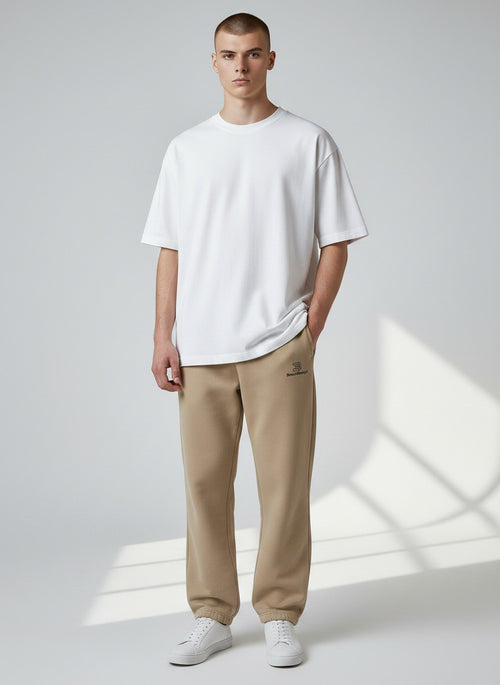
The range includes oversized T-shirts, hoodies, sweatshirts, and jogging pants in an oversized cut. The Identity Sport Jogging Pants, for example, are made from 320 gsm GOTS organic cotton and carry all relevant proofs directly on the product page. If you want to apply the verification steps described in this article, Beachbodyz provides a concrete example to practice the process. All Oversized T-shirts and other collection items are available in the online shop.
Useful Resources for Further Reading
- Portuguese Textile Industry: Export Data and Industry Statistics
- ESPR and Textile Regulation: Practical Notes on the Digital Product Passport
- Environmental Certifications in the Portuguese Textile Sector: 2025 Report
- Fair Wear Foundation: Member List and Country Reports
- Deutschlandfunk: Fashion Instead of Mass-Produced Goods from Portugal
- Beachbodyz: Understanding and Verifying GOTS-Certified Clothing
- Beachbodyz: Overview of Sustainable Fabrics
| Source | Content |
|---|---|
| ATP / portugalclothingfactory.com | Industry data, MOQ guidelines, cluster information |
| jornaldenegocios.pt | Certification trend +13% in the textile sector |
| fairwear.org | Audit reports, member list, country risk assessments |
| deutschlandfunk.de | Journalistic context on structural change in Portugal |
| beachbodyz.de | GOTS guide, material guide, product pages with certificate IDs |
FAQ
Which fashion brands are manufactured in Portugal?
Numerous European and international brands produce in Portugal, including Beachbodyz as an EU-made streetwear brand with GOTS certification. Transparent providers list the factory location directly on the product page.
Is "Made in Portugal" a reliable quality feature?
Yes, if the claim is supported by certificates like GOTS or OEKO-TEX and proof of the factory. According to EU Regulation 1007/2011, the last substantial processing step must have taken place in Portugal.
Why is so much clothing produced in Portugal?
Portugal offers shorter lead times (4–8 weeks to Europe), EU-compliant working conditions, and a dense production cluster in Vale do Ave with around 12,000 textile companies.
How do I recognise false origin claims on clothing?
Missing factory specifications, an un-verifiable certificate ID, and vague phrasing such as "designed in Portugal" instead of "made in Portugal" are typical warning signs. Ask directly about the sewing factory and the last significant processing step.