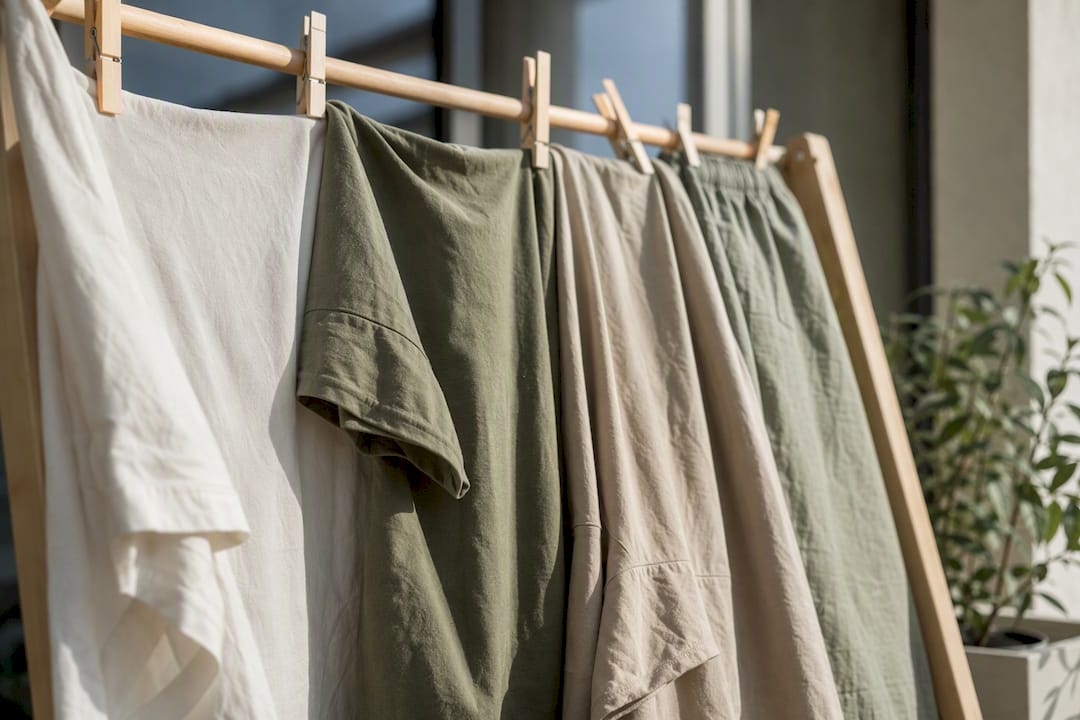
Air-drying is gentler on your clothes than any dryer, saves energy, and significantly extends the life of textiles. Fibers such as organic cotton or wool suffer from heat and mechanical friction in the dryer. Without this stress, the shape and structure of the fabrics are preserved longer, as confirmed by Leifheit. The only important thing is: If you dry clothes indoors, you must keep an eye on the humidity, otherwise mold is a risk.
Three things help immediately:
- Spin clothes at a high speed, this significantly shortens the drying time
- When drying indoors, ventilate thoroughly several times a day and keep the humidity between 40 and 60%
- Dry outside whenever the weather and space allow, this brings UV freshness without chemicals
Important Insights
Air-drying is more sustainable for textiles than any dryer and works safely indoors and outdoors, provided the spin speed and humidity are right.
| Topic | Details |
|---|---|
| Use spin speed | Spin at 1,200 rpm, this significantly shortens the drying time. |
| Control humidity | Keep the target value between 40 and 60%, above 70% the risk of mold increases. |
| Dry outside in the wind | Wind and dry air dry faster than the sun alone. |
| Plan thorough ventilation | Ventilate briefly several times a day, especially when drying indoors. |
| Treat fabrics differently | Dry wool flat, silk in the shade, and pull cotton into shape. |
Table of Contents
- Air-drying clothes: These benefits convince immediately
- Drying clothes outside: Weather, sun, and the right technique
- Air-drying clothes in the apartment: How to do it without mold risk
- How to hang your clothes properly: Step by step
- Wool, silk, cotton: These fabrics need special care
- Avoiding mold: When air-drying indoors becomes a problem
- What really counts when air-drying
- Sources
- FAQ
Air-drying clothes: These benefits convince immediately
Air-drying is the most energy-efficient drying method for textiles, so that the German Environment Agency. A clothes dryer consumes significantly more electricity than any form of air-drying, even modern heat pump dryers cannot compete.
Pro tip: If you do not want to completely do without a dryer, you should opt for a heat pump model. It saves a lot of electricity compared to older condenser dryers, but does not replace the gentleness of pure air.
Three effects speak for air-drying:
- Less heat and mechanics mean less fiber degradation, especially with organic cotton
- No dryer wear on buttons, zippers, or prints
- Sunlight has a germ-reducing effect and leaves a fresh scent without fabric softener
Drying clothes outside: Weather, sun, and the right technique
Wind and dry air dry clothes faster than the sun alone. Direct, strong UV radiation can bleach dark colors, as described by the Hörzu guide. So it is better to hang in the partial shade if the color should be preserved, and only use the sun in bright, but not in heat radiation.
In clear frost, clothes dry outside surprisingly reliably, the dry cold extracts moisture from the fabric almost like a dryer. Wet, cold fog weather on the other hand brings nothing, then better hang inside.
- Hang thick pieces like towels and jeans on the edge, thin clothes in the middle, where less wind gets
- Leave enough space between the pieces so that air can circulate
- Use wooden or stainless steel clothespins, plastic pins become brittle and leave marks
Pro tip: Hang shirts and blouses with the hem up. The weight pulls the fabric smooth, and you save yourself almost completely from ironing.
Air-drying clothes in the apartment: How to do it without mold risk
Living spaces with good air circulation are the best choice for indoor drying, a well-ventilated bathroom also works. Clothes should not hang in the bedroom, moisture collects there overnight without airing.
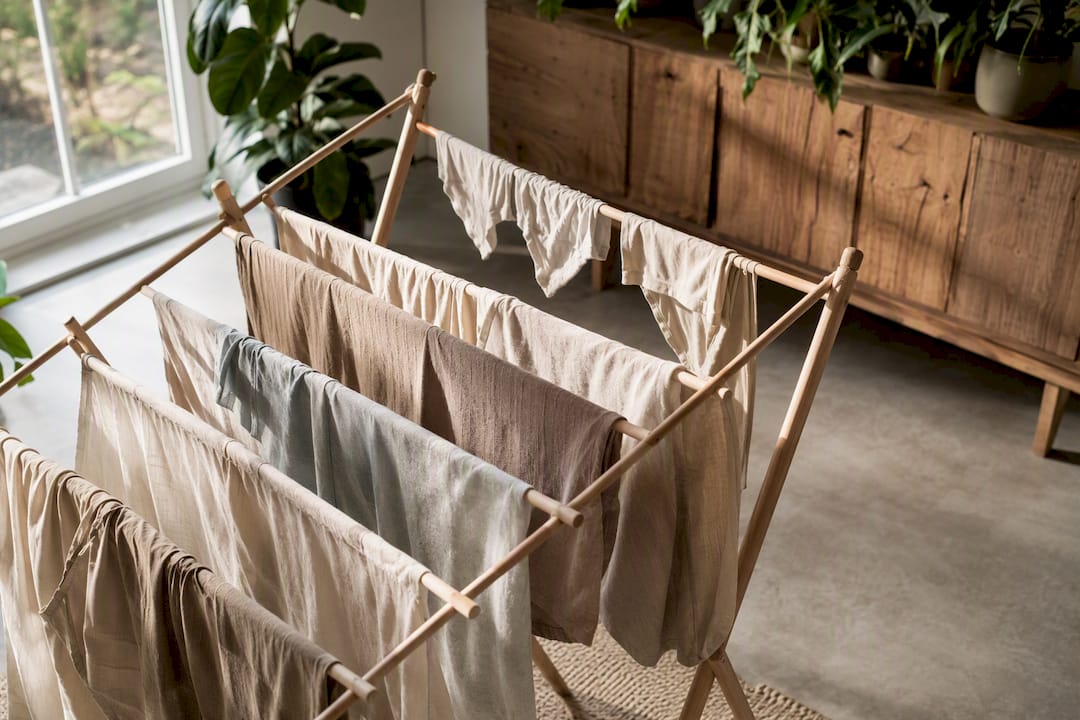
A single wash load can release up to two liters of water into the room air according to Grünatur. That is a lot of moisture that has to go somewhere, and that is exactly why airing is not an option, but a duty.
This is how you do it:
- Set up a hygrometer and keep an eye on the humidity, target value 40 to 60%
- Ventilate thoroughly several times a day for five to ten minutes, preferably across two opposite windows
- Better dry several small wash loads instead of one huge one, that relieves the room air
- Leave enough space between the drying rack and the wall, at least a handbreadth
- In case of persistently high humidity, specifically use a fan or dehumidifier
If the humidity rises permanently above a high value, the risk of mold grows noticeably. A hygrometer costs little and shows immediately if action is needed.
How to hang your clothes properly: Step by step
The right preparation determines how quickly and wrinkle-free your clothes dry.
- Spin at a high speed, that reduces the residual moisture significantly and shortens the drying time considerably, as shown by the analysis of the German Environment Agency
- Shake out every piece of clothing vigorously before hanging it up, that releases wrinkles beforehand
- Sort by material and thickness, so that thin fabrics do not hang under heavy towels
- Hang T-shirts over hangers instead of over the line, that preserves the shoulder shape
- Pull seams and edges smooth when hanging, that reduces the ironing effort later considerably, as recommended by EnBW
- Let dried pieces air out for a short time before putting them in the closet, that prevents a musty smell
Pro tip: Shape sweaters directly after washing on a towel lying in their original silhouette. So nothing gets distorted, and you hardly need to iron later.
Wool, silk, cotton: These fabrics need special care
Not every material tolerates the same treatment, even when air-drying.
- Wool: dry flat on a towel, never hanging, otherwise the weight pulls it out of shape
- Silk: dry in the shade and with little draft, direct sun makes the fibers brittle
- Polyester and synthetics: dry in well-ventilated places, that reduces unpleasant odor even without fabric softener
- Organic cotton and linen: pull into shape while damp and hang up, the fabric retains its structure better than in the dryer, as Leifheit emphasizes
Mixed fabrics follow the more sensitive part, so a cotton-polyester shirt dries like pure cotton, only faster.
Avoiding mold: When air-drying indoors becomes a problem
Damp room air is the real enemy when drying indoors, not the clothes themselves. Between 40 and 60% relative humidity is the safe range, above 70% the risk of mold increases significantly.
| Value | Recommendation |
|---|---|
| Optimal humidity | 40 to 60% relative humidity |
| Risky humidity | above 70% |
| Water release per load | up to 2 liters into the room air |
| Operating temperature dehumidifier | 20 to 25 °C |
A dehumidifier works best according to NDR at moderate room temperatures, in cooler basement rooms it loses significantly in performance. Who permanently struggles with high humidity, for example in a small apartment without a balcony, should think about a heat pump dryer. It is to be understood as a pure context solution, not a general purchase recommendation, because air-drying remains the gentler and cheaper option for most households.
Clothes rack, clothes line, or dehumidifier: What is worth it?
A classic clothes rack fits in every apartment, but only holds a limited amount of clothes. A clothes line in the garden offers significantly more capacity, but needs space and dry weather. A dehumidifier pays off especially in small, poorly ventilated apartments, where thorough ventilation alone is not enough.
- Wooden clothespins and metal racks last longer than plastic variants and are ultimately the more sustainable choice
- A fan accelerates the drying specifically, without reaching the electricity consumption of a dryer
- Who invests in a solid purchase should pay attention to a stable construction instead of gimmicks
Who wants to know more about ventilation in the room will find a clear explanation of condensation on windows at DuetteShop.
Care instructions from Beachbodyz for sustainable streetwear
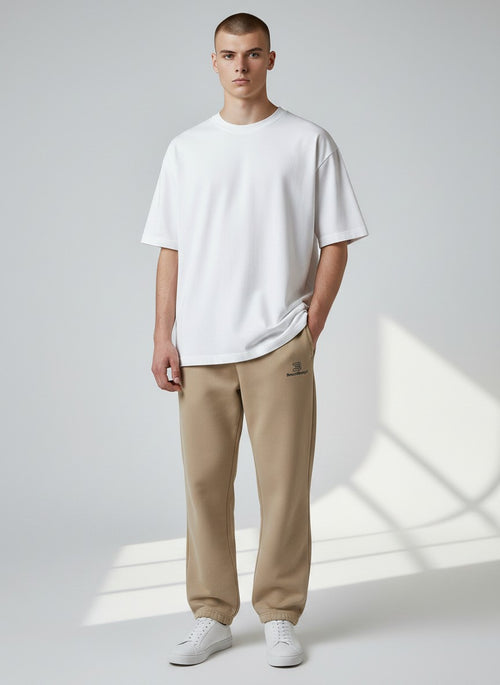
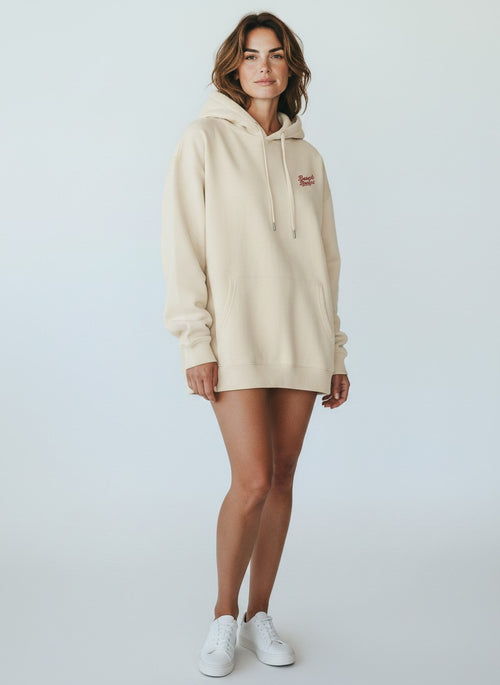
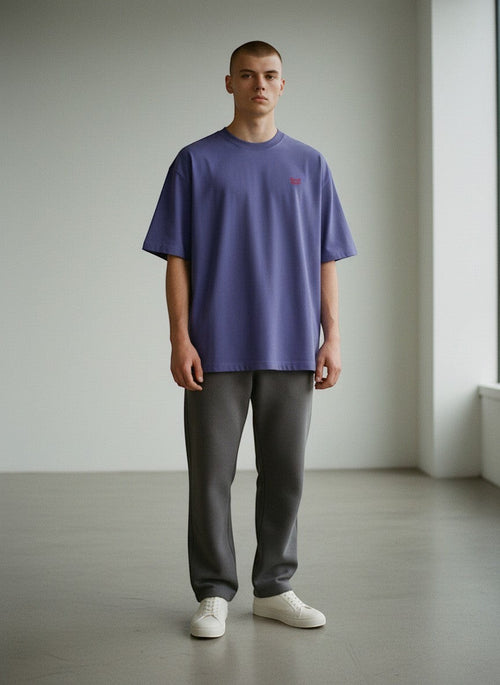
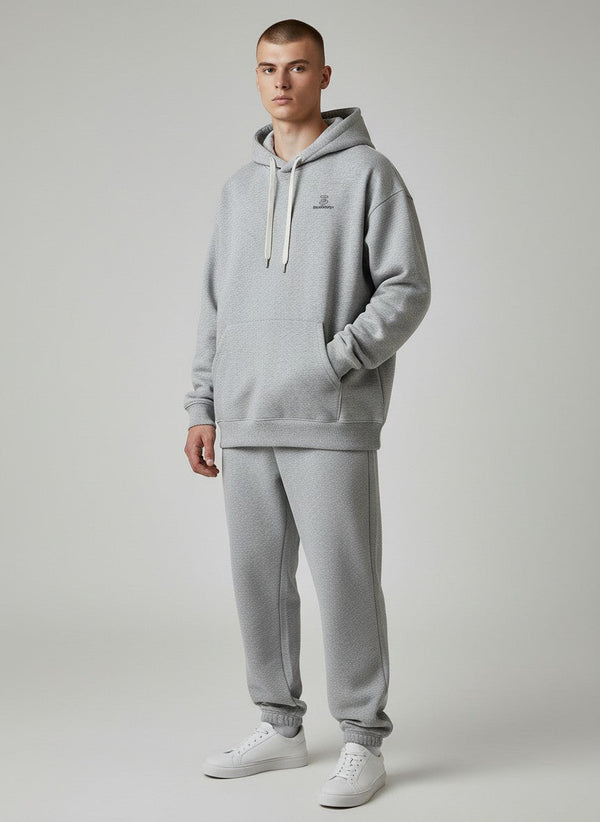
Beachbodyz processes organic cotton and recycled polyester, two materials that benefit especially from gentle air-drying. Heat from the dryer damages the fiber structure, air-drying preserves shape and color significantly longer.
- Oversize shirts and hoodies best dry over hangers, that preserves the shoulder line
- Hang embroidered pieces with the embroidered side inside, that protects threads from sunlight
- Odors disappear with good ventilation mostly without fabric softener
More detailed care instructions can be found in the Guide to caring for organic cotton and on the Care instructions page of Beachbodyz.
What really counts when air-drying
The common idea that air-drying is only an emergency solution for people without a dryer falls short. The actual insight from practice is different: Air-drying is the technically better method for almost every piece of clothing, the dryer is the compromise solution for time pressure.
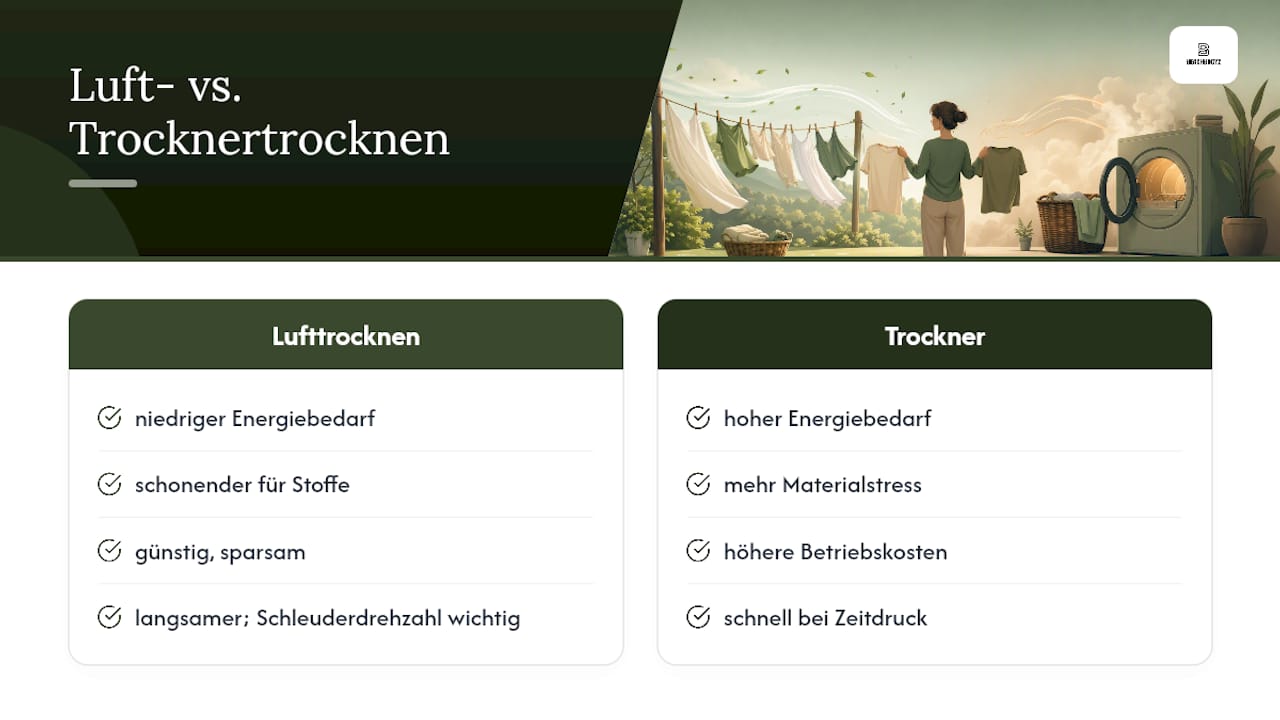
What is missed in many guides is the importance of spin speed. Who spins at 1,200 instead of 800 revolutions often shortens the drying time indoors by hours, not minutes. That is the lever that most people ignore, because it takes place before the actual drying.
The second blind spot is the humidity. Many simply hang clothes somewhere and wonder later about mold spots on the wall. A hygrometer for a few euros would have prevented that. Who owns sustainable clothing like organic cotton should treat it as if it had a value, which it does, with patience instead of heat.
— Ahmed
Sources
- German Environment Agency — Washing Clothes: Tips for everyday life
- Electricity saving tips for drying, washing & ironing | EnBW
- Sustainability in washing clothes | Leifheit guide
FAQ
Can I air-dry clothes?
Yes, practically every piece of clothing can be air-dried, indoors or outdoors. Sensitive fabrics like wool or silk benefit from it even especially strongly, because heat and mechanics are eliminated.
At what humidity does laundry no longer dry properly?
From about 70% relative humidity the drying process stalls, and the risk of mold increases significantly. The optimal range for indoor drying is between 40 and 60%.
Is it better to dry laundry with an open window?
A permanently open window brings little, multiple thorough ventilations for five to ten minutes is more effective. So the damp air escapes quickly, without the apartment cooling down permanently.
In which room does laundry dry fastest?
Well-ventilated living spaces or a bathroom with a window dry laundry fastest, because there the air circulation and ventilation possibilities are best. The bedroom should be avoided, there moisture accumulates overnight.