In a nutshell:
- Small damages to clothing can be permanently repaired with simple fixes.
- Mending early prevents snags and holes from getting bigger.
How to repair clothes: the most important methods
Small holes, open seams, and missing buttons can be permanently fixed with simple means. Those who mend early prevent snags from expanding the hole. Vera from "Reparieren ist Liebe" (Repairing is Love) emphasizes that repairing should be understood as an appreciation and creative enrichment, not as an invisible obligation.
- Small hole in organic cotton: Place iron-on patch on the inside and fix with an iron, or manually mend with a needle and matching thread.
- Open seam: choose high-quality thread that matches the fabric; for elastic fabrics, imitate the original elastic stitch type.
- Sewing on a button: sew through the buttonholes several times and knot the thread on the inside.
- Decorative repair: Sashiko and visible mending deliberately make holes visible as a design element.
Beachbodyz uses GOTS-certified organic cotton and recycled polyester. These sustainable materials respond well to careful repairs and retain their quality for years.
Table of contents
- Step by step: mending holes and repairing seams
- How to sustainably extend the lifespan of your clothes
- Special features of organic cotton and recycled fabrics
- Repairing zippers and elastic cuffs
- FAQ
- Key takeaways
Step by step: mending holes and repairing seams
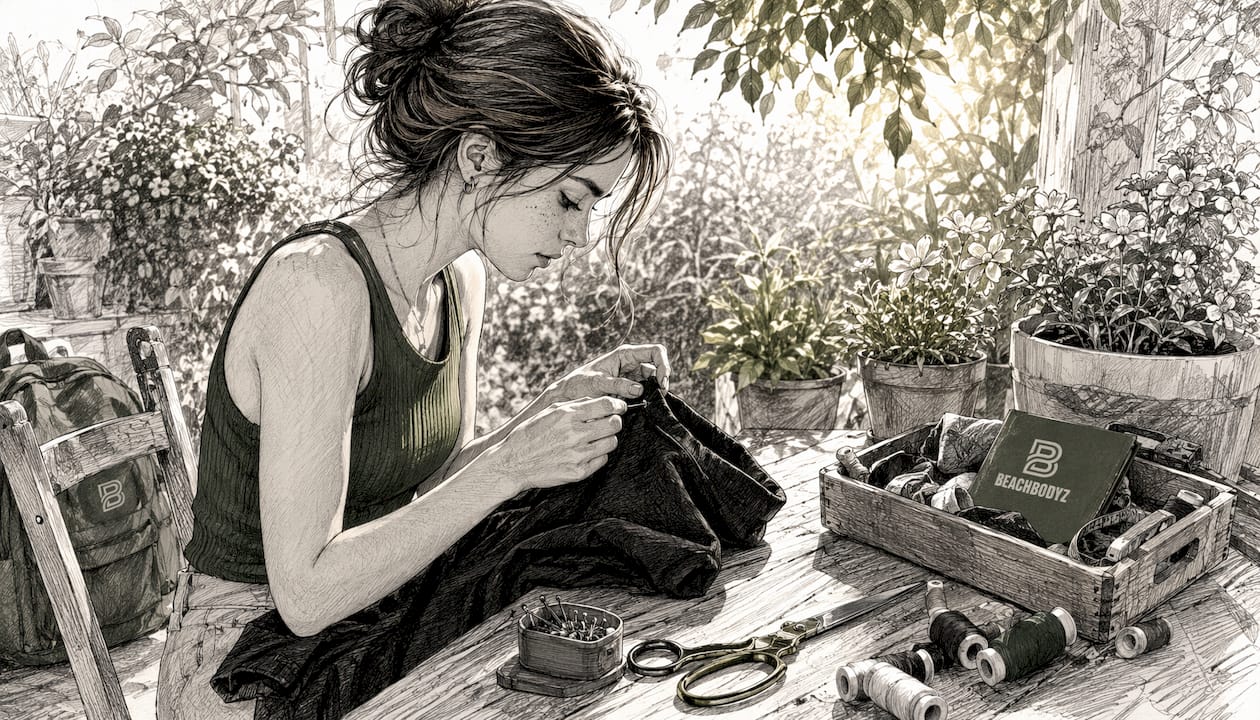
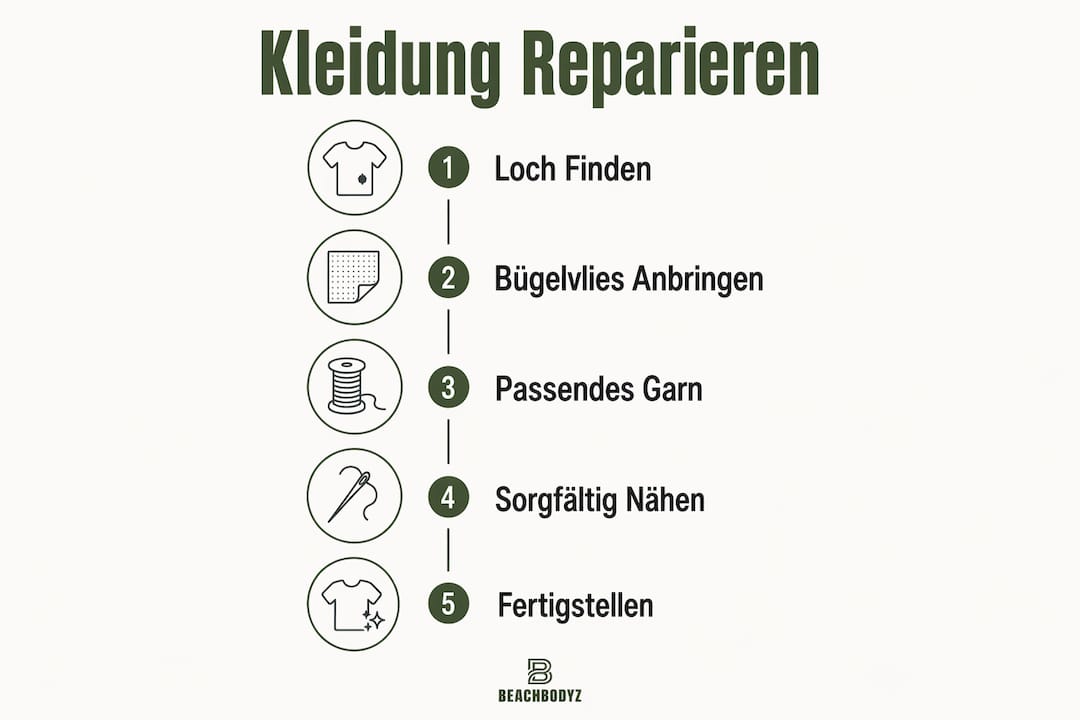
Holes in t-shirts are usually caused by mechanical abrasion, not moths. First, fix the hole from the inside with pins. Then close it with small, even backstitches.
- Choose thread that matches the color: The closer the color to the original fabric, the more invisible the result.
- Iron-on patch: Cut a piece, turn the t-shirt inside out, place the patch, iron for 30 seconds.
- Open seam with a sewing machine: Use a zigzag stitch or stretch stitch for jersey and sweat, as rigid straight seams on elastic fabrics tear quickly.
- Button on jackets: sew a shank, i.e., wrap the threads between the button and the fabric so that the fabric has enough space and no tear occurs.
Pro tip: For recycled polyester or jersey, always choose needle and thread appropriate to the material thickness. A needle that is too thick leaves visible punctures in fine fabric.
Regular small repairs significantly extend the lifespan of high-quality streetwear and reduce textile waste.
How to sustainably extend the lifespan of your clothes
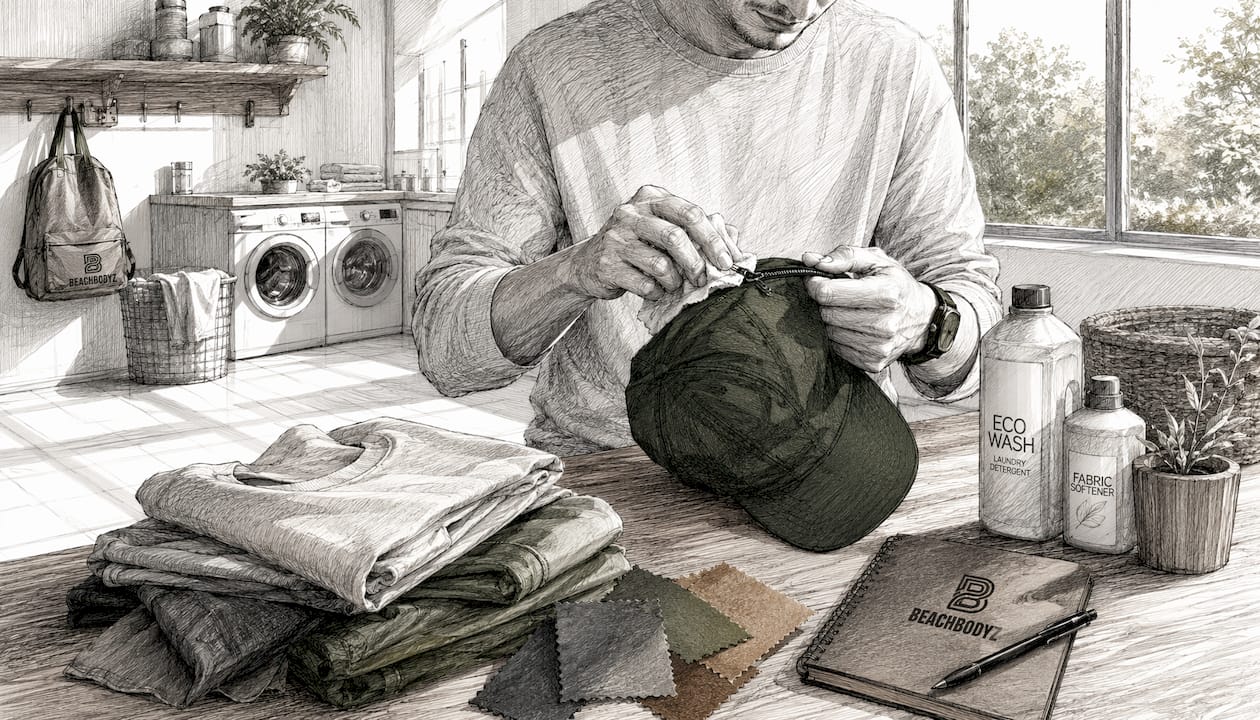
Place delicate items in a laundry bag before washing. Close zippers and buttons before putting the garment in the machine. The Streetwear Care Guide from Beachbodyz provides further specific tips on how to handle organic cotton and recycled fabrics gently. Repair damage immediately, do not wait until the hole gets bigger.
Special features of organic cotton and recycled fabrics
Organic cotton is breathable but more sensitive to heat than conventional cotton. Therefore, use iron-on patches only on a medium setting. Recycled polyester has a smoother surface; iron-on patches adhere less well here, manual mending is the more reliable method. For sustainable repairs on high-quality items, thread made of organic cotton or recycled fiber is recommended so that the material and repair match.
Repairing zippers and elastic cuffs
First, clean and lightly oil a sticky zipper before considering replacement. If the slider is broken, it can be carefully squeezed back together with pliers. Elastic cuffs on hoodies or sweatpants: cut out the old elastic band, sew in a new one of the same width and secure with a zigzag stitch. This maintains the fit.
FAQ
Which thread is suitable for organic cotton?
Organic cotton or natural fiber thread of the appropriate thickness. For elastic fabrics, also pay attention to the stretchability of the thread.
How do I mend a hole in a T-shirt invisibly?
Turn the T-shirt inside out, fix the hole with an iron-on patch from the inside, or close it with fine stitches and matching thread.
When do I need an elastic stitch?
Always for jersey, sweat, and recycled polyester: a zigzag or stretch stitch prevents the seam from tearing when worn.
Can I use Sashiko on streetwear?
Yes. Sashiko is particularly suitable for thicker fabrics like sweatshirts and hoodies and enhances the repaired area as a design element.
Key takeaways
Early repair protects the textile structure and significantly extends the lifespan of sustainable streetwear.
| Topic | Details |
|---|---|
| Fixing small holes | Iron-on patches or manual mending with matching thread close holes permanently. |
| Sewing elastic fabrics | Use a zigzag or stretch stitch to prevent the seam from tearing on jersey. |
| Button on jackets | Wrap a shank between the button and fabric to prevent tears in the fabric. |
| Organic cotton and polyester | Material-appropriate thread and low ironing temperature maintain breathability and function. |
| Decorative techniques | Sashiko and visible mending transform repaired areas into visible design elements. |