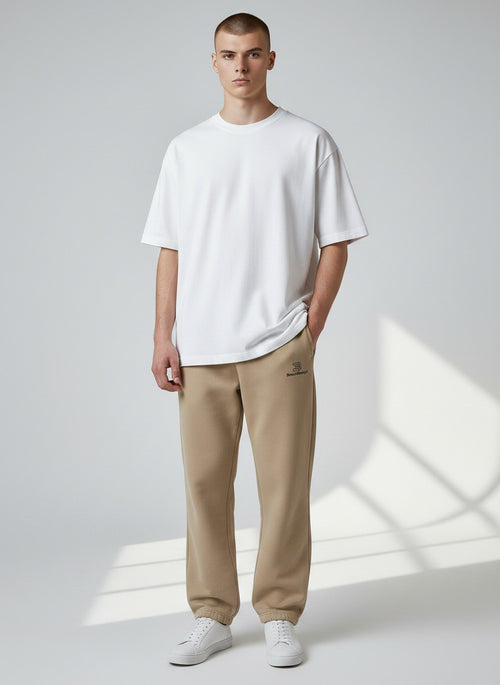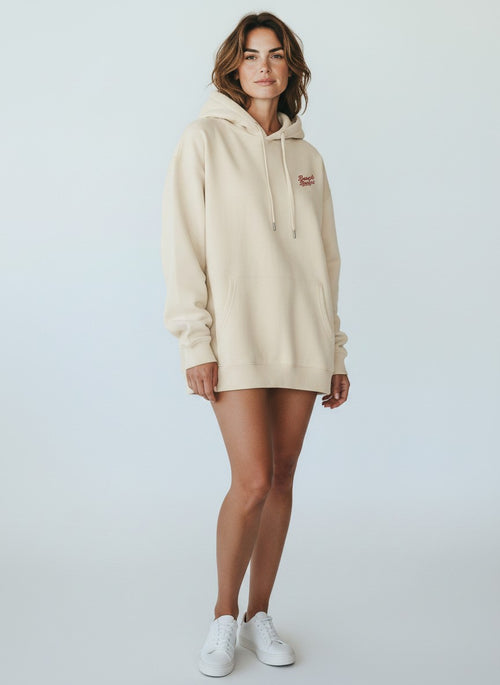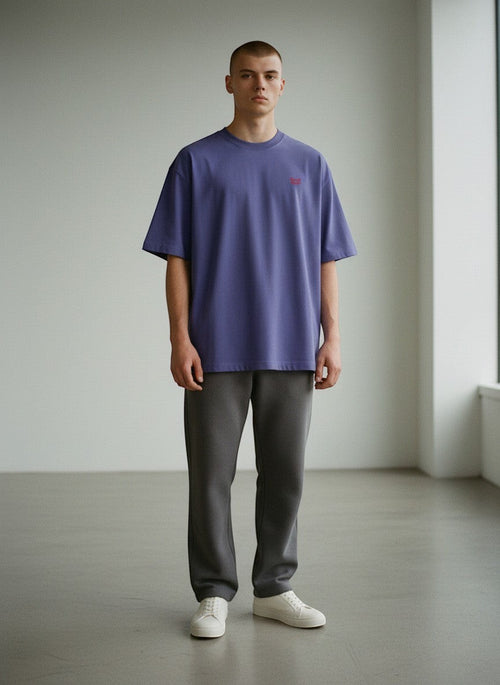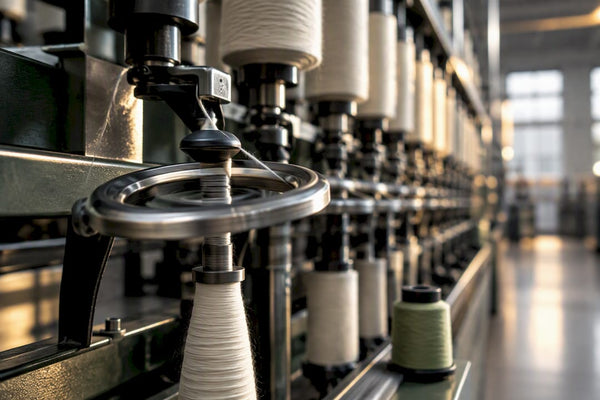
A heavy cotton T-shirt, technically known as a heavyweight T-shirt, has a high fabric weight, which is typically classified as heavy. This metric, abbreviated as GSM (grams per square meter), is the only measurable basis for comparing fabric weights. The best everyday choice is a 180–220 gsm shirt made from ring-spun, combed organic cotton. Those who only look at the grammage miss the essential aspects.
- Fabric Weight: A defined fabric weight is considered heavy; significantly heavier fabrics are referred to as extra-heavy.
- Material: 100% cotton, preferably ring-spun and combed quality
- Workmanship: Double seams on sleeves and hem, sturdy rib cuffs
- Certificates: GOTS or OEKO-TEX as proof of pollutant-free production
Pro Tip: If a product label lacks the GSM specification, that's a clear warning sign. Reputable suppliers always state the fabric weight.
Table of Contents
- What Exactly Does "Heavyweight" Mean for a T-Shirt?
- Why Yarn Quality Is More Important Than Just Weight
- How Fit and Weight Influence the Wearing Comfort
- How a Heavy Cotton T-Shirt Stays in Shape for a Long Time
- What to Look for When Buying a High-Quality Heavyweight T-Shirt
- When Is a Heavy T-Shirt Worth It, and How Do You Combine It?
- Why Grammage Is Not Synonymous with Quality
- Key Takeaways
- Why a GOTS-Certified, Ring-Spun Heavyweight Option Is Recommended
- Beachbodyz Oversize T-Shirts: Quality with Verifiable Origin
- Useful Sources and Further Links
- FAQ
What Exactly Does "Heavyweight" Mean for a T-Shirt?
GSM stands for grams per square meter and is the standard unit for a T-shirt's fabric weight. One square meter of the finished fabric is weighed. The higher the value, the denser and heavier the fabric.
| Weight Class | Typical Characteristics |
|---|---|
| Light | Thin, airy, transparent |
| Medium | All-round, suitable for summer |
| Heavy | Dimensionally stable, opaque, structured |
| Extra-heavy | Very dense, warm, outdoor/workwear |
The term "heavyweight" is not legally protected. Manufacturers set different limits for heavy shirts depending on the brand. For everyday wear, a medium to heavy fabric weight is recommended, offering a compromise between weight, comfort, and durability.
Important: Very heavy T-shirts can be too warm in summer. Many programs and durable basics prefer medium to heavy fabrics.
Why Yarn Quality Is More Important Than Just Weight
Manufacturing experts emphasize: Carded open-end yarn, despite its high weight, offers poorer hand feel and lower durability than ring-spun, combed yarns. Weight says nothing about how the yarn was produced.
Ring-Spun vs. Open-End:
- Open-end yarn is produced quickly and cheaply. The fibers are less uniformly aligned, making the fabric feel rougher and more prone to pilling.
- Ring-spun yarn is created by slowly, uniformly twisting the fibers. The result is a smoother, stronger yarn with better dimensional stability.
- Combed cotton goes a step further: Short fibers are combed out before spinning. This reduces pilling and noticeably improves the hand feel.
Fiber length also plays a role. Varieties with particularly long fibers, such as Pima or Egyptian cotton, result in softer and more durable fabric at the same grammage. A 180 gsm shirt made from such fibers surpasses a 220 gsm shirt made from inferior cotton in feel and lifespan.
Visible quality features on the finished shirt include: double seams on sleeves and hem, sturdy rib cuffs on the collar, and clean seam allowances on the inside. These details reveal more about manufacturing quality than any marketing statement.
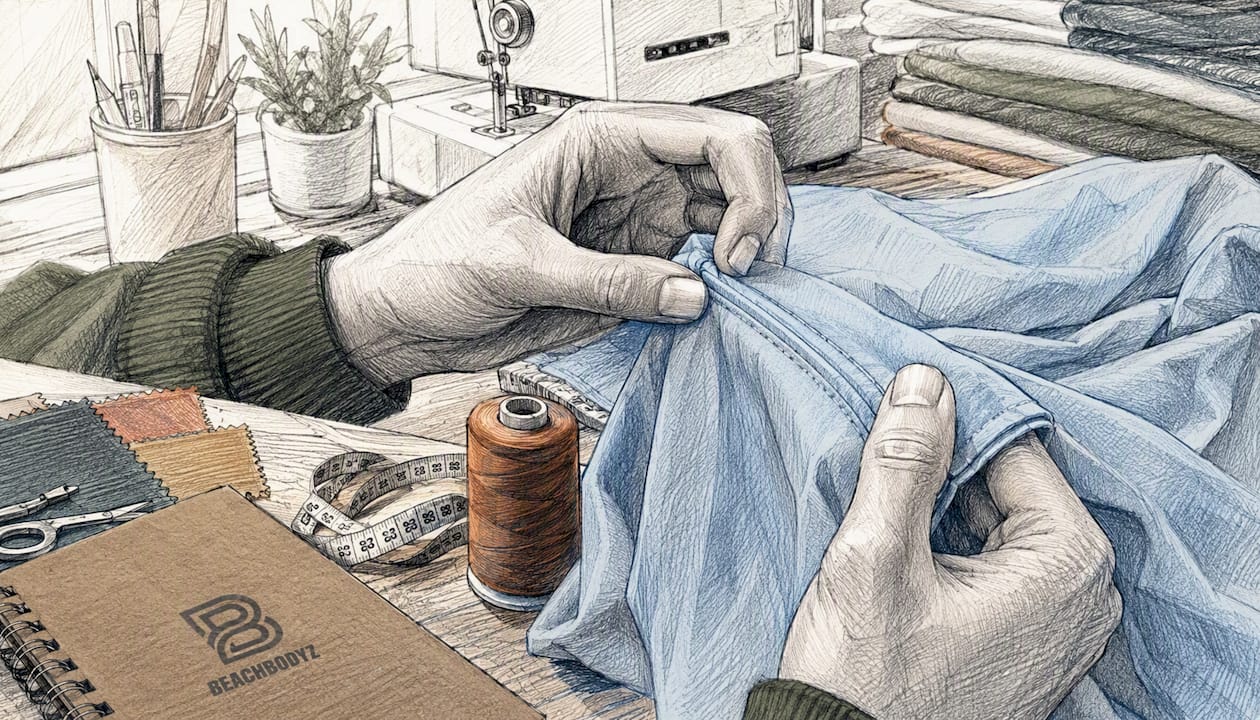
Pro Tip: Turn the shirt inside out and check the inner seams. Double seams with even spacing are a reliable sign of careful workmanship.
How Fit and Weight Influence the Wearing Comfort
Heavy fabric drapes differently than light fabric. As soon as the weight reaches a certain heaviness, a T-shirt, due to its own weight, drapes more structured on the body. This prevents the billowing of light summer shirts and gives the silhouette more contour.

With a regular fit, a heavy shirt appears close to the body and structured. Oversize cuts particularly benefit from higher fabric weight: the fabric drapes evenly and retains its shape, instead of creasing at the shoulders or sleeves. Those who wear an oversize look should pay attention to sufficiently heavy material so that the cut unfolds its effect.
This can be seen in product photos: If the fabric lies smooth and without wrinkles, it indicates sufficient weight. Waves and uneven creases at the hem speak for material that is too light. For sizing, oversize cuts are often one to two sizes larger than regular sizes. If you plan a shirt as a layering piece, you should consider this when choosing.
Thermal properties change with weight. Heavier shirts retain significantly more warmth at cool temperatures than lighter ones. This is an advantage in spring, autumn, and cool summer evenings. In midsummer, it can become too warm.
How a Heavy Cotton T-Shirt Stays in Shape for a Long Time
Cotton shrinks. This is not a question of weight, but of fiber structure. A heavyweight shirt made from unpreshrunk fabric can shrink up to 5% during the first wash. Preshrunk shirts have already undergone this process.
Care instructions for heavy cotton shirts:
- Washing: Use gentle temperatures and a delicate wash cycle, mild detergent without bleach. Hot washes accelerate fiber wear and shape loss.
- Drying: Dry flat or hang on a hanger. Tumble dry on the lowest setting, if at all. High dryer heat permanently destroys the fiber structure.
- Ironing: If necessary, iron on medium heat, inside out. Avoid direct ironing on prints or embroideries.
- Immediately after purchase: Wash once in cold water to remove any residual sizing.
- After 10 washes: Check if seams are still secure and cuffs retain their shape.
- After 50 washes: Visually inspect for pilling and color loss. Ring-spun, combed shirts show significantly less wear here than open-end qualities.
Pro Tip: Wash shirts inside out. This protects the outer surface from friction in the drum and preserves the color longer.
What to Look for When Buying a High-Quality Heavyweight T-Shirt
The following table shows what information must be present on a product page and what signals indicate quality problems.
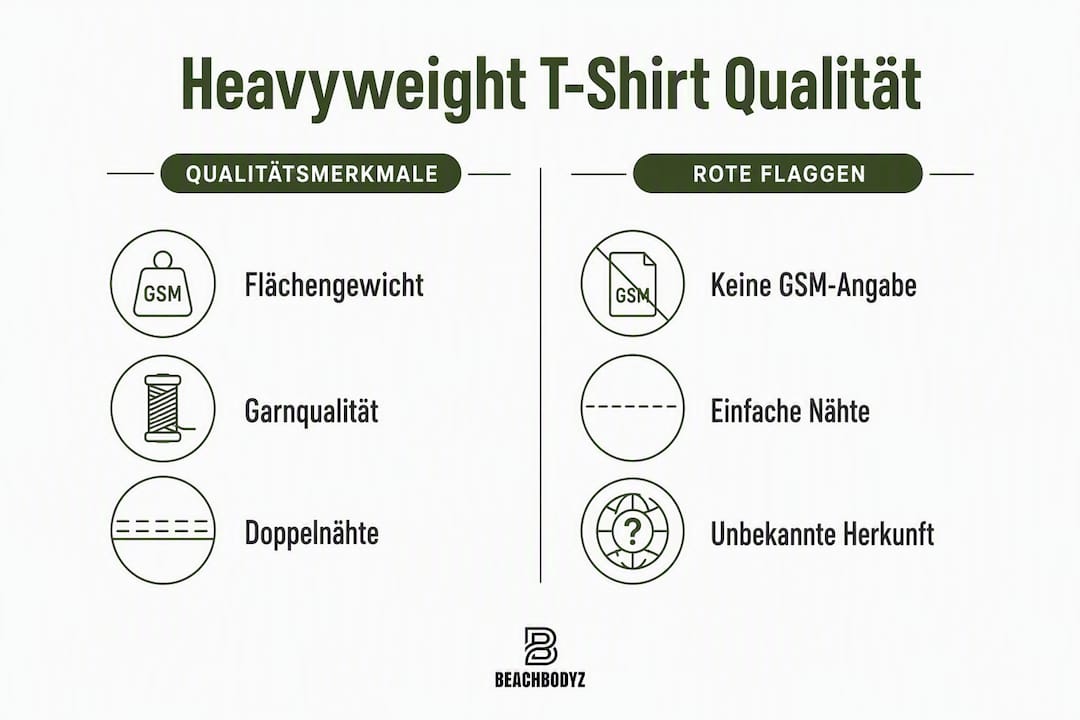
| Criterion | Quality Feature | Red Flag |
|---|---|---|
| Fabric weight | GSM specification present (180–220 gsm) | No GSM specification |
| Yarn type | Ring-spun and/or combed cotton | Only "100% cotton" without further specification |
| Fiber composition | 100% organic cotton or ELS fiber | Mixed fabric without proportion specification |
| Certificates | GOTS or OEKO-TEX present | No certificates, vague "eco" promises |
| Workmanship | Double seams, sturdy rib cuffs | Single seams, cuffs without structure |
| Origin | EU production or verifiable fair manufacturing | No origin specified |
GOTS (Global Organic Textile Standard) audits the entire supply chain and differentiates between products with at least 95% organic fibers (organic textile) and those with at least 70% organic fibers. OEKO-TEX STANDARD 100 tests for harmful substances in the final product. Both certificates are the most reliable method for consumers to recognize sustainable production.
When Is a Heavy T-Shirt Worth It, and How Do You Combine It?
A heavyweight shirt is not the best choice for every situation. Here's a clear overview:
- Everyday and Basics: 180–220 gsm is the right choice for a shirt that is worn daily and retains its shape for years.
- Layering: Heavy fabric lies flat under a flannel shirt or blazer without adding bulk. Light shirts bulge under outer layers.
- Cool Summer Evenings and Transitional Seasons: From 200 gsm, a T-shirt is sufficient as a standalone layer without feeling cold.
- Outdoor and Physical Work: Extra-heavy qualities over 220 gsm are more resistant to mechanical stress.
- Oversize Styling: Combine with slim-fit trousers or shorts. The structured drape of the heavy fabric prevents the look from appearing shapeless.
When a medium weight (150–180 gsm) is the better choice: sports, mid-summer, traveling with light luggage. Lighter shirts dry faster and feel more comfortable in the heat. If a shirt is primarily used as a sports shirt, a heavyweight is not needed.
Why Grammage Is Not Synonymous with Quality
The common assumption that a heavier shirt is automatically better is, according to manufacturing experts, incorrect. A 180 gsm shirt made from ring-spun, combed cotton can age better than a 220 gsm shirt made from open-end yarn. Yarn finishing increases fiber fineness, reduces pilling, and improves dimensional stability more than mere weight.
“High grammage alone does not automatically guarantee better hand feel or durability. Carded open-end yarn, despite its high weight, provides poorer hand feel and lower durability than ring-spun or combed and finished yarns.” — Manufacturing Clothes GmbH
Organic cotton offers another advantage: In certain growing regions, it requires significantly less irrigation water than conventional cotton. It is also often better tolerated by sensitive skin, as no synthetic pesticides are used. The final price of organic cotton is sometimes 5–20% higher than conventional goods.
Beachbodyz uses GOTS-certified organic cotton and fair EU production for its oversize T-shirts. This is not a marketing statement, but verifiable through the GOTS certificate across the entire supply chain.
Key Takeaways
A heavyweight T-shirt is a good choice when information on fabric weight, yarn quality, and certifications are consistent.
| Topic | Details |
|---|---|
| Fabric weight | The weight should match the intended use and have a certain degree of heaviness. |
| Yarn quality | High-quality yarns such as ring-spun, combed cotton offer better hand feel and durability. |
| Certificates | Sustainable production can be recognized by trustworthy certificates like GOTS or OEKO-TEX. |
| Care | Gentle washing and drying methods protect the lifespan. |
| Product selection | Offers with tested organic cotton and fair production are recommended. |
Why a GOTS-Certified, Ring-Spun Heavyweight Option Is Recommended
When buying a heavy cotton T-shirt, one invests in a garment that is meant to be worn for years. It is therefore logical to also check the production conditions. A shirt that has been manufactured fairly and under controlled conditions in the EU has a traceable supply chain. This is not a luxury argument, but practical quality assurance.
Beachbodyz combines GOTS-certified organic cotton with EU manufacturing and climate-neutral shipping. The oversize cuts are designed to retain their silhouette even after many washes. Personalization options such as embroidery are available, making the shirts interesting for groups or individual projects. Those who treat sustainability and quality as equivalent purchasing criteria will find an offer here that delivers both without compromise.
Beachbodyz Oversize T-Shirts: Quality with Verifiable Origin
Beachbodyz offers oversize T-shirts made from 180 gsm GOTS-certified organic cotton, produced fairly in the EU and shipped climate-neutrally to Central Europe. This is the direct opposite of shirts without GSM specifications and unclear origin.
The shirts are ring-spun quality with double seams and sturdy rib cuffs. Personalization by embroidery is possible. Limited drops ensure that the collection remains current.
Those looking for a heavy, dimensionally stable T-shirt that meets all the criteria of the buyer's checklist can find the current offer directly in the Beachbodyz shop. Availability and current models can be viewed there.
Useful Sources and Further Links
For more in-depth research on GSM definitions, certifications, and material quality:
- GOTS-Certification | Ecocert
- GOTS Standard 7.0 (PDF) | Global Organic Textile Standard
- Organic cotton: Better for people and climate?
- Beachbodyz: Sustainable fabrics
FAQ
What is a heavyweight T-shirt?
A heavyweight T-shirt is a shirt with a fabric weight of 180–220 g/m². Shirts over 220 g/m² are considered extra heavy and are often used for outdoor or workwear.
What is considered a heavy T-shirt?
A heavy T-shirt has a higher GSM (grams per square meter) than a standard shirt. From 180 g/m² upwards, it is considered heavy; the fabric is denser, more opaque, and more dimensionally stable than lighter variants.
What are thicker T-shirts called?
Thicker T-shirts are called heavyweight shirts. The term is not legally defined but is used by manufacturers and retailers for shirts starting at approximately 180 g/m².
What is Heavy Weight Cotton?
Heavy Weight Cotton refers to cotton fabric with a high basis weight, typically from 180 g/m². In addition to weight, the yarn type is crucial for quality: Ring-spun, combed cotton provides better feel and durability than open-end yarn of the same grammage. Beachbodyz uses GOTS-certified organic cotton in this range.