In short:
- GOTS-certified clothing meets strict ecological and social standards along the entire supply chain. The seal guarantees at least 95 percent organic fibers for "Organic" and 70 to 95 percent for "Made with Organic." The certificate is openly verifiable, but genuine GOTS label quality is only assured with specific product labeling.
GOTS-certified clothing meets minimum standards for organic natural fibers, chemical management, wastewater treatment, and social conditions along the entire supply chain. The Global Standard gGmbH seal is considered one of the strictest textile certificates worldwide.
Three points for quick classification:
- Quality Grades: "Organic" stands for at least 95% certified organic fibers; "Made with Organic" for 70–95%.
- Trust Signals: Official logo (green circle with shirt), license number on the label, approved certification body.
- Instant Check when purchasing: Check license number on global-standard.org. If it's missing, that's a red flag.
Table of Contents
- What exactly does GOTS mean, and what are the label levels?
- What ecological and chemical requirements does GOTS impose?
- What does GOTS require regarding working conditions?
- How does GOTS certification work, and how is it monitored?
- How do you recognize genuinely GOTS-certified clothing when buying?
- What are the benefits of GOTS clothing, and what are the limitations of the seal?
- What brands and sources are available in Central Europe?
- Key Takeaways
- Why Verified Standards Matter When Buying Clothes
- Beachbodyz: GOTS-certified Streetwear from the EU
- Important Sources for Verification
- FAQ
What exactly does GOTS mean, and what are the label levels?
GOTS stands for Global Organic Textile Standard. The standard covers the entire processing chain: from the harvesting of raw fibers to spinning, weaving, dyeing, and manufacturing, all the way to retail. Every operation along this path must meet the requirements, not just the final producer.
The label levels differ by fiber content:
- "Organic": at least 95% certified organic fibers (excluding accessories).
- "Made with Organic": 70–95% certified organic fibers.
The issuer is Global Standard gGmbH, based in Germany. Version 7.0 of the standard came into effect on March 1, 2024; Version 8.0 is already available. According to the GOTS Annual Report 2025, the number of certified facilities worldwide has grown by approximately 15%. This demonstrates how deeply entrenched the standard has become in the industry.
What ecological and chemical requirements does GOTS impose?
GOTS prohibits a broad list of problematic substances. Only chemicals on the GOTS positive list may be used in production. This includes dyes, auxiliary agents, and finishing agents.
Specific requirements:
- Prohibited substances include heavy metals, formaldehyde, chlorinated bleaches, and genetically modified organisms.
- Wet processing facilities must treat wastewater and comply with defined limits for temperature, pH value, and pollutants.
- Organic cotton is tested for genetically modified organisms (GMO screening according to ISO IWA 32).
- Residue tests are conducted after a contamination risk assessment; auditors can send samples to accredited laboratories.
Permitted fibers include certified organic cotton, organic wool, organic linen, and other natural fibers. Synthetic fibers like polyester are not allowed as the main fiber but can be used as accessories (zippers, sewing thread) under certain conditions.

What does GOTS require regarding working conditions?
The social criteria are based on the ILO core labor standards. Child and forced labor are explicitly prohibited. Workplace discrimination is forbidden, and freedom of association and the right to collective bargaining are guaranteed.
Companies must also:
- Document and implement occupational safety measures.
- Maintain records of wages that meet at least the legal minimum wage.
- Violations lead to withdrawal of certification.
Pro Tip: If you want to know whether a manufacturer actually adheres to social criteria, you can view the company's scope certificate in the public GOTS database. All certified production stages are listed there.
Unannounced inspections supplement the annual on-site audits. This makes it significantly harder to conceal violations on short notice.
How does GOTS certification work, and how is it monitored?
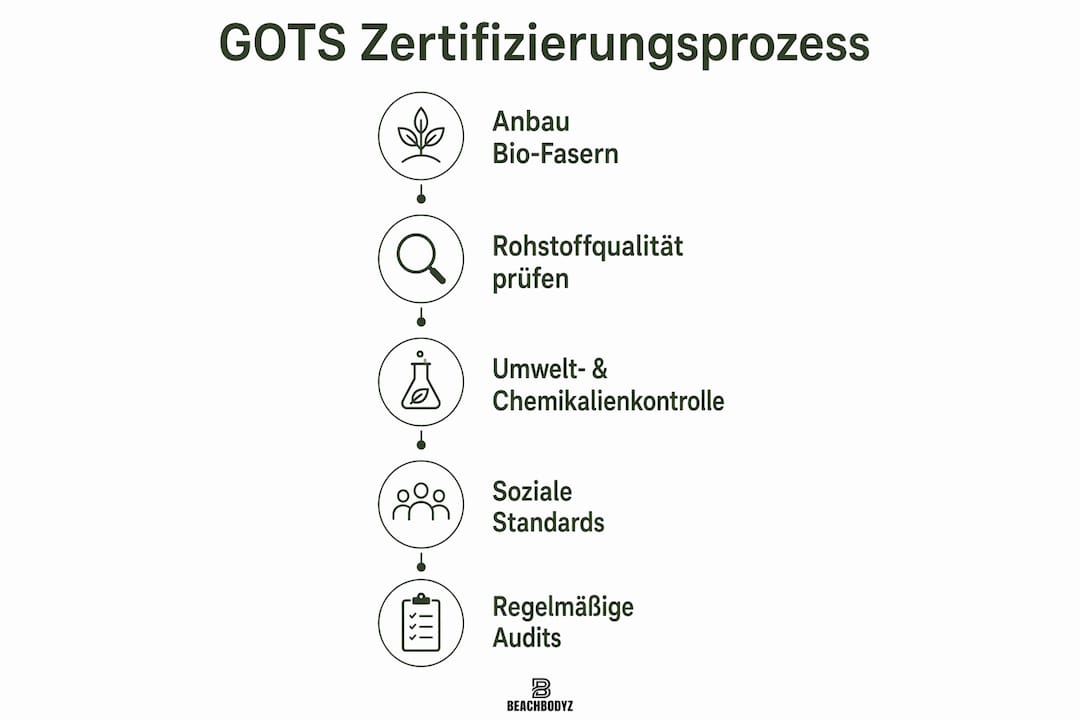
The process follows a clearly defined procedure:
- Application: The company contacts a certification body approved by Global Standard gGmbH.
- On-site Audit: An accredited body inspects production processes, chemical use, documentation, and social standards.
- Scope Certificate: Upon conformity, the company receives a valid operating certificate listing certifiable product categories and processing steps.
- License Number: The number links the certification body and the company and is publicly accessible.
- Annual Re-certification: All certified companies undergo annual on-site inspections, supplemented by possible unannounced controls based on a risk assessment.
Small contract manufacturers with low risk potential may be exempt from the annual inspection under certain conditions but must provide evidence of an on-site inspection at least in the first year and every three years.
Pro Tip: Note the license number on the label, then enter it into the public database at global-standard.org. The result shows which product categories and processing steps are actually certified.
How do you recognize genuinely GOTS-certified clothing when buying?
Checklist for shopping:
- Official Logo: Green circle with a stylized shirt and the inscription "GOTS."
- Label Level: "Organic" or "Made with Organic" must be explicitly stated.
- License Number: Visible on the label or product page; no number means no proof.
- Certification Body: Name or abbreviation of the approved body must be mentioned.
- Scope Certificate: Reputable retailers link the PDF in the product description or provide it upon request.
Red flags:
- Phrases like "made according to GOTS standards" or "GOTS-inspired" without a license number.
- Only the brand, not the specific product, is certified.
- No mention of the certification body.
Pro Tip: GOTS certifies facilities and production stages, not brands generically. A company may be GOTS-certified without every single product in its assortment meeting this requirement. Always check at the product level.
Transparent labeling with a license number and scope certificate is the most reliable indicator to distinguish genuine certification from mere marketing.
What are the benefits of GOTS clothing, and what are the limitations of the seal?
| Criterion | GOTS Advantage | Standard's Limit |
|---|---|---|
| Chemicals | Positive list, over 90% conventional chemicals excluded | No statement on microplastics from synthetic ingredients |
| Fibers | Certified organic fibers, GMO screening | Transport routes and carbon footprint not regulated |
| Social | ILO core standards, child labor prohibition, freedom of association | No requirement for living wages beyond the legal minimum wage |
| Transparency | Public database, verifiable license numbers | Repairability and longevity of the product not evaluated |
GOTS clothing is typically 20–40% more expensive than conventional textiles. Reference values: organic T-shirts and organic sweatshirts cost more than ordinary textiles; typical price ranges vary by product. The surcharge is explained by higher raw material costs, audit fees, and stricter production requirements.
GOTS is not a complete sustainability certificate. Climate impact, transport emissions, and product lifespan remain outside its scope. To comprehensively assess sustainable fashion, GOTS should be understood as a solid foundation, not a conclusive judgment.
What brands and sources are available in Central Europe?
GOTS-certified products are available through various channels:
- Specialized Brand Webshops: Hessnatur is one of the best-known German suppliers with many years of GOTS experience in women's and men's clothing. LANA Organic (LANA) offers GOTS-certified knitwear and baby textiles. The Avocado Store, as a marketplace, features products from various certified brands.
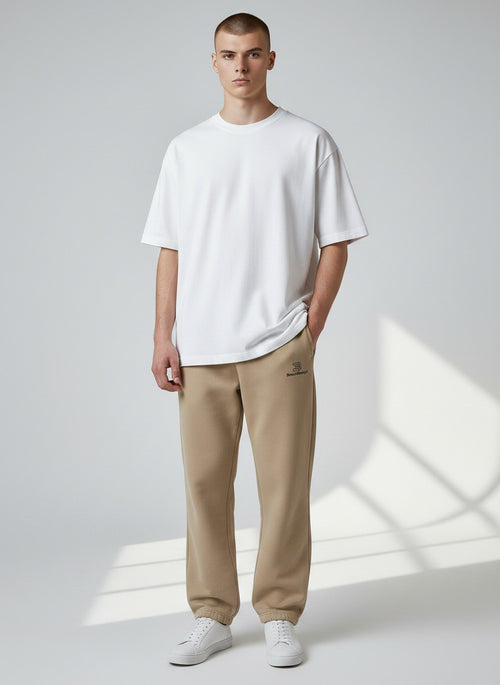
- Beachbodyz: The German streetwear brand offers GOTS-certified organic cotton in oversized cuts, including T-shirts, hoodies, and sweatshirts. All products are fairly produced in the EU and shipped carbon-neutrally. For those seeking sustainable streetwear, Beachbodyz provides a verified option with full labeling.
- Local Specialty Stores: Health food stores, organic stores, and sustainable fashion boutiques in German cities often carry GOTS products.
Check availability: The official GOTS database at global-standard.org lists all certified companies by country, product category, and processing stage. If you are specifically looking for sustainable fabrics and brands, you will find a complete, up-to-date overview there.
How do you care for GOTS textiles to make them last longer?
GOTS-certified clothing made from organic cotton is more sensitive to high temperatures than conventional goods. Proper care significantly extends its lifespan.
- Washing: 30–40 °C is sufficient for most garments. Use mild detergent without optical brighteners to protect the fibers. Avoid overloading the drum, as friction stresses the fabric structure.
- Drying: Air drying in the shade preserves shape and color. Tumble dryers noticeably accelerate the wear and tear of organic cotton.
- Repair instead of discard: Small holes and thin spots can be fixed with simple darning techniques. Patches made from the same material are more durable than glued-on patches.
Pro Tip: Washing clothes less often and airing them out instead saves water, protects fibers, and extends their lifespan many times over. Organic cotton absorbs odors less strongly than synthetics.
More everyday tips for conscious clothing care can be found in the Beachbodyz blog.
Key Takeaways
GOTS-certified clothing offers verified organic fibers, strict chemical requirements, and minimum social standards along the entire supply chain, but it is not a complete sustainability judgment.
| Topic | Details |
|---|---|
| Label Levels | "Organic" from 95% organic fibers; "Made with Organic" 70–95% organic fibers — always check the label. |
| Price Orientation | GOTS products typically cost 20–40% more than conventional textiles. |
| Verification | Check the license number on the label in the public GOTS database; a missing number is a red flag. |
| Limitations of the Seal | Transport emissions, microplastics, and product repairability are not part of the GOTS scope. |
| Beachbodyz | Offers GOTS-certified organic cotton streetwear, fairly produced in the EU and shipped carbon-neutrally. |
Why Verified Standards Matter When Buying Clothes
The textile seal offerings are extensive. Oeko-Tex, Fairtrade, Bluesign, EU-Ecolabel: Each label inspects something different. Oeko-Tex tests the finished product for harmful substance residues but says nothing about the origin of the fibers or working conditions in the factory. GOTS regulates both and is more comprehensive than most alternatives. This makes the standard particularly valuable for consumers seeking a single reliable orientation.
What is often overlooked: GOTS does not certify brands, but rather facilities and production stages. A company can credibly communicate that it uses GOTS materials without the final product itself being certified. The difference is not trivial. When comparing fair fashion seals, one should start exactly there: Is the specific product certified, or only the facility?
Experts consider GOTS one of the most reliable textile seals because the entire supply chain is controlled. Nevertheless, it remains part of a larger sustainability picture. For truly sustainable purchases, combine GOTS with long-term use and targeted care.
Beachbodyz: GOTS-certified Streetwear from the EU
For those looking for verified organic cotton in streetwear cuts, Beachbodyz offers a concrete option. The German brand relies on GOTS-certified materials, fair EU production, and carbon-neutral shipping. No compromises between style and certification.
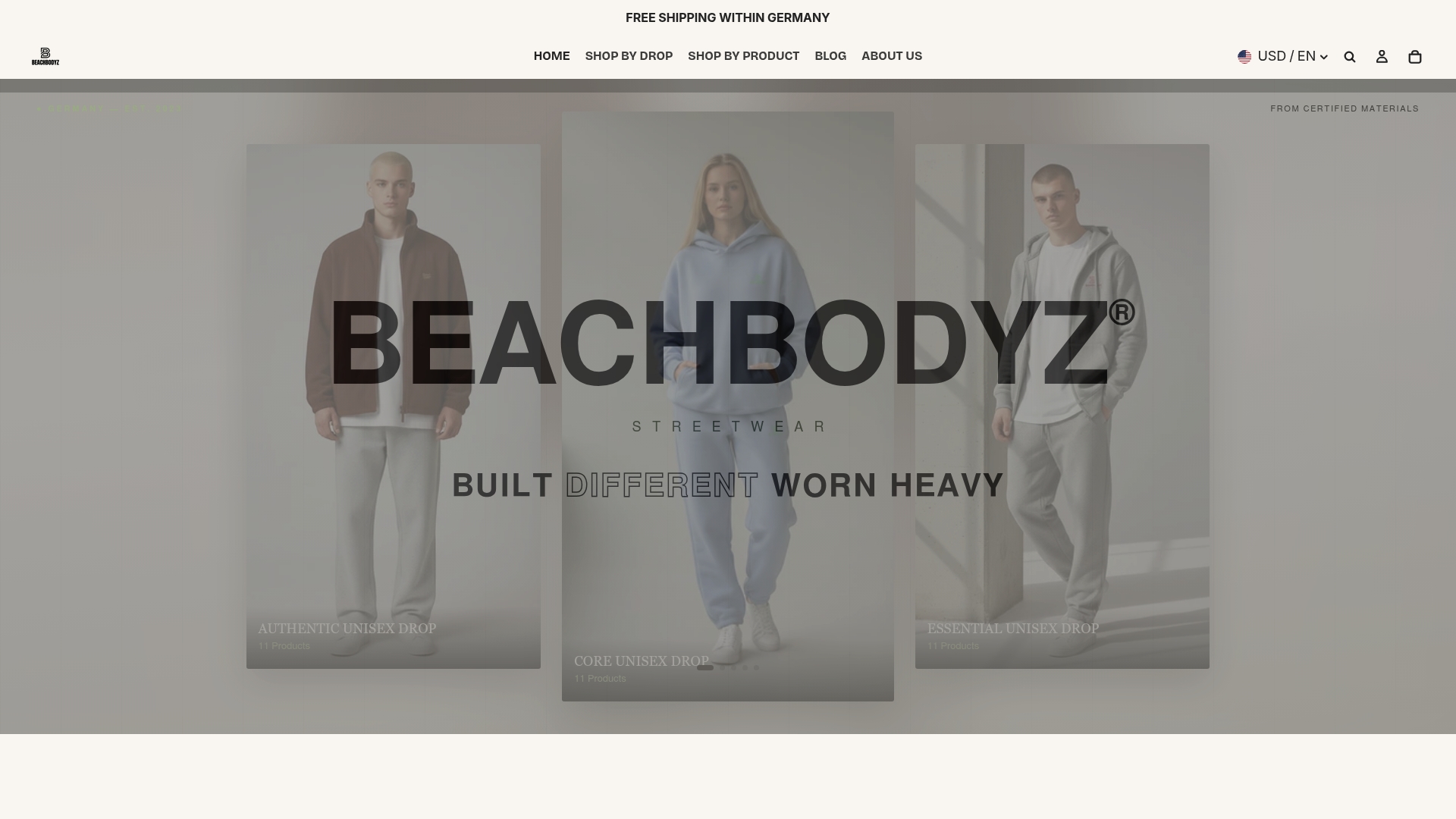
The range includes oversized T-shirts, hoodies, sweatshirts, and jogging pants. All products come with full labeling, including license number and certification proof. The Motion Oversize Top and the Sport Jogging Pants are two specific entry points. Those who want to make sustainable purchasing decisions based on traceable values will find certified products with transparent origins in the Beachbodyz shop.
Key Sources for Verification
Official resources for verification:
- global-standard.org: Official website of Global Standard gGmbH; standard texts, database, and downloads.
- GOTS Database: Check license numbers and scope certificates at global-standard.org/de/zertifizierung-und-labelling/zertifizierung.
- GOTS FAQ: Answers to certification requirements, labeling, and logo use.
- GOTS Version 7.0 (PDF): Complete standard text in German.
- nachhaltigleben.ch: Independent classification of the seal with notes on strengths and limitations.
Quick guide to database search: Note the license number from the label, go to global-standard.org, and enter the number. The result shows the company name, certification body, valid product categories, and expiration date of the certificate.
FAQ
What is GOTS-certified clothing?
GOTS-certified clothing consists of at least 95% certified organic natural fibers (label level 'Organic') or 70-95% (label level 'Made with Organic') and meets strict ecological and social requirements along the entire supply chain, verified by independent certification bodies.
Which brands are GOTS-certified?
Hessnatur, LANA Organic, and Avocado Store are among the well-known providers in Germany. Beachbodyz offers GOTS-certified streetwear made from organic cotton with fair EU production. A complete list can be found in the public GOTS database at global-standard.org.
How does GOTS differ from Oeko-Tex?
Oeko-Tex checks the finished product for harmful substance residues. GOTS, on the other hand, regulates the origin of the fibers, the entire processing chain, and minimum social standards, which makes the standard more comprehensive in many aspects.
Which sustainable fashion labels are there in Germany?
Besides GOTS, Oeko-Tex, Fairtrade Textile, and Blue Angel are common. Each label focuses on different aspects: GOTS covers fibers, chemicals, and social standards; Fairtrade focuses on fair trading conditions for raw material producers.
How do I check if a product is really GOTS-certified?
Enter the license number from the label into the GOTS database at global-standard.org. The result shows whether the company is certified and which product categories the certificate covers.