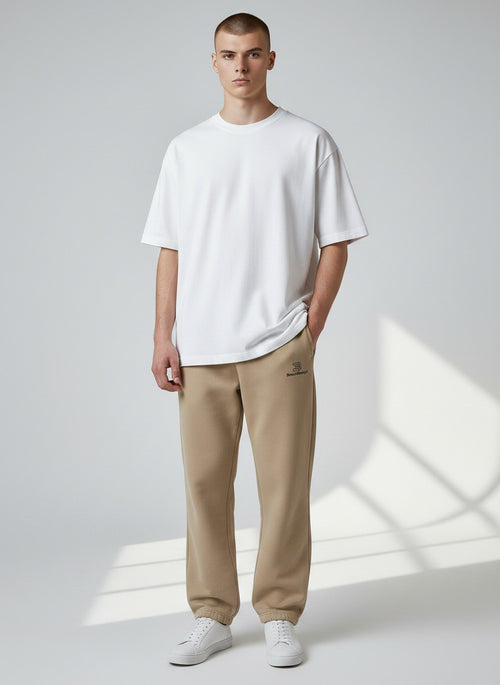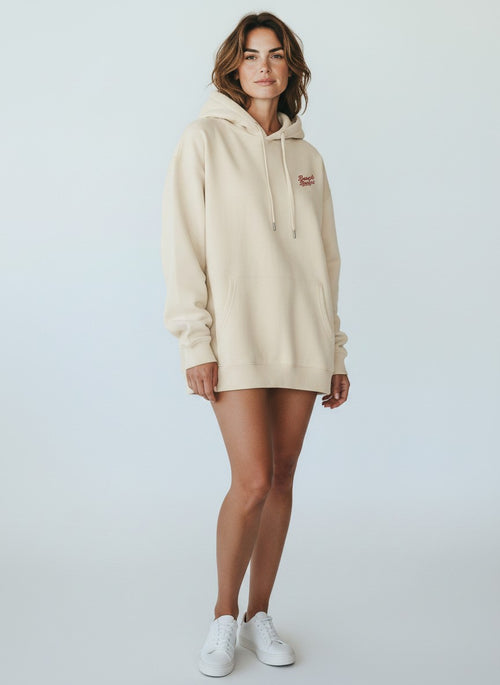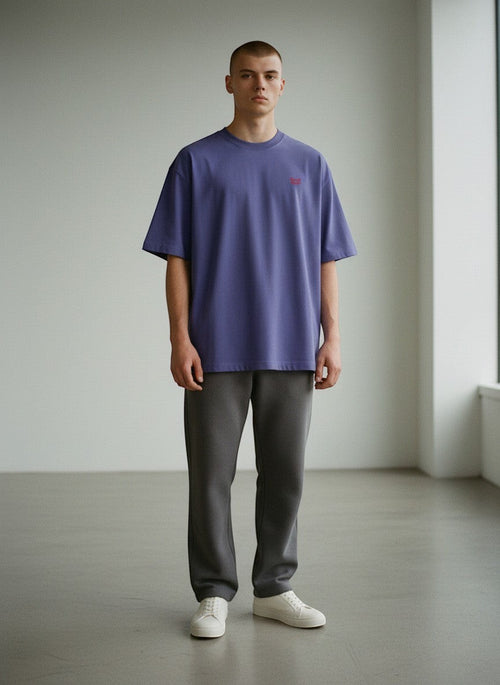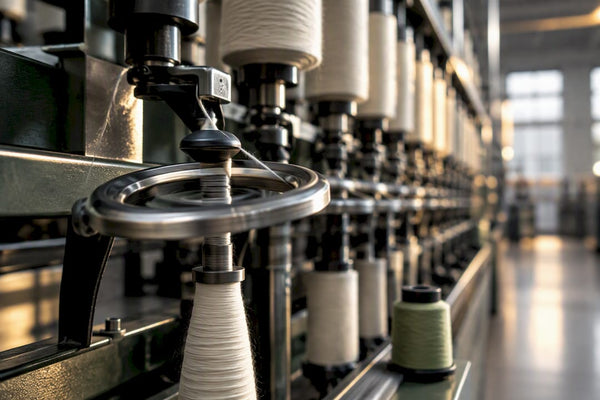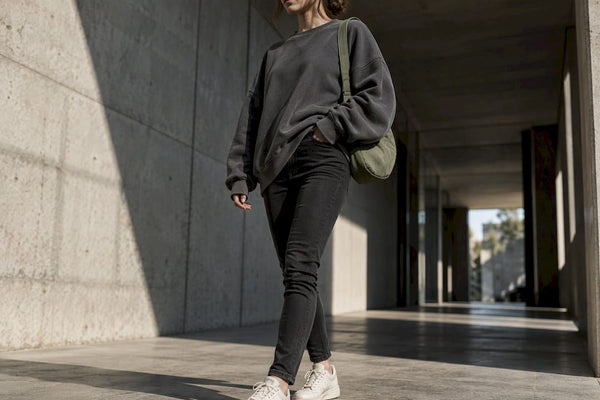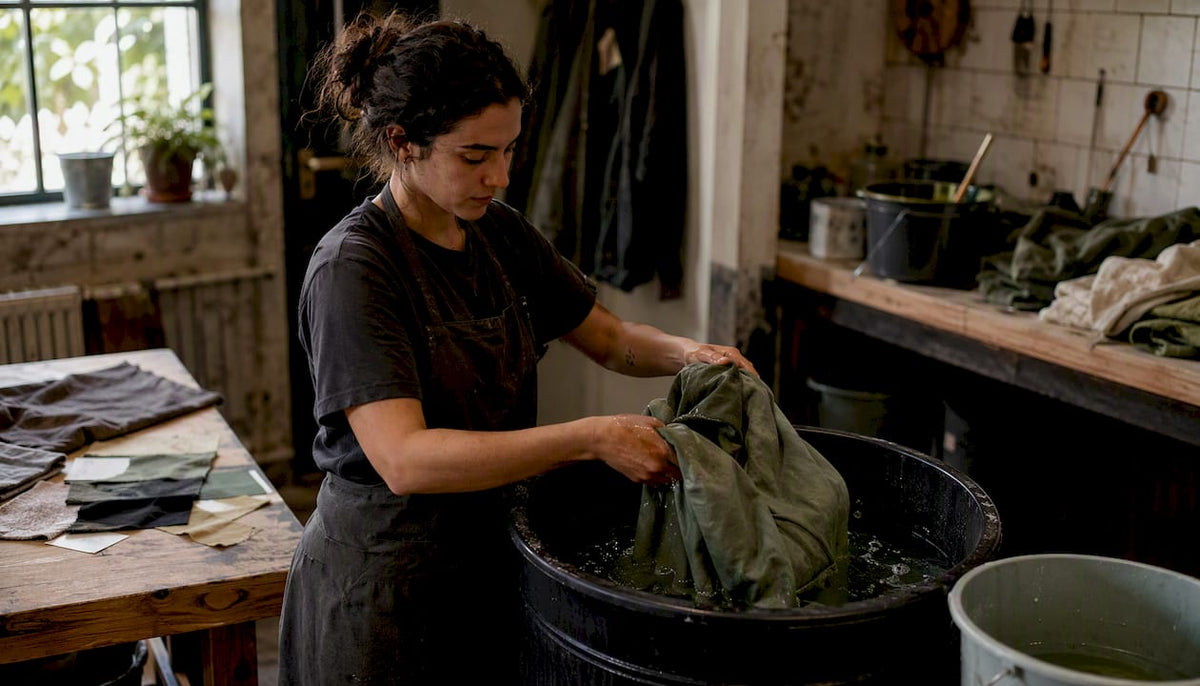
Garment Dyed means: A finished garment is dyed, not the yarn and not the fabric beforehand. First, the item is completely made from raw, undyed material, then it goes into the dye bath as a whole hoodie, T-shirt, or sweatshirt. This is precisely what creates the typical vintage look with slight, natural color variations at seams, edges, and stress points, because less dye penetrates there than on the flat surface.
For brands, this primarily means one thing: flexibility. The color decision is made late in the production process, allowing for quick reactions to trends without dyeing huge quantities of yarn in advance. The price for this is production risks: batches can vary slightly, and not every sewing material is compatible with the dyeing process.
- Brief definition: Dyeing after confection, not before.
- Appearance: Tone-on-tone character, washed look, individual nuances per piece.
- Advantage: quick reaction time to color trends, flexible batch sizes.
- Risk: batch deviations and potential material conflicts with sewing threads.
Key Takeaways
Garment Dyed refers to dyeing finished garments, creating a distinctive, uneven vintage look with an increased quality risk compared to yarn or fabric dyeing.
| Topic | Details |
|---|---|
| Definition | Garment Dyed colors finished garments, not yarn or fabric before assembly. |
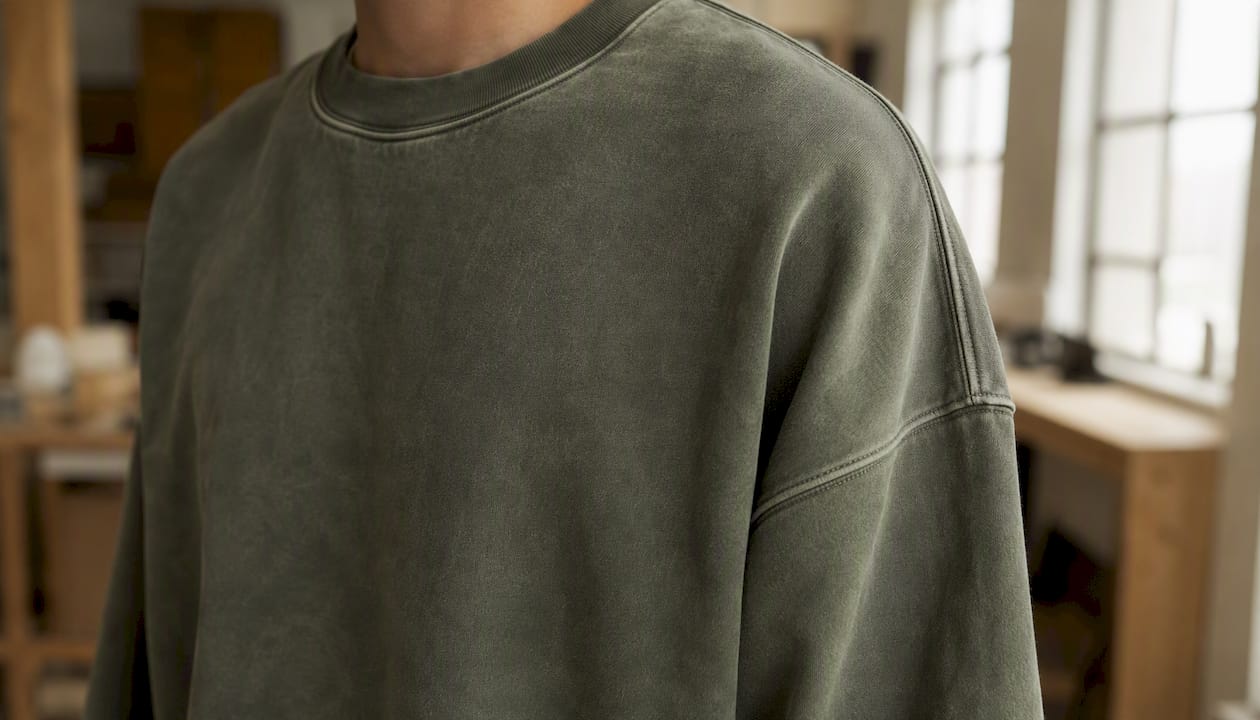
| Typical Appearance | Tone-on-tone effect, lighter seams, individual vintage/washed character per item. |
| Biggest Quality Risk | Standard sewing threads cause white spots; special threads reduce this risk. |
| Care Recommendation | Wash separately for the first wash, low temperature, avoid tumble drying. |
| Beachbodyz Approach | Focuses on GOTS organic cotton and fair EU production for hoodies and sweatshirts. |
Table of Contents
- Garment Dyed: What it is and how exactly the process works
- Garment-dyed, yarn-dyed or piece-dyed: What's the difference?
- How a Garment Dye process works in production
- Which fibers and dyes are suitable for garment dyeing?
- What look is created and what are the quality risks?
- How to properly care for garment-dyed clothing
- Who uses Garment Dye in fashion and streetwear?
- Why technical diligence is crucial for garment dyeing
- Why we at Beachbodyz appreciate the Garment-Dyed look
- Discover the Garment-Dyed look at Beachbodyz
- Sources
- FAQ
Garment Dyed: What it is and how exactly the process works?
The process follows a fixed logic: raw assembly, then dyeing, then fixing, then finishing. First, the garment is completely sewn together from undyed, usually natural white or ecru raw material. Only then does the brand decide which color will actually be produced.
This late timing is no coincidence. It allows for short-term reactions to demand or trend colors, without having to plan long lead times for pre-dyed yarn. After the dye bath, fixation follows, where the color is chemically or thermally bonded to the fiber, depending on the system. Finally, the finish: washing, softening, partly additional mechanical processing to refine the feel and appearance.
In contrast, classic yarn or fabric dyeing occurs much earlier in the process, long before any pattern piece even exists. This explains why garment-dyed goods almost always show a more uneven, lively color gradient than uniformly dyed meter goods.
Garment-dyed, yarn-dyed or piece-dyed: What's the difference?
Three terms, three completely different points in the process, and that's exactly what determines the later appearance. Yarn-dyed material is dyed before it is even woven or knitted, often used for stripes, checks or denim with a clear warp effect. Piece-dyed or fabric-dyed material is dyed as a finished fabric, before cutting, which provides a very even color surface. Garment Dye comes last: only the finished item is dyed.
- Yarn-dyed: Color before weaving/knitting, ideal for patterns and stripes.
- Piece-dyed: Color on the finished fabric, very even result, classic for basics.
- Garment Dyed: Color on the finished item, irregular, lively character with a vintage touch.
| Method | Time of Dyeing | Typical Effect | Batch Uniformity |
|---|---|---|---|
| Yarn-dyed | Before weaving/knitting | Patterns, stripes, clear contrasts | Very high |
| Piece-dyed | On finished fabric | Uniform, solid color | High |
| Garment Dyed | On finished garment | Tone-on-tone, washed look, lighter seams | Medium to low |
How a Garment Dye process works in production
In practice, the process is divided into clearly defined steps that every dye house follows in a similar sequence.
- Raw production: The item is completely sewn from undyed material, including sewing threads, labels, and accessories.
- Recipe determination: The dye house determines the dye class, concentration, and process parameters, often based on a lab dip as a reference sample.
- Dye bath: The finished parts go through the actual dye bath, usually in rotating dyeing machines for ready-made garments.
- Fixation: Depending on the dye system, the color is permanently bonded chemically or thermally.
- Finish and washing: A final wash removes excess dye and improves the feel.
Quality control takes place at several points. The lab dip before production starts ensures color fastness, shrinkage management monitors shrinkage during dyeing, and a thread test ensures that sewing threads take on the same color as the fabric. This is where the biggest difference to yarn or fabric dyeing lies: Garment Dye allows for smaller, more flexible batch sizes, but increases the risk of visible deviations between individual batches.
Which fibers and dyes are suitable for garment dyeing?
Cellulosic fibers such as cotton, viscose, and lyocell absorb dye most reliably, forming the basis of most garment-dyed collections. Pure polyester components can hardly be co-dyed with conventional methods, which can lead to uneven results in blended fabrics.
There are three main approaches to dye systems. Pigment dyeing adheres color particles to the fiber surface with a binder, creating the soft, pleasantly worn vintage feel, and consumes less water than reactive processes, though with lower wash and rub fastness. Reactive dyes, on the other hand, form a strong chemical bond with the fiber, offering better fastness properties, sometimes even at lower fixing temperatures, which can be ecologically advantageous. Disperse dyes, in turn, are used for synthetic fibers but play a minor role in pure garment dyeing.
A special form is oil or cold dyeing: a pigment process carried out at room temperature that creates a marbled, oily appearance with distinctly light seams and is often used for particularly washed-out streetwear looks.
| Fiber Class | Recommended Dye System | Typical Result |
|---|---|---|
| Cotton | Reactive or Pigment | Soft feel, good to high fastness |
| Viscose/Lyocell | Reactive | Intense color, fine feel |
| Cotton Blends | Pigment | Vintage look, moderate water consumption |
| Finished goods for vintage effect | Oil/Cold-Dye | Marbled, emphasized light seams |
What look is created and what are the quality risks?
The appeal of garment dyeing lies precisely in its imperfection. Instead of a flat, boring uniform color, a three-dimensional color effect is created with slightly lighter seams, gentle transitions at edges, and an authentic, already worn-in character. No two pieces look exactly alike, which many streetwear fans perceive as a quality feature rather than a flaw.
At the same time, the process carries real risks. "White spots" occur if standard polyester sewing threads are used, which do not absorb the dye and thus remain visible as light cores. Batch-to-batch variations occur when dyeing parameters vary slightly between production runs. And pilling can increase if a fabric is overdyed multiple times or heavily mechanically post-treated.
- Tone-on-tone effect with an individual touch per piece.
- Light seams possible as a desired, but also as an undesired side effect.
- Batch deviations in the absence of process control.
- Pilling risk with excessive post-treatment.
Pro Tip: When buying, specifically look at the seam allowances. If conspicuously white dots are visible there, standard sewing threads were likely used instead of specially dyeable threads, a clear sign of sloppy workmanship.
How to properly care for garment-dyed clothing
The first wash often determines how long the look lasts. Wash new garment-dyed items separately, preferably at a low temperature and on a gentle cycle, as excess dye can be released during the first washes. A delicate detergent without aggressive bleaches protects both the color and the fiber.
When drying, it's best to lay flat or use a gentle cycle, as high temperatures in the dryer can lead to shrinkage and harden the soft feel that is precisely the appeal of garment dyeing. Ironing usually works without problems at medium temperature, but it's worth checking the care label beforehand.
- Wash separately and at a low temperature for the first wash.
- Use delicate detergent instead of aggressive heavy-duty detergents.
- Avoid tumble drying or use on the lowest setting.
- Read the care label carefully before the first wash.
Who uses Garment Dye in fashion and streetwear?
Garment Dyeing is not a new invention. The process has been used for specific design effects since the 1970s, but has since established itself primarily in the streetwear and casual wear scene. Hoodies, T-shirts, and sweatpants particularly benefit from the technique because the washed look is most pronounced here.
A well-known example of striking Garment-Dye optics is Stone Island, whose dyeing techniques and treatments have been considered a reference point in the scene for years. Many brands do not use the process consistently, but selectively for certain collection pieces, usually where the vintage character best fits the design language.
Why technical diligence is crucial for garment dyeing
A garment-dyed piece is only as good as its weakest component. Sewing threads, labels, zippers, and other accessories must be color-compatible, otherwise, precisely the white spots that many buyers perceive as flaws will appear. Special, easily dyeable sewing threads like D-Core RFD significantly reduce this risk compared to standard polyester.
The choice of dye system is also a question of resources. Pigment processes save water and provide the soft vintage feel, while reactive systems score with higher wash fastness. Process controls such as lab dips before production start and correct sanforization of the raw material counteract both main problems: uncontrolled shrinkage and batch-to-batch variations.
At Beachbodyz, this knowledge is precisely incorporated into material selection: GOTS-certified organic cotton and recycled polyester form the basis, while fair production in the EU ensures that process steps such as thread testing and color fixation are not left to chance.
Why we at Beachbodyz appreciate the Garment-Dyed look
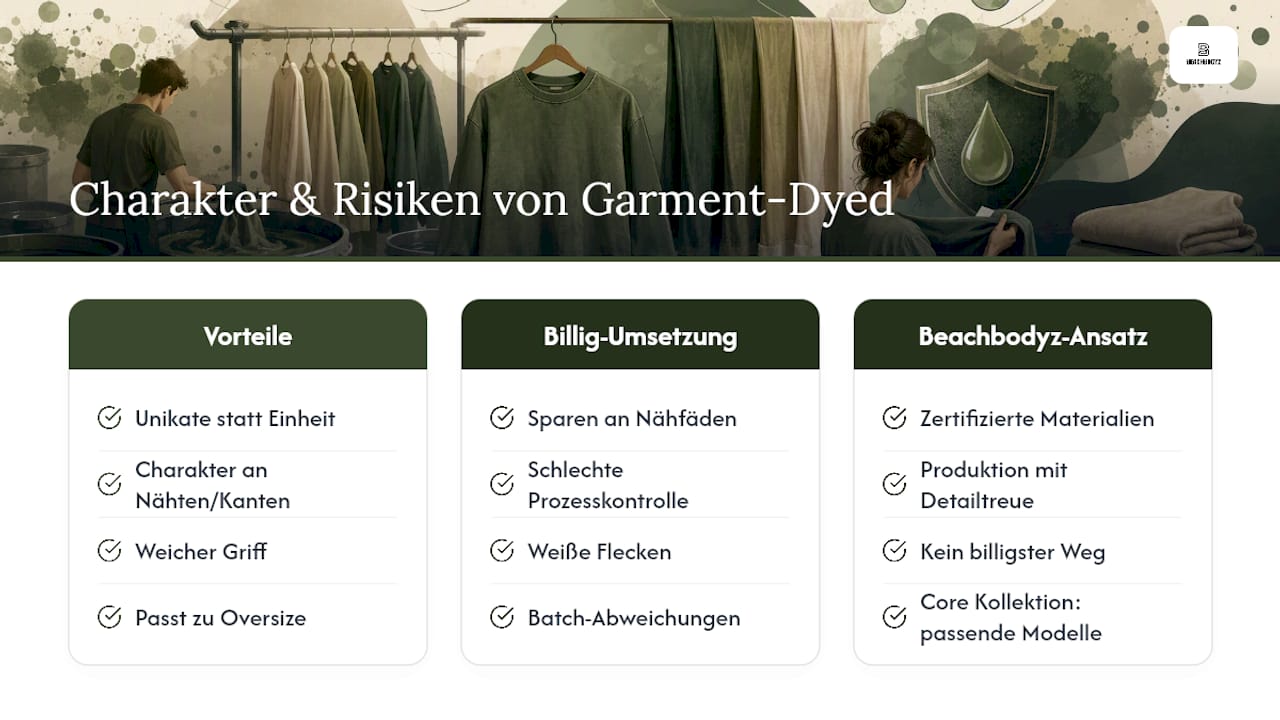
I like the character that Garment Dye gives a garment. No two pieces look exactly alike, and it's precisely these small irregularities at seams and edges that make a hoodie or sweatshirt more personal than a smooth, industrial uniform color. The soft feel created by many Garment-Dye processes also perfectly matches oversized cuts, where tactile quality is almost as important as visual appeal.
At the same time, I know that there are significant budget and quality differences here. Cheap implementations skimp on sewing threads or process control, and that's precisely where the white spots and batch deviations arise that I warned about above. That's why Beachbodyz consistently relies on certified materials and production that values attention to detail, not the fastest and cheapest way to achieve a vintage look. If you're interested in the suitable models, you'll find a good overview in the Core Collection.
Discover the Garment-Dyed look at Beachbodyz
If you like the washed-out, individual character of Garment Dye, it's worth taking a look at Beachbodyz's hoodies and sweatshirts. The crucial difference to many fast-fashion providers: GOTS-certified organic cotton, fair production in the EU, and workmanship designed for longevity rather than quick wear and tear.
The Standard Oversize Hoodie with 400gsm showcases the kind of soft, vibrant color character that defines a good Garment-Dye look, combined with an oversized cut that prioritizes feel and fit. The Core Sweatpants made from 320gsm cotton follow the same principle: sturdy construction, certified material, climate-neutral shipping. After purchasing, please follow the care instructions in this article, especially the separate first wash, to ensure the color and feel last as long as possible. Check out the current selection directly in the Sweatshirt Collection and find the model that suits your style.
Sources
- Pigment & Garment Dyeing: Vintage Look — KARCEM
- Requirements for modern garment dyeing - CHT Group - Specialty Chemicals
- Formaldehyde-free Cold/Cool or Oil-Dyeing for Garments — Dr. Petry
- Garment Dye — The Textile Glossary
FAQ
What does garment dyed mean?
Garment dyed means that a garment is dyed after it has already been sewn, instead of dyeing the yarn or fabric before manufacturing. This creates a tone-on-tone effect with slightly lighter seams and an individual color impact per item.
What is the difference to yarn-dyed goods?
Yarn-dyed goods are dyed before being woven or knitted, which creates a very uniform, predictable look. Garment-dyed goods are dyed on the finished item, making them appear more vibrant and irregular.
Why do white seams appear on garment-dyed clothing?
Standard polyester sewing threads absorb certain dyes less effectively than the surrounding fabric, leaving light cores visible. Special, highly dyeable sewing threads significantly reduce this risk.
How do you properly wash garment-dyed hoodies?
The first wash should be done separately and at a low temperature on a delicate cycle, as some color may still bleed initially. The dryer is not a good choice, as high heat promotes both shrinking and stiffening of the fabric.
Which brands frequently use garment dye?
Streetwear and casual wear brands particularly often use this process for hoodies, T-shirts, and sweatpants. Stone Island is a well-known example in this area for distinctive garment-dye looks, while Beachbodyz uses similar effects with certified, sustainable materials for some models.