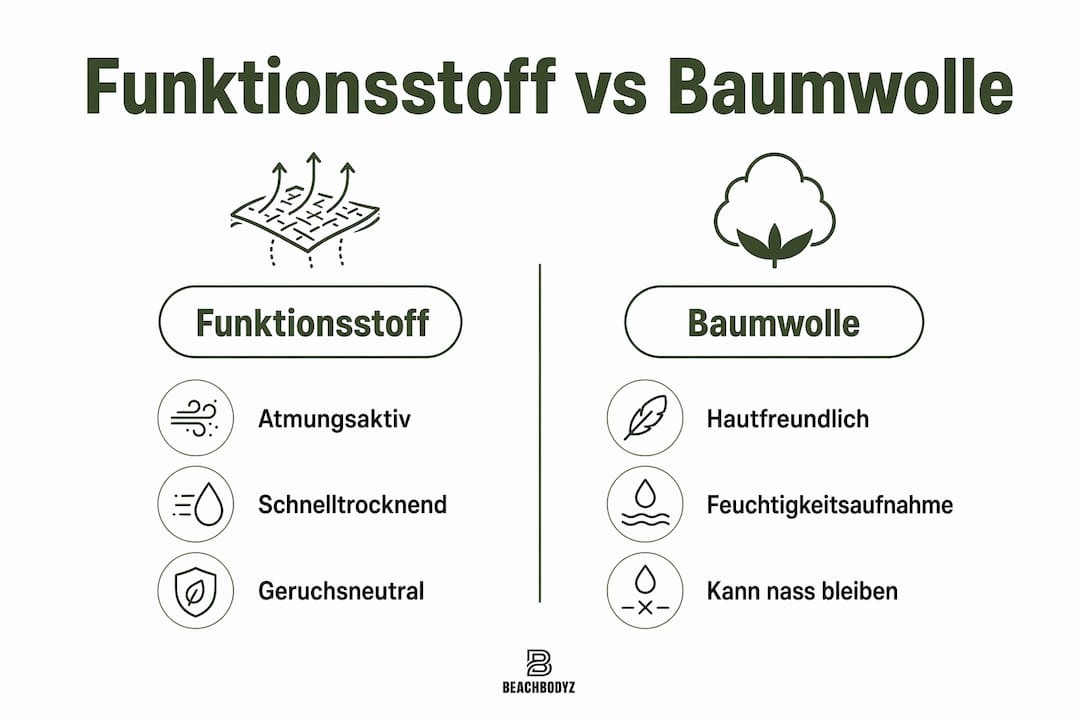
For intense sports, functional fabric is the better choice. It actively wicks away sweat, dries quickly, and keeps body temperature stable. Cotton, on the other hand, absorbs moisture, stays wet for a long time, and can lead to cooling down during breaks. For everyday wear, streetwear, and light activity, cotton scores points with its natural, soft feel.
Quick overview:
- Functional fabric (mostly polyester or polyamide): active moisture wicking, quick drying, high elasticity, ideal for gym, running, outdoors
- Cotton (natural fiber): pleasant on the skin, breathable, but slow drying and no active moisture transport
- Organic cotton (e.g. according to GOTS standard): more sustainable alternative to conventional cotton, less water and chemical use
- Recycled polyester: resource-saving, high-performance, but with microplastic problems during washing
- Sport recommendation: Functional fabric for all training forms with sweat production
- Everyday recommendation: Cotton or organic cotton for comfort and sustainable consumption
Table of contents
- What properties differentiate functional fabric and cotton in sportswear?
- What are the pros and cons of cotton for sports?
- Why is functional fabric superior for intense training?
- Sweat management, odor and temperature: A direct comparison
- How does wearing comfort differ between the two materials?
- Where are cotton and functional fabric best suited?
- What should you look out for when buying sportswear?
- Beachbodyz: GOTS organic cotton and recycled polyester in practice
- Beachbodyz: Sustainable sportswear directly from Germany
- Key findings
- FAQ
What properties differentiate functional fabric and cotton in sportswear?
Cotton is a natural fiber made from cellulose. It is skin-friendly and breathable, absorbs moisture well and feels soft. It is precisely this absorbency that becomes a problem during sports: the fabric stores sweat instead of wicking it away.
Functional fabrics such as polyester and polyamide are synthetically produced. Their yarn structure is designed so that sweat is transported from the skin to the outside by capillary action. The fabric remains dry, and so does the skin.
Properties in comparison:
- Moisture management: Cotton absorbs, functional fabric wicks away
- Drying time: Cotton dries slowly, polyester much faster
- Elasticity: Functional fabrics are generally more elastic and dimensionally stable
- Durability: Polyester is more tear-resistant and does not shrink; cotton can shrink with frequent washing
- Temperature effect: Cotton cools by evaporation, functional fabric actively regulates
Modern polyester fibers are just as breathable as natural fibers and are characterized by high durability.
What are the pros and cons of cotton for sports?
Cotton has clear strengths and equally clear limitations when it comes to sports.
Advantages:
- Soft, natural feel directly on the skin
- Good breathability with light exertion
- Hypoallergenic, well tolerated by sensitive skin
- Inexpensive and widely available
Disadvantages:
- Retains sweat and dries slowly, which leads to cooling down in cold conditions
- No active moisture transport: The fabric becomes heavy and sticky
- Lower dimensional stability with frequent washing and movement stress
- Unsuitable for intense training, as performance decreases due to wet clothing
Silke Off from the Hohenstein Institutes puts it directly: For sports, cotton has the huge disadvantage that it stays wet for a long time once it gets wet. If you then take a break and get wind, you quickly get goosebumps.
Why is functional fabric superior for intense training?
Functional fabrics are built for stress. Their structure promotes rapid evaporation of sweat and keeps the skin dry, even during long sessions.
Strengths in training:
- Active moisture wicking through capillary action
- Quick drying, even after heavy sweating
- High elasticity for full freedom of movement
- Dimensionally stable: retains its fit even after many washes
- Temperature regulation through breathable fabric structure
In addition: At low temperatures and long training sessions, cotton carries the risk of cooling down, as the fabric stores sweat. Functional fabrics avoid this through dynamic moisture management. For running, cycling, climbing or strength training, this is not a detail, but a real performance factor.
Sweat management, odor and temperature: A direct comparison
| Criterion | Cotton | Functional fabric |
|---|---|---|
| Moisture management | Absorbs sweat, stays wet | Actively wicks away sweat |
| Drying time | Slow | Fast |
| Odor formation | Lower, due to less bacterial growth | Higher: Bacteria like Micrococcus thrive on polyester |
| Breathability | Good with light exertion | Good to very good, depending on the fabric structure |
| Temperature regulation | Cools by evaporation, carries risk of cooling down | Actively regulates, keeps body temperature more stable |
| Area of application | Everyday, light activity | Intense sports, outdoors |
One point deserves special attention: functional fabrics can tend to develop odors more quickly despite good moisture wicking, as bacteria thrive better on polyester. Regular washing at a suitable temperature is therefore important.
Care instructions:
- Cotton: wash cold, gentle drying, tends to shrink
- Functional fabric: gentle cycle, no high drying temperatures, control odor development by regular washing
How does wearing comfort differ between the two materials?
Comfort is subjective. Cotton feels warmer, softer, and more natural to many people. This feeling is real and has its place, especially in everyday life.

During sports, perception quickly shifts. Wet cotton sticks to the skin, feels heavy, and causes friction. Functional fabric remains lighter and drier, even if it initially feels smoother or more synthetic.
- Freedom of movement: Functional fabrics with elastane content offer more stretch
- Temperature comfort during breaks: Cotton cools down significantly, functional fabric less so
- Odor perception: Cotton smells neutral longer, polyester can start to smell faster
- Skin compatibility: Cotton is hypoallergenic, polyester can irritate sensitive skin
For everyday wear and streetwear, cotton is often the more pleasant choice. For high-performance sports, the functional advantages of synthetic fabrics clearly outweigh the others.
Where are cotton and functional fabric best suited?
Functional fabric:
- Gym and strength training: high sweat production, freedom of movement necessary
- Running and cycling: moisture management and temperature regulation are crucial
- Outdoor and hiking: protection against cooling down in changing conditions
- Travel: quick-drying, space-saving, easy-care
Cotton:
- Everyday and leisure wear: comfort and natural feel
- Light activities like yoga or walking
- Streetwear and oversized styles: aesthetics and feel are paramount
Blended fabrics made from cotton and synthetics sound like the best of both worlds. In practice, however, they often hinder moisture management and should be avoided for clear application profiles. If you are buying for sports, it is better to choose pure functional fabric. If you are looking for sustainable everyday clothing, choose high-quality organic cotton.
What should you look out for when buying sportswear?
Check material composition:
- For sports: ideally 100% functional fabric (polyester, polyamide) or with a small elastane content for stretch
- For everyday use: 100% cotton or organic cotton, preferably without mixed fiber content for better recyclability
Pay attention to certificates:
- GOTS-certified organic cotton is more sustainable than conventional cotton: less water consumption, no chemical use
- For recycled polyester, pay attention to origin information (e.g. from PET bottles)
Functional requirements:
- Moisture management: capillary action present?
- Elasticity: stretch for full freedom of movement?
- Fit: oversized for everyday wear, close-fitting for sports
Sustainability aspects:
- Recycling of polyester from PET bottles reduces the need for new raw materials
- GOTS organic cotton has a better environmental footprint than conventional cotton
- Microplastics when washing synthetic fibers: special washing bags can help to collect fibers
Price-performance ratio:
- High-quality functional clothing costs more, but lasts longer and retains its shape
- Cheap cotton can quickly shrink or fade
Pro tip: If you want to buy sustainably, look for the GOTS label for cotton and recycling information for polyester. Timeless cuts and good workmanship significantly extend the lifespan of every garment.
Beachbodyz: GOTS organic cotton and recycled polyester in practice
Beachbodyz is a German streetwear brand that combines both material worlds. The brand relies on GOTS-certified organic cotton and recycled polyester, combining sustainability with sporty functionality and having all products fairly produced in the EU.
What this means in concrete terms:
- GOTS-certified organic cotton: no pesticide use, less water consumption, skin-friendly
- Recycled polyester: resource-saving, durable, dimensionally stable
- Fair production in the EU: transparent supply chain, no exploitation
- Climate-neutral shipping and durable cuts instead of fast-fashion throwaway logic
The range includes oversized T-shirts, hoodies, sweatshirts, jogging bottoms and jackets. The cuts are designed for durability and suitable for personalizations such as embroidery. Those who are looking for sustainable sportswear will find products at Beachbodyz that make no compromises on comfort or environmental balance.
Organic cotton according to the GOTS standard is more sustainable than conventional cotton: less water consumption, no chemical use, better working conditions in the supply chain. Recycled polyester, in turn, conserves raw materials, but brings with it the microplastic problem when washing. Beachbodyz addresses both sides through material selection and production standards.
Pro tip: When washing sportswear made from recycled polyester, a special washing bag should be used to catch microfibers. This significantly reduces the microplastic input into wastewater.
Beachbodyz: Sustainable sportswear directly from Germany
If you don't want to choose between comfort and performance, Beachbodyz has a clear answer. The brand combines GOTS-certified organic cotton with recycled polyester in products that are equally suitable for everyday wear and sports activities. Fairly produced in the EU, climate-neutrally shipped, durably processed.
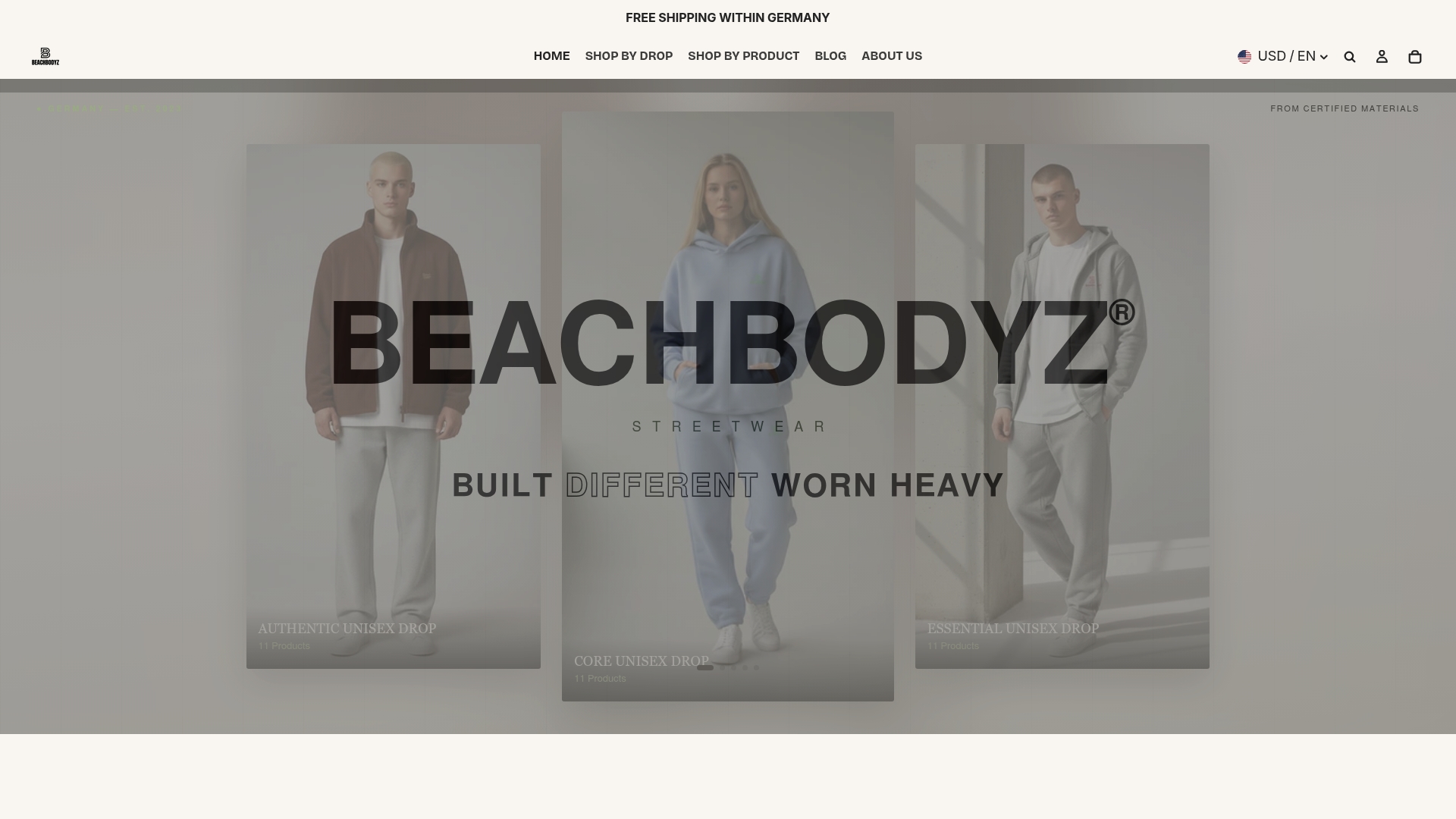
The Identity Jogger Shorts and the Sports Jogging Pants from the Beachbodyz range represent exactly this combination: sustainable materials, sporty function, timeless design. If you want to leave fast fashion behind without sacrificing quality, you will find the direct entry in the Beachbodyz shop.
Key findings
For intense sports, functional fabric is the superior choice, while GOTS-certified organic cotton offers the best combination of comfort and environmental balance for sustainable everyday wear and streetwear.
| Topic | Details |
|---|---|
| Functional fabric in sports | Actively wicks away sweat, dries quickly, prevents cooling down during breaks. |
| Cotton in everyday life | Soft, natural feel, good for light activities and casual wear. |
| Odor formation | Polyester can tend to develop odors faster, as bacteria thrive better on synthetic fibers. |
| Sustainability | GOTS organic cotton and recycled polyester are more environmentally friendly than their conventional counterparts. |
| Beachbodyz | Combines GOTS organic cotton and recycled polyester in fairly produced sportswear from Germany. |
FAQ
Which fabric is better for sports: functional fabric or cotton?
For intense sports, functional fabric is clearly superior: it actively wicks away sweat, dries quickly and prevents cooling down. Cotton is only suitable for light activities or everyday movement.
What exactly is a functional fabric?
Functional fabrics are materials with specific properties such as moisture-wicking, breathability, or odor control. They are usually made of polyester or polyamide and are primarily used in sportswear and outdoor clothing.
Is 100% cotton good or bad for sports?
For intense sports, 100% cotton is not very suitable: it absorbs sweat, stays wet for a long time, and can lead to cooling down during breaks. For everyday wear and light exercise, however, it is comfortable and skin-friendly.
Which material is more sustainable: cotton or polyester?
Neither of the conventional variants is clearly better. GOTS-certified organic cotton has clear advantages over conventional cotton due to less water and chemical use. Recycled polyester conserves raw materials but releases microplastics when washed.
Which sportswear combines sustainability and function?
Beachbodyz uses GOTS-certified organic cotton and recycled polyester in fairly produced sportswear from the EU. The range includes jogging pants, hoodies, and jackets for everyday wear and sports.