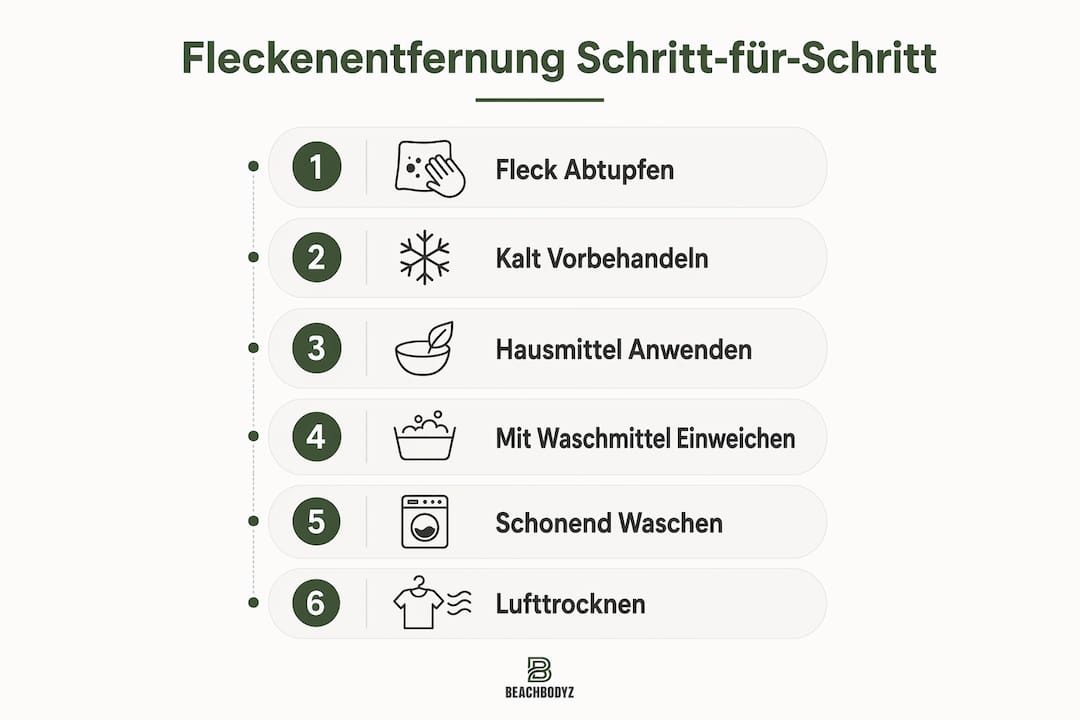
Stains can be reliably removed from cotton if treatment is immediate and in the correct order. First, blot, never rub. Then rinse the back of the stain with cold water. Next, apply a suitable home remedy or stain remover and let it work. Wash according to the care label at the highest permissible temperature. Before drying, check if the stain has completely disappeared.
Brief overview of the key steps:
- Blot the stain immediately with a clean, white cloth
- Turn the fabric inside out, rinse the back with cold water
- Apply a home remedy or stain remover specifically
- Observe the soaking time; for stubborn stains, wait longer
- Wash at the highest temperature allowed by the label
- Check before drying, repeat the process if necessary
How to remove stains from cotton textiles?
Cotton absorbs stains quickly because the fiber is porous. Therefore: act quickly before the stain dries and sets.
- Check the care label. Read washing temperature and drying instructions before applying anything.
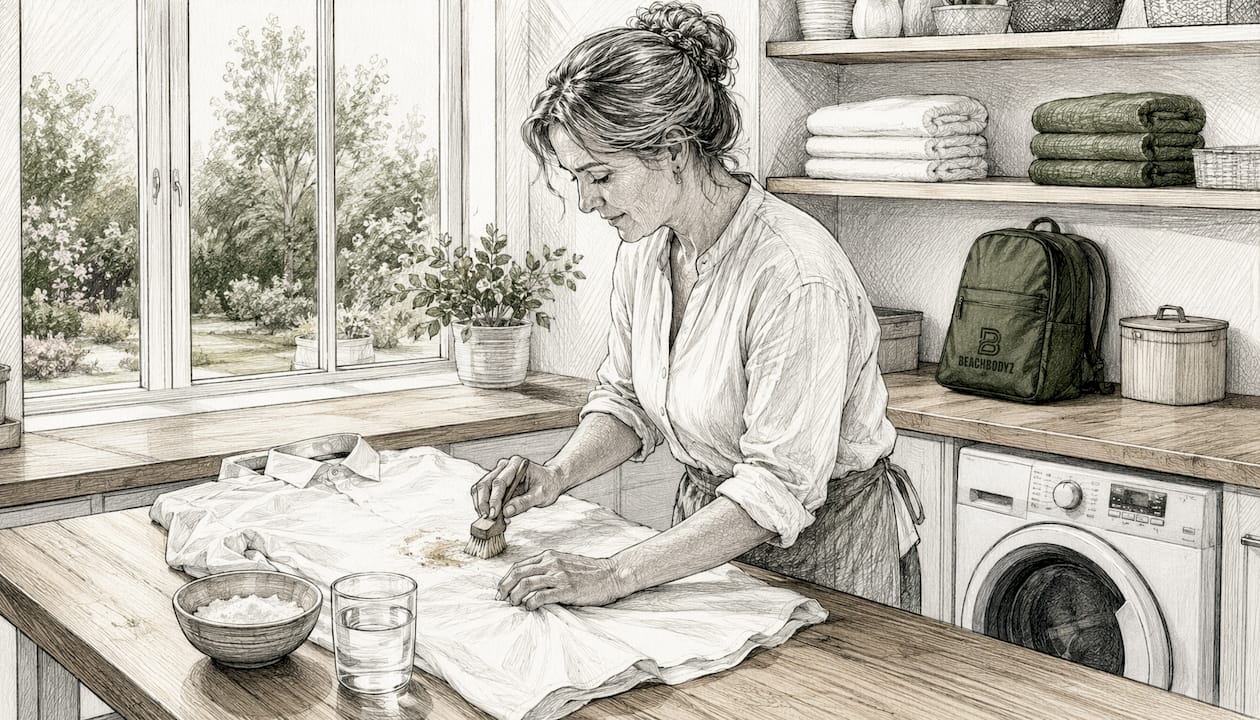
- Blot, do not rub. Gently blot the stain with a clean, white cloth. Rubbing damages the fibers and pushes the dirt deeper into the fabric.
- Rinse the back. Turn the fabric inside out and rinse the back of the stain with cold water. This pushes the dirt out of the fiber, not into it.
- Apply pre-treatment. Apply stain remover, gall soap, or dish soap directly to the stain and gently massage it in. Soaking time depends on the product and stain intensity: 15–60 minutes.
- Wash. Machine wash at the highest temperature allowed by the label. Many cotton textiles can tolerate 60 °C, some even 95 °C.
- Check the result. After washing, check if the stain is gone. Only then dry.
Pro tip: Never put a still-stained garment in the dryer. Heat fixes grease and other substances permanently in cotton, making the stain almost impossible to remove afterward.
What types of stains require what treatment?
Not every stain responds to the same method. The type of stain determines the approach.
Fresh grease stains
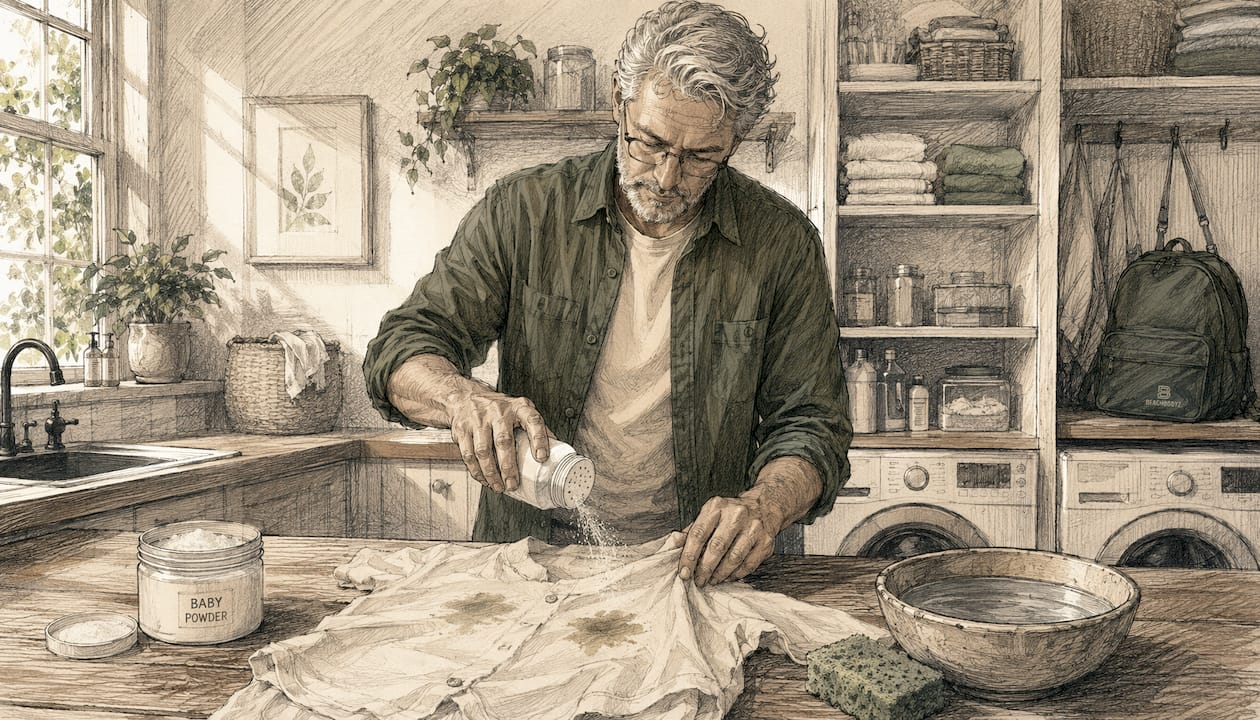
Sprinkle cornstarch or baby powder directly onto the stain. The powder absorbs the grease from the fiber without damaging the fabric. After 15–30 minutes, brush off, then pre-treat with dish soap.
Sweat stains and deodorant stains
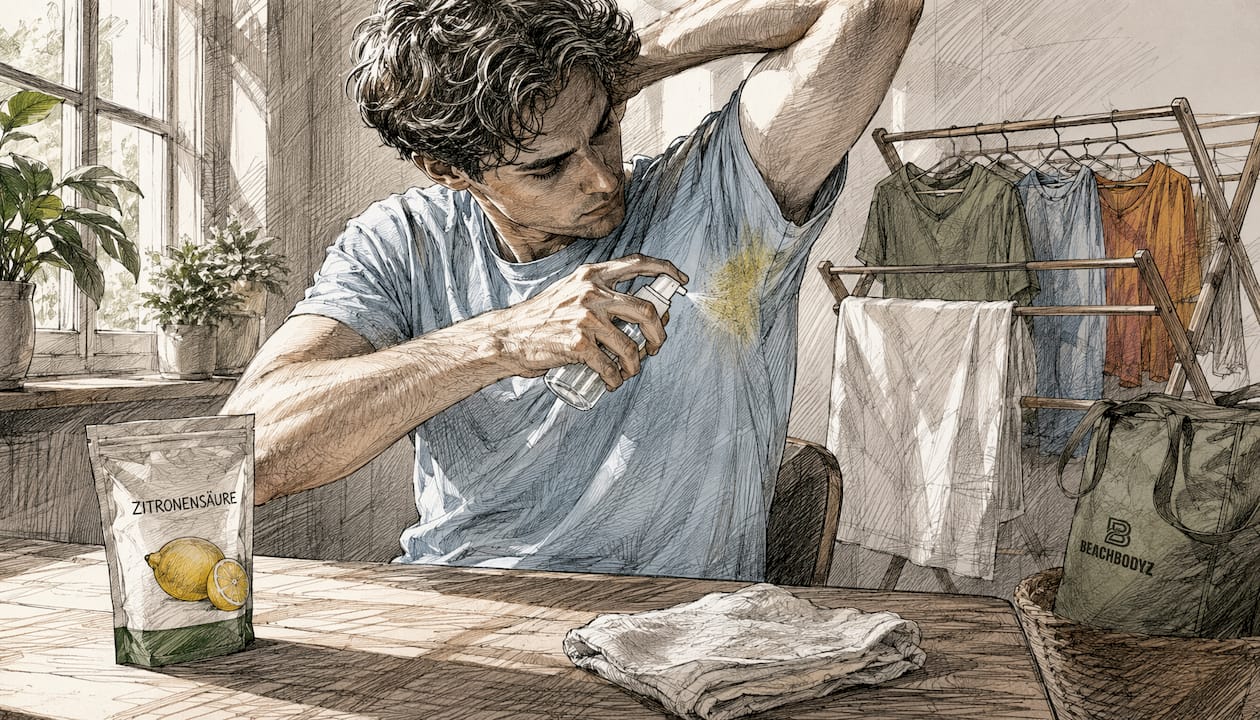
Yellow stains under the arms often result from a chemical reaction between sweat and aluminum salts in deodorants. Acidic household remedies such as citric acid or vinegar dissolve these compounds. Simply prepare a solution of one tablespoon of citric acid and one liter of water and soak the textile for 30–60 minutes.
Dried and old stains
Stubborn or already dried stains need more time. Soaking in water with detergent for several hours also loosens deeply embedded residues. Then wash as normal.
Unknown stains
Always start by dissolving with cold water. Starting with hot or chemical treatment without knowing the type of stain risks irreversible fixation. Cold water is the safe starting point.
White vs. colored cotton
Stronger agents like oxygen bleach are possible for white cotton. For colored fabrics, always test in an inconspicuous area first to avoid color loss. Chlorine bleach is generally unsuitable for cotton.
Pro tip: For odor control with sweat stains, baking soda helps: sprinkle directly on the damp stain, let it sit for 30 minutes, then brush off and wash.
Which home remedies really help with cotton fabrics?
Gall soap, dish soap, vinegar, citric acid, and baking soda are the most proven remedies for cotton. Each works in a different way.
- Dish soap: Contains surfactants that act as emulsifiers. The grease is bound to the washing solution and can be rinsed out. Especially effective for fresh grease stains on cotton.
- Gall soap: Acts enzymatically and dissolves organic stains like sweat, blood, or grass. Dampen the stain, rub in gall soap, let it sit for 30 minutes, then wash.
- Citric acid: Neutralizes odors and dissolves yellow discolorations. Well suited for white cotton; for colored fabrics, test first.
- Baking soda: Acts as a mild abrasive and binds odors. Sprinkle on the damp stain, let it sit, brush off.
- Vinegar: Dissolves limescale and sweat residues. Mix 100 ml of white household vinegar with one liter of water, soak the textile for at least one hour.
Dosage is crucial. Too much product rinses out poorly and can leave residues. A small amount applied precisely is sufficient in most cases. Household remedies like citric acid and vinegar are also a sustainable alternative to chemical stain removers and are gentle on the fabric.
Pro tip: Mix baking soda, a few drops of water, and a splash of vinegar directly on the stain. The foaming reaction loosens deeply embedded particles from the fiber without mechanical pressure.
Washing and after-treatment: How to check for stain removal?
After pre-treatment, machine wash at the highest temperature allowed by the care label. Many cotton textiles tolerate 60 °C without problems, which significantly increases cleaning effectiveness. Blended fabrics with wool or polyamide often require a delicate detergent and lower temperatures.
Important steps after washing:
- Check the textile for residual stains before drying. If a shadow is still visible, repeat pre-treatment and wash again.
- Do not put clothing in the dryer as long as a stain is still visible. Heat permanently fixes residues.
- Cotton tends to shrink in the dryer. Air drying is gentler and offers more control over the result.
- Store ironed cotton textiles flat or hanging to avoid wrinkles.
- Iron cotton at a medium ironing temperature (level 2) while the textile is still slightly damp.
Those who want to keep sustainable cotton clothing for a long time consistently pre-treat stains and gently air dry. This significantly extends the lifespan of the fabric.
Key takeaways
Stains can be reliably removed from cotton if they are immediately blotted, pre-rinsed with cold water, and pre-treated with the appropriate home remedy before the laundry goes into the machine.
| Topic | Details |
|---|---|
| Immediate blotting | Blot the stain with a white cloth, never rub, to avoid fiber damage. |
| Rinse the back | Turn the textile inside out and rinse the stain from the back with cold water. |
| Targeted use of home remedies | Dish soap for grease, citric acid for sweat stains, gall soap for organic stains. |
| Avoid heat | Do not use a dryer before complete stain removal, as heat permanently fixes residues. |
| Colored vs. white cotton | For colored fabrics, test the product in an inconspicuous area first; always avoid chlorine bleach. |
FAQ
How do you remove stubborn stains from cotton?
Soak stubborn stains for several hours in a solution of water and detergent, then pre-treat with gall soap or dish soap and wash at the highest temperature allowed by the label. Repeat the process if necessary.
How do you remove sweat stains from a T-shirt?
Prepare a solution of one tablespoon of citric acid and one liter of water, soak the T-shirt for 30–60 minutes, then wash as normal. Alternatively, white household vinegar works in the same way.
How do you remove dried stains from cotton?
First, rub dried stains with gall soap or dish soap and let them sit for 15–30 minutes to soften the fabric. Then wash in the washing machine and repeat the process if necessary.
How do you treat unknown stains on cotton?
Always moisten unknown stains first with cold water to prevent fixation by heat or chemicals. Only when it is clear whether the stain is water-soluble should the appropriate product be chosen.
Recommendation
- Eco-Friendly Fabric Choices: Sustainable Fabrics for a Better Future – BEACHBODYZ®
- Premium Cotton Basics: The Ultimate Guide for Sustainable and High-Quality Everyday Wear – BEACHBODYZ®
- Streetwear Care Guide 2026 | BeachBodyz®
- Sustainable living: How to make your everyday life more conscious and – BEACHBODYZ®