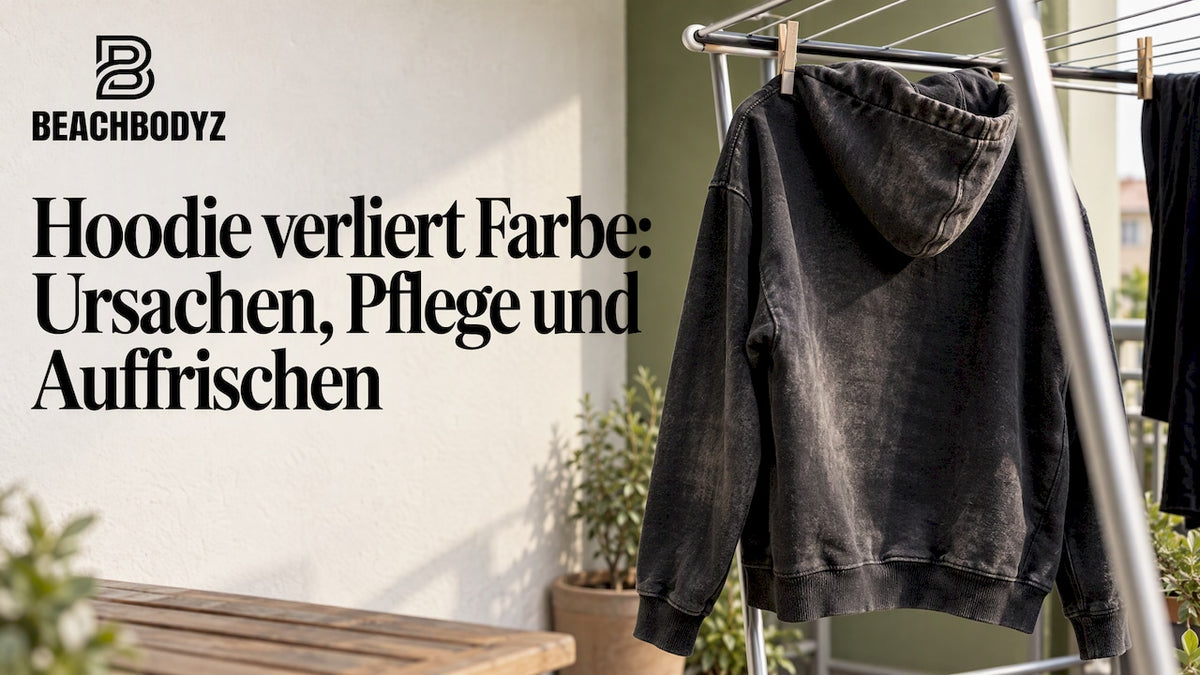
A hoodie fades primarily through washing. Detergents release dyes from the fibers, friction in the drum and high temperatures weaken the bond between dye and fabric, and UV light additionally breaks down color. The most effective countermeasures: 20 to 30 °C, color detergent, washing inside out, and drying outdoors and in the shade. Once washed-out dye does not return. However, a faded hoodie can often be visually refreshed: remove the gray haze, remove lint, or re-dye it darker. Causes, diagnosis, care, and refreshing follow below in tables and steps.
Key Findings
- Main causes of color loss: surfactants in detergent, mechanical friction, high water temperature, dryers, and sunlight.
- Light damage to textile fibers accumulates and cannot be undone. Drying and storing in the shade protects.
- For lightly to normally soiled colored laundry, 20 to 30 °C is usually sufficient.
- Color detergents contain neither bleach nor optical brighteners and are the right choice for colored and dark hoodies.
- Re-dyeing only works in a darker direction. Synthetic fibers do not absorb textile dye, and blended fabrics become paler or mottled.
Table of Contents
- Why a hoodie's color fades
- Faded, grayed, or just pilled?
- Washing a hoodie without color loss: step by step
- Which detergent for colored hoodies
- Drying and storing
- Refreshing faded color
- Material and color when buying
- Hoodies from Beachbodyz
- Frequently asked questions
- Sources
Why a hoodie's color fades
Color loss is no coincidence, but a chain of chemical and mechanical stresses. During washing, surfactants attack color molecules in textiles and release pigments from the fibers. At the same time, friction and high water temperatures weaken the bond between dye and textile material. Every wash cycle removes a small amount of color. For a hoodie washed weekly, this accumulates visibly over a season.
Outside the washing machine, other factors are at work. According to the Dry Cleaning and Laundry Institute, sunlight, perfume, or deodorant can also lead to color loss. Household cleaners and chlorine bleach are also among them. Typically, this results in light spots on collars, armpits, or cuffs, not uniform fading.
How strongly a fabric reacts to these stresses depends on its manufacture. A technical bulletin from Cotton Incorporated lists fiber quality, dye selection, and the bond to the fabric as the decisive influencing factors for color fastness. Care then determines how long this color is preserved.
Causes at a glance
| Cause | Effect on color | Countermeasure |
|---|---|---|
| Surfactants in detergent | release color pigments from the fiber | Color detergent, dose according to soiling |
| High washing temperature | weakens the bond between dye and fiber | 20 to 30 °C |
| Friction and spinning | mechanical abrasion, pilling, dull surface | wash inside out, loosely load the drum, gentle cycle |
| Tumble dryer | Heat and movement cause fibers to age faster | Air drying |
| UV light | photochemical degradation, permanent | dry in the shade, store in the dark |
| Deodorant, perfume, cleaners, chlorine bleach | localized lightening or discoloration | Let products dry completely, avoid contact |
| Limescale and detergent residues | gray haze, color looks dull | dose sparingly, remove residues |
Which colors are particularly sensitive
Not every color loses intensity at the same rate. Due to their pigment structure, intense red tones, strong blue tones, and dark black are particularly sensitive to friction and spinning movements. These are exactly the colors common in hoodies: black, navy, burgundy, forest green.
With light tones such as cream, sand, or gray, color loss is less noticeable. Here, graying or yellowing is more likely. A black hoodie, on the other hand, looks visibly lighter after just a few washes, especially on seams, edges, and cuffs, where friction is highest.
Care by color tone
The basic rules apply to all hoodies. Depending on the color, the focus shifts.
| Color tone | Main risk | Care focus |
|---|---|---|
| Black, anthracite | visible fading on edges and seams | inside out, 20 to 30 °C, color detergent, shade |
| Navy, strong blue | Abrasion, uneven lightening | gentle cycle, low spin speed |
| Red, burgundy | bleeding in the first washes | wash separately or with similar colors initially |
| Green, olive | light damage on shoulders and hood | store protected from light |
| Gray, cream, sand | gray haze, yellowing | dose sparingly, avoid residues |
The first washes of a new hoodie
With new, intensely dyed garments, excess dye can bleed out in the first washes. This is not a sign of poor quality, but loose dye on the surface. For this phase: wash only with similar colors, no light garments in the same drum, inside out and cool. A white cloth rubbed with a little water on a hidden area shows in advance whether more dye is still coming off. After a few washes, the picture stabilizes.
Faded, grayed, or just pilled?
Before taking any measure, a brief diagnosis is worthwhile. Not everything that looks pale is actually lost color. Four appearances are frequently confused.
| Appearance | Typical feature | Cause | What helps |
|---|---|---|---|
| True color loss | uniformly lighter, also visible inside | washed-out or light-degraded dye | Re-dyeing |
| Gray haze | dull, grayish film, fabric feels hard | limescale and detergent residues | remove residues, adjust dosage |
| Lint and pilling | lighter, “fluffy” shimmer, little balls | roughened fiber ends reflect light differently | lint shaver, wash gently |
| Localized spots | light spots on collar or armpits | deodorant, perfume, bleach, cleaner | re-dye, avoid contact in the future |
A simple test: turn the hoodie inside out and compare the inside with the outside. If the inside is significantly more intense, the damage is mainly on the surface, due to friction, lint, or light. If both look equally pale, the dye has been lost from the entire fiber.
The light during comparison also plays a role. The assessment of textile colors depends on the light source: A fabric can look yellower under incandescent light than under daylight. For a fair comparison, daylight by the window, without direct sun, is recommended.
Washing a hoodie without color loss: step by step
The following steps reduce color loss in every wash cycle. They apply to cotton hoodies as well as models made of cotton with recycled polyester.
- Read the care label. Temperature, dryer symbol, and material composition are on the label. An explanation of the information is provided in the article on material labeling in clothing.
- Sort by color. Dark with dark, light with light. Wash new, intensely dyed garments separately or only with similar colors in the first washes.
- Turn inside out. This protects the outside from friction. Printed or embroidered garments benefit particularly from this. Details on embroidery on blended fabrics are included in the article on embroidery on recycled polyester.
- Close the zipper, secure the drawstring. Open zippers rub against other garments. For drawstring care: organic cotton hoodie drawstrings.
- Lower the temperature. According to the German Environment Agency, 20 to 30 degrees are usually sufficient for lightly and normally soiled colored laundry. This protects the color and saves energy.
- Choose a gentle cycle and low spin speed. Less movement means less abrasion. Washing inside out, cooler temperatures, a gentle cycle, and a drum that is not overloaded reduce friction and thus fading.
- Dose detergent correctly. According to the German Environment Agency, overdosing does not lead to better washing results. Excess detergent remains in the fabric and promotes a gray haze.
- Remove immediately. Do not leave damp laundry in the drum. Wrinkles and odors develop faster, and drying is delayed.
Wash less often
Every wash costs a little color. A hoodie that has only been worn briefly often does not need a machine: airing it out overnight on a hanger is usually sufficient. Individual spots can be treated locally with a little water and color detergent.
It looks different after sports. Sweat and deodorant residues settle into the fiber, especially at the armpits and collar. A sweaty hoodie belongs in the laundry, but should be dried beforehand and not lie damp in the laundry basket. For athletes who train several times a week, a rotation of two or more hoodies is recommended, so that each garment needs to go into the machine less often. Tips specifically for training clothes: Gym hoodie before and after training.
Typical mistakes that cost color
- Washing too hot: 40 or 60 °C out of habit, although 20 to 30 °C are sufficient for normal soiling.
- Full detergent for dark colors: Bleach and optical brighteners have a lightening effect on colored fabric.
- Overloaded or half-empty drum: Too full increases friction between the garments, very few heavy garments strike the drum strongly.
- Washing right-side out: The outside then bears all the abrasion.
- High spin speed: Strong spinning additionally stresses the fibers and color.
- Dryer for time reasons: Heat and movement accelerate fiber aging.
- Drying in the sun: UV light permanently breaks down color, especially with dark tones.
- Excess softener: Residues settle on the fiber and can make the color look dull.
Which detergent for colored hoodies
The choice of detergent has a major impact on the color. The Hamburg consumer advice center considers three detergents sufficient for the household and highlights that color detergents, unlike full detergents, contain neither bleach nor optical brighteners.
| Detergent | Bleach and optical brighteners | Suitable for |
|---|---|---|
| Full detergent | contain | white textiles, not for colored hoodies |
| Color detergent | not contained | colored and dark hoodies, sweatshirts, sweatpants |
| Delicate detergent | not contained | wool, delicate laundry, sensitive fabrics |
Bleach and optical brighteners are intended for white laundry. On colored fabrics, they lighten the color or change the color tone. For a black or colored hoodie, full detergent is therefore the wrong choice.
Enzymes also play a role. According to Cotton Incorporated, detergent containing enzymes reduces color changes because they reduce fiber lint. Fewer protruding fiber ends mean a smoother surface on which the color looks richer.
Can detergents refresh faded color?
No detergent replaces washed-out dye. Special care products act on the surface: One manufacturer describes its formula as smoothing brittle fibers and making colors appear more intense, mainly through fewer lint fibers in cotton. The effect is visual. For true color loss, re-dyeing remains.
Drying and storing
After washing, drying determines a large part of color retention. The more often clothes are washed and put in the dryer, the faster they fade. Heat and drum movement strain the color and fibers at the same time.
Air drying: Heavy hoodies dry best lying flat on a drying rack. This prevents the weight of the wet fabric from stretching out the shoulders. Lighter models can dry on a wide hanger.
Shade instead of sun: The Canadian Conservation Institute describes light damage to textiles as cumulative and irreversible. Intense light over a short period of time therefore damages just as much as weak light over a long period of time, and UV components are also present in indirect daylight. For dark hoodies, this means: dry them on the balcony in the shade or indoors, not in the midday sun.
Storage: Folded in the closet, not permanently on the hanger next to the window. A hoodie that hangs in the same place in the light for months often fades unevenly, typically on the shoulders and hood.
Contact with cosmetics: Let deodorant dry completely before dressing, apply perfume to the skin instead of the fabric. This prevents light spots on the collar and armpits.

Refreshing faded color
If the color is already pale, there are three ways depending on the cause. The diagnosis above shows which one is suitable.
Removing the gray veil
If a dull film lies on the fabric, limescale and detergent residues are often the cause. Clear household vinegar with 5% acidity can dissolve this film and make existing colors look clearer. Important for the machine: Vinegar essence with 25% acidity can make seals and hoses porous. Therefore, only diluted household vinegar is used, not vinegar essence. In the long term, an adjusted detergent dosage according to water hardness is especially helpful.
Removing fuzz and pills
Pilling makes fabric look lighter and worn out. A lint razor or clothing comb removes the pills. After that, the original, richer surface is free again. Guide the razor flat and without pressure, on a smooth surface, so that the fabric is not damaged.

Dyeing the hoodie again
In the case of real color loss, re-dyeing remains. Textile dyes for the washing machine are made for this. An example: With the textile dye Back to Black by simplicol, faded black can be refreshed in the washing machine at 40 °C, according to the manufacturer, even in modern water-saving machines.
Three rules determine the result:
- Only darker, not lighter. Light fabrics can only be dyed darker. Lighter is only possible with bleach, which removes color, with mostly an unattractive result.
- Check the material. Synthetic fibers do not take dye. In mixed fabrics, the color turns out significantly paler, or the piece looks mottled.
- Think about the details. Sewing thread, cords, prints and embroideries often consist of a different material than the fabric. They can remain in the old shade after dyeing or dye differently.
Choosing the right shade
For re-dyeing: same shade or darker. A faded black hoodie becomes deep again with black. A faded navy can be refreshed with navy or completely darkened with black. A gray hoodie can become anthracite, dark blue or dark green. From red to green or from gray to yellow does not work reliably, because the old and the new color mix. As a rule of thumb, the result always looks like a mixture of residual color and new color.
This is how re-dyeing in the machine works:
- Check the label: cotton content and allowed washing temperature. The dyeing temperature must not exceed the specification on the label.
- Weigh the dry hoodie. The amount of dye depends on the weight according to the package instructions.
- Wash the hoodie beforehand, so that residues of detergent and fabric softener do not interfere with the color absorption.
- Put the dye into the drum according to the package instructions, place the wet hoodie in it, start the program.
- After dyeing, wash separately until no excess dye comes out.
- Clean the machine according to the manufacturer's instructions before the next light laundry goes in.
When handling textile dye, the safety instructions on the packaging apply, for example regarding gloves and contact with skin and eyes. Keep children away. If you have questions about compatibility with your own machine, the operating instructions of the appliance manufacturer provide information.
Material and color when buying
How long a hoodie keeps its color begins with the manufacturing: fiber quality, dye selection and their bond to the fabric. When buying, the label, seal and workmanship give clues to the quality of a piece. The article recognizing sustainable streetwear offers an overview of this.
The type of fabric also influences how a hoodie ages. The differences between knit and sweatshirt qualities are explained by the comparison Jersey vs. sweatshirt fabric. Those interested in dyeing methods will find background information on plant-based dyes for clothing. Why material and production are reflected in the price is shown by the article why sustainable hoodies are more expensive.
Hoodies by Beachbodyz
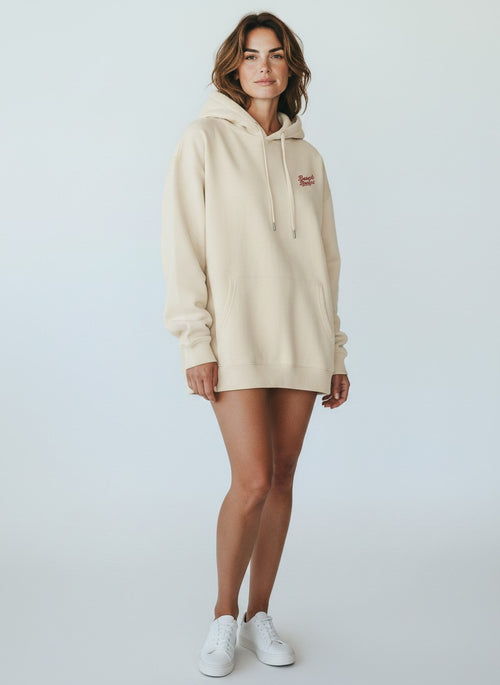
Beachbodyz makes hoodies from GOTS-certified organic cotton and recycled polyester, fairly produced in the EU and shipped climate-neutrally. The cuts are often oversized, the fabrics heavy and designed for long wear. The hoodie collection is priced at €66–78.

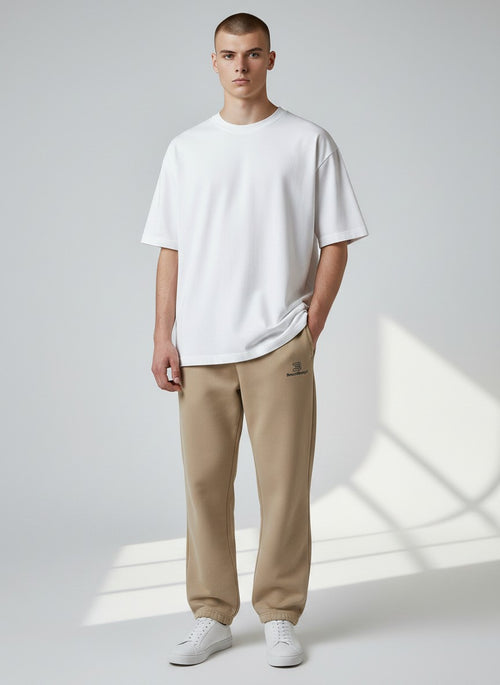
Additionally: sweatshirts for €71 and sweatpants for €59. All pieces are suitable for personalization such as embroidery. With the care steps from this article, they will stay in shape and color for a long time.
Frequently Asked Questions
Can faded color be restored?
Washed-out or light-degraded dye does not return on its own. Visually, a lot can be saved: removing the gray veil and removing fuzz often brings back the original surface. In the case of real color loss, re-dyeing with textile dye in a same or darker shade helps.
Which detergent refreshes colors?
No detergent replaces lost dye. Color detergents without bleach and optical brighteners prevent further color loss. Enzyme-containing products reduce fuzz, making the color look richer.
How do you refresh the color of a jacket?
The steps correspond to those for the hoodie: remove residues, remove fuzz, re-dye if necessary. The material according to the label is crucial. Jackets with a high synthetic fiber content hardly take textile dye, while pieces made of cotton do.
How often should a hoodie be washed?
There is no fixed rule. After short wear, airing out is often enough, after sports or in case of visible dirt, it belongs in the machine. Every avoided wash protects the color and fibers.
Can a hoodie with a print or embroidery be re-dyed?
Yes, with limitations. The fabric takes the dye, but prints and synthetic embroidery threads often do not. The motif then remains in the original shade or only dyes slightly. Check the label beforehand and compare it with the desired result.
Sources
- MORITZ: Why does clothing fade when washed?
- Dry Cleaning and Laundry Institute: Color Change
- Cotton Incorporated: Colorfastness of Cotton Textiles
- Cotton Incorporated: Overview of Fabric Yellowing
- German Environment Agency: Washing and cleaning consciously of the environment
- Vanish: Protect clothing from fading
- Consumer Center Hamburg: Which detergents do I really need?
- Perwoll: Does the sweater pill?
- Canadian Conservation Institute: Textiles and the Environment
- Deavita: Refreshing colored laundry with vinegar
- simplicol: Color series
- DAS HAUS: Dyeing clothing
- KurzwarenKatze: Freshness cure for your clothes