You can recognize fair production by certified labels, a visible license number on the tag, and traceable supply chain transparency. The most reliable standards in Central Europe are GOTS, Grüner Knopf, Fairtrade, and OEKO-TEX MADE IN GREEN. Four quick checks help immediately:
- Check the logo: Is a recognized label printed on the hangtag or care label?
- Look for the license number: A genuine GOTS label always carries a license number, which can be verified in the official certificate registry.
- Consult Siegelklarheit: The Siegelklarheit (Label Clarity) portal of the German Federal Ministry for the Environment assesses labels based on credibility and depth of inspection.
- Read the material information: Percentage Angaben of organic fiber content (e.g., "95% organic cotton") are mandatory for GOTS products.
If any of this information is missing, caution is advised.
Key Takeaways
You can reliably identify fair production by certified labels with license numbers, independent audits, and traceable supply chain transparency.
| Topic | Details |
|---|---|
| Labels and License Numbers | GOTS, Grüner Knopf, and Fairtrade are reliable reference points; verify license numbers in the registry. |
| Using Siegelklarheit | The Federal Ministry for the Environment's portal assesses labels based on independence and depth of inspection. |
| Reading GOTS labeling | "Organic" means ≥ 95% organic content, "made with organic" means ≥ 70%; license number is mandatory. |
| Prioritizing Durability | Seam quality and material choice (e.g., GOTS organic cotton) extend lifespan and reduce environmental impact. |
| Beachbodyz | Offers GOTS-certified streetwear from EU production with accessible material specifications and certificate links. |
Table of Contents
- What exactly do "Fair Fashion" and fair production mean?
- Which textile labels are considered reliable in Central Europe?
- How do you verify a label and expose false promises?
- Shopping Checklist: What to check before buying
- Secondhand, repair, and durable choices as part of fairness
- What does GOTS really guarantee, and how do you check a GOTS product?
- Why Beachbodyz relies on fair production
- Beachbodyz: Buy GOTS-certified streetwear directly
- Editorial Perspective: What labels achieve and where they encounter limitations
- Sources
- FAQ
What exactly do "Fair Fashion" and fair production mean?
Fair production is not a marketing term, but a measurable concept with three dimensions: social standards, environmental requirements, and economic fairness.
Social standards refer to the ILO core labor standards: prohibition of child and forced labor, freedom of association, safe working conditions, and reasonable working hours. A label that covers this dimension requires regular audits in production facilities.
Environmental requirements include the use of organic cotton or other ecologically certified fibers, restricted chemical use according to positive lists, and wastewater treatment in dye houses.
Economic fairness means minimum prices above market price, Fairtrade premiums for community projects, and long-term trade relationships that create planning security for producers.
Terms like "sustainable," "climate-neutral," or "environmentally friendly" alone do not guarantee any of this. The Verbraucherzentrale (Consumer Advice Centre) points out that such statements, without independent inspection bodies and public audit reports, should be classified as greenwashing. As of September 2026, EU regulations will mandate verifiable environmental claims, which will reduce greenwashing risks in the medium term.
Verification mechanisms that really matter:
- Independent third-party verification by accredited certifiers
- Publicly accessible Scope Certificates and audit reports
- License numbers retrievable in official databases
Which textile labels are considered reliable in Central Europe?
Not every label covers the same areas. Some focus on chemicals, others on social standards, still others on the entire supply chain. An overview:
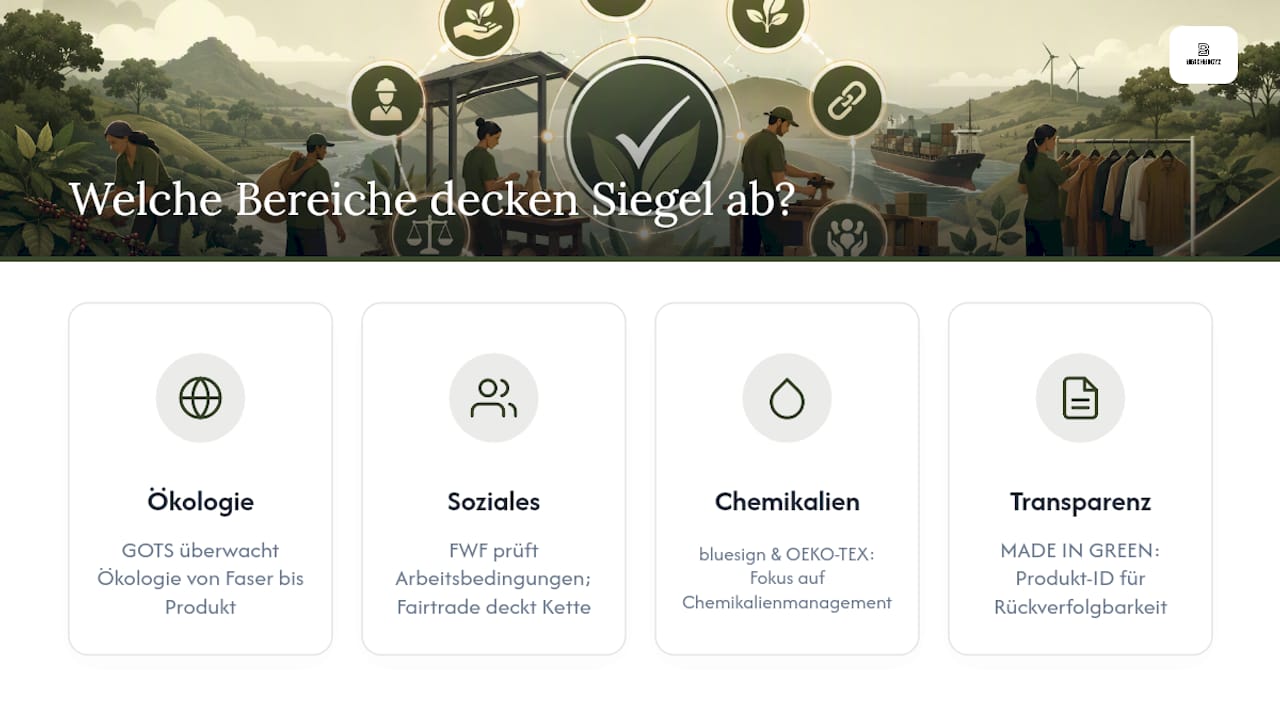
GOTS (Global Organic Textile Standard) is one of the most comprehensive standards: it monitors ecological and social requirements from fiber to finished product. License numbers, Scope Certificates, and annual on-site inspections are mandatory. More on this in the GOTS deep-dive section below.
Grüner Knopf (Green Button) is a state-backed label from the Federal Ministry for Economic Cooperation and Development. It audits both companies and specific production steps such as sewing and dyeing and is considered a meta-label that combines several existing standards and monitors their compliance.
Fairtrade / Fairtrade Textile Standard: The Fairtrade Cotton label stands for traceable, fairly traded raw cotton. The Fairtrade Textile Standard goes further and covers the entire textile value chain. Audits are carried out by FLOCERT as an independent body.
OEKO-TEX MADE IN GREEN combines harmful substance testing (according to OEKO-TEX Standard 100) with requirements for production conditions. Products receive a unique product ID, which consumers can use to trace the supply chain online. OEKO-TEX Standard 100 alone, however, only tests for the absence of harmful substances, not the social conditions in production.
bluesign® focuses on chemical management and occupational safety in the production chain. This label is particularly common in the outdoor segment and applies to weaving mills and dye houses, not necessarily to the raw fiber.
Fair Wear Foundation audits working conditions in garment factories based on a code of conduct that relies on ILO standards. Member brands are assessed on their progress and must report annually.
The label is considered one of the most demanding on the market.
Der Blaue Engel (Textilien) (The Blue Angel, Textiles) is a German state environmental label that assesses the absence of harmful substances and resource conservation in production. Social criteria are less comprehensive than with GOTS or IVN Best.
Cotton made in Africa (CmiA) promotes conventionally grown cotton from African smallholder farms with a focus on training, water efficiency, and social standards. The label is not an organic standard, but a proof of fairness for the raw material.
Greenpeace analysis shows that credible labels consistently exhibit comprehensive supply chain coverage, strict chemical management, and transparent audits. Labels that cover only one of these areas are weaker as standalone evidence.
How do you verify a label and expose false promises?
The verification sequence is short: read the label, note the license number, compare with the database, request an audit report if necessary.
-
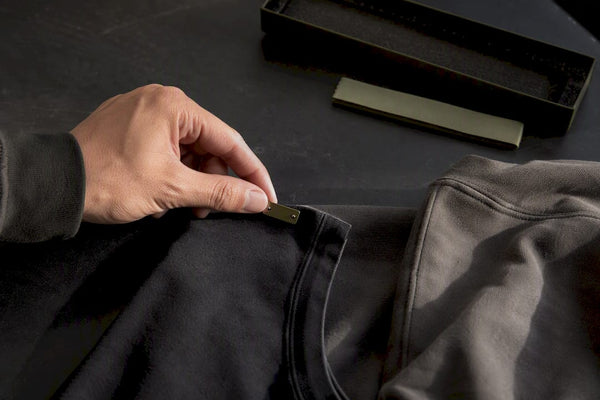
Check the label and hangtag. The logo, additional information (e.g., "organic" or "made with organic"), and license number must be visible. For GOTS, the license number is usually on the care label or hangtag, often in small print below the logo.
-
Compare the license number in the certificate registry. For GOTS: The official database at global-standard.org lists all certified operations with Scope Certificates. For Fairtrade: FLOCERT operates a public certificate registry. A number that does not appear there is not valid proof.
-
Consult Siegelklarheit. The portal assesses labels according to criteria such as the independence of the inspection body, transparency, and scope. According to the Verbraucherzentrale, Siegelklarheit is the recommended first point of contact for consumers.
-
Request an audit report or transaction certificate. Reputable brands provide Scope Certificates or transaction certificates upon request. A lack of willingness to do so is a warning sign.
-
Contact the brand directly. A simple email asking for the certifier and license number quickly shows whether a company operates transparently.
Pro Tip: *Vague percentage indications like "from sustainable cultivation" without mentioning a certifier or license number are not proof.
Shopping Checklist: What to check before buying
Before purchasing, whether in a store or at an online checkout, these points will help:
- Is the logo of a recognized label visible on the tag or product page?
- Is a license number or product ID present and retrievable in the database?
- Material specification with percentage (e.g., "95% organic cotton, GOTS certified")?
- Country of manufacture indicated and plausible for the price level?
- Is the label rated as credible by Siegelklarheit or in the VerbraucherFenster Hessen?
Red Flags indicating Greenwashing:
- Terms like "eco," "green," or "sustainable" without any label or proof
- Proprietary company labels without naming an independent auditor
- Very low price for supposedly organic-certified items (fair wages and certification costs are reflected in the price)
- No information about fiber content or country of production
- Label issued exclusively by the company itself
With secondhand clothing, labels are sometimes missing. In that case, it's worth asking the seller about the original manufacturer or checking the original product page via QR code or brand website.
Secondhand, repair, and durable choices as part of fairness
Sustainability often means: buy less, wear longer, care better. Secondhand and repair are effective levers that do not replace a label but complement it.
Concrete alternatives to buying new:
- Secondhand: Platforms and local stores offer well-preserved clothing without new production effort.
- Clothing swaps: Swap meets in clubs, libraries, or online reduce demand for new goods.
- Repair and alteration: A torn hem or a broken zipper does not justify a new purchase. Tailors and repair cafes significantly extend lifespan.
- Choose high-quality materials: GOTS organic cotton and recycled fibers are often more densely woven and more durable than conventional cheap goods.
When buying, pay attention to seam quality: a seam density of at least 4 to 5 stitches per centimeter, overlocking on edges, and reinforcements at stress points like pockets and sleeves are signs of durability. A garment that lasts five years has a significantly lower environmental impact per day of wear than a cheap one that is discarded after a year.
For disposal: Donate well-preserved clothing to social department stores or swap meets. Heavily damaged textiles go into collection containers for textile recycling. Upcycling, i.e., repurposing into new products, is another option for creative households.
What does GOTS really guarantee, and how do you check a GOTS product?
GOTS is one of the most comprehensive standards for ecological and social minimum requirements in the textile industry. It monitors fiber content, processing steps, and testing procedures from raw fiber to finished product.
Essential GOTS points according to GOTS Standard Version 7.0:
- Minimum percentages: Products labeled "organic" contain at least 95% organic fibers. The label "made with organic" requires at least 70%.
- License number: Every certified operation receives a license number. This must be visible on the product.
- Scope Certificate: All processing stages (spinning, weaving, dyeing, garment manufacturing) require a valid Scope Certificate.
- Positive list for chemicals: Only approved auxiliary substances may be used; heavy metals and certain dyes are prohibited.
- Annual on-site inspections: Accredited certifiers inspect all operations at least once a year. Transaction certificates accompany every delivery.
Statistical Identification Features: A GOTS product bears either "organic" (≥ 95% organic content) or "made with organic" (≥ 70% organic content) as a mandatory indication next to the logo and license number.
Concrete inspection steps on the label: Look for the logo, read the additional information ("organic" or "made with organic"), note the license number, then compare it in the Scope Certificate register at global-standard.org. Only approved certifiers are allowed to release GOTS labels. If the license number is missing, the product is not GOTS-certified, even if the logo is printed. More on how Beachbodyz labels its own GOTS products is shown in the Beachbodyz GOTS guide.
Why Beachbodyz relies on fair production
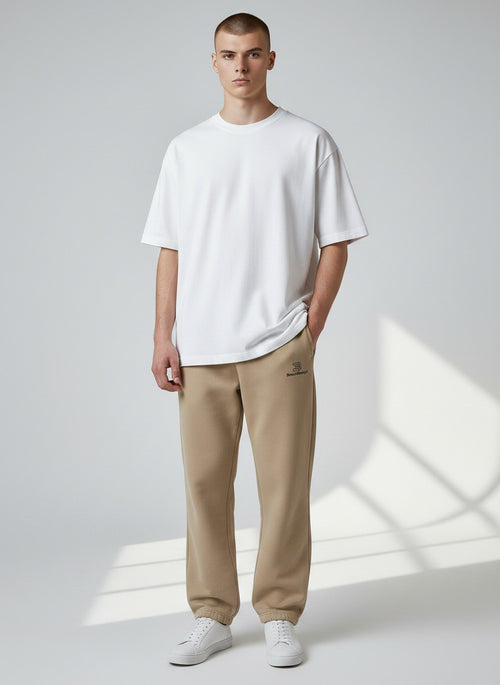
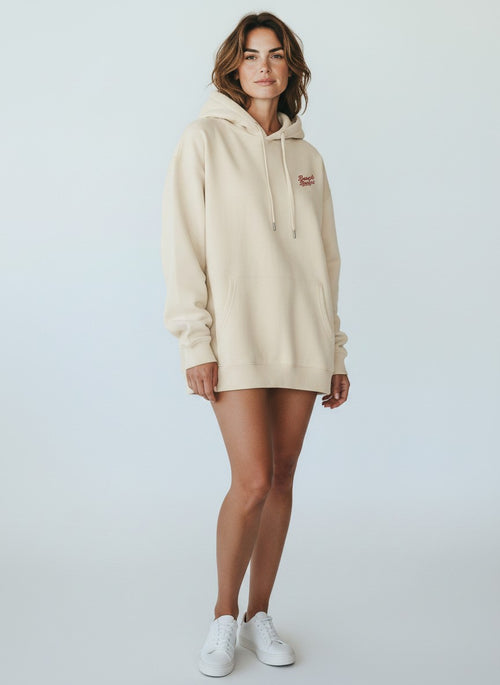
Beachbodyz exclusively uses GOTS-certified organic cotton and recycled polyester for its streetwear collections. All products are fairly produced in the EU. This means: Scope Certificates are available, material information with fiber percentages is visible on every product page, and the supply chain is traceable upon request.
Durability is not a marketing promise, but a design decision. Oversized cuts made from densely woven GOTS organic cotton jersey withstand mechanical stress longer than thinly woven conventional goods. The brand explains its material selection and sustainability strategy in its sustainability blog and refers to specific certificate links there. Climate-neutral shipping complements the production strategy.
Beachbodyz: Buy GOTS-certified streetwear directly
Those who not only want to recognize fair production but also actively support it will find products at Beachbodyz that comply with the inspection rules described in the article: GOTS-certified organic cotton, recycled polyester, EU production, and climate-neutral shipping.
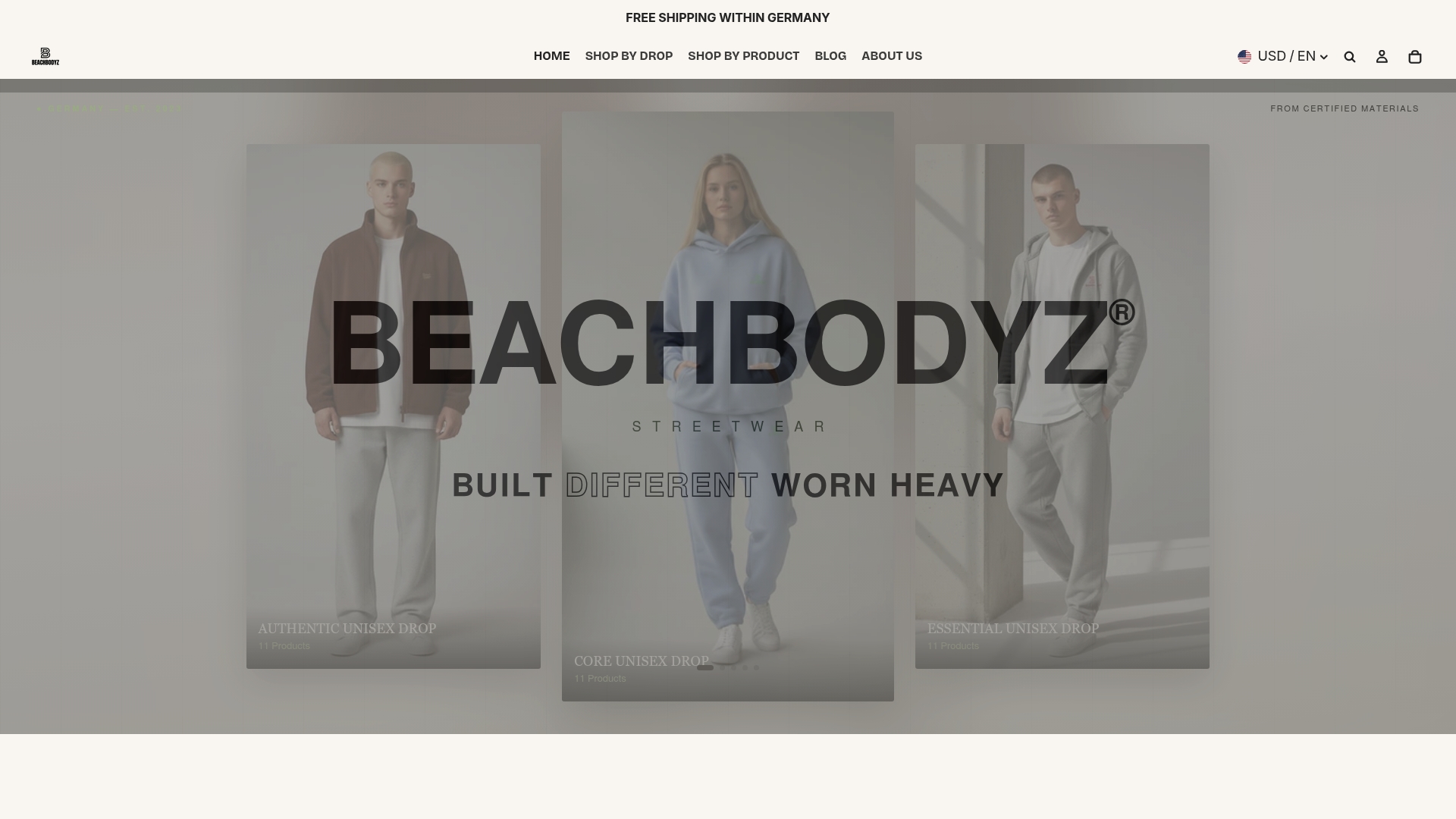
The range includes oversized T-shirts, hoodies, sweatshirts, jogging pants, fleece jackets and accessories. Material information with fiber content and certificate details are available on each product page. If you have questions about Scope Certificates or license numbers, you can contact customer service directly. Returns are easy. You can find the complete shop with all certified products at Beachbodyz.
Editorial Perspective: What Labels Achieve and Where They Reach Their Limits
Labels are the most reliable tool consumers have today. But they are not a free pass. Anyone who believes that a GOTS hoodie automatically does everything right overlooks the actual question: How much do I buy in the first place?
The debate about fair production focuses almost exclusively on certificates. This is understandable, because labels are visible, verifiable, and communicable. But Greenpeace rightly pointed out in its analysis that true sustainability also includes production quantities and longevity. A certified T-shirt that is deformed after two washes is ecologically worse than an uncertified one that lasts ten years.
The second blind spot: many consumers check the label, but not its scope. OEKO-TEX Standard 100 means that the finished product is low in harmful substances. It says nothing about the working conditions in the sewing factory. If you want to check social standards, you need GOTS, Fair Wear Foundation, or the Fairtrade Textile Standard. Confusing the two is a common mistake that the labels themselves do not correct.
And then there's the price argument. Fair wages, certification costs, and ecological production standards are reflected in the sales price. A GOTS T-shirt for 8 euros is either incorrectly declared or savings are being made somewhere in the chain. This is not an attack on cheap fashion, but a calculation.
EU regulation from 2026 will improve a lot. Verifiable environmental claims will become mandatory, and private label labels without third-party verification will be harder to place. But until then, the responsibility for verification remains with the consumer. And the five minutes a database comparison takes are well spent.
Sources
Reliable sources for research and certificate verification:
- Recognizing Greenwashing: How to Expose False Eco-Promises | Consumer Advice Centre
- Fairtrade Mark | Fairtrade International
- GP_Label-Guide_Bekleidung.pdf
FAQ
How do I recognize fair clothing at a glance?
Fair clothing bears a recognized label such as GOTS, Grüner Knopf (Green Button), or Fairtrade on the tag, supplemented by a license number that can be verified in the official certificate register.
Where is fair clothing produced?
Fair clothing can be produced worldwide; the country of manufacture is not decisive, but rather whether the production facilities are independently audited and certified. Beachbodyz produces its GOTS-certified streetwear fairly in the EU.
Which labels are considered particularly credible?
What distinguishes fair fashion from conventional fashion?
Fair Fashion meets verifiable standards in three areas: decent working conditions according to ILO norms, environmentally friendly production with limited chemical use, and economic fairness through minimum prices and premiums for producers.