Chenille Embroidery: An Overview of Techniques, Yarns, and Production
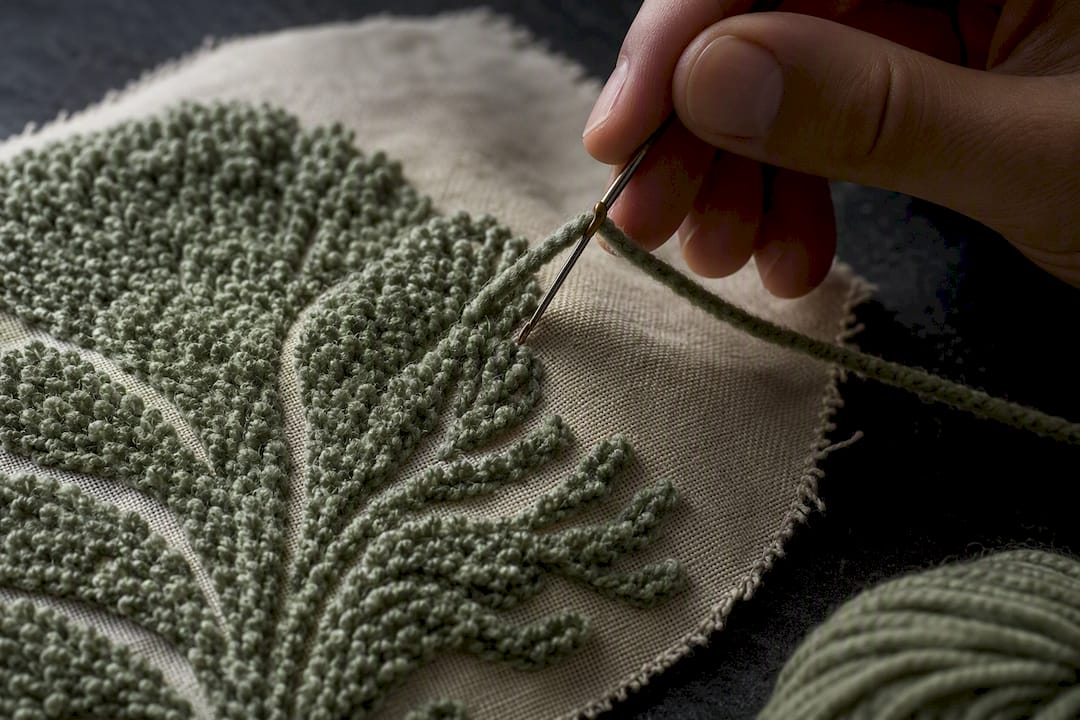
Chenille embroidery is a loop embroidery that gives textiles a velvety, raised surface using moss and chain stitches. The technique creates a three-dimensional effect and is particularly suitable for patches, varsity logos, and large lettering. It is produced on special K-head machines with a single-thread system, not on conventional embroidery machines.
In short:
- Chenille embroidery uses special K-head machines with a single-thread system to create the characteristic 3D and soft effect.
- For a clean result, the spacing, corners, and chain stitch length must be carefully observed to avoid fraying or holes.
- The choice of yarn, especially bulky chenille yarn in size 12, influences the appearance, durability, and environmental footprint of the appliqué.
- Machine settings such as stitch length, needle height, and tension values are essential for even loops and to prevent thread breakage.
- Sustainable clothing made from organic cotton or recycled polyester provides optimal conditions for stable and durable chenille embroidery.
Table of Contents
- What is Chenille Embroidery? Origins and Basic Principles
- How do moss stitch and chain stitch differ?
- Which yarns are suitable for Chenille Embroidery?
- Which machine settings are crucial for Chenille?
- How does digitization work for Chenille Machines?
- Which carrier materials and attachment methods work best?
- How do you properly care for Chenille Embroidery?
- Why sustainability matters in Chenille yarns
- What the industry often misunderstands about Chenille Embroidery
- Why Beachbodyz clothing is well suited for embroidery
- Sources
- FAQ
What is Chenille Embroidery? Origins and Basic Principles
The term comes from the French word for "caterpillar". And that is exactly what the surface feels like: soft, fluffy, and slightly wavy. Unlike flat embroidery, where the thread lies flat on the fabric, Chenille forms small loops that build up into a velvety texture. This loop formation creates the characteristic 3D effect, which distinguishes the technique from all other classic embroidery.
Chenille is used primarily where appearance and feel are more important than fine details:
- Appliqués and patches for jackets, backpacks, and caps
- Varsity letters on college jackets and sportswear
- Large logos and lettering on hoodies and sweatshirts
- Decorative appliqués in the fashion industry
Anyone who has ever held a varsity patch knows how important the design processes for team clothing are. It is precisely this volume that makes the technique so popular, especially among streetwear brands that focus on a bold visual presence.
How do moss stitch and chain stitch differ?
Two stitch types form the technical backbone of every Chenille appliqué, and both serve completely different purposes. The moss stitch creates the fluffy surface by building up the thread in repeated loops. The chain stitch, on the other hand, outlines and stabilizes, usually sitting at the edge of a motif or marking fine lines that the moss stitch cannot cleanly depict.
For a clean result, a few firm rules apply that are difficult to ignore in practice:
- The chain outline needs a distance of about 1 to 2 millimeters from the moss surface, otherwise the contours will blur.
- Corners under 90 degrees should be avoided because the needle cannot form a clean loop there.
- The stitch distance must match the chosen stitch density, otherwise the surface will be either too thin or too stiff.
These rules for stitch lengths and chain distances are found in the pattern book for K-head machines and are not a recommendation, but a technical necessity. Anyone who ignores them will get frayed edges or holes in the moss surface.
Pro tip: Test every new motif at a small resolution first. Chenille quickly loses readability in letters under about two centimeters in height because the moss loops simply swallow up fine details.
Which yarns are suitable for Chenille Embroidery?
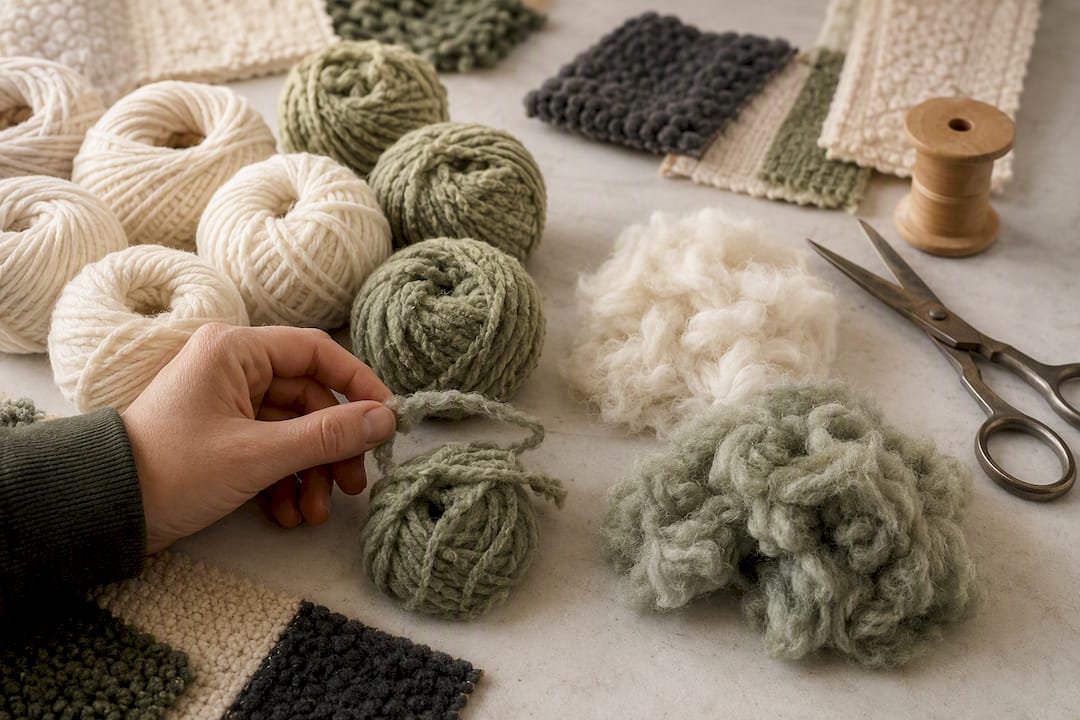
The choice of yarn determines both appearance and durability. The industry standard is yarn size 12, a bulky yarn that brings enough mass to form the characteristic loops without appearing too heavy or stiff.
An example from practice: Madeira Chenille 12 is specially developed for Chenille machines and is not compatible with conventional embroidery machines. Important material points at a glance:
- Smooth continuous filaments ensure even loop formation
- Up to 34 shades are available, depending on the manufacturer
- Recycled polyester according to the GRS standard improves washability and environmental footprint
- The needle choice must match the yarn size, otherwise the thread will break at high stitch density
It is precisely this combination of volume and recycled material that has made GRS-certified yarns the first choice for many producers nowadays. Anyone who produces sustainable clothing should not treat this aspect as a side note, but as a fixed part of material planning.
Which machine settings are crucial for Chenille?
Chenille machines operate fundamentally differently from classic embroidery machines. They use a single-thread system with a hook needle, controlled via a so-called K-head. Each head has several stepper motors that adjust the needle, fabric presser foot, and thread placer independently, allowing for individual settings per yarn position.
The following parameters directly influence quality and durability:
- Stitch length: determines the density and volume of the moss surface
- Needle height: controls how deeply the loop is pulled into the fabric
- Needle spacing: crucial for the visual uniformity of the moss surface
- Presser foot distance: prevents crushing on thicker carrier fabrics
- Thread tension: must be individually adjusted for each yarn position
A common beginner mistake: setting stitches under 0.5 millimeters in length. This significantly increases the risk of thread breakage and produces irregular loops.
Pro tip: If the moss surface looks bare in places, it is almost always due to the thread tension, not the yarn itself. Check the tension values first before changing the material.
How does digitization work for Chenille Machines?
An artwork is not simply scanned and embroidered; it must be prepared for Chenille logic. Software such as Wilcom or Tajima offers its own tools for this, such as the Compound Chenille function in Wilcom, which manages moss and chain objects separately.
The process typically follows these steps:
- Simplify the artwork, remove fine details that Chenille cannot depict anyway
- Assign the appropriate stitch types to areas and lines, moss for areas, chain for edges
- Define borders and fills, including entry and exit points for each color change
- Provide accompanying information for the machine operator, such as yarn colors and order
Before actual production, a sample with the exact target material, yarn, and backing is recommended. This takes time, but prevents costly misproductions in larger quantities.
Which carrier materials and attachment methods work best?
Not every fabric can withstand Chenille directly. Felt has established itself as a carrier material for patches because it is stable enough to withstand the loop tension without warping. Köper fabric is better suited for direct embroidery on finished garments.
A proven production sequence looks like this:
- Apply a stabilizer layer, usually as a grid or zigzag structure
- Embroider the moss surface, then add the chain outline
- Add edge finishing, such as a Merrow or satin edge
- Cut out and check for durability before the goods are further processed
For attachment, three options are available: sewing, heat pressing, or Velcro. Sewing significantly increases durability compared to pure heat pressing, especially for garments that are washed frequently. Velcro is only an option if patches are intended to remain interchangeable, such as on uniforms or collectibles.
How do you properly care for Chenille Embroidery?
Chenille forgives little when cared for incorrectly, but the effort is manageable. A gentle wash cycle at a low temperature is usually sufficient. The dryer should be avoided, because heat and friction cause the loops to felt and the contours to lose their sharpness. Direct ironing destroys the structure completely; if smoothing is necessary, place a cloth in between and iron from the reverse side.
On the production side, durability can be improved beforehand:
- Clean chain boundaries prevent moss loops from coming loose later
- Thermal backings stabilize the back against fraying
- A friction test before series production shows how stable the loops remain under stress
- A wash test with three to five cycles reveals weak points before the goods are shipped
Anyone who skips these tests risks complaints only after the sale, when rectification is hardly possible anymore.
Why sustainability matters in Chenille yarns
Recycled yarns are no longer a niche, but a quality feature. Beachbodyz processes organic cotton and recycled polyester in its collections, produced fairly in the EU. This material base is well suited to high-quality embroidery, because a stable, well-processed carrier fabric withstands the stress of Chenille appliqués significantly better than thin fast-fashion goods.
What the industry often misunderstands about Chenille Embroidery
Many treat Chenille as a purely design decision, but it is first and foremost a technical problem. Anyone who does not prepare the file cleanly or ignores the thread tension will not get a beautiful look, but rather rejects. The temptation is great to digitize Chenille like normal flat embroidery and skip the parameters from the pattern book. This is exactly what leads to the most common complaints: bare spots, frayed edges, uneven loop height.
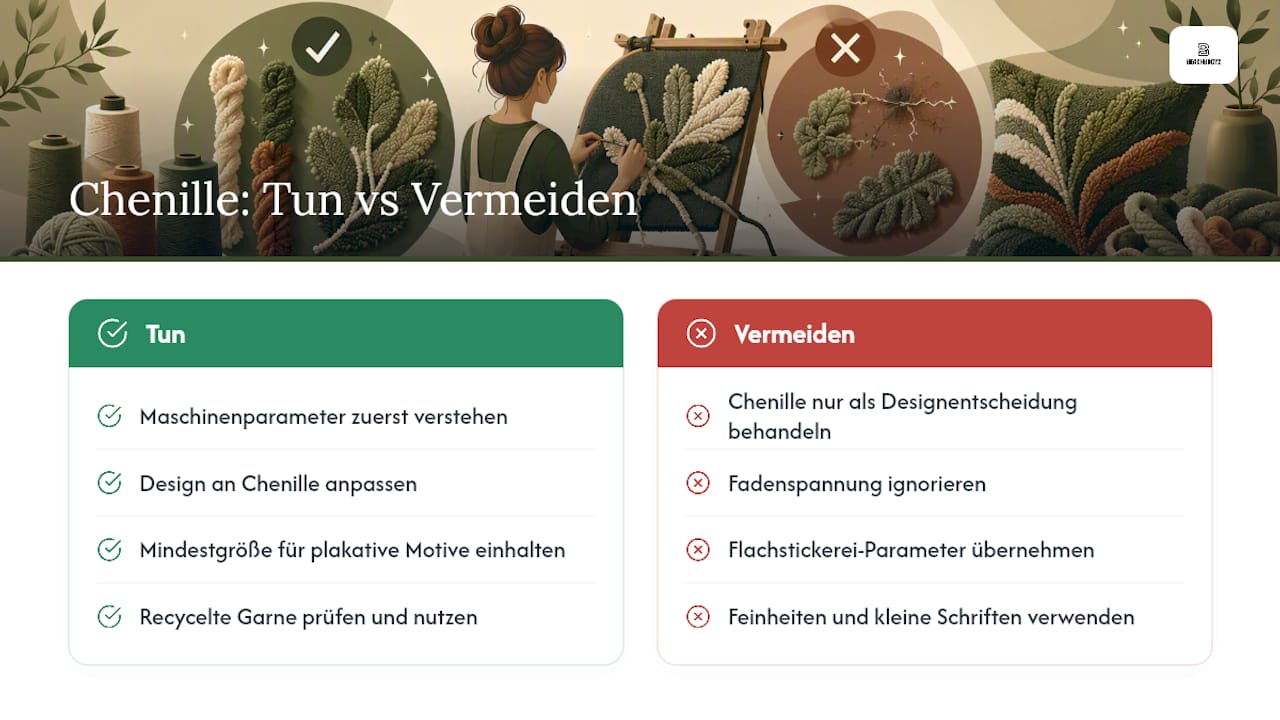
What many also underestimate: Chenille is not a tool for fine details. Small lettering, thin lines, complex logos—none of this works simply with this technique. Anyone who plans striking motifs and respects the minimum size will get a result that lasts for years. Anyone who tries to squeeze a delicate company logo into it will be disappointed.
My priority for anyone who is new to this: first understand the machine parameters, then adapt the design, never the other way around. And when choosing yarn, looking at recycled options is worth it not only for environmental reasons, but because they are now technically equivalent.
— Ahmed
Why Beachbodyz clothing is well suited for embroidery
A heavy, well-processed fabric is half the battle for a successful Chenille appliqué. Sustainable collections often rely on high-quality materials instead of thin mass-produced goods, which makes the difference in personalization noticeable.
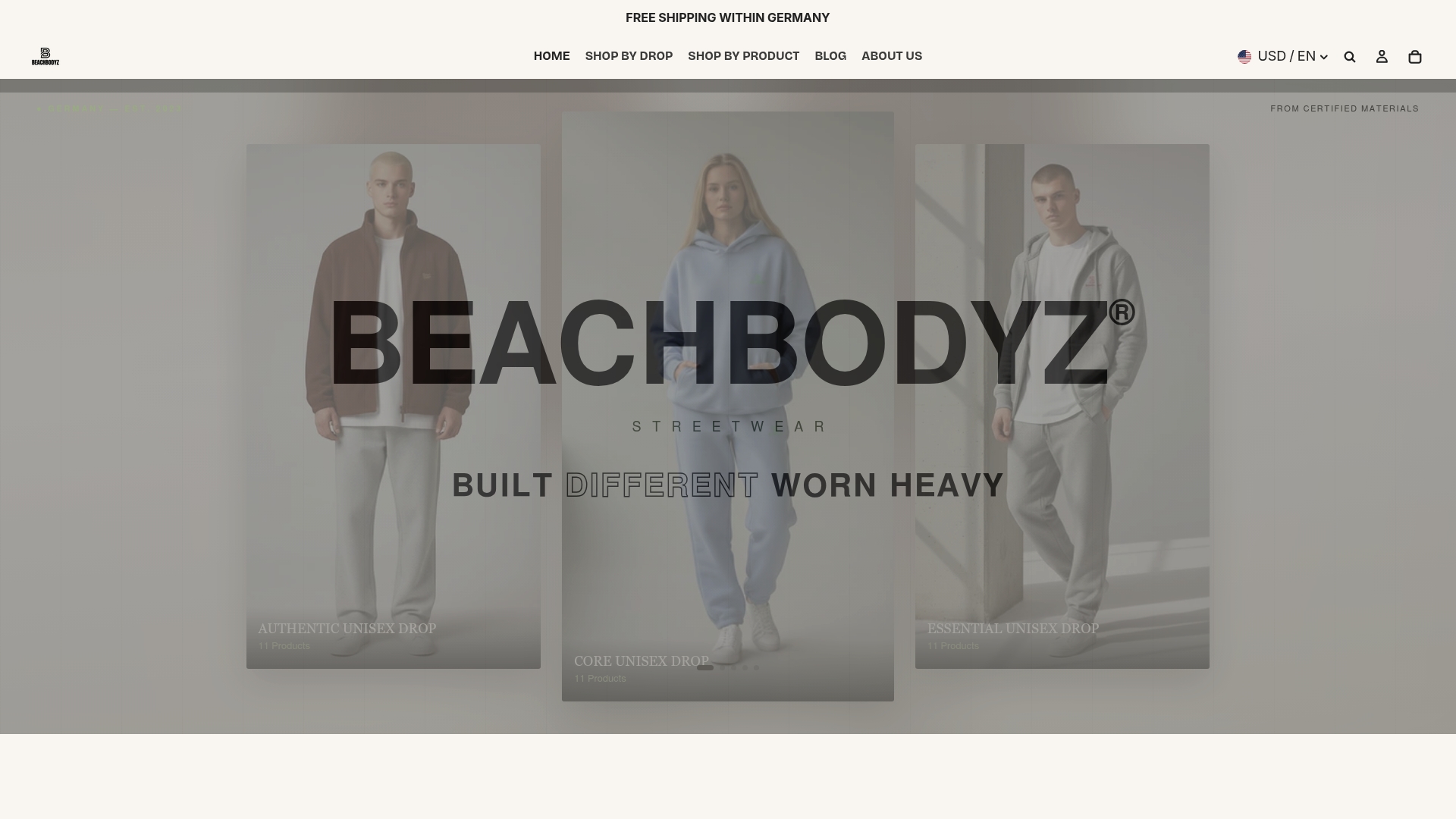
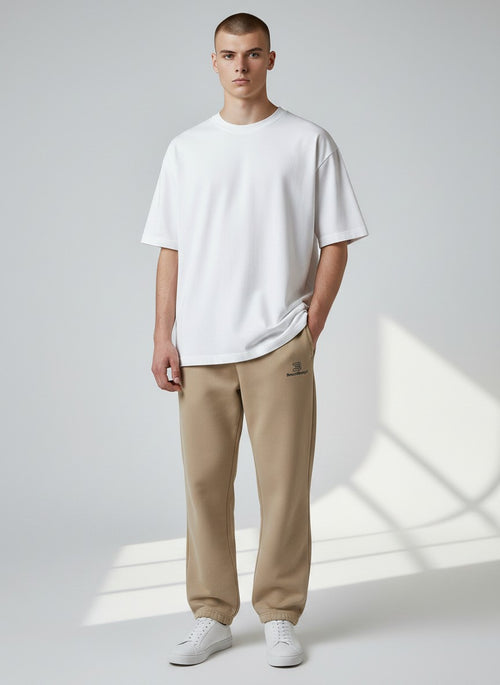
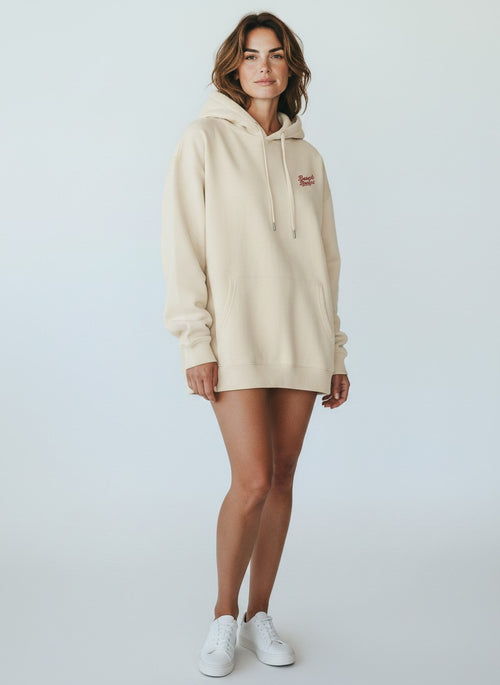
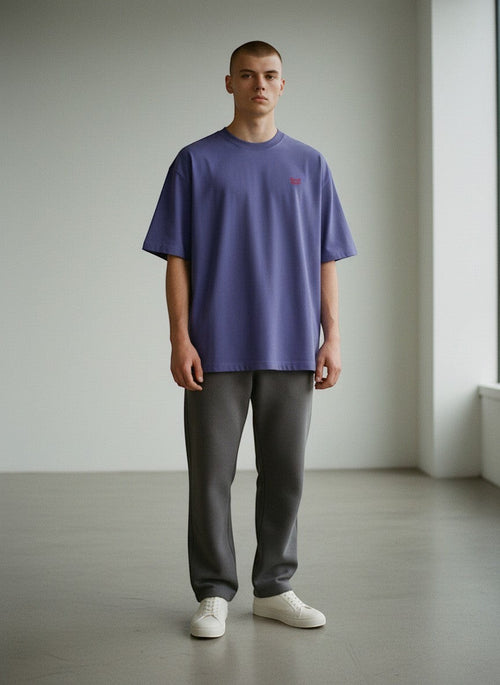
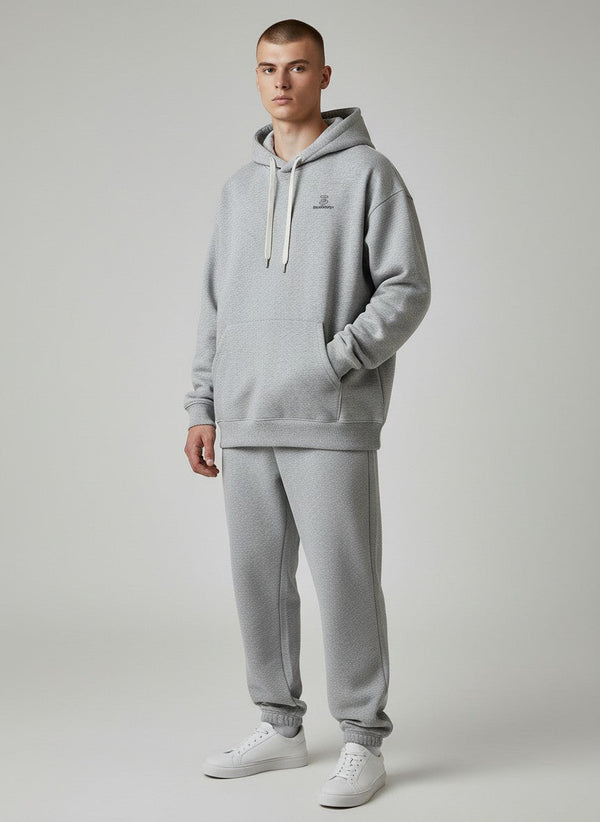
The Hoodie from the collection easily carries a large Chenille patch without warping, thanks to the robust, heavy fabric. An Oversize Shirt, on the other hand, is better suited for smaller logo appliqués on the chest, where less material tension is created. Anyone looking for a warmer base will find enough stability for varsity letters or large lettering in the Sweatshirt. All products are made from organic cotton or recycled polyester and are fairly produced in the EU, a foundation that not only enables sustainable craftsmanship but also deserves it. Anyone planning their own design should look directly in the shop and choose the right garment for the planned appliqué.
Sources
- Madeira — Yarns: Chenille
- Madeira — Chenille 12 (Product Description)
- ZSK — K-Head Pattern Book: Moss and Chain Stitch
- Wilcom — Chenille Digitizing (Documentation)
FAQ
What material is chenille?
Chenille is not a single fiber, but a yarn structure, usually made of polyester or recycled polyester according to the GRS standard. Bulky yarns of thickness 12 are the industry standard because they provide enough bulk for the characteristic loops.
Which tricks help when learning chenille embroidery?
The most important thing is to start small and not skip the machine settings in the pattern book. Practice with simple shapes and generous minimum sizes before moving on to more complex designs with chain stitching and fine details.
Are there instructions for chenille yarn?
Yes, manufacturers such as Madeira provide technical data sheets on needle selection, bobbin capacity, and compatibility. Chenille 12, for example, is designed exclusively for special chenille machines. In addition, the ZSK pattern book provides specific settings for stitch length and thread tension.
How do you properly wash chenille embroidery?
A gentle cycle at a low temperature is usually sufficient; a tumble dryer should be avoided. Direct ironing destroys the loop structure, so always iron on the reverse side with a cloth in between.
Is Beachbodyz clothing suitable for your own chenille designs?
Yes, the heavy fabrics in the hoodie and sweatshirt collection provide enough stability for large patches and logos. Current prices and availability are available directly in the online shop.