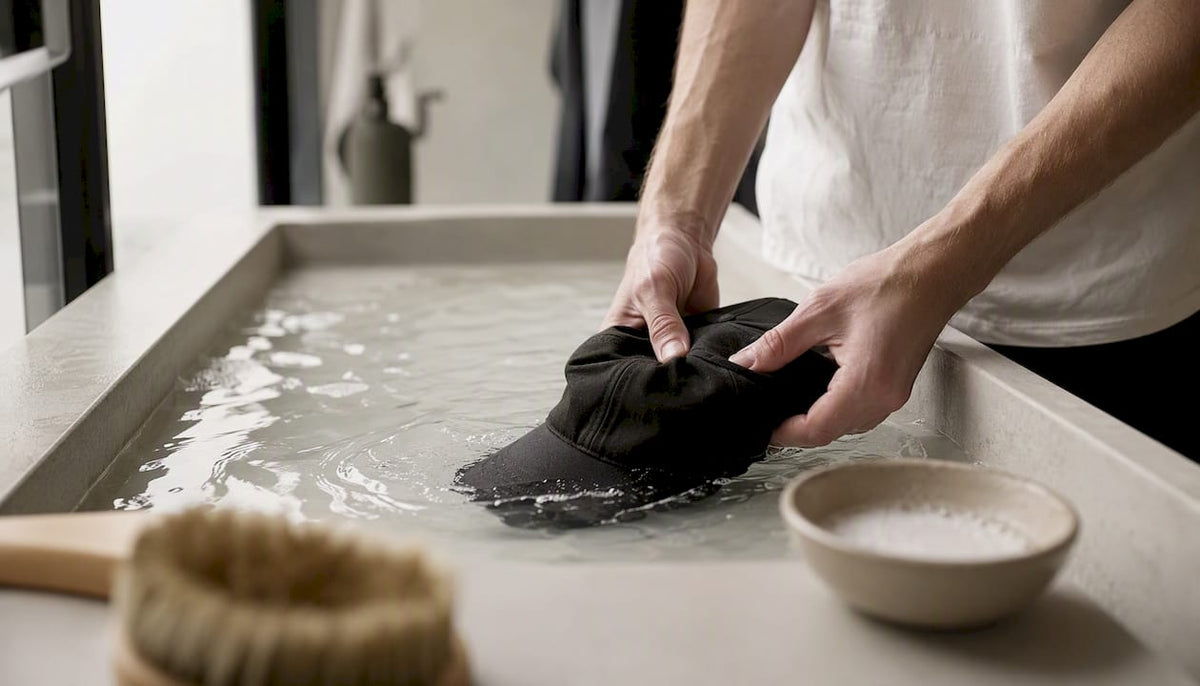
Handwashing is the safest method for cleaning a cap. Lukewarm water, a mild delicate detergent, and a soft brush are sufficient for most dirt. Machine or dishwasher washing is only an option if the care label allows it and the brim is made of plastic. In that case: gentle cycle, maximum 30 °C, no fabric softener.
Three risks that can occur during cleaning:
- Brim deformation due to heat, spinning, or soaking for cardboard brims
- Fading due to aggressive tablets, heavy-duty detergent, or direct sunlight during drying
- Adhesive detachment on the brim due to excessively high temperatures in the washing machine or dishwasher
Key Takeaways
Handwashing with lukewarm water and mild delicate detergent is the safest method to clean a cap while preserving its shape and color.
| Topic | Details |
|---|---|
| Standard Method | Handwash at max. 30 °C with delicate detergent reliably protects shape and color. |
| Check Brim | Before any wet treatment, test for cardboard vs. plastic; never soak cardboard brims. |
| Stain Treatment | Baking soda paste for sweat stains, vinegar solution for salt stains; H2O2 only for white caps. |
| Drying | Air dry in shape, 24–48 hours; no dryer, no direct sun, never wring. |
| Beachbodyz | Sustainable caps made from GOTS-certified organic cotton are durable and easy to care for. |
A Personal Note on Sustainable Care
Those who wear sustainable streetwear know: longevity begins not with purchase, but with care. Gentle handwashing, targeted stain treatment, and drying in shape are not inconveniences, but investments in a garment's lifespan. Especially for caps made from organic cotton or recycled polyester, this effort is doubly worthwhile, as the material lasts for years with proper care. The Beachbodyz care instructions offer a compact overview for all streetwear items.
When the Cap is Truly Beyond Saving
Sometimes, even the most meticulous cleaning is not enough. Deformed brim, faded color, dissolved seams. Then, a new purchase is not a defeat, but an opportunity.

Beachbodyz offers caps and accessories made from GOTS-certified organic cotton, fair-produced in the EU, with durable craftsmanship and the option for individual embroidery. Not a fast-fashion compromise, but a piece that truly lasts with proper care. If you're looking for a new cap designed for longevity from the start, you'll find the current collection in the Identity Drop.
Table of Contents
- What should you check before cleaning a cap?
- How to handwash a cap?
- Removing sweat stains and stubborn stains
- Can you wash caps in the washing machine?
- Is the dishwasher really an option for caps?
- How do I tell if the brim is made of cardboard or plastic?
- How to dry a cap without losing its shape?
- Which cleaning method suits which material?
- Sustainable cleaning: Less is often more
- Sources
- FAQ
What should you check before cleaning a cap?
Starting the wash directly risks deformation or color loss. Two minutes of preparation save trouble later.
Read the care label:
- Is the cap machine washable? What is the maximum temperature indicated?
- Is there a handwash symbol or a do not wash symbol?
- Note instructions for bleaches and dryers. A guide to reading care labels helps to interpret the symbols correctly.
Identify brim material:
- Gently tap the brim: if it sounds hollow and is slightly flexible, it's likely cardboard.
- Plastic brims feel firmer and yield evenly when bent.
- If uncertain: assume cardboard brim and clean only spot-wise.
Assess type of dirt:
- Sweat stains on the inner band: pretreatment necessary.
- Salt stains on the outside: vinegar solution helps.
- Prints or embroideries: treat with special care, never brush directly.
Prepare utensils:
- Lukewarm water (max. 30 °C)
- Mild delicate detergent or shampoo
- Soft brush or old toothbrush
- Clean towel
- Laundry net or cap shaper for drying
Pro-tip: Before any wet treatment, test an inconspicuous spot to see if the color runs. Press a damp cloth briefly and check for color transfer.
How to handwash a cap?
Handwashing works because temperature, pressure, and soaking time are fully controllable. No spinning, no uncontrolled heat. This protects both shape and color.
According to Deichmann Shoe Fashion, handwashing with lukewarm water and a mild, bleach-free delicate detergent is the safest method for most baseball caps.
- Prepare water: Fill a bowl or sink with lukewarm water, maximum 30 °C. Stir in a small dash of delicate detergent until it dissolves.
- Pre-treat: Rub heavily soiled areas, especially the inner band, with gall soap or an enzyme cleaner. Let it sit for five to ten minutes.
- Clean locally: Do not fully submerge the cap if the brim is made of cardboard. Only gently work on the soiled areas with the soft brush in circular motions.
- Wash entire cap: For plastic brims, briefly dip the cap into the water, gently work the crown and outer surface. Do not brush directly on prints and embroideries.
- Rinse thoroughly: Rinse under lukewarm, clear water until no soap residue is visible. Residues can leave stains.
- Blot water: Do not wring the cap. Instead, gently press it between two towels.
- Shape and dry: Stuff the crown, hold the brim in shape, and let it dry in a shady, ventilated spot.
Important for leather applications and strong seams: Never soak leather details. Only dab seams on embroideries with a damp cloth, never brush. If unsure, treat only the outer surface spot-wise.
Removing sweat stains and stubborn stains
Yellowish rings on the inner band are caused by sweat and skin oil. They don't simply disappear with water. Targeted home remedies can help here.
Color test first: Every home remedy, even baking soda and vinegar, can leave traces on sensitive colors. Always test on a hidden spot before applying the paste to the stain.
Baking soda paste for yellowish and oily stains:
- Mix baking powder with a little water to form a thick paste.
- Apply the paste to the stain and let it sit for about an hour.
- Gently brush off with a soft toothbrush and rinse thoroughly with clear water.
Vinegar solution for salt stains:
- Dilute white household vinegar 1:5 with water.
- Dab onto the salt stain with a cloth, let it sit briefly.
- Do not rub, only dab. Then rinse with clear water.
Gall soap and enzyme cleaner for protein and grease:
- Apply gall soap directly to the inner band, let it sit for five minutes.
- Enzyme cleaners like Perwoll or a biological stain remover dissolve protein and grease stains particularly gently, as the enzymes specifically break down molecules.
- Always rinse thoroughly afterward.
According to the New Era care guide, hydrogen peroxide (3%) is suitable exclusively for white caps. For colored models, there is a high risk that the color will be permanently lightened.
If you are unsure about commercial stain removers: Many are too aggressive for fashion accessories. The choice of cleaner should match the material composition, so cotton should be treated differently than polyester. More on this in the Beachbodyz article on removing stains from cotton.
Can you wash caps in the washing machine?
Yes, but only under certain conditions. The care label must allow machine washing, and the brim must be made of plastic. Cardboard brims do not survive a machine wash.
According to Persil Waschwiki: gentle cycle at maximum 30 °C, delicate detergent, low spin speed or no spin at all.
Settings and protective measures:
- Select gentle cycle or handwash program
- Maximum 30 °C, no higher temperatures
- Dose delicate detergent, no heavy-duty detergent, no fabric softener
- Place cap in a laundry net or use a cap washer (anti-deformation frame)
- Wash separately from heavily soiled laundry, similar colors together
What to avoid:
- No bleach
- No high-speed spinning
- Do not wash with heavy textiles like jeans
Pro-tip: Pre-treat stubborn stains on the inner band by hand with gall soap before machine washing. The machine alone often does not completely remove dried sweat stains.
Is the dishwasher really an option for caps?
Technically, yes. The dishwasher doesn't spin, which makes it gentler than a washing machine in one respect. But the risks are real and depend heavily on the settings.
Brief conclusion: The dishwasher can work if temperature, tablets, and protection are right. Without these precautions, handwashing is the better choice.
According to Decathlon, a maximum of 30–40 °C is recommended, no rinse aid and no heat drying.
How to do it more safely:
- Place cap in the top rack, never in the bottom (too close to the heating element)
- Use a cap washer or suitable support to maintain shape
- Select a gentle wash program, maximum 40 °C
- Turn off heat drying and remove the cap immediately after the cycle
- Do not use rinse aid
Risks to be aware of:
- Aggressive tablets can fade colors
- Adhesive on the brim detaches with heat, especially on older caps
- Contact with heavily soiled dishes can leave residues on the cap
- High temperatures permanently damage prints
If you want to be on the safe side, choose handwashing or the washing machine's gentle cycle with a cap protection frame.
How do I tell if the brim is made of cardboard or plastic?
This is the most important question before any wet treatment. A cardboard brim swells when soaked and permanently loses its shape.
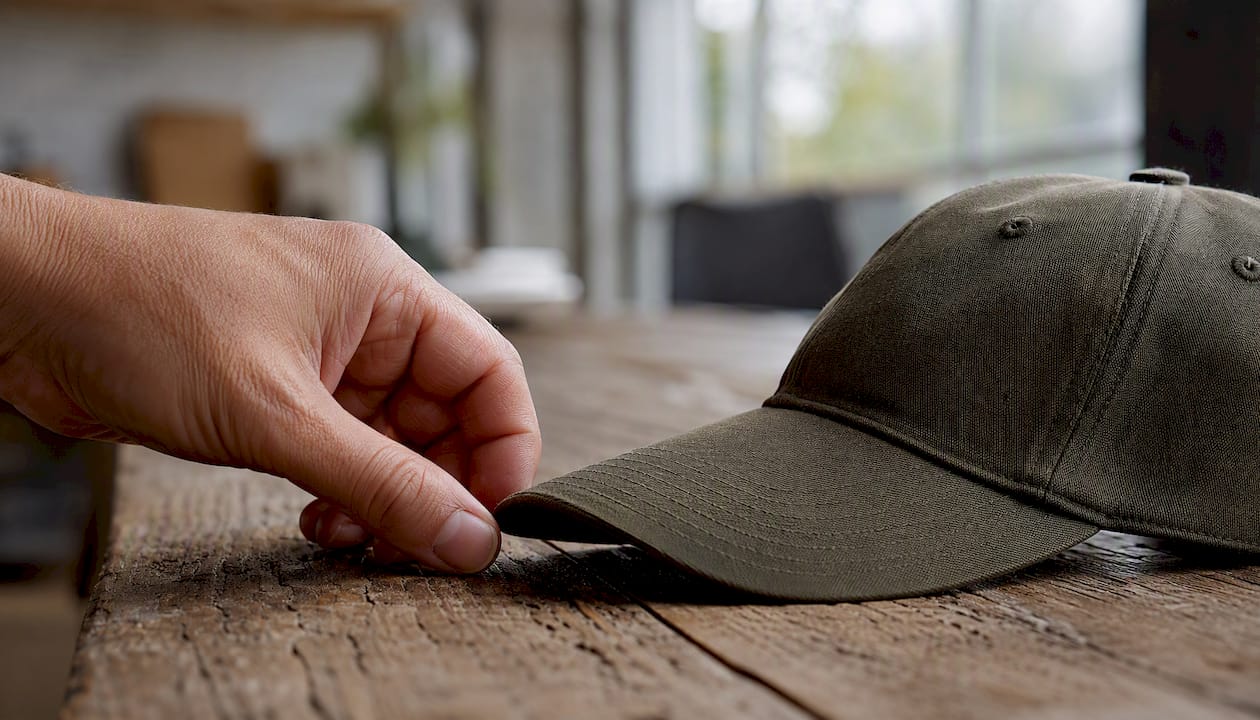
According to TAG24, a simple sound test helps: gently tap the brim. If it sounds hollow and slightly tinny, it's probably cardboard. Plastic sounds duller and yields evenly when bent.
Dos and Don'ts depending on brim material:
| Brim Material | Allowed | Forbidden |
|---|---|---|
| Cardboard | Spot clean with a damp cloth | Soaking, machine wash, dishwasher |
| Plastic | Handwash, gentle cycle, dishwasher (with caution) | Hot water, spinning, dryer |
For cardboard brims: only treat the outer surface with a slightly damp cloth and very little pressure. Never soak, never put in the machine. Older caps more often have cardboard brims, newer models usually plastic.
And generally, regardless of material: never wring, no dryer, no direct heat on the brim.
How to dry a cap without losing its shape?
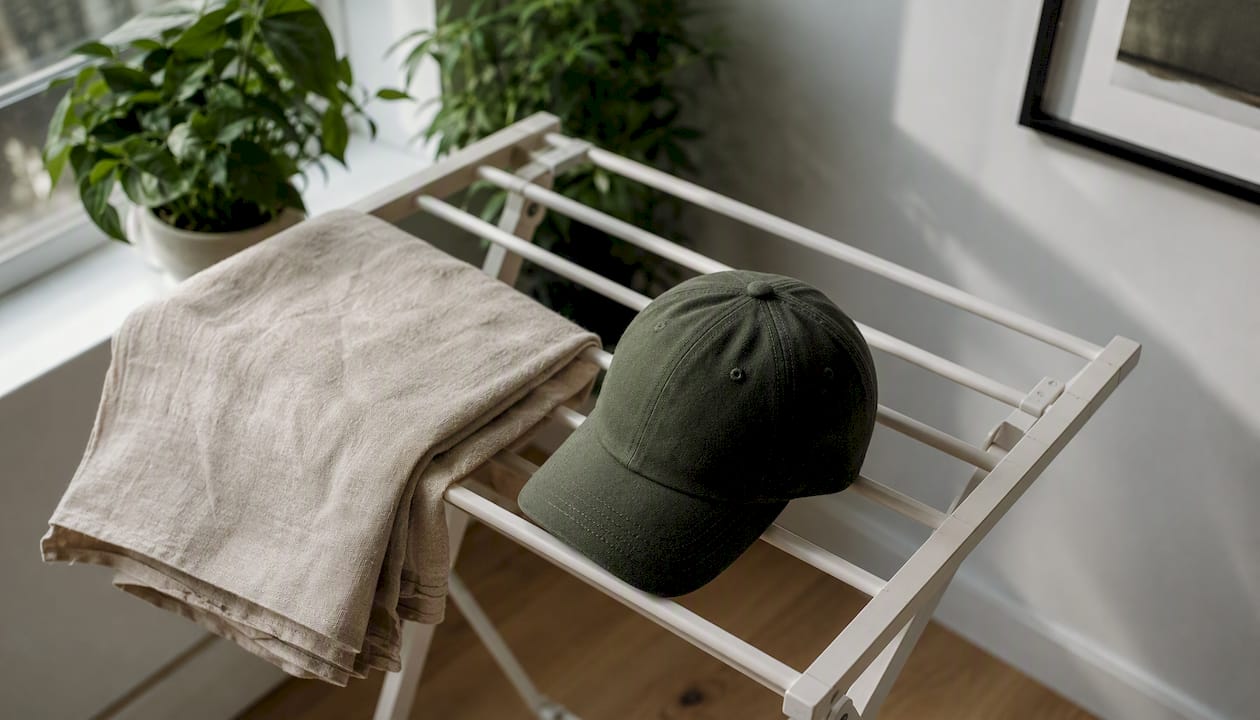
Air drying is the only safe method. Dryers, hairdryers, and direct sunlight damage fibers, fade colors, and can permanently deform the brim.
According to New Era, drying takes 24–48 hours depending on material and ambient temperature. Heat hardens fibers and can permanently lighten colors.
- Blot excess water: Gently press the cap between two towels, never wring.
- Stuff the crown: Place a rolled-up towel, an inverted bowl, or a cap shaper inside the crown. This maintains the shape during drying.
- Position the brim: Bring the brim back to its natural shape and place it so it's not under pressure.
- Choose drying location: Shady, well-ventilated, at room temperature. No windowsill in the sun, no radiator.
- Patience: Allow at least 24 hours to dry before wearing the cap again.
Pro-tip: If the cap is slightly distorted after drying, gently push the crown into shape with your hands while the material is still minimally damp. Once the cap is completely dry and deformed, it's almost impossible to correct.
Which cleaning method suits which material?
The material determines how much moisture and pressure the cap can withstand. Ignoring this risks shrinking, deformation, or color loss.
- Cotton: Shape-stable with proper treatment. Delicate detergent, maximum 30 °C. Caution: cotton shrinks with heat. Prefer handwashing.
- Polyester and blends: Often a bit more robust, dries faster. Prints on polyester are sensitive to heat and aggressive cleaners. Gentle cycle is sufficient.
- Wool and felt: Only spot clean, never machine wash. For heavy soiling, consider professional cleaning.
- Leather and Suede Details: Never soak through. Dab with a lightly damp cloth, then treat with a suitable leather care product. Do not apply water directly.
| Material | Hand Wash | Machine | Dishwasher | Special Feature |
|---|---|---|---|---|
| Cotton | Yes, max. 30 °C | With caution | Not recommended | Risk of shrinkage when hot |
| Polyester | Yes | Delicate cycle | Possible | Protect prints |
| Wool/Felt | Spot clean | No | No | Professional cleaning if needed |
| Leather/Suede | Only dab clean | No | No | Leather care afterwards |
More about material differences and suitable cleaning agents can be found in the Beachbodyz guide to recycled materials in clothing.
Sustainable Cleaning: Less is Often More
The gentlest cleaning is also the most environmentally friendly. Spot treating instead of washing the entire cap saves water, energy, and protects the material.
- Choose mild cleaners: Plant-based delicate detergents or biological enzyme cleaners put less strain on water bodies than synthetic heavy-duty detergents.
- Only treat what is soiled: Local pre-treatment instead of a full wash significantly reduces water and detergent consumption.
- Machine only when fully loaded: If washing the cap in a machine, fill the program with other delicate wash items to save energy.
- Use liners and impregnating sprays: Hat liners absorb sweat before it penetrates the fabric. Impregnating sprays keep dirt and moisture away from the fabric. Both significantly reduce cleaning effort in the long run.
- Ventilate regularly: After wearing, hang the cap to air out. Moisture and sweat dry before they penetrate the fibers. This prevents odors and makes frequent washing unnecessary.
For more tips on sustainable washing, see the Beachbodyz guide to sustainable washing.
Sources
All the following sources were used for this article and are suitable for further reading:
- Washing a Cap: How to Get Your Baseball Caps Clean
- Washing a Baseball Cap: Which Method is Best? | TAG24
- Washing a Cap and Removing Sweat Stains | Persil Wash Wiki
- Washing a Cap: How to Clean Your Visor Properly | Decathlon
The care label is always the first point of reference. External guides supplement but do not replace manufacturer-specific instructions.
FAQ
How do I remove sweat stains from a baseball cap?
Apply a baking soda paste made from baking powder and a little water to the stain, let it sit for an hour, gently brush off, and rinse thoroughly. Alternatively, use gall soap directly on the inner band.
Can caps be washed in a washing machine?
Yes, if the care label allows it and the brim is made of plastic. Use a delicate cycle at a maximum of 30 °C, delicate detergent, no fabric softener, and protect the cap in a laundry bag or cap washer.
Can I clean caps in the dishwasher?
Technically possible, but with caution: use the top rack, a gentle program at a maximum of 40 °C, no heat drying, no rinse aid, and use a cap washer. Hand washing is the safer alternative.
Can I clean caps with baking soda?
Yes. Baking soda paste is good for yellowish sweat rings and oily stains. Apply the paste, let it sit for about an hour, brush off, and rinse thoroughly. Test for colorfastness on an inconspicuous area first.
Recommendation
- Cool-Down Exercises: The Key to Optimal Recovery After Your Workout – BEACHBODYZ®
- Repair clothes: Make sustainable streetwear last longer – BEACHBODYZ®
- Eco-Friendly Fabric Choices: Sustainable fabrics for a better future – BEACHBODYZ®
- Carhartt Alternatives: Sustainable Streetwear Made from Organic Cotton – BEACHBODYZ®