Organic cotton is a natural textile grown without synthetic pesticides or artificial fertilizers. If you want to wash organic cotton, you need to know that its fibers are more delicate than those of conventional cotton because they haven't been chemically treated for stabilization. This means that incorrect temperatures or aggressive detergents can quickly cause damage. With the right washing instructions for organic cotton, your clothes will stay soft, maintain their shape, and last significantly longer. Beachbodyz uses certified organic cotton in its products and recommends these gentle care methods so that each item can be worn for years to come.
What are the ideal washing temperatures for organic cotton?
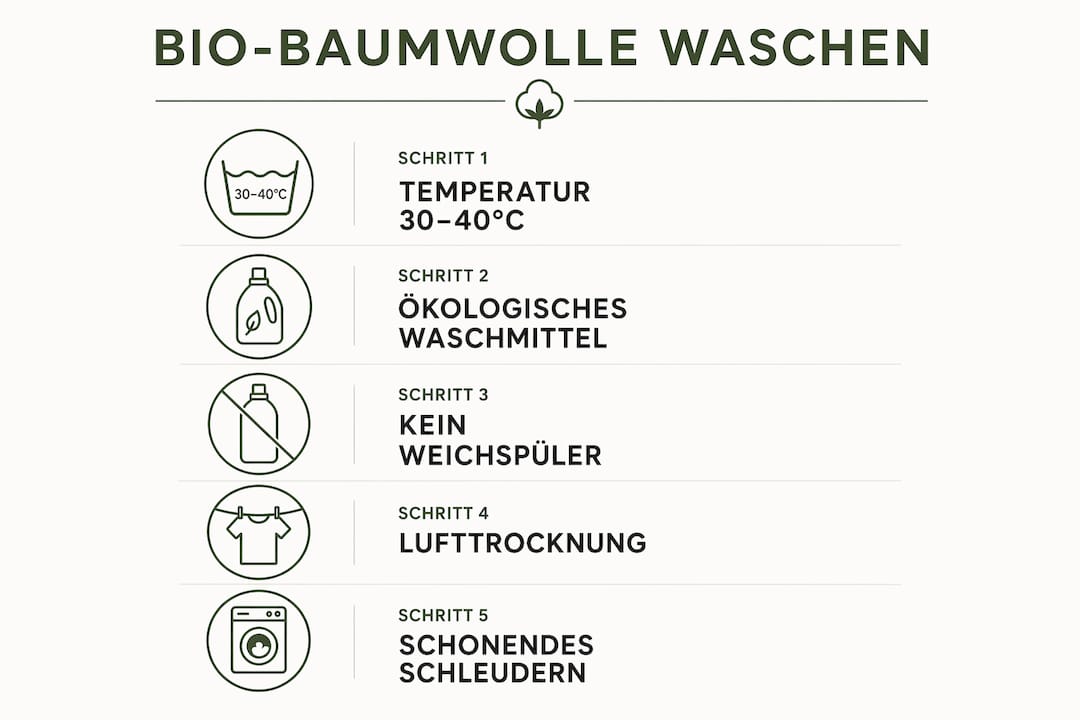
The optimal washing temperature for organic cotton is 30–40 °C (86–104 °F). This protects the fibers from wear and tear and prevents the fabric from shrinking or losing its shape. Regularly washing at too high a temperature risks permanent fiber damage.
60 °C (140 °F) is only acceptable in exceptional cases. Heavily soiled textiles or underwear may be washed at this temperature, but only if the care label explicitly permits it. For normal everyday clothing made from organic cotton, 60 °C is simply too much.
Why does temperature play such a big role? Organic cotton requires a gentler washing process than conventional cotton because there are no chemical finishes to protect the fibers. Heat directly attacks the natural fiber structure, resulting in a shirt that is smaller and rougher after just a few washes.
Additionally, there's the energy aspect. Washing at 30 °C uses significantly less electricity than at 60 °C. So, if you want to clean cotton sustainably, you should choose the lower temperature for environmental reasons alone.
- 30 °C (86 °F): Ideal for lightly soiled everyday clothing and colored items
- 40 °C (104 °F): Suitable for normal soiling and white textiles
- 60 °C (140 °F): Only for heavily soiled items or underwear, if the label permits
- 90 °C (194 °F): Generally not suitable for organic cotton
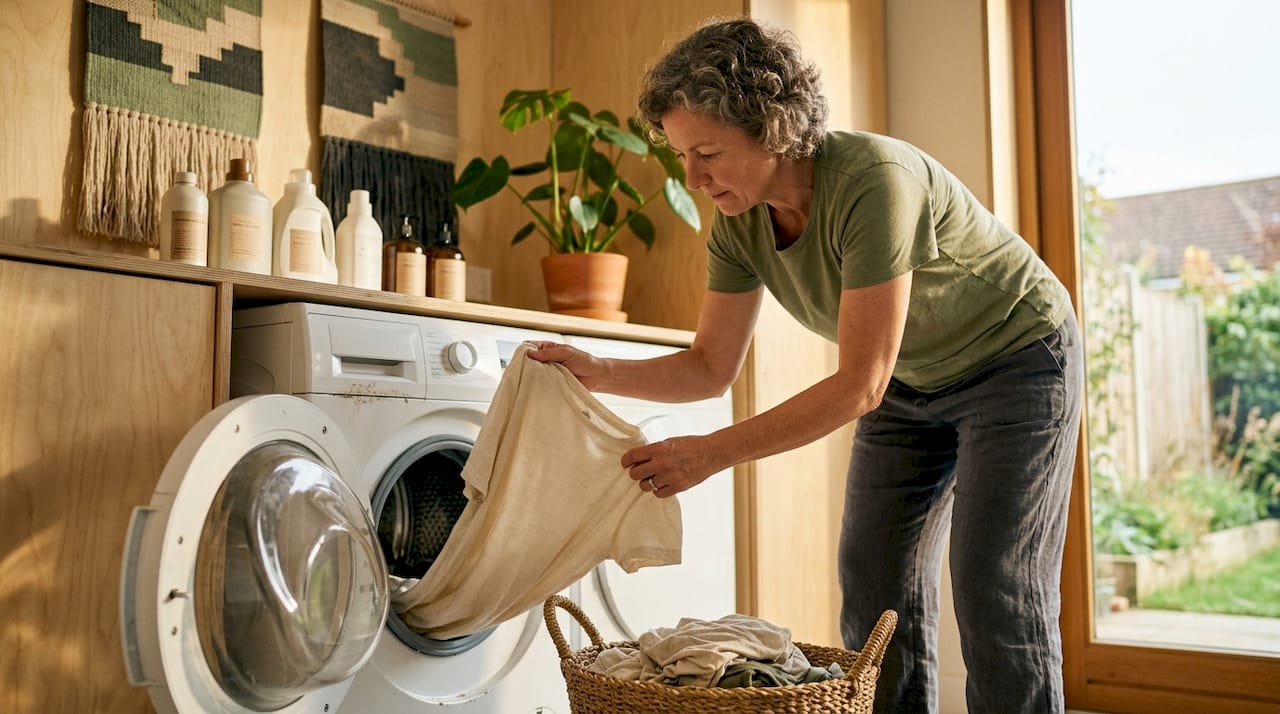
Pro Tip: Turn the garment inside out before washing. This protects the outside from friction in the drum and keeps the color vibrant longer.
Which detergent is suitable for organic cotton?
Heavy-duty detergents with optical brighteners or bleaches are unsuitable for organic cotton. These ingredients attack natural fibers and can fade colors. Instead, an ecological color or delicate detergent with natural ingredients is recommended.
Ecological detergents are biodegradable and significantly reduce wastewater pollution. They clean reliably at low temperatures, which perfectly matches the 30–40 °C recommendation. Well-known certifications like the EU Ecolabel or the Blue Angel help you make the right choice when purchasing.
Sorting before washing is just as important as the detergent itself. Sort organic cotton by color and degree of soiling to prevent color transfer. Light and dark items belong in separate wash cycles.
- Light textiles: Wash separately, do not use bleach
- Dark and vibrant colors: Wash separately, use color-safe detergent
- Heavily soiled items: Soak or pre-treat beforehand, then wash separately
- New clothing: Wash before first wear to remove production residues and soften the fabric
Fabric softener sounds tempting, but it's a common mistake. More on that later.
Pro Tip: Dose detergent sparingly. Too much detergent leaves residue in the fibers and makes the fabric stiff. Half the recommended amount is often sufficient for lightly soiled clothes.
How should organic cotton be properly dried and spun?
The tumble dryer is organic cotton's biggest enemy. Tumble drying leads to shrinking and increased fiber damage. The combination of heat and mechanical stress significantly shortens the lifespan of a garment.

Air drying on a clothes rack is the better choice. Even gentler is flat drying on a flat surface, as this prevents marks from hangers and stops heavy items from stretching. An organic cotton sweater will thus retain its original shape.
The spin cycle in the washing machine should be adjusted. Gentle wash programs and appropriate spin speeds prevent fiber damage. For delicate items, a maximum spin speed of 800–1000 revolutions per minute is recommended.
- Air drying: Best method for shape retention and fiber protection
- Flat drying: Ideal for heavy items like sweaters or hoodies
- Spinning: Maximum 800–1000 revolutions, less for delicate items
- Tumble dryer: Only in an emergency and on the lowest setting, if the label permits
Consistently avoiding the dryer also saves energy. This is a simple but effective contribution to sustainable clothing care.
What mistakes should be avoided when washing organic cotton?
Washing mistakes cost money because clothes wear out faster. Most problems can be avoided with a few clear rules.
-
Choosing too high a washing temperature. Temperatures above 40 °C (104 °F) cause organic cotton to shrink and make the fibers brittle. If an item is smaller after washing, it's usually because it was washed too hot. Remedy: gently pull the damp item into shape and dry it flat.
-
Using fabric softener. Fabric softener can gum up organic cotton fibers and impair the fabric's breathability. Additionally, many fabric softeners are harmful to the environment. If you want soft laundry, add a splash of vinegar to the fabric softener dispenser instead.
-
Incorrect sorting. Washing a red T-shirt with white socks is known to end badly. Color transfer can only be prevented by consistently separating laundry by color.
-
Overloading the machine. An overcrowded drum cleans less effectively and causes more friction on the fibers. Two-thirds full is the maximum for gentle results.
-
Treating stains incorrectly. Immediately pre-treat stains on organic fabrics with cold water, never hot. Hot water sets protein and grease stains permanently into the fibers. Apply gall soap or baking soda to the fresh stain, let it sit briefly, then wash normally.
-
Wearing new clothes unwashed. New organic cotton clothing contains production residues. Washing once before the first wear is not a luxury, but a necessity.
If a garment has already shrunk, you can carefully stretch it while damp and dry it into shape. This often works surprisingly well for slight shrinkage. For severe discoloration due to color transfer, a special color remover, available in drugstores, can help.
How can you reduce your ecological footprint when washing?
The biggest sustainability lever when washing is not the detergent, but reducing washing frequency. Clothes that are not truly dirty don't need to go into the machine. Airing them out is often enough.
Dry cleaning is problematic from an ecological perspective. Dry cleaners use solvents that heavily pollute the environment and fibers. Wet cleaning with biodegradable surfactants is a significantly more environmentally friendly alternative if machine washing is not possible. For organic cotton, the washing machine, when set correctly, is already the best choice.
“Wash less frequently, wash cooler, and avoid dry cleaning: these three measures reduce energy consumption and environmental impact from clothing care more than any single detergent choice.”
Concrete measures for a smaller ecological footprint:
- Air instead of wash: Hang clothes after wearing and let them air out before putting them in the wash
- Wash full loads: Half-empty machines waste water and energy
- Use energy-saving programs: Many washing machines have an eco-program that works particularly efficiently at low temperatures
- Choose ecological detergents: Products with the EU Ecolabel or Blue Angel are biodegradable and phosphate-free
Those who buy sustainable fabrics like organic cotton and then care for them with ecological methods consistently close the loop. Buying alone is not enough. Care determines how long an item truly remains in use.
Key Takeaways
Washing organic cotton correctly means: low temperatures, ecological detergents, air drying, and less frequent washes protect the fibers and reduce environmental impact simultaneously.
| Topic | Details |
|---|---|
| Washing Temperature | 30–40 °C (86–104 °F) are ideal; 60 °C (140 °F) only for heavily soiled items or underwear as per the care label. |
| Detergent | Use ecological color or delicate detergents without bleach and optical brighteners. |
| Drying | Air drying on a rack or flat; avoid tumble dryers to prevent shrinking. |
| Error Prevention | No fabric softener, consistently sort by color, and do not overload the drum. |
| Sustainability | Reducing washing frequency and avoiding dry cleaning lowers energy consumption and environmental impact. |
What I've learned after years with organic cotton
I've been wearing almost exclusively organic cotton clothing for years. And I have to say: the most common mistake I observe isn't the wrong temperature. It's the belief that washing fundamentally cleans and preserves.
In fact, every wash cycle is a small attack on the fibers. This sounds dramatic, but it's simply physics. Water, friction, and heat break down natural fibers over time. Those who understand this wash less often and more gently. Not out of laziness, but out of conviction.
What truly surprised me: airing out works better than expected. A hoodie I hung up in the evening smells fresh the next morning. No wash cycle needed. This significantly extends the life of an item and saves water and electricity in the process.
The second point I underestimated is the choice of detergent. For a long time, I used a conventional color detergent and wondered why my shirts looked faded after two years. Since I switched to an EU Ecolabel detergent, the difference is visible. The colors stay more vibrant, the fabric softer.
If you want to live sustainably, it doesn't start with buying. It starts with care. Organic cotton is an investment. Like any investment, it needs the right care to pay off.
— Ahmed
Beachbodyz: Sustainable streetwear that lasts
Beachbodyz produces streetwear from certified organic cotton, fairly manufactured in the EU. Each piece is designed to be worn for years with the care methods described here. Those who invest in high-quality, sustainable clothing and care for it properly will need to repurchase less often.

Discovering the collection at Beachbodyz is worthwhile for anyone who values style and longevity. Whether jogging pants, fleece jackets, or shorts: all products are made from materials that deserve gentle care and retain their quality with proper treatment. If you want to deepen your streetwear care guide, you'll find further concrete instructions for sustainable clothing care there.
FAQ
How often should organic cotton be washed?
As rarely as possible. Airing out after wearing is often sufficient for lightly used clothes and significantly protects the fibers.
Can organic cotton be washed at 60 °C (140 °F)?
Yes, but only in exceptional cases for heavily soiled items or underwear, if the care label explicitly permits it.
Which detergent is best for organic cotton?
Ecological color or delicate detergents without bleach and optical brighteners are best. Products with the EU Ecolabel or Blue Angel are a reliable choice.
Why should fabric softener be avoided with organic cotton?
Fabric softener gums up natural fibers and impairs the fabric's breathability. Additionally, many fabric softeners are harmful to the environment.
How do you prevent organic cotton from shrinking?
Washing at a maximum of 30–40 °C (86–104 °F), gentle spinning, and then air drying instead of tumble drying reliably prevents shrinking.